Before bottle-feeding, make sure the kitten truly needs it. A mother cat is usually the best caregiver, and a mother who is temporarily out of sight may return. If you found kittens outdoors, observe quietly from a safe distance for several hours when possible, then contact a veterinarian, shelter, rescue, or experienced neonatal foster program for guidance. Alley Cat Allies explains how to assess whether a mother cat is nearby.
If the kitten is orphaned, separated after reasonable observation, unable to nurse, or not getting enough milk from its mother, commercial kitten milk replacer and a small nursing bottle may be appropriate. This is general care information, not a substitute for a veterinary examination. Newborn kittens can deteriorate quickly. A cold, limp, weak, ill, or nonresponsive kitten may need veterinary treatment rather than routine bottle-feeding.
What you need to bottle-feed a kitten
- Commercial kitten milk replacer formulated for kittens. Choose a powder or liquid product and follow that product’s label exactly.
- A small kitten nursing bottle with a kitten-sized nipple. A specific brand is not required, but the nipple must provide a slow, controllable flow.
- A gram scale for consistent weight checks.
- Clean towels or fleece bedding and a safe, controlled heat source.
- Warm water for a water bath to warm prepared formula.
- A warm, damp cotton ball, gauze pad, or soft cloth for helping a very young kitten urinate and defecate.
- A bottle brush and cleaning supplies for washing feeding equipment.
- A notebook or phone log for recording weight, feedings, formula preparation, urine, stool, and symptoms.
Commercial replacer is preferable to cow’s milk, plant-based milk, human infant formula, regular goat’s milk, or an internet homemade recipe. These products do not provide the same nutrient profile as queen’s milk and may cause digestive problems. A commercial kitten milk replacer powder is one example of the type of product to look for; follow the label for whichever formula you choose.
A pet-safe heating pad or warming disc can help create a warm resting area, but it is not a substitute for veterinary treatment of hypothermia. Use a covered heat source under only part of the box or carrier so the kitten can move away from it. Never place a kitten directly on a heating element.
#1 Best Overall

- SQUEEZE BOTTLE - 60ml nursing bottle for newborn kittens and puppies, 2.1 ounce capacity, small animal feeding bottle is easy to squeeze and easy to control the amount of milk.
- SMALL ANIMAL FEEDER SET - 1ml for small nipples, 3ml, 5ml, 10ml for medium and large nipples, 60ml feeding bottles can be freely combined with (small, medium, large) nipples.
- 5 REPLACEABLE NIPPLES - Different sized nipples to meet the needs of small animal at every stage, the soft rubber-tipped nipple prevents scratching the gums of newborn kittens and puppies.
- 5ML BROWN FEEDER - The brown 5ml syringe is made of light-safe material to prevent photosynthesis of medication, use a separate dedicated feeder for better use when your pet is sick.
- NEWBORN KITTENS & PUPPIES GIFT - Suitable for newborn and not yet teething small animals, kittens, puppies, hamsters, chinchillas, squirrels, rabbits, etc. you will be a very gentle owner, take care of it, love it and grow with it.
1. Warm the kitten before feeding
Do not feed a chilled kitten. A cold kitten may be unable to suck or digest normally, and feeding can be dangerous if the kitten is hypothermic, dehydrated, has low blood sugar, or is becoming seriously ill.
Place the kitten in a warm, draft-free carrier or box with clean bedding. Put a wrapped, pet-safe heat source under one side of the area and leave the other side unheated. Check the kitten and bedding frequently to prevent overheating or burns.
If the kitten is cold, limp, minimally responsive, breathing abnormally, or severely weak, warm it gradually and contact a veterinarian or experienced neonatal-care provider. Do not proceed with ordinary bottle-feeding until you have received appropriate advice.
2. Mix and warm the kitten formula
Prepare the formula exactly according to the selected product’s instructions. Do not assume that one brand’s powder-to-water ratio applies to another brand or to liquid formula.
- Wash your hands and use clean feeding equipment.
- Measure the powder and water accurately according to the label.
- Mix thoroughly without improvising extra powder, extra water, or supplements.
- Refrigerate prepared formula, prepare no more than a 24-hour supply, and follow the product’s storage directions.
- Warm only the portion needed for the current feeding in a bowl or cup of warm water.
- Test several drops on the inside of your wrist. VCA Animal Hospitals recommends approximately 100°F (38°C); the formula should feel comfortably warm, not hot.
Do not microwave kitten formula. A microwave can create dangerously hot spots even when the liquid feels cool elsewhere. Discard prepared formula left at room temperature for one hour, and never save formula left in a used bottle for the next feeding. VCA Animal Hospitals’ kitten-feeding guidance recommends refrigerating prepared replacer and limiting it to a 24-hour supply.
3. Check the bottle and nipple flow
Before every feeding, inspect the bottle and nipple for tears, brittleness, blockage, or loose pieces. A kitten nursing bottle or replacement nipple should be small enough for the kitten and should allow a slow, controlled flow.
Turn the filled bottle upside down to test it. For a neonatal kitten, formula should generally fall in a slow drip—not pour freely. Follow the instructions supplied with your bottle, but never use a nipple that floods the kitten’s mouth.
If nothing comes out, the kitten may become frustrated and suck forcefully. If formula streams out, the flow is too fast and the risk of aspiration increases. Do not enlarge the nipple opening excessively. Replace a damaged nipple rather than trying to repair it.
What’s actually slowing this PC down?
Pick the symptom - the matching free tool is one click away.
4. Position the kitten belly-down
Place the kitten on its stomach with its feet facing the surface, as though it were nursing from its mother. Support the body and keep the head in a neutral position. The neck may be gently extended forward, but do not force the head backward.
Rank #2
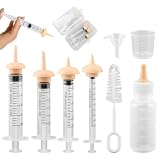
- One-Stop Scientific Feeding: Designed specifically for newborn kittens, puppies, and various small animals, this kit includes a 50ml professional feeding bottle, four precision syringes of different capacities (1ml, 3ml, 5ml, 10ml), four biomimetic nipples, as well as a funnel and measuring cup. From precise feeding immediately after birth to supplemental feeding during the transition period, this single kit meets all your care needs.
- Precise Measurement for Safe Feeding: Recognizing that newborn pets are extremely sensitive to feeding amounts, the kit includes four syringes of different sizes, each featuring clear, durable graduations. This allows you to control feeding with milliliter-level precision based on your pet’s weight and age, effectively preventing choking or digestive strain caused by overfeeding.
- Bio-Mimetic Nipples: Made from ultra-soft, food-grade silicone, these bio-mimetic nipples replicate the natural feel of a mother dog or cat’s mouth. They are bite-resistant and gentle on the mouth. Multiple nipple shapes are available to suit pets of different sizes and developmental stages, increasing the success rate of feeding.
- Easy to Clean, Comes with a Dedicated Storage Case: The included cleaning brush easily reaches the bottom of bottles and syringes, ensuring no milk residue remains. All accessories are neatly stored in a transparent storage jar/container, making it convenient for home storage and keeping your tools organized and ready to use—whether you’re traveling with your pet or on the go.
- Essential Professional Tools for Young Pets: Whether caring for orphaned puppies or kittens, administering medication to sick adult pets, or providing nutritional support for frail premature pets, this multifunctional kit offers the most professional support. The included measuring cup and funnel make the process of mixing formula more precise and spill-free, making it the ideal assistant for pet owners and animal rescuers.
Never bottle-feed a kitten on its back like a human infant. Do not hold it vertically or tip its head sharply backward. Those positions make it easier for formula to enter the airway. A small towel can steady a wriggling kitten, but it must not cover the face or compromise the belly-down position.
5. Let the kitten suckle at its own pace
- Touch the nipple gently to the kitten’s mouth and allow it to latch.
- Hold the bottle at roughly a 45-degree angle so the nipple remains filled with formula without flooding the mouth.
- Allow the kitten to suck and swallow at its own pace.
- Watch for regular swallowing and calm breathing.
- Pause if the kitten needs a break. Several patient attempts are safer than forcing the nipple.
Do not squeeze the bottle or push formula into the kitten’s mouth. The kitten should create the flow by suckling. If the kitten cannot latch, cannot swallow, repeatedly coughs, or is too weak to suck, stop and call a veterinarian or experienced neonatal-care provider. Do not improvise syringe-feeding or tube-feeding. Tube feeding requires hands-on instruction because placing a tube incorrectly can cause life-threatening injury or aspiration.
Stop immediately if formula enters the airway
Stop the feeding if formula bubbles from the nose, or if the kitten coughs, gags, wheezes, struggles to breathe, or suddenly becomes distressed. Keep the kitten calm and seek veterinary guidance. Breathing difficulty after a feeding is an emergency because aspiration can progress to pneumonia. Best Friends’ kitten foster guidance provides additional safety information, and PetMD describes aspiration-pneumonia warning signs in cats.
6. Decide how much and how often to feed
There is no single safe volume or schedule for every kitten. The appropriate amount depends on body weight, estimated age, health, formula calorie density, ability to suckle, and whether the kitten is also nursing from its mother or eating solids.
Use the selected formula’s label together with instructions from a veterinarian, shelter, or experienced neonatal foster program. Do not combine the volume from one formula with the schedule from another. Published guidance differs: VCA Animal Hospitals recommends feeding every 2–4 hours during the first week, then every 4–6 hours until weaning; other guidance varies by age and individual needs. Ask for an individualized plan rather than treating any schedule as universal.
Feed small, regular meals rather than trying to make up a missed feeding with a large volume. Overfeeding or feeding too forcefully can cause regurgitation, bloating, diarrhea, discomfort, and aspiration. A slightly rounded abdomen can occur after feeding, but a hard, tense, painful, or persistently distended abdomen is not normal.
If the kitten vomits, repeatedly regurgitates, develops diarrhea, appears uncomfortable, or refuses subsequent feedings, contact a veterinarian instead of repeatedly changing formula concentration or increasing the amount.
Quick wins for a faster PC:
Clear out junk files and repair common Windows errorsFree Scan →Fix the driver behind crashes, sound loss and screen glitchesFind Drivers →7. Burp and help a young kitten eliminate
After feeding, hold the kitten in a natural upright or supported position and gently pat or rub its back to help release swallowed air. Burp the kitten after each feeding.
Kittens generally cannot urinate and defecate independently until about 3–4 weeks of age. After each feeding:
Rank #3

- Comes with soft nursing nipples designed to fit the oral structure of newborn kittens and puppies, simulating natural sucking feeling to let little pets feed comfortably without rejection.
- Featured replaceable accessories design, you can easily swap out worn or aging parts individually, no need to throw away the whole feeding set for long time use.
- Equipped with practical portable storage to organize all feeding tools neatly in one place, keep items tidy and avoid loss at all times.
- Designed as emergency ready feeding supplies, perfect for unexpected newborn pet care, stray pet rescue and daily emergency feeding needs anytime.
- All-in-one newborn pet feeding kit matches daily nursing demands of kittens and puppies, also suitable for small birds, hamsters and rabbits for multi-purpose use.
- Moisten a cotton ball, gauze pad, or soft cloth with warm water.
- Gently stroke the genital and anal area.
- Continue carefully until the kitten urinates or defecates, if it needs to.
- Stop if the skin becomes irritated; never scrub harshly.
- Record the output and note unusual color, blood, persistent constipation, or diarrhea.
Wipe formula from the kitten’s face and fur with a warm, damp cloth, then dry it promptly. Dried formula can irritate the skin and cause moist dermatitis. Return the kitten to its warm, clean resting area.
8. Clean and sterilize the equipment
Wash the bottle, cap, and nipple with hot soapy water after every feeding and rinse them thoroughly. Follow the equipment manufacturer’s instructions for boiling or otherwise sterilizing the parts between uses. This is especially important when feeding multiple kittens.
Free tools Windows power users keep installed
One-click scans. No signup required.
Allow equipment to dry completely, then inspect it before the next feeding. A kitten bottle brush can make it easier to clean the bottle and nipple interior, but cleaning supplies should support—not replace—proper washing and sterilization.
If one kitten is ill, use separate feeding equipment when possible or feed the ill kitten last, following veterinary or rescue-program infection-control instructions.
9. Track weight, intake, and behavior
Weigh the kitten consistently, preferably before feeding, and record the result. A small gram scale for kittens is useful because neonatal weight changes can be difficult to detect by handling alone. Weighing does not diagnose illness, but it helps reveal whether the kitten is maintaining an appropriate growth trend.
A veterinary review in the Journal of Feline Medicine and Surgery gives approximately 10–15 g of gain per day as a general reference. Expected gain varies with age, birth weight, health, and clinical circumstances. A downward trend, failure to gain, pronounced lethargy, weakness, or reduced appetite warrants veterinary evaluation—not simply a larger bottle.
Crashes, No Sound, or Screen Glitches?
Random freezes, missing sound and display glitches usually trace back to one bad driver. Find and replace yours safely.Free scan · under a minuteWindows Errors? Fix Them Before They Spread
Repair common Windows errors and clear accumulated junk for a smoother, more stable PC - no reinstall needed.Free scan · no reinstallKeep a log containing:
- date and time of each feeding;
- formula brand and exact preparation;
- amount offered and amount consumed, when measurable;
- urination and bowel movements;
- body weight;
- vomiting, diarrhea, coughing, nasal discharge, bloating, or other symptoms.
This record helps a veterinarian distinguish inadequate intake from infection, dehydration, incorrect mixing, digestive intolerance, parasites, or fading-kitten syndrome.
Independent reader supportYour contribution helps us test, update, and keep practical guides available for everyone.10. Wean gradually when the kitten is ready
Very young kittens generally need kitten milk replacer as their sole nutrition until weaning begins at approximately 3–4 weeks, although readiness varies. Signs of readiness can include increased mobility, chewing on the nipple, interest in food, and the ability to lap.
Offer a shallow dish of suitable kitten gruel or wet kitten food gradually while continuing enough bottle-feeding to maintain nutrition. Do not abruptly stop formula when solid food is first introduced. Reduce bottle-feeding only as the kitten reliably eats, remains hydrated, and continues gaining weight.
Rank #4

- Product:2 feeding bottles (50 ml each), 6 syringes (2 of 1 ml, 2 of 3 ml, 2 of 5 ml), 10 nipples (2 small short nipples, 2 small straight nipples, 3 medium straight nipples, 3 large nipples), 1 storage measuring cup (250 - 300 ml)
- Features:The items included in this product can meet the feeding needs of kittens and puppies. Syringes and nipples of different specifications can be flexibly matched and used according to the age, food intake and oral size of pets. Nipples of various sizes can be installed on the feeding bottles or syringes according to the oral size of pets
- Instructions for Using the Syringe:If newborn kittens and puppies are unable to drink milk on their own, syringes can be selected for auxiliary feeding. There are syringes of different specifications, such as 1 ml, 3 ml and 5 ml, which can be adapted to different food intake requirements and accurately control the feeding amount
- Instructions for Using the Feeding Bottle:If newborn kittens and puppies are able to suck milk on their own, it is recommended to use a feeding bottle for feeding. The 3 medium straight nipples and 3 large nipples provided can be replaced according to the growth stage of the pets
- Attention:If your kittens or puppies have already grown teeth, please be careful to prevent them from biting the nipples during use, so as to avoid the risk of the nipples being bitten and the pets accidentally swallowing pieces of the nipples
Contact a veterinarian if the kitten refuses the new food, loses weight, develops diarrhea, or remains unable to transition as expected.
Recommended Free Tools
Common bottle-feeding mistakes to avoid
- Assuming an unseen mother has abandoned the litter: observe from a safe distance and seek rescue or veterinary guidance first.
- Using cow’s milk or an improvised recipe as the normal diet: use a commercial kitten milk replacer unless a veterinarian gives different instructions.
- Feeding a cold kitten: warm the kitten gradually and obtain veterinary advice for weakness or hypothermia.
- Feeding on the back: keep the kitten belly-down with the head neutral.
- Using a nipple that streams formula: adjust or replace it so the flow is slow and controlled.
- Squeezing the bottle: let the kitten control the flow through suckling.
- Force-feeding a kitten that cannot swallow: stop and seek professional instruction; do not attempt unsupervised tube feeding.
- Overfeeding: follow the formula label and individualized professional guidance rather than trying to compensate with a large meal.
- Reusing warmed or contaminated formula: discard it and prepare a fresh portion.
- Leaving the heat source uncovered or under the entire enclosure: provide a warm setup with an unheated area and check it frequently.
When to contact a veterinarian immediately
Seek immediate veterinary help for any of the following:
- formula from the nose, coughing, wheezing, rapid breathing, difficult breathing, blue or pale gums, or persistent respiratory signs after feeding;
- a cold, limp, minimally responsive, or severely weak kitten;
- inability to latch or swallow, or a kitten too weak to suck;
- repeated refusal of the bottle;
- repeated vomiting or regurgitation;
- significant diarrhea, suspected dehydration, or a swollen, hard, or painful abdomen;
- failure to gain weight or a downward weight trend;
- suspected cleft palate, congenital abnormality, injury, severe infection, or fading-kitten syndrome.
Aspiration pneumonia can be life-threatening. Coughing, breathing difficulty, fever, lethargy, reduced appetite, and nasal discharge after suspected aspiration require urgent veterinary attention. Do not delay care to try another nipple, formula, or feeding position.
If you cannot safely provide frequent care, contact a local kitten rescue, shelter, bottle-baby foster network, or neonatal-care organization. Availability and services vary by location, so call ahead. Experienced hands-on help is safer than attempting unfamiliar feeding methods alone.
FAQ
Can I use cow’s milk to bottle-feed a kitten?
No. Cow’s milk is nutritionally different from queen’s milk and can cause digestive problems. Use a commercial kitten milk replacer and follow its label, unless a veterinarian gives you different instructions.
How warm should kitten formula be?
Warm the prepared portion in a warm-water bath and test it on your wrist. VCA Animal Hospitals recommends approximately 100°F (38°C). Never microwave it.
Can I feed a kitten on its back?
No. Feed with the kitten belly-down, feet toward the surface, and the head in a neutral position. Feeding on the back increases the risk of formula entering the airway.
How often should a bottle-fed kitten eat?
Use the chosen formula’s label plus veterinary or experienced foster guidance. Frequency depends on age, weight, health, formula, and individual needs; ask for an individualized feeding plan.
What should I do if formula comes out of the kitten’s nose?
Stop feeding immediately. Formula from the nose, coughing, wheezing, or breathing difficulty may indicate aspiration. Keep the kitten calm and contact a veterinarian urgently.
Do these 3 things before closing this tab:
1Clear out junk files and repair common Windows errors2Fix the driver behind crashes, sound loss and screen glitches3Repair Windows errors before they cause bigger problemsThe Bottom Line
Bottle-feeding safely means more than offering formula: warm the kitten first, mix a commercial replacer exactly as directed, use a slow-flow nipple, keep the kitten belly-down, let it control the suckling, and monitor weight and symptoms. When a kitten is cold, weak, unable to swallow, coughing, breathing abnormally, vomiting, developing diarrhea, or failing to gain weight, veterinary care takes priority over another bottle-feeding attempt.
Quick Recap
Product prices and availability are accurate as of the date/time indicated and are subject to change. Any price and availability information displayed on Amazon at the time of purchase will apply.




