The Tool Desk
Outbyte Driver Updater FREEScan for outdated or missing drivers - takes under a minuteDriver Scan →Outbyte PC Repair FREERepair Windows errors before they cause bigger problemsFix Now →CT scans of fossil skulls show that giant Australian mihirungs had brain shapes researchers said most closely resembled those of chickens. The scans also revealed an extraordinary skull in Dromornis stirtoni. Researchers used these anatomical clues to propose how the birds saw and fed, but vision and diet are interpretations—not direct evidence of behavior.
What were mihirungs, and when did they live?
Dromornithids, commonly called mihirungs, were giant, flightless birds from Australia. An International Ornithologists’ Union newsletter describes the group as living from around 25 million years ago until roughly 50,000 years ago, and says the largest forms reached about 3 metres tall and 600 kilograms. These are broad estimates reported in the newsletter, not specimen measurements established by the brain study. International Ornithologists’ Union newsletter
How did scientists study fossil bird brains?
Warren D. Handley and Trevor H. Worthy’s 2021 study used CT scans of fossil braincases to create three-dimensional reconstructions of the spaces inside the skulls. Those spaces preserve clues to the brain and associated structures, including nerves; they are not preserved soft-tissue brains. The researchers compared the reconstructions with anatomy in living birds. The original paper is titled “Endocrinal Anatomy of the Giant Extinct Australian Mihirung Birds (Aves, Dromornithidae),” published in Diversity 13, article 124. Study DOI
Popular coverage identifies fossils of Dromornis murrayi (about 24 million years old), Dromornis planei and an Ilbandornis taxon (about 12 million years old), and Dromornis stirtoni (about 7 million years old). These ages are approximate context reported by New Atlas, not precise dates or statistical results from the study. New Atlas coverage
Free tools Windows power users keep installed
One-click scans. No signup required.
#1 Best Overall

- 2-in-1 Archaeopteryx Model Set**:This kit includes 1 lifelike Archaeopteryx reconstructed model and 1 fossil slab replica. It shows both the exterior appearance and fossil remains of this prehistoric creature for intuitive observation.
- Solid Material & Fine Details**:Made of sturdy resin with delicate sculpted details. The model and fossil plate can be used for long-term display, suitable for classroom demonstration and exhibition.
- Biology & Paleontology Teaching Aid**:Suitable for science teachers, students and fossil enthusiasts. Helps learners observe transitional anatomical features between dinosaurs and ancient birds.
- Defined Display Dimensions**:Reconstructed model stands **14.57 inches** in height; fossil replica plate measures **14.57 in × 11.81 in**. The clear shape and anatomical details support teaching demonstration and personal collection.
- Protective Carton Packaging**:Packed in a rigid cardboard box, outer box size: **14.96 in × 12.01 in**, to reduce damage risk during shipping. Great for science classrooms, homeschool learning and paleontology collections.
What did the reconstructed brains look like?
The reconstructed brain shapes were reported as most similar to those of chickens. That comparison concerns anatomy; it does not show that mihirungs behaved like chickens, had similar intelligence, or shared the same lifestyle. Their enormous bodies and distinctive skulls make them a striking example of how a broadly familiar kind of bird anatomy could occur in a very different animal.
What was unusual about Dromornis stirtoni’s skull?
The striking feature was the cranium: it was described as taller and wider than it was long. The researchers’ proposed explanation is that the skull needed room for muscles operating the bird’s massive bill, leaving the brain compressed and flattened within the available space. This is an interpretation of fossil anatomy, not a direct measurement of how the bird used its bill.
Rank #2

- Utahraptor was a large theropod dinosaur that lived during the Early Cretaceous period, known for its sharp claws and hunting abilities
- This replica is based on a real Utahraptor fossil discovered in Utah, accurately capturing the shape and detail of the original claw
- The Utahraptor’s curved claw was used for gripping and slashing, making it a key tool for hunting prey
- Cast in durable resin, this 5.5-inch replica offers museum-quality detail and texture
- Made in the USA, this fossil reproduction is perfect for collectors, educators, and dinosaur enthusiasts
What might mihirungs have seen and eaten?
Handley and colleagues interpreted the brain and nerve anatomy alongside the birds’ large, forward-facing eyes and large bills. They proposed that mihirungs likely had well-developed stereoscopic vision—using overlapping visual fields to judge depth—and ate soft leaves and fruit. Fossils cannot directly reveal what an individual bird ate or how it perceived its surroundings, so these are functional inferences rather than observed behavior or a confirmed menu.
Independent reader supportYour contribution helps us test, update, and keep practical guides available for everyone.Why call them “extreme evolutionary experiments”?
The phrase captures the contrast between a chicken-like reconstructed brain shape and the unusual proportions of a giant, flightless bird—especially Dromornis stirtoni, whose broad, tall cranium was interpreted as accommodating powerful bill muscles. It is a vivid description of evolutionary variety, not a formal scientific classification. Likewise, “demon ducks,” sometimes used as a nickname for mihirungs, is colorful popular wording, not their taxonomic name.
Quick Recap
Best Value

- Size: about 15 cm / 5.9 inches.
- Package Include:1 x Figure, 1 x Base, 1 x Egg, 1 x Egg Base.
- Feature:Aepyornis Model, Decoration, Highly Realistic Detailed Appearance, Simulation Animal, Decoration.
- Material:Made of Resin, Safe and Eco-friendly.
Rank #4
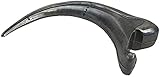
- Jurassic Park Fossil Raptor Claw Bottle Opener is sure to inspire awe and amazement
- Based on and scaled to the size of the original prop from the film series
- 5.5 inch heavy duty bottle opener is cast in tough zinc-alloy
- It's sure to last and open your favorite beverages for the next 65 million years, or until an extinction level event happens.
- Authentic and authorized Jurassic Park item from Factory Entertainment
Rank #3

- Replica Chirostenotes dinosaur claw – approx. 4.5 inches (11.43cm)
- Species: Chirostenotes pergracilis, Late Cretaceous (~76.5 million years ago), Alberta, Canada
- Realistic texture and anatomical accuracy – great for collectors, educators, and fossil enthusiasts
- Useful in paleontology education, museum displays, or as a unique prehistoric gift
- Display-ready fossil replica (stand not included)
Product prices and availability are accurate as of the date/time indicated and are subject to change. Any price and availability information displayed on Amazon at the time of purchase will apply.




