The three-stripe damselfish (Dascyllus aruanus) is hardy, but it is also territorial. Its care depends less on finding a guaranteed tankmate list than on planning enough shelter, choosing companions cautiously, and being ready to manage persistent aggression.
Identify the three-stripe damselfish
Dascyllus aruanus is also called the three-stripe damsel, humbug, or whitetail dascyllus. Its white body has three dark vertical bars. FishBase lists a maximum total length of 10 cm; that is a reported maximum, not a prediction for every individual aquarium fish. FishBase species summary and its field guide use these names and measurements.
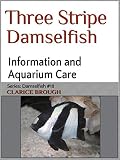
Geography matters when identifying the species. FishBase describes D. aruanus as Pacific; the Indian Ocean form once treated as a synonym has been recognized as a separate species, Dascyllus abudafur. Calling D. aruanus broadly Indo-Pacific without that distinction can blur two taxa.
Is it a good fish for a community aquarium?
Only if the aquarium and its stocking plan can accommodate territorial behavior. FishBase describes the species as territorial, and the USGS account describes small home territories that are fiercely defended. An aquarium care profile also warns of aggression in captivity. Hardiness should not be mistaken for peacefulness or easy compatibility.
Free tools Windows power users keep installed
One-click scans. No signup required.
#1 Best Overall

- this is a pillow shell, it is not stuffed; poly fill not included
- video for reference of finished product only
- 7 different available fish shells...see other listing in our store
- wholesale and mix & match listings created upon request contact us via Amazon messages and we will create a new listing and send the link to that listing via Amazon messages
- All multiple yard and lot purchases will be sent continuous in one piece
In the wild, three-stripe damselfish occupy shallow lagoon and reef-flat habitat. They may form larger aggregations over branching Acropora or smaller groups above isolated coral heads, but that does not mean a home aquarium group will behave the same way. A wild mating arrangement reported by USGS involves pairs or small groups of three to six, with a dominant male and females; this is a natural-history observation, not a stocking recommendation.
Plan the aquarium around shelter and territory
OATA’s general damselfish guidance recommends complex rockwork with hiding places for territorial fish and other inhabitants, and advises checking aquarium suitability for the species being planned. OATA’s damselfish guidance does not provide a species-specific tankmate recipe.
Rank #2

- Style, Show off your love for tropical fish at aquarium visits, beach trips, or casual outings with detailed three-stripe damselfish embroidery and garment washed look
- Size, Big size fit from XL to 3XL for extra comfort and roomy wear
- Construction, 6 panels, constructed front, mesh back, hook and loop closure, 4 inches deep crown for breathable structured fit
- Bill, Same color under bill with 4 1/4 inches long bill for added sun protection
- Product Dimensions, 8(W) x 11.5(L) x 4.5(H) inches
AquariumDomain recommends at least 30 US gallons for this species, along with live-rock shelter and swimming room. Treat that figure as this profile’s recommendation, not a universal or scientifically established minimum. Actual suitability also depends on tank dimensions and footprint, rockwork, filtration, tankmates, and the rest of the stocking plan. AquariumDomain’s species profile
- Arrange rockwork to create multiple hiding places and break up lines of sight, rather than leaving one fish able to dominate every shelter.
- Assess prospective companions by temperament, adult size, and space needs; no pairing can be called reliably safe for every aquarium based on the available species guidance.
- Have a practical way to monitor, separate, or rehome a fish if aggression becomes persistent.
- Consider introduction order and whether a newcomer is entering an already established territory. Aquarium Industries notes that established damselfish may treat newcomers aggressively.
Aquarium Industries also suggests that territoriality may be affected by under-crowding and by rearranging decor. These are management ideas, not guarantees that aggression will stop. Avoid crowding fish simply to reduce territorial behavior; the whole aquarium must still meet the needs of its inhabitants. Aquarium Industries’ damselfish care sheet
What do three-stripe damselfish eat?
In nature, the species eats zooplankton, benthic invertebrates, and algae. A captive diet should reflect that variety rather than rely on a single food format. Fishkeeping UK’s care sheet lists meaty foods, flake food, and herbivore preparations as options. Marine fish food flakes can be one part of a varied diet, not a basis for assuming flakes alone are complete. Fishkeeping UK’s care sheet
Why can aggression increase around breeding?
Territory defense is part of the species’ natural behavior, and breeding adds a nest to defend. The male clears a nesting site and guards the eggs, fanning and cleaning the clutch. It is therefore reasonable to expect defensive behavior to intensify near a nest, though the exact response will vary by fish and aquarium.
Rank #4
- Style, Show off your love for tropical fish at aquarium visits, beach trips, or casual outings with detailed three-stripe damselfish embroidery and garment washed look
- Size, Big size fit from XL to 3XL for extra comfort and roomy wear
- Construction, 6 panels, constructed front, mesh back, hook and loop closure, 4 inches deep crown for breathable structured fit
- Bill, Same color under bill with 4 1/4 inches long bill for added sun protection
- Product Dimensions, 8(W) x 11.5(L) x 4.5(H) inches
Published summaries disagree on how long eggs take to hatch: FishBase reports 3–5 days, while the USGS factsheet gives about 44–51 hours. Because the underlying study conditions are not reconciled here, neither timing should be treated as a single definitive aquarium expectation. The reliable practical point is that the male guards the eggs until they hatch. FishBase; USGS species factsheet
Independent reader supportYour contribution helps us test, update, and keep practical guides available for everyone.Conservation status
FishBase’s field guide reports the IUCN Red List assessment as Least Concern (LC), assessed on 23 September 2021. This is a conservation-status assessment, not an indication that the fish is suitable for every aquarium or that wild collection has no impact.
Quick Recap
Best Value

- 3001 Unisex Short Sleeve Jersey T-Shirt
Product prices and availability are accurate as of the date/time indicated and are subject to change. Any price and availability information displayed on Amazon at the time of purchase will apply.




