A cat with a firm lump, a slow-healing ulcer or a tract that keeps draining may have a deep fungal infection. The same picture can also come from a bacterial abscess, an immune-mediated disease, a foreign-body reaction or a tumor, so the skin alone cannot settle the question. Deep fungal disease is uncommon, but it is serious. The organism invades tissue, can spread through the blood and lymphatic system, and the skin lesion may be the visible part of a multi-organ infection. The workable sequence is to investigate the lesion in context, identify the organism and how far it has spread, and only then choose treatment. That treatment is specific to the organism and the organs involved, usually lasts for months, and should be directed and monitored by a veterinarian.
How deep fungal infection differs from ringworm
Ringworm (dermatophytosis) is a superficial infection of hair and the outer layers of skin. Deep fungal dermatoses behave differently: the organism penetrates tissue beneath the surface, the infection can stay localized or spread locally, and it can travel through blood or lymphatic vessels. Dermatophytes rarely invade deeper tissue, so ringworm is worth ruling out early, but a lesion that persists despite appropriate treatment for superficial fungus should prompt a broader workup.
Warning signs that justify a workup
Typical lesions include firm or fluctuant nodules under the skin, ill-defined swellings, ulcers and draining tracts. They may be single or multiple and may discharge a thin, blood-tinged fluid or pus. Several patterns should prompt testing rather than another round of guesswork:
- Nodules, ulcers or tracts that persist or keep returning.
- Partial improvement on antibiotics. A temporary response may reflect control of secondary bacteria rather than cure of the underlying infection.
- Granulomatous or pyogranulomatous inflammation on cytology, which is the pattern produced by many fungal infections.
- Worsening after immunosuppressive drugs.
- Exposures: residence in or travel to an endemic region, outdoor access, hunting, contact with soil or vegetation, bird or bat droppings, standing water, or a recent wound.
- Signs in other systems, such as coughing or breathing changes, eye inflammation, bone pain or lameness, and neurologic signs. These point to dissemination and change the workup.
“Indoor only” does not rule these infections out. Environmental spores and contaminated organic material can reach indoor cats. Some tendencies are reported in the literature: sporotrichosis is often seen in young, sexually intact, free-roaming males, and cryptococcosis often affects young adult cats. These are patterns, not exclusion criteria. A 2026 review by Chi-Yen Wu, DVM, MS, DACVD, in Today’s Veterinary Practice recommends recording concurrent illness and retroviral status (for example, feline leukemia and feline immunodeficiency virus testing), because immune compromise can affect susceptibility, response to treatment and relapse risk.
Crashes, No Sound, or Screen Glitches?
Random freezes, missing sound and display glitches usually trace back to one bad driver. Find and replace yours safely.Free scan · under a minuteWindows Errors? Fix Them Before They Spread
Repair common Windows errors and clear accumulated junk for a smoother, more stable PC - no reinstall needed.Free scan · no reinstall#1 Best Overall

- HELPS SUPPORT HEALTHY SKIN - With a wash and soaking of the coat for 5-10 minutes, our powerful ingredients work to help soothe red, scaly, greasy, or smelly skin that may cause your pet discomfort
- FAST ACTING – Works fast to soothe your pet's sensitive skin that may be affected by environmental stressors
- VET-RECOMMENDED – This pet shampoo is pH balanced for your pet's skin and is paraben and soap-free to promote overall skin and coat health without damaging detergents
- FOR DOGS AND CATS – Our cat and dog shampoo is intended for pets over 12 weeks of age. Use twice weekly until skin clears up, then once a week to help maintain skin health
- APPLICATION: This product is intended for topical use only. Read directions carefully before applying to your pet's coat. Test on a small area to avoid further sensitivity before using
Why appearance cannot settle the diagnosis
Deep fungal infections look much like several common noninfectious and bacterial problems. The 2026 review puts the central point plainly: “Importantly, nodular or ulcerative skin disease does not necessarily indicate infection.” The differential therefore includes bacterial infection, immune-mediated disease, foreign-body reactions and neoplasia alongside the fungal causes.
This matters because immunosuppressive treatment given for a mistaken noninfectious diagnosis can worsen local invasion or spread the infection. If a cat deteriorates after immunosuppression, the infection should be reconsidered and diagnostics repeated rather than treating the deterioration with more of the same.
How a veterinarian works up a suspected case
- Take a detailed history and examine the cat. Record residence and travel, regional endemicity, outdoor access, environmental exposures, trauma, how the lesion has changed over time, prior antibiotics and immunosuppressants, concurrent illness, retroviral status, and any signs of respiratory, eye, neurologic or bone disease.
- Collect cytology. Aspirate intact nodules or lymph nodes, and make impression smears from ulcers or draining tracts. Romanowsky-type stains can show granulomatous or pyogranulomatous inflammation and sometimes the organisms themselves. Organisms may look like yeasts, pigmented hyphae or negatively stained hyphae. Finding none does not exclude infection.
- Confirm the organism. Depending on the suspected pathogen, the sample and the laboratory available, the options are histopathology with special fungal stains, fungal culture, PCR, and antigen or antibody testing. The European Advisory Board on Cat Diseases (ABCD) sporotrichosis guideline notes that a suspected Sporothrix culture should be handled by an appropriately notified laboratory.
- Assess how far the infection has spread. Because the respiratory tract is a common portal of entry, thoracic imaging is useful when respiratory signs or dissemination are suspected. Per Barrs and colleagues (Journal of Feline Medicine and Surgery, 2024), CT is preferred over skull radiographs for suspected upper respiratory disease, and MRI is preferred when neurologic signs call for central nervous system assessment. Imaging shows the extent of disease but does not identify the pathogen.
The main causes and how they differ
Exposure history and geography narrow the list, but they are not a substitute for testing. The table compares the causes covered in the ABCD guidelines and the 2026 review.
Rank #2

- SUPPORTS RED, SCALY OR GREASY SKIN - Formulated to help maintain skin comfort for dogs prone to seasonal sensitivities or surface buildup
- FRESHENS ODOR CAUSING BUILDUP - Helps support skin prone to lingering odors while promoting a clean, refreshed coat
- COMPLETE SKIN CARE ROUTINE - Includes Antiseptic & Antifungal Shampoo and Spray designed to work together to support healthy skin and coat between baths
- GENTLE, SOAP FREE FORMULA -Paraben free, dye free, and soap free to cleanse without stripping natural oils. Suitable for routine use
- TRUSTED SKIN AND COAT SUPPORT - From Veterinary Formula Clinical Care, developed to provide straightforward skin and coat care solutions for dogs
| Cause | Exposure and distribution | First-line drug (as described in the sources) |
|---|---|---|
| Sporotrichosis | Outdoor and fighting cats. S. brasiliensis is especially associated with South America; S. schenckii has a broader distribution. | Itraconazole |
| Cryptococcosis | Environmental acquisition. Pigeon droppings and decaying vegetation are described as possible risk factors. | Fluconazole is often preferred, particularly when central nervous system penetration matters; drug choice depends on extent and other factors |
| Histoplasmosis | Contaminated soil and bird or bat droppings. Indoor cats may be at risk. | Itraconazole, the current treatment of choice in ABCD guidance |
| Blastomycosis | In North America, reported around the Mississippi, Missouri and Ohio River valleys and parts of the mid-Atlantic. | Itraconazole, described as first-line in the 2026 review |
| Coccidioidomycosis | Semiarid endemic regions, including Arizona and south-central California. Indoor cats can be affected. | Fluconazole is generally preferred; bone involvement may influence selection |
| Phaeohyphomycosis and pythiosis | Melanized fungi may follow traumatic inoculation. Pythiosis is caused by an oomycete, not a true fungus, but can resemble invasive fungal disease. | Pathogen-specific; complete surgical excision may be considered in selected cases |
Sporotrichosis
Sporotrichosis presents as nodules, ulcers and draining tracts. Cytology or histology is typically followed by confirmation with PCR or culture. A multiplex qPCR evaluated by Della Terra et al. (2022) and reported in the ABCD sporotrichosis guideline had a reported sensitivity of 98.6%. That figure comes from one study, and the guideline notes that the test’s availability varies by location while other molecular methods are emerging. Sporotrichosis is also the cause that carries the clearest handling implications for people, covered below.
Cryptococcosis
Cryptococcosis is acquired from the environment. It can involve the nose, skin, eyes, central nervous system or the whole body. Lesion cytology, histopathology and PCR can all contribute, but the ABCD cryptococcosis guideline, first published in 2013 and updated on 6 November 2024, points to antigen testing as the most practical starting point (see the test section below). Treatment runs for months and is followed by long monitoring. The ABCD cryptococcosis guideline states that treatment guidelines have not been established, so decisions rest on the individual cat.
Histoplasmosis
Histoplasmosis can cause pulmonary and systemic signs, and skin or ocular lesions can occur alongside them. In one study of feline histoplasmosis cases (Ludwig et al., 2018, as cited in the 2026 review), 16.8% had cutaneous nodules or ulcers. The ABCD histoplasmosis guideline describes antigen testing as a screening step that should be followed by cytology or histology, or PCR, for confirmation. Feline treatment evidence consists of retrospective studies and case reports. Central nervous system or ocular disease, or severe illness, may change drug selection.
Rank #3
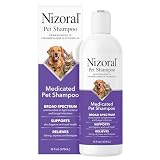
- Powerful Chlorhexidine Formula: Advanced ketoconazole shampoo with 1% ketoconazole and 2% chlorhexidine gluconate supports pets with stubborn skin concerns, offering effective antifungal dog shampoo and antimicrobial benefits.
- Antimicrobial Support: Nizoral's antimicrobial medicated dog shampoo for smelly dogs helps reduce irritation, itch, and odor while supporting healthier skin and coat comfort. Use 2-3 times per week as needed or as directed by your veterinarian.
- Medicated Relief for Irritated Skin: Nizoral s dog and cat shampoo with its soothing medicated formula helps calm itchy, irritated skin and ease discomfort without harsh additives. Gentle enough for regular use, it provides comforting relief.
- Ideal for Hot Spots, Odor, and Persistent Irritation: Targets problem areas as a hot spot shampoo for dogs, reducing odor and buildup while promoting cleaner, healthier skin perfect for pets needing a stronger medicated shampoo for dogs
- Gentle Care for Dogs and Cats: This gentle Nizoral chlorhexidine shampoo for dogs and cats is safe for multi-pet homes and works well as a cat wash or shampoo for dogs with itchy skin, providing a versatile option for overall coat maintenance.
Blastomycosis
Blastomycosis is reported in the regions listed in the table, and respiratory signs may accompany nodules or draining tracts. Cytology or histology can show large, thick-walled, broad-based budding yeasts. Urine antigen testing is sensitive in the studies cited by the 2026 review but cross-reacts with Histoplasma, so the result must be interpreted alongside the clinical picture and organism confirmation.
Coccidioidomycosis
Coccidioidomycosis can affect the respiratory tract and disseminate to skin, bone, eyes or the nervous system. Because organisms are often sparse, antibody detection is useful. The 2026 review describes agar gel immunodiffusion (AGID) as the primary diagnostic test. Studies cited in the review report antibody-detection sensitivity of 97.7% to 100%.
Quick wins for a faster PC:
Scan for outdated or missing drivers - takes under a minuteDriver Scan →Repair Windows errors before they cause bigger problemsFix Now →Phaeohyphomycosis and pythiosis
Phaeohyphomycosis is caused by melanized fungi that often enter through trauma. Pythiosis is caused by an oomycete, which is biologically distinct from fungi but can look much like invasive fungal disease. Diagnosis and treatment for both are pathogen-specific. Complete excision is considered in selected cases, but the evidence for surgical approaches is limited.
Rank #4

- Supports healthy skin for animals
- Formulated for dogs, cats and horses
- Supports restoring dry, damaged skin
- Made in the USA.
What the test numbers mean
Several tests have published performance figures. They come from the studies cited in the 2026 review and the ABCD guidelines, and they describe specific test types, sample types and populations. They are not guarantees for any laboratory or cat. Sensitivity is the share of infected animals a test detects in those studies; specificity is the share of uninfected animals it correctly clears. Where a test cross-reacts with another organism, a positive result identifies a genus or group rather than a single species.
| Test | Organism targeted | Reported sensitivity | Reported specificity and cross-reactivity | Source |
|---|---|---|---|---|
| Urine Histoplasma antigen ELISA | Histoplasma | 90% to 94.4% | Specificity 64.6%; cross-reacts with other fungi, which limits species specificity | Cook et al., 2012; Hanzlicek et al., 2016, as summarized in the 2026 review |
| Urine Blastomyces antigen ELISA | Blastomyces | 93.5% to 100% | Cross-reacts with Histoplasma; specificity not stated in the cited sources | Studies cited in the 2026 review |
| Coccidioides antibody detection | Coccidioides | 97.7% to 100% | Specificity not stated in the cited sources | Studies cited in the 2026 review |
| Multiplex qPCR | Sporothrix | 98.6% | Specificity not stated in the cited sources | Della Terra et al., 2022, reported in the ABCD sporotrichosis guideline |
| Cryptococcal antigen (serum, urine or body fluids) | Cryptococcus | No sensitivity figure stated in the cited guideline | Described by ABCD as easy and reliable | ABCD cryptococcosis guideline |
The ABCD cryptococcosis guideline states: “An easy and reliable test for the diagnosis of cryptococcosis is antigen detection in blood serum, urine and body fluids.” A reassuring test result is still a screening result when it does not identify the organism. A negative test or a negative cytology sample also does not exclude infection, so clinical suspicion should drive whether testing continues.
Treatment principles
Treatment follows the pathogen, the distribution of disease and the organs involved. The drug choices in the table above are starting points, not universal prescriptions. No single dose or duration suits every cat. Several principles recur across the guidelines:
Best Value

- Supports healthy skin for animals with conditions
- Helps prevent and treat fungal skin
- Can be used on cats, dogs and horses
- Duration is long. Sporotrichosis treatment continues beyond clinical cure, so a lesion that looks healed does not mark the end of therapy. Cryptococcosis requires months of treatment and extended follow-up. Histoplasmosis treatment should be adjusted for intolerance or specific organ involvement, with alternatives available.
- Severe or disseminated disease may need more. The 2026 review notes that adjunctive or alternative drugs may be needed when disease is severe, disseminated or life-threatening.
- Monitor the liver. Itraconazole can cause hepatotoxicity, so liver status matters before and during treatment. Absorption, formulation, adverse effects, drug interactions and adherence also affect outcome.
- Check for central nervous system, eye and bone involvement. These affect drug selection and the length of treatment.
- Watch for relapse. Follow-up after treatment is part of the plan, particularly for cryptococcosis and immunocompromised cats.
- Consider surgery selectively. For some phaeohyphomycosis and pythiosis cases, complete surgical excision may be appropriate, though the evidence base is limited.
Handling, zoonotic risk and prevention
The two most-discussed causes carry different implications for people and other animals, so they should not be grouped together.
- Sporotrichosis is an emergent zoonosis in some regions, especially Brazil. Infected cats can transmit the infection to people and other cats, often through bites or scratches. ABCD guidance advises wearing personal protective equipment when handling cats with suspicious lesions and restricting cats to indoors as a preventive measure. Veterinary evaluation should not be delayed for suspected disease.
- Cryptococcosis is not contagious. The organism is acquired from the environment, and ABCD does not consider affected cats contagious to people or other animals. Pigeon droppings and some decaying vegetation are described as possible environmental risks, but efficient preventive measures have not been demonstrated.
- Other causes. For histoplasmosis, blastomycosis, coccidioidomycosis and the other organisms covered here, ask your veterinarian whether any handling precautions apply to your cat.
What remains uncertain
Feline cases of several of these infections are uncommon, and most treatment evidence is retrospective or based on case reports. The updated ABCD histoplasmosis guideline explicitly reports no prospective feline treatment studies. Test performance depends on the assay and the case, and cross-reactivity can obscure the causative genus.
The available sources do not establish comparative treatment efficacy across all feline deep fungal diseases, a universal prognosis, or a single diagnostic test that detects every organism. Where the evidence is limited, the honest answer is a provisional one: a positive test supports a diagnosis, a negative test narrows it, and confirmation of the organism guides treatment.
Quick Recap
Product prices and availability are accurate as of the date/time indicated and are subject to change. Any price and availability information displayed on Amazon at the time of purchase will apply.




