Yes, itraconazole can be prescribed for cats with ringworm, but the answer depends on which fungus is involved, which product is used, and where the cat lives. In the United States, Itrafungol oral solution (10 mg/mL) is labeled for dermatophytosis caused by Microsporum canis in cats, and federal law restricts it to use by or on the order of a licensed veterinarian. Veterinary references also discuss itraconazole for other fungal infections, such as sporotrichosis, which follow different doses and durations. Never start, stop, change, or substitute itraconazole without the prescribing veterinarian.
What itraconazole is used for in cats
The US label states: “ITRAFUNGOL oral solution is indicated for the treatment of dermatophytosis caused by Microsporum canis in cats.” The label was last updated on DailyMed on September 14, 2023. Outside the United States, authorization for itraconazole products for cats differs by country, so a veterinarian should confirm which products are legally available locally.
Ringworm caused by Microsporum canis
Ringworm is a fungal infection of the hair, skin, and claws, not a worm. The US label covers only M. canis dermatophytosis, so for that diagnosis itraconazole is a labeled option. Whether a particular cat with ringworm should receive it, and at what dose, is the veterinarian’s decision.
Sporotrichosis and other fungal diseases
Sporotrichosis is a different disease. It commonly causes chronic skin nodules or ulcerated, draining lesions. Veterinarians diagnose it by cytology, culture, or both, and identifying the species of fungus can matter. Veterinary references describe itraconazole for this infection, but the US Itrafungol label does not cover it, and the regimen is not the ringworm schedule.
Do these 3 things before closing this tab:
1Clear out junk files and repair common Windows errors2Fix the driver behind crashes, sound loss and screen glitches3Repair Windows errors before they cause bigger problems#1 Best Overall

- Premium Skin Support Formula:Crafted with L-Lysine, Beta-Glucan, Olive Leaf Extract, Quercetin, Colostrum, Zinc Gluconate, and other beneficial ingredients to support healthy skin, coat condition, and overall wellness for dogs and cats.
- Supports Common Skin Concerns:Helps maintain healthy skin in pets experiencing dryness, redness, scabbing, hair loss, dandruff, itching, or ringworm-related skin concerns, promoting a healthier appearance and everyday comfort.
- Easy Daily Administration:Shake well before use and administer orally once daily or mix thoroughly with food. The liquid formula makes daily supplementation simple and convenient for pets of all sizes.
- For Dogs & Cats of All Life Stages: Suitable for puppies, kittens, adult pets, and senior dogs and cats needing ongoing skin, coat, and immune support as part of their daily wellness routine.
- Customer Satisfaction Guarantee:We are committed to providing quality pet wellness products and responsive customer support. If you have any questions about your purchase, our team is here to help.
Product forms: commercial solution versus compounded itraconazole
Formulation affects how much drug a cat absorbs, so products are not interchangeable on a milligram-for-milligram basis. Merck Veterinary Manual’s dermatophytosis chapter warns that compounded itraconazole has poor bioavailability and favors a commercial veterinary liquid.
| Product type | Status in the sources reviewed | What it means for the cat |
|---|---|---|
| Itrafungol 10 mg/mL oral solution (commercial) | US-labeled for feline M. canis dermatophytosis; supplied with a graduated oral syringe | The dose is measured in milliliters as calculated by the veterinarian from the label; the label’s ringworm schedule applies to this product. |
| Compounded itraconazole | Merck notes poor bioavailability; not the product described on the US label | Not dose-equivalent to the commercial liquid. Ask the veterinarian why it is being used and how the dose was set. |
Dosage
For ringworm, the label’s dosing sentence reads: “The daily dosage is 5 mg/kg (0.5 mL/kg) body weight administered once daily on alternating weeks for 3 treatment cycles.” At 10 mg/mL, 0.5 mL per kilogram is the same as 5 mg per kilogram. The schedule itself is covered in the duration section below.
The label includes a graduated oral syringe that holds 3.0 mL. According to the label, a cat weighing over 13 lb (about 5.9 kg) needs its calculated dose delivered over two syringe fills. The dose is calculated from the cat’s current body weight, so it should be worked out by the veterinarian or the clinic team, not from an old weight or a weight estimate.
Rank #2

- HELPS SUPPORT HEALTHY SKIN - Formulated with powerful ingredients to help soothe red, scaly, greasy, or smelly skin while adding moisture to support skin health
- USE WITH SHAMPOO – Works best when used between washes of our Antiseptic & Antifungal Shampoo as a complete routine to help maintain healthy skin and coat
- VET-RECOMMENDED – This paraben-free, non-irritating cat and dog spray helps alleviate your pet's skin and coat that may be affected by environmental stressors
- FOR DOGS AND CATS – Intended for topical use only, spray on pets over 12 weeks of age. The pleasant smell and soothing, effective relief of symptoms will make you and your pets happy
- EFFECTIVE & AFFORDABLE – Our products are created with powerful ingredients at an affordable price. We know dogs and cats are more than just pets because we are pet parents too
Sporotrichosis reference dosing
Merck Veterinary Manual’s sporotrichosis guidance uses 10 mg/kg every 24 hours. This is a veterinary-reference regimen for a different disease. It is not the US product-label schedule for ringworm, and it should not be applied to any other fungal infection without a veterinarian’s instructions.
Why a cat should never be dosed from a home supply
- Leftover medication from an earlier illness or from another cat’s course
- Human capsules or compounded products used in place of the labeled oral solution
- The ringworm schedule applied to a different diagnosis such as sporotrichosis
Each of these changes the amount a cat actually receives, which is the outcome the prescription is designed to control.
How long a cat needs itraconazole
Ringworm: the labeled five-week schedule
The label spreads three treatment weeks across five weeks, with a dose-free week between each treatment week.
Rank #3

- LIME SULFUR DIP FOR DOGS, CATS, PUPPIES & KITTENS: Professional-strength lime sulfur dip formulated for dogs, cats, puppies, and kittens to help manage mange, mites, and ringworm-related skin issues. Supports healthy skin and coat condition while helping soothe itching, irritation, and discomfort caused by common skin challenges.
- SUPPORTS MANAGEMENT OF MANGE & MITES IN DOGS AND CATS: Helps maintain healthy skin when facing mange or mite infestations in pets. Designed to support relief from skin irritation and promote comfort in dogs and cats experiencing symptoms commonly associated with these conditions.
- RINGWORM & SKIN IRRITATION SUPPORT: This lime sulfur dip for cats and dogs is used to support care for ringworm and other fungal skin concerns, helping maintain normal skin integrity. A trusted choice for pet owners, groomers, and breeders managing multi-pet environments where ringworm or mange may occur.
- CONCENTRATED, EASY-TO-USE FORMULA: Contains 97.8% sulfurated lime and is designed to be diluted before use. Apply with a sponge or pour-on method, then let air dry. no rinsing needed. Provides deep skin contact for ongoing support of skin health in affected areas.
- TRUSTED BY PROFESSIONALS FOR PET SKIN HEALTH: Vet Basics Lime Sulfur Dip is used by veterinarians, breeders, and groomers as a reliable antimicrobial and antiparasitic skin solution for managing mange, ringworm, and mite-related issues. Suitable for dogs, cats, puppies, kittens, and horses when diluted as directed.
| Week | Itrafungol schedule for ringworm (US label) |
|---|---|
| 1 | Dose once daily |
| 2 | No dose |
| 3 | Dose once daily |
| 4 | No dose |
| 5 | Dose once daily |
Merck Veterinary Manual describes treatment endpoints for dermatophytosis as both clinical cure and mycological cure. In plain terms, the lesions resolve and cultures show the fungus is gone. In the label’s laboratory study, mycological cure meant two consecutive negative cultures. The veterinarian decides whether a cat has reached those endpoints after the labeled course.
Sporotrichosis: longer treatment with possible failure
Merck advises continuing treatment for at least one month beyond apparent clinical cure, and notes that cats often need more than 12 months of therapy. Treatment failures can occur.
The evidence base is thin. An ABCD guideline summary reports no prospective studies of feline sporotrichosis treatment. It also notes potential itraconazole hepatotoxicity and recommends liver-enzyme monitoring in the context of that guideline. These comments concern sporotrichosis and do not describe the US Itrafungol instructions for ringworm.
Rank #4
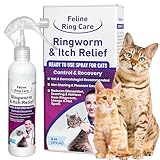
- TOPICAL SOLUTION for Skin Irritants Causing Itching, Hot Spots & Hair Loss Caused by Various Dermatitis Related Issues Including Ringworm, Rashes, Hives, Allergies & Yeast
- HELPS SOOTHE, PROTECT & ALLEVIATE spray directly on skin or wipe on with a cloth to help keep skin strong and healthy
- DERMATOLOGIST & VET RECOMMENDED - Cleans Wounds, Controls Ringworm & Promotes Healing at the Cellular Level
- GENTLE YET EFFECTIVE FORMULA Safe for all breeds and ages, our Feline Ring Care spray is free from harsh chemicals, alcohol, and strong, artificial fragrances, ensuring a soothing application for sensitive skin.
- PROTECT YOUR PET from Surfaces that May Contain Ringworm, Bacteria or Viruses. When In Doubt – Spray with Feline Ring Care
How well itraconazole worked in the studies
The figures below come from the Itrafungol label (Virbac, 2023). They describe study groups under specific conditions, not an individual cat’s predicted chance of cure.
- In a masked, placebo-controlled laboratory study of 80 experimentally infected cats, 24 of 40 treated cats (60%) versus 1 of 40 controls (2.5%) achieved mycological cure, defined as two consecutive negative cultures.
- In the same laboratory study, 98% of treated cats versus 15% of controls had complete resolution of clinical lesions by the end of the study.
- In the same laboratory study, 36 of 40 treated cats (90%) had at least one negative culture by study end.
- In a masked, positive-controlled European field study of 514 cats with dermatophytosis, 175 of the 207 cats treated with itraconazole (83%) were clinically cured four weeks after treatment.
Side effects and safety
What the labeled study recorded
In the label’s effectiveness study, which included 40 treated and 40 control cats, the reactions linked to drug exposure were mainly gastrointestinal. The counts below cover the dosing period. They come from a single study, so they are not general probabilities for every cat.
| Event | Treated cats (n=40) | Control cats (n=40) |
|---|---|---|
| Vomiting | 5 (12.5%) | 4 (10%) |
| Diarrhea | 9 (22.5%) | 7 (17.5%) |
| Transient hypersalivation | 2 (5%) | not stated |
| Mild ALT and AST increases that returned to normal by follow-up | 1 (2.5%) | not stated |
Adverse events reported after approval
The label lists post-approval reports in descending order of reporting frequency:
Best Value

- ITRAFUNGOL oral solution is an easy to administer formulation for treatment of dermatophytosis (ringworm) caused by microsporum canis (fungus) in cats.
- The only FDA - approved flavored liquid treatment for feline dermatophyosis (ringworm)
- Cats are treated during weeks 1, 3, and 5, and left untreated during weeks 2 and 4.
- Use with caution in cats with renal dysfunction or impaired liver function.
- ITRAFUNGOL oral solution is available in a 52 mL 10mg/mL bottle and includes an oral dosing syringe for easy administration.
- Anorexia
- Emesis
- Elevated liver enzymes
- Lethargy
- Weight loss
- Icterus
- Elevated total bilirubin
- Diarrhea
Deaths, including euthanasia, have been reported, and some of these reports involved the events listed above. The label cautions that not all events are reported, and that frequency and causal relationship cannot reliably be estimated from these reports.
Signs to report to your veterinarian promptly
- Loss of appetite
- Repeated vomiting or diarrhea
- Unusual lethargy
- Weight loss
- Yellowing of the eyes or skin
Contact the prescribing veterinarian promptly if any of these appear. The veterinarian will work out whether the medication is involved.
Cats that need extra caution
- Hypersensitivity: the label contraindicates use in cats hypersensitive to itraconazole.
- Pregnancy and lactation: safety has not been established in pregnant cats. Use in a pregnant or nursing cat is a veterinarian’s benefit-risk decision.
- Liver or kidney impairment: the manufacturer’s current safety material advises caution.
- Heart disease: the manufacturer recommends careful monitoring.
- Other medicines: itraconazole inhibits cytochrome P450 enzymes, which may increase or prolong levels of other medicines metabolized through that pathway.
Give the veterinarian a complete list of current medicines before the first dose.
Household care and zoonotic risk
Ringworm: protecting people at home
M. canis dermatophytosis is zoonotic, so people in the household can be affected. The label states that Itrafungol has not been shown to be sporicidal, so the oral medicine does not clean the environment on its own. The label recommends topical and environmental treatment to reduce zoonotic potential, environmental contamination, and disease duration.
What’s actually slowing this PC down?
Pick the symptom - the matching free tool is one click away.
- Wear disposable protective gloves when handling the cat during treatment and when cleaning the dosing syringe.
- Wash hands afterward.
- Remove loose hair and organic debris by vacuuming or wiping, then wash surfaces and disinfect them with a product your veterinarian recommends.
- Use topical products only as your veterinarian directs and according to their labels.
Sporotrichosis: transmission from cat to people
Merck Veterinary Manual describes feline-to-human transmission of sporotrichosis as well documented. It calls for strict hygiene, personal protective equipment, and disinfection of the premises. Anyone who develops a suspicious skin lesion after contact with an infected cat should receive a medical assessment.
Quick Recap
Questions to ask your veterinarian
- Was the diagnosis confirmed by culture, cytology, or both, and was the organism identified?
- Is the product a commercial veterinary liquid or a compounded preparation, and how was the dose set?
- What is the dose in milliliters based on the cat’s current weight, and how will it be given if more than one syringe fill is needed?
- What monitoring is planned, such as liver tests, given the cat’s liver, kidney, and heart status?
- Which of the cat’s current medicines could be affected through the cytochrome P450 pathway?
- How will household cleaning be carried out, and how will cure be checked?
Product prices and availability are accurate as of the date/time indicated and are subject to change. Any price and availability information displayed on Amazon at the time of purchase will apply.




