Amantadine is an off-label adjunct that some veterinarians use for chronic feline pain, most often long-standing pain with a suspected neuropathic component. The published evidence in cats is small, and the doses reported in studies are not instructions for home use. Whether your cat should take it, which formulation to use, how much to give and how to monitor are decisions for your veterinarian. Amantadine also needs particular caution when kidney function is reduced, and an overdose can cause serious illness.
What the feline evidence covers
Three published studies describe amantadine in cats. Each is small and tests a narrow question, so they should be read as separate pieces of evidence rather than as a single body of proof.
| Study | Cats | Design | Dose and timing | Main reported result |
|---|---|---|---|---|
| Pharmacokinetics (Siao, Pypendop, Stanley and Ilkiw, 2011; PubMed) | Six healthy adult female domestic shorthair cats | Oral and intravenous crossover work | 5 mg/kg amantadine hydrochloride (equivalent to 4 mg/kg amantadine base) | Oral terminal half-life 324 ± 41 minutes (range 277–381); oral systemic availability 130 ± 11% (range 86–160%) |
| Osteoarthritis (Shipley et al., 2021; PubMed) | 13 client-owned cats with clinical and radiographic osteoarthritis | Blinded, placebo-controlled randomized crossover; three weeks on each treatment | 5 mg/kg by mouth every 24 hours for three weeks | Owners scored mobility impairment better and a greater proportion reported improved quality of life on amantadine; measured activity was significantly lower (240,537 ± 53,880 versus 326,032 ± 91,759 counts in week three, amantadine versus placebo) |
| Ovariohysterectomy (Universidade Estadual de Santa Cruz team, 2024; PMC) | 20 young, healthy cats, 10 per group | Amantadine versus placebo before surgery | One 5 mg/kg oral dose, given 30 minutes before preanesthetic medication | Rescue analgesia needed in 4/10 amantadine cats versus 8/10 controls; no adverse effects or physiological changes observed |
Dose: what the studies used and why that is not your cat’s dose
Every feline protocol above used 5 mg/kg given by mouth. That figure describes what researchers tested in a controlled setting. It is not a safe amount for a particular cat. Body weight, kidney function, other medications, age and illness all affect what is appropriate, and the healthy cats in the pharmacokinetic study do not represent sick, elderly or kidney-compromised animals.
Formulation is a practical problem as well. The Cats.com veterinary education article by Chris Vanderhoof, DVM, MPH, states that 100 mg human tablets are too large for safe feline dosing, and it describes compounded medication as a common way to achieve more accurate dosing and improve palatability (cats.com/amantadine-for-cats). Splitting or crushing a human tablet at home is therefore not a reasonable way to approximate a study dose.
#1 Best Overall
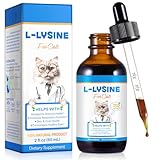
- Supports Immune Health & Overall Wellness – This L-Lysine supplement for cats helps strengthen your cat‘s natural defenses. Enriched with Astragalus and B Vitamins (B1, B2, B6), it supports antibody production and immune system function to keep your feline friend healthy and active every day.
- Promotes Upper Respiratory Comfort – Lysine is widely recommended to help manage common upper respiratory symptoms in cats, including sneezing, nasal congestion, and runny eyes. Our liquid lysine formula supports respiratory function and helps your cat breathe easier.
- Helps Reduce Tear Stains & Supports Eye Health – Regular use of this lysine drops for cats may help minimize excessive tearing and reduce unsightly tear stains. Combined with Vitamin A, it supports healthy eye function and maintains bright, clear eyes.
- Promotes Healthy Skin & Shiny Coat – 100% Natural Formula – This liquid cat supplement is made with all-natural ingredients, free from grain, corn, soy, gluten, and artificial preservatives. Vegetable glycerin base and natural roast chicken flavoring make it easy to administer and highly palatable for even picky eaters.
- Easy-to-Use Liquid Drops for Fast Absorption – No pills or messy powders. Simply add to your cat‘s food bowl, mix with treats, or administer directly orally using the included dropper. Shake well before use. Adjust based on weight: up to 10 lbs use 1 dropper (1 mL); over 10 lbs use 2 droppers (2 mL), 1-2 times daily..
Efficacy by use case
The three studies answer different questions, so their results should not be pooled into one verdict.
Chronic osteoarthritis
In the 13-cat crossover trial, owners gave lower mobility-impairment scores and more owners reported improved quality of life while cats were on amantadine. The same trial found that measured activity was significantly lower during amantadine treatment. The authors suggested amantadine may be an option for symptomatic treatment, but the small sample and the mixed outcome mean the study does not justify promising your cat will move better.
Acute pain around surgery
In the 20-cat ovariohysterectomy trial, multidimensional pain scores were lower in the amantadine group at specified assessment times, while the visual analog scale did not show significant differences. Fewer amantadine-treated cats needed rescue analgesia (4/10 versus 8/10 in controls). The authors called for further work. This is one small trial in young, healthy cats undergoing one procedure, so it does not establish amantadine as a general painkiller for surgery or other acute injuries.
Long-standing neuropathic-type pain
The 2022 WSAVA pain guidelines, published in 2023 in the Journal of Small Animal Practice (doi.org/10.1111/jsap.13566), describe amantadine as an option for long-standing pain syndromes with a neuropathic component. The guideline notes that cats with osteoarthritis had better client-reported pain scores on amantadine but decreased activity when it was used alone. It presents amantadine as one possible component of multimodal care rather than a stand-alone treatment.
The Tool Desk
Outbyte Driver Updater FREEScan for outdated or missing drivers - takes under a minuteDriver Scan →Outbyte PC Repair FREEClear out junk files and repair common Windows errorsFree Scan →Rank #2

- Antibiotics for Cats:Our cat antibiotics are used to improve infections in cats, ranging from ear infections and skin issues to respiratory and urinary tract infections. They help keep your pet healthy.
- Herbal Supplement Drops:100% pure natural ingredients, gentler, safer, and more effective formula Apple Cider Vinegar, Pau D-Arco, Goldenseal, Echinacea, no artificial additives, Non-GMO, Sugar-Free and has a supportive effect.
- Cat Health Supplement:It's in liquid form and can assist in alleviating several common issues, such as skin infections, ear infections, some other cats composition UTIs and more. Regardless of your cat's breed, our supplement is effortlessly digestible and can effectively enhance their overall well-being.
- Antibiotic Cats Supplement:The cat antibiotics may also helps to skin infection relief include itch relief and allergy relief, balanced digestive system of cats, reduce scratching associated with seasonal or environmental sensitivities.
- Easy to Use:The cat supplement is in liquid form and it's quickly enters the circulation and has fast absorption. Easily absorbed liquid formula delivers faster relief. Administer directly or mix with food. Use 1 mL(2/3rds of the dropper full) recommended serving1-3 times per day.
How long before it works?
Published feline studies do not establish how quickly amantadine produces a noticeable effect. The pharmacokinetic work measures how the drug is absorbed and cleared, not when a cat’s pain improves. The surgical trial assessed pain around a single dose given before anesthesia, and the osteoarthritis trial reported owner scores in weeks two and three of each three-week period. Any specific onset time you read elsewhere goes beyond what these studies show, so ask your veterinarian what response to expect and when to reassess.
Side effects
The Cats.com article lists these possible adverse effects:
- Loose stools or diarrhea, which is a gastrointestinal effect.
- Behavioral changes such as agitation or anxiety.
The surgical trial observed no adverse effects in its 10 treated cats, and no feline study located provides a complete adverse-event rate. Absence of reported effects in a small trial does not mean a cat will tolerate the drug, so report any new change in appetite, stool, behavior or activity to your veterinarian.
Independent reader supportYour contribution helps us test, update, and keep practical guides available for everyone.Overdose warning signs
Overdose is a real concern, particularly with human tablets. The same veterinary source describes tremors, ataxia (uncoordinated walking), restlessness, drooling and vomiting as signs of overdose in animals, and it warns that overdose can be serious. Because cats differ widely in size and tolerance, do not treat any human-overdose experience as a measure of how much a cat can safely take.
What’s actually slowing this PC down?
Pick the symptom - the matching free tool is one click away.
Rank #3

- ATOPIC DERMATITIS ITCH RELIEF Specifically formulated to relieve itching, repeated scratching, redness, inflammation, and skin irritation associated with cat atopic dermatitis, delivering long-lasting relief and improved skin comfort.
- SUPPORTS SKIN COMFORT Helps maintain normal skin comfort and supports a healthy skin barrier for daily wellness and long-term care.
- HELPS REDUCE OCCASIONAL SCRATCHING Supports healthy skin condition and helps reduce occasional scratching, rubbing, and excessive grooming associated with everyday skin sensitivity.
- EASY DAILY TABLETS Convenient tablets are easy to administer and fit seamlessly into your cat's daily wellness routine.
- VET RECOMMENDED Recommended by veterinarians for daily nutritional support to help maintain healthy skin, coat condition, and overall comfort.
If you think your cat has received too much amantadine, or it shows any of these signs after a dose:
- Contact your prescribing veterinarian or an animal poison control service right away. Do not wait to see if the signs pass.
- Have the bottle or packaging ready, including the strength, the number of tablets or the volume given, and the time of the dose.
- Do not try home remedies or induce vomiting unless a veterinarian or poison service tells you to.
Kidney function and other safety checks
The WSAVA guideline states that amantadine is excreted by the kidneys and calls for caution in animals with reduced renal function. Before any course, ask your veterinarian whether your cat’s kidney health has been assessed, and tell them about every medication, supplement or compounded product your cat already receives. The published sources do not provide a complete list of feline drug interactions or a detailed monitoring schedule, so those points need to be worked out with your vet for your individual cat.
Questions to take to your veterinarian
- Is amantadine appropriate for my cat’s pain, and is a neuropathic component suspected?
- What formulation do you recommend, and is a compounded product better suited to my cat’s dose and palatability?
- What dose and schedule do you choose for my cat’s weight and kidney function?
- Which changes in stool, behavior, appetite or movement should prompt a call?
- When should we reassess, and what would tell us the medication is not helping?
If your cat resists pills, a pill pocket or flavored treat may help, but it does not suit every cat or every formulation. Ask your veterinarian or compounding pharmacist before using one so the medication is delivered as intended.
Sources: Siao et al., 2011 (PubMed); Shipley et al., 2021 (PubMed); perioperative amantadine study, 2024 (PMC); 2022 WSAVA pain guidelines (DOI); Cats.com, updated April 4, 2026.
Quick Recap
Product prices and availability are accurate as of the date/time indicated and are subject to change. Any price and availability information displayed on Amazon at the time of purchase will apply.




