
Some links on this page are affiliate links: if you buy through them we may earn a commission, at no extra cost to you.
The most reliable way to destress your cat over the holidays is to give them control: provide a quiet retreat stocked with essentials, preserve familiar routines, prevent escape and poisoning hazards, and avoid forcing interaction. If travel is unavoidable, prepare the carrier weeks ahead and ask your veterinarian early about severe anxiety. Pheromone sprays or diffusers may help some cats, but they are optional support rather than a complete plan.
Every cat responds differently. The guidance below is general education based on holiday advice from Cornell University College of Veterinary Medicine and Cats Protection; it is not a diagnosis or a substitute for your cat’s veterinarian.
As an Amazon Associate I earn from qualifying purchases.
Recommended Free Tools
1. Set up a quiet retreat before guests arrive
Choose a peaceful room away from the busiest parts of the home. Put your cat’s food, water, litter box and bed inside, with enough space for the cat to move between them comfortably. Keep the door open if that is safe and let your cat decide whether to stay, explore or return.
A retreat works because it gives your cat an escape route and control over social contact. Do not carry the cat into the room as punishment or shut them away without their normal resources. Check that visitors, children and visiting pets cannot enter unexpectedly.
Popular on Amazon
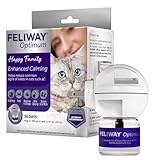
- HELPS REDUCE SIGNS OF STRESS USING A PATENTED PHEROMONE: FELIWAY Optimum is an advanced cat pheromone diffuser that helps reduce signs of stress in cats and helps ease tension between cats.*
- HELPS CATS FEEL CALM IN EVERYDAY SITUATIONS: FELIWAY Optimum is a cat calming diffuser that helps reduce stress‑related behaviors like urine spraying, scratching, hiding, and fearful reactions to change. Cat parents reported noticeable reductions in these behaviors, including a 77% reduction in urine spraying.
- SUPPORTS HARMONY IN MULTI‑CAT HOMES: Helps promote calmer interactions between cats. 72% of cat parents noticed reduced tension between their cats
- SAFE** AND NON-SEDATING: FELIWAY Optimum is not a sedative. It’s safe for use around cats, kittens, people and other pets.
- CONTINUOUS CALMING SUPPORT: This plug‑in cat pheromone diffuser provides 24/7 support when used as directed. To get started, plug into an open outlet with the vents pointed upward, allow at least 4 feet of clearance, and follow the label instructions.
Cornell’s holiday guidance recommends a separate, quiet room with essentials available at the cat’s discretion. Some cats will hide until the house settles. As Pamela Perry, DVM, a senior veterinary behavior resident at Cornell University Hospital for Animals, puts it: “Some like to wait till everyone is settled in before coming out from hiding.”
Make the room genuinely usable
- Place the litter box away from food and water.
- Add a covered bed, open box or other hiding option your cat already uses.
- Keep familiar bedding and normal household scents rather than introducing strongly scented products.
- Provide a scratching surface and a safe perch if your cat normally uses one.
- Tell guests that the room is off-limits unless you invite them in.
- Check the room before closing the door for hazards such as dangling cords, open windows or small objects.
Some cats prefer a retreat with a way to observe the household from a distance, while others settle best where activity cannot be seen or heard. Follow your cat’s established preferences rather than redesigning the space during the busiest part of the holiday. Refresh food, water and litter quietly, and avoid repeatedly checking or coaxing the cat out.
Quick wins for a faster PC:
Repair Windows errors before they cause bigger problemsFix Now →Fix the driver behind crashes, sound loss and screen glitchesFind Drivers →Clear out junk files and repair common Windows errorsFree Scan →2. Keep meals, play and attention on the usual rhythm
Holiday schedules can shift abruptly, but cats often cope better when feeding, litter care and interaction happen at familiar times. Keep meal portions and food types consistent unless your veterinarian has advised otherwise. If you will be busy, put routine care on a written schedule so another person can follow it accurately.
Protect a small daily play period even on crowded days. Cornell’s holiday guidance says that five or ten minutes of play per day “can do the trick.” That is a practical suggestion from Cornell, not a clinical-trial threshold or a guarantee. Use the toys your cat already enjoys and stop if the cat disengages.
Quiet, predictable attention is better than repeated attempts to make a nervous cat socialize. Sit nearby, speak softly and allow the cat to approach. Never drag a hiding cat out to meet guests.
Make the plan easy for every caregiver to follow: note usual meal times, preferred toys, medication instructions, litter-cleaning habits and the signs that mean your cat wants distance. A short play session before guests arrive may fit the normal schedule, but do not use vigorous handling to tire out a frightened cat. Rest, access to essentials and choice are more important than getting a particular response.
The Tool Desk
Outbyte PC Repair FREERepair Windows errors before they cause bigger problemsFix Now →Outbyte Driver Updater FREEFix the driver behind crashes, sound loss and screen glitchesFind Drivers →3. Manage doors, visitors and unfamiliar animals
Exterior doors are a major escape point when people arrive, leave coats or carry packages. Before the first guest comes, put your cat in the retreat or another secure room. Use a visible reminder on the door, and ask guests to close it fully every time.
Update your cat’s microchip registration and identification details before the holiday period. If your cat slips out, current contact information improves the chance of a prompt reunion. Confirm that the chip details are registered to a current phone number and address, and check that any collar identification is still legible and secure.
Unfamiliar people and pets can be stressful. Arrange introductions only if your cat chooses to approach. Keep visiting dogs and other animals separated from the cat’s food, litter and resting areas, and provide a route to retreat without being cornered.
Ask guests not to stare at, pick up or follow a hiding cat. Children need especially clear instructions: a cat’s retreat is not a playroom, and hissing or swatting means the cat needs more space. If a visitor brings a pet, use physical separation rather than relying on a quick introduction. Keep the cat’s normal routes between resting, eating and toileting areas open and free of bags or gifts.
4. Cat-proof decorations, cords and flames
Holiday objects can be attractive toys but dangerous if chewed or swallowed. Secure the tree so it cannot topple, and inspect the area daily for fallen pieces.
| Hazard | Why it matters | Safer action |
|---|---|---|
| Tinsel, ribbon and string | Swallowing can cause life-threatening intestinal injury. | Keep them inaccessible; remove loose strands immediately. |
| Electrical cords, lights and small bulbs | Chewing can cause electrical injury or swallowing problems. | Route and cover cords, and unplug damaged or unattended decorations. |
| Candles and open flames | A cat can be burned or knock a flame over. | Use barriers and never leave a cat near an unattended flame. |
| Essential oils and concentrated scents | Ingestion can injure the mouth, tongue and esophagus. | Do not use scent-based deterrents casually around cats; store oils securely. |
| Tree water, ornaments and small parts | Contamination, breakage or swallowing may cause illness or injury. | Block access and remove broken pieces promptly. |
Gretchen Schoeffler, DVM, Section Chief of Emergency Medicine and Critical Care Services at Cornell University College of Veterinary Medicine, warns: “If cats do ingest essential oils, the oils can cause significant chemical burns to the mouth, tongue and esophagus.”
Secure cords before guests arrive rather than waiting to see whether your cat shows interest. Choose sturdy, non-breakable decorations where possible, and keep packaging, ornament hooks and gift-wrap scraps off the floor. A cat that normally ignores decorations may investigate when furniture, smells and people change, so supervision and daily checks still matter.
5. Prevent food and plant poisoning
Keep holiday meals, rubbish and serving plates out of reach. Cornell advises avoiding human food generally for cats; onions and garlic are toxic, and poultry bones can obstruct the gastrointestinal tract. Do not let guests share leftovers without checking with you first.
Free tools Windows power users keep installed
One-click scans. No signup required.
Also popular on Amazon

- Help Your Cat Feel Safe Again: Create a calmer, more comfortable home with advanced calming pheromone technology that helps reduce common signs of stress including hiding, scratching, urine spraying, conflicts between cats, and nervous behavior. Ideal for everyday emotional support
- Continuous 120-Days Comfort: Each refill delivers calming support for up to 30 days when used continuously, package include: 2 diffusers, 4 refills. Designed to cover rooms up to approximately 750 sq ft, making it perfect for bedrooms, living rooms, and multi-cat households
- Supports Positive Everyday Behavior: Whether introducing a new pet, moving into a new home, welcoming visitors, or dealing with loud noises such as fireworks or thunderstorms, the diffuser helps cats feel more secure and adapt to changes more comfortably
- Easy Plug-In, No Daily Effort: Simply plug the diffuser into an open wall outlet and let it work around the clock. No sprays, no pills, no complicated routines—continuous calming support with minimal maintenance
- Trusted Care for Cats of Every Age: Suitable for kittens, adult cats, senior cats, and multi-cat families. Designed to support a peaceful home environment while helping strengthen the bond between cats and their owners
Lilies are highly toxic to cats. Cornell also identifies mistletoe and holly as holiday hazards. Choose cat-safe decorations instead, and remove fallen leaves or berries immediately.
If you suspect your cat swallowed a dangerous item, contact a veterinarian promptly. Seek urgent advice if the cat is vomiting repeatedly, having trouble breathing, collapsing, showing pain, or simply “not acting right.” Do not induce vomiting or give a home remedy unless a veterinary professional instructs you.
Tell every person who feeds the cat what is and is not allowed, including children and overnight visitors. Keep rubbish in a closed container, and do not assume that a small amount of a leftover is harmless. Save packaging or a photograph of a suspected plant or product for the veterinarian if an exposure occurs, while seeking advice without delay.
6. Decide whether home care is less stressful than travel
For many cats, staying in their own territory with reliable care is calmer than a journey and a new environment. Cats Protection says most cats would prefer not to travel, and a trip can be stressful even when a cat does not display obvious distress.
Compare the actual options for your individual cat rather than assuming that boarding or travel is automatically better.
| Option | Potential advantages | Questions to answer first |
|---|---|---|
| Stay at home with a sitter | Familiar territory, scents, litter setup and hiding places. | Can a trusted person visit at least twice daily, provide food and water, clean litter, give prescribed medication and notice illness? |
| Boarding or a cattery | Professional oversight and a controlled environment. | Has your cat previously found boarding stressful? Is the facility able to provide suitable space, quiet and veterinary support? |
| Travel with you | Keeps the cat with the household when another arrangement is unsuitable. | Is the destination secure, is there appropriate space and veterinary care, and can you manage the journey safely? |
Cats Protection’s holiday-care guidance suggests a trusted friend, neighbour or family member visit at least twice daily when a cat stays home. Leave sufficient food, litter, cleaning supplies, written instructions, emergency contacts and any medication. Cornell advises considering boarding only when boarding itself is not a source of stress.
Twice-daily visits should be real welfare checks, not simply dropping food at the door. The sitter should confirm that the cat is eating and drinking normally, using the litter box, safe indoors and receiving any prescribed medication. Provide a backup contact and the name and number of the cat’s veterinarian. If your cat needs care that a sitter cannot reliably provide, discuss alternatives early rather than changing arrangements at the last minute.
7. Prepare the carrier well before an unavoidable journey
A carrier should be secure, well ventilated, easy to clean and large enough for the cat to turn around and lie down. The best carrier is not defined by a particular shape or brand; fit, ventilation, security and your cat’s familiarity matter more.
What’s actually slowing this PC down?
Pick the symptom - the matching free tool is one click away.
- Introduce it early. Put the carrier in a room your cat uses several weeks before departure. Leave the door open and allow investigation without pushing the cat inside.
- Build positive associations. Place familiar, unwashed bedding or a piece of your clothing inside. Offer treats or play nearby if your cat is comfortable, but never force entry.
- Practice in stages. Once the cat enters voluntarily, briefly close the door, reopen it and gradually extend the time. Later, lift the carrier for a short period and take brief practice trips if the cat tolerates them.
- Check the equipment. Test latches, ventilation openings and the base. Line the carrier with absorbent material and bring a spare layer for accidents.
- Secure the journey. Keep the carrier closed and stable in the vehicle; do not allow the cat to ride loose. Keep temperature and airflow comfortable.
Cats Protection recommends familiarizing the cat with the carrier and using familiar scents. If you choose a pheromone spray for the carrier, its guidance says to spray at least 15 minutes before the cat enters, then allow the carrier to air. A spray is optional and should not replace carrier training or safe transport.
Do not wait until departure morning to discover that a latch sticks or the carrier is too small. Check that bedding does not block ventilation and that the carrier can be lifted without the door opening. At the destination, place the closed carrier in a secure room before opening it; ensure doors and windows are managed so the cat cannot escape while adjusting to unfamiliar surroundings.
8. Use pheromone products as an optional adjunct
Synthetic feline pheromones are sold as sprays, wipes and diffusers. Cats Protection notes that some owners notice a change within days while others notice one later, and individual responses vary. No reliable success rate applies to every cat.
Choose the format that fits the situation: a diffuser for a room, or a spray or wipe for a carrier or specific surface. Follow the product label and avoid spraying directly on the cat. Keep the retreat, routine, safe handling and veterinary plan in place whether or not you use a pheromone product.
Crashes, No Sound, or Screen Glitches?
Random freezes, missing sound and display glitches usually trace back to one bad driver. Find and replace yours safely.Free scan · under a minutePC Slower Than It Used to Be?
A free scan shows the junk files, broken settings and background clutter dragging Windows down - then fixes them in one click.Free scan · Windows 10 & 11Do not present pheromones as a cure, a guarantee against anxiety or a substitute for removing the stressor. If your cat remains intensely fearful, stops eating, develops toileting changes or cannot settle, contact the veterinarian rather than adding more products.
A diffuser may be practical in the room where the cat spends time, while a spray or wipe can be limited to a carrier or another specific surface. Product format does not remove the need for ventilation, safe storage and label directions. If there is no noticeable improvement, discontinue the assumption that more product will solve the problem and reassess noise, access, routine and medical support.
Also popular on Amazon

- SPECIFICALLY DESIGNED FOR MULTI-CAT HOMES: FELIWAY MultiCat is a cat calming diffuser that helps reduce tension between cats, including conflict, fighting, chasing, and blocking, supporting a calm home for cats living together
- HELPS CATS GET ALONG BETTER: This cat pheromone diffuser promotes calm interactions and helps ease ongoing tension, supporting more peaceful relationships in multi-cat households
- HELPS REDUCE TENSION BETWEEN CATS: 84% of cat parents noticed improvement in tension and conflict between their cats when using FELIWAY MultiCat
- SAFE* AND NON-SEDATING: FELIWAY MultiCat is not a sedative. It is safe for use around cats, kittens, people and other pets.
- CONTINUOUS CALMING SUPPORT FOR SHARED SPACES: Plug-in cat pheromone diffuser provides 24/7 calming support. To get started, plug into an open outlet with vents pointed upward and allow 4+ ft of clearance, and follow the label instructions.
9. Get veterinary help for significant or persistent anxiety
Contact your cat’s veterinarian early if your cat has a history of severe travel distress, panicked escape attempts, prolonged hiding, aggression associated with fear, or a holiday situation you cannot make predictable. Early planning leaves time to discuss handling, travel and monitoring.
Cornell advises discussing anti-anxiety medication with a veterinarian when indicated. Do not give human medication, use another pet’s prescription or start a drug without your cat’s veterinarian directing you. The veterinarian can decide whether medication is appropriate and explain how it should be administered and monitored.
Call sooner rather than later if anxiety is paired with a medical concern, such as refusal to eat or drink, repeated vomiting, breathing difficulty, marked lethargy or trouble urinating. A cat may hide illness as well as fear, so a sudden or persistent change should not be written off as holiday stress. Have the veterinarian’s holiday and emergency contact details available to every caregiver.
A practical holiday timeline
Several weeks before
- Choose and furnish the quiet retreat.
- Update microchip and identification details.
- Decide between home care, boarding and travel.
- Begin open-carrier familiarization if travel may occur.
- Contact the veterinarian if anxiety is severe or medication may be needed.
- Tell guests and children in advance how to respect the cat’s retreat.
One to two days before guests or departure
- Check doors, screens, cords, decorations, plants and food storage.
- Confirm the sitter, boarding reservation or destination veterinary information.
- Prepare written care instructions and supplies.
- Wash neither the cat’s familiar bedding nor the carrier liner unless soiled; familiar scent is useful.
- Test carrier latches, pack spare bedding and confirm the cat can turn around and lie down inside.
On the day
- Feed and play at the usual times when possible.
- Move the cat to the retreat before guests arrive or before loading the carrier.
- Keep the retreat door and exterior doors managed deliberately.
- Observe appetite, litter use, breathing and behaviour without repeatedly disturbing the cat.
- Keep emergency contacts, medication instructions and the veterinarian’s number accessible.
Signs the plan needs adjusting
Hiding by itself can be a normal coping choice, especially during a busy gathering. Concern rises when fear is intense, prolonged or accompanied by physical or behavioural changes. Contact your veterinarian for persistent refusal to eat or drink, repeated vomiting or diarrhoea, breathing difficulty, injury, straining to urinate, sudden aggression, marked lethargy or any suspected toxin exposure.
Review the environment first: reduce noise, restore the normal routine, increase distance from guests or animals, and make sure food, water and litter are easy to reach. Never punish hiding, hissing or other fear signals. These behaviours communicate that the cat needs more space.
Reassess after each change rather than making many changes at once. If moving the retreat farther from the party helps, keep that arrangement. If a sitter reports that the cat is not eating, using the litter box or acting normally, contact the veterinarian instead of waiting for the holiday to end. A quiet cat is not automatically a comfortable cat, so combine observation with access to essentials and timely professional advice.
Do these 3 things before closing this tab:
1Fix the driver behind crashes, sound loss and screen glitches2Repair Windows errors before they cause bigger problems3Scan for outdated or missing drivers - takes under a minuteFrequently Asked Questions
How can I keep my cat calm when guests visit?
Set up a quiet retreat with food, water, litter and bedding before guests arrive. Let your cat choose whether to hide or approach, keep doors secure, and never force introductions. Ask children and visitors not to enter the retreat or follow the cat.
Should I travel with my cat over the holidays?
Not automatically. Cats Protection says most cats would prefer not to travel. Compare the stress of a journey and new location with reliable twice-daily home care or a suitable boarding facility for your individual cat.
Do cat pheromone diffusers work?
Some cats may respond, and timing varies. Treat a diffuser, spray or wipe as optional support; it should not replace a quiet retreat, routine, safe handling or veterinary advice.
How long before travel should I introduce the carrier?
Start several weeks ahead when possible. Leave it open and accessible, add familiar bedding, and build from voluntary entry to brief door-closing and handling sessions.
What should go in my cat’s holiday safe room?
Provide the cat’s usual food and water, a litter box placed away from them, familiar bedding, a hiding option and any normally used scratching or perching surface. Keep the room quiet and prevent unexpected entry.
Is hiding during a holiday gathering always a problem?
No. Hiding can be a normal choice when the home is busy. Do not pull the cat out. Seek veterinary advice if hiding is prolonged or accompanied by refusal to eat or drink, illness signs, injury or other marked changes.
How often should someone visit my cat if I leave them at home?
Cats Protection suggests that a trusted friend, neighbour or family member visit at least twice daily to feed and check the cat. Leave supplies, written instructions, medication details and emergency contacts.
What holiday items are especially dangerous to cats?
Tinsel, ribbon and string can cause life-threatening intestinal injury if swallowed. Electrical cords, candles, essential oils, lilies, mistletoe, holly, onions, garlic and poultry bones also present serious hazards. Keep them inaccessible and contact a veterinarian promptly after suspected ingestion.
Do these 3 things before closing this tab:
1Clear out junk files and repair common Windows errors2Scan for outdated or missing drivers - takes under a minute3Repair Windows errors before they cause bigger problemsThe Bottom Line
Make the holiday smaller and more predictable from your cat’s point of view: provide a quiet retreat, keep familiar routines, secure doors and decorations, and never force social contact. If travel is unavoidable, use a well-fitted carrier that your cat has explored in advance. Treat pheromones as optional support, and involve your veterinarian early for severe, persistent or medically concerning anxiety.





Leave a Reply