
The Tool Desk
Outbyte Driver Updater FREEScan for outdated or missing drivers - takes under a minuteDriver Scan →Outbyte PC Repair FREERepair Windows errors before they cause bigger problemsFix Now →For most domestic trips, the best budget strategy is to compare the total cost and flexibility of driving, rail, and flying—not just the advertised fare. Driving is often the most adaptable choice, Amtrak can work for small pets on eligible short routes, and flying should be booked only after the airline, carrier, health-document, and destination rules are confirmed.
The cheapest pet trip is the one with the lowest total cost—not necessarily the lowest ticket price
For many domestic trips, driving is the most flexible budget option because you control the route, stops, luggage, and schedule. A short regional train journey can work well for a small dog or cat, while flying is usually the most restrictive choice: airline pet fees, carrier rules, health paperwork, ground transportation, and last-minute changes can quickly erase a low fare.
As an Amazon Associate I earn from qualifying purchases.
Before booking, compare the complete itinerary:
- Transportation fare, pet fee, reservation, or carrier charge
- Fuel, tolls, parking, and extra overnight stops
- Pet-friendly lodging fees, deposits, and cleaning charges
- Carrier, vehicle restraint, bowls, food storage, and other equipment
- Veterinary visits, vaccinations, certificates, tests, permits, and treatments
- Backup money for delays, route changes, emergency lodging, or veterinary care
A useful rule is to choose the option that is affordable and adaptable. A slightly more expensive plan may be the better bargain if it avoids a nonrefundable booking, an unsuitable hotel, or a pet-health problem far from home.
Quick wins for a faster PC:
Scan for outdated or missing drivers - takes under a minuteDriver Scan →Repair Windows errors before they cause bigger problemsFix Now →Fix the driver behind crashes, sound loss and screen glitchesFind Drivers →Choose transportation by pet, distance, and total cost
| Option | Usually works best for | Main budget advantages | Important limitations |
|---|---|---|---|
| Driving | Most domestic trips, especially with a medium or large dog or several travelers | Flexible stops and route; no airline pet fee per flight segment; easier to carry food and supplies | Fuel, tolls, parking, extra travel time, and pet-friendly overnight lodging can add up |
| Amtrak | Short eligible regional trips with a small dog or cat | May avoid driving and parking costs; pet rules are clear when the route qualifies | Pet and carrier must weigh 20 pounds or less; most pet trips are limited to seven hours; route exclusions apply |
| Flying | Long distances where driving is impractical and the airline confirms the pet’s eligibility | Can reduce travel time for the human traveler | Fees, carrier dimensions, seating restrictions, health documents, weather rules, and cargo limitations vary by airline |
There is no universal answer to whether driving, rail, or flying is cheapest. For example, a long drive may lose its advantage once fuel, tolls, an additional hotel night, and extra vacation days are included. On the other hand, a flight that looks inexpensive may require a pet fee in each direction, a new carrier, a veterinary visit, airport parking, and a costly rental car.
#1 Best Overall
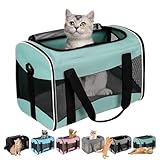
- [PRODUCT DIMENSIONS] Pet travel carrier size : 17x11x11 inches, recommended up to 15 lb pets, it is suitable for large, medium cats and small dogs. Please don't choose your airline cat carrying case based on weight, please refer to your pet's length and height when choosing a pet carrier size.
- [AIRLINE APPROVED] This cat carrier is designed with airline approved, it can fit comfortably under most flight seats, we can take our pets wherever we want. Dog travel carrier offers two attachment loop handles that can be used as a dual harness or as a luggage strap for balanced carry and secure transport.
- [EXCELLENT MATERIAL] Collapsible cat carrier is made of polyester fabric, supported by a steel ring, washable, wear-resistant and durable. The three sides and the top of this pet carrier are nylon mesh, scratch-resistant and not easy to damage, it can not only check your pet in real time, but also ensure enough air circulation.
- [SAFE AND COMFORTABLE] Dog travel bag has metal zippers on the top and side entrances, durable and not easy to deform, it allows your pets to enter and exit easily. The cat carrying case is equipped with an anti-escape safety buckle, which can effectively prevent pets from accidentally falling. It is suitable for car rides and vet rides.
- [PORTABLE AND FOLDABLE] Pet travel carrier comes with a detachable and hand washable wool pet bed, it can provide a comfortable sleeping space for your traveling pet. The cat travel case comes with an adjustable shoulder strap and handle for easy portability. When not in use, you can fold it up for storage.
1. Driving: the most adaptable option for many domestic trips
Driving lets you plan around your pet’s bathroom schedule, anxiety level, feeding routine, and exercise needs. It is often the simplest choice for a large dog or for a group sharing one vehicle, although that is a comparison principle rather than a guaranteed price result.
Make the car trip safe before trying to save money
Do not let a pet ride loose in the vehicle or ride with its head outside the window. A dog should travel in a properly fitted back-seat harness attached to a seat buckle or in a properly sized, ventilated crate that cannot slide. A crate should allow the animal to stand, sit, lie down, and turn around.
If your dog is not comfortable in the car, follow the CDC’s advice to acclimate it gradually with a series of short drives before the main journey. Begin with calm, brief trips and increase the duration only if the pet is coping well. A dog car seat-belt harness can be useful for dogs that are safer in a harness than in a crate, but it must be correctly fitted and attached as directed; it is not a substitute for supervising the animal’s comfort.
Recommended Free Tools
Plan frequent stops for bathroom breaks and stretching. Keep the leash on before opening a car door, and check the collar or harness fit at every stop. Never allow a pet to wait alone in a parked vehicle. Temperatures can become dangerous within minutes, even when the windows are cracked or the weather initially feels mild. Saving the cost of a short errand is not worth the risk.
Driving costs to include
- Fuel based on the full route, including detours and local driving at the destination
- Tolls and parking
- One or more additional hotel nights if the route cannot be completed comfortably in a day
- Pet fees, deposits, and cleaning charges at overnight lodging
- Food, water, medication, waste bags, and replacement supplies
- Possible grooming or veterinary costs during a long trip
For a road trip, the cheapest itinerary is not always the shortest. A route with a free pet-friendly overnight stop, reliable rest areas, and fewer tolls may cost less overall than a faster route that requires an expensive hotel and parking.
2. Amtrak: a narrow but useful option for small pets
Amtrak permits small dogs and cats on most eligible services when they travel with a human in a closed, leak-proof, well-ventilated carrier. The combined weight of the pet and carrier must be no more than 20 pounds, and the carrier may be no larger than 19 by 14 by 10.5 inches. Reservations are required, and pet travel is generally limited to trips of seven hours or less, including transfer time.
Check the exact route and accommodations on Amtrak’s pet policy page before buying a ticket. Some services and accommodations are excluded. Pets cannot travel as checked baggage or be shipped separately, so Amtrak is not a practical substitute for a long-distance flight or a cross-country trip with a large dog.
Pet fees vary by route and are displayed during booking. Do not build a budget around a universal Amtrak pet fee. Reserve the pet space early, because the number of pets accepted on a train may be limited. Measure the carrier and weigh the pet and carrier together before booking rather than discovering a problem at the station.
Rank #2

- Airline Compatible. A Delta airline approved dog carrier and Delta airline approved cat carrier. TSA approved pet carrier gets you onboard hassle-free, meeting airline rules so you can focus on making memories instead of worrying about gate rejections
- Under Seat Small Pet Carrier. Patented spring wireframe compresses to slide securely under airline seats, giving your dog or cat a cozy window view while you keep the travel carrier close during takeoff and landing for ultimate peace of mind
- Escape Proof Dog Travel Bag. Locking zippers and reinforced mesh panels keep curious cats and dogs safely inside while providing airflow, so your adventurous pet companion stays secure and comfortable throughout the journey. A great puppy carrier too!
- Right Sizing. Accommodates pets up to 16 pounds and 16 inches long with room to stretch and turn around, ensuring your buddy travels in comfort rather than feeling cramped into a dog travel bag during those long airport waits
- A Small Pet Carrier That Is Travel Ready. Built-in seat belt strap doubles as a luggage handle for easy maneuvering through crowded terminals. Trust Sherpa, a leader in dog carriers for small dogs and cat carriers
For an eligible short trip, a pet travel carrier needs to meet more than a size requirement: it should be secure, ventilated, leak-resistant, and comfortable enough for the entire journey. Use the same carrier for practice at home so the pet is not encountering unfamiliar equipment on travel day.
3. Flying: verify everything before paying for the ticket
Airline pet policies differ substantially. An airline may permit a pet in the cabin, in the cargo hold, or not at all on a particular route. Cabin travel can depend on carrier dimensions, the pet’s size and age, breed, behavior, seating location, aircraft, and weather. Airlines may also limit the number of pets per flight.
Check the airline’s pet policy immediately before booking and again before departure. Confirm all of the following:
- Whether the airline accepts your species, breed, age, and size
- Whether the pet can travel in the cabin or must travel as cargo
- The exact under-seat carrier dimensions for your aircraft and seat
- The pet fee and whether it applies per direction or segment
- Whether a health certificate or other veterinary record is required
- Whether your chosen seat is compatible with an under-seat carrier
- Weather restrictions, embargoes, connection rules, and seasonal limitations
- Check-in timing and any airport-specific procedures
Some airlines require a certified health record issued within 10 days of travel, but that is not a universal airline rule. The airline, destination, and type of travel determine what is needed. A veterinary visit that is not required for one itinerary may be essential for another.
When flying, the CDC recommends booking a direct flight when possible, checking vaccination and destination requirements, and using an appropriately sized USDA-approved shipping crate when cargo transport is unavoidable. A pet traveling in the cabin must remain secured in its carrier below the seat. Never place a pet in an overhead bin.
Do not assume a pet qualifies as a service animal. Under U.S. Department of Transportation guidance, a service animal is a dog individually trained to perform work or tasks for a qualified person with a disability. Emotional-support, comfort, companionship, and service animals in training are not service animals under that DOT definition and may be treated as pets by the airline. See the DOT service-animal guidance before relying on an accommodation.
Avoid sedating a pet for air travel unless a veterinarian specifically advises it. Discuss the risks and alternatives with your veterinarian well in advance. Direct flights, a secure kennel, and gradual carrier training are safer planning tools than attempting to chemically manage travel anxiety at the last minute.
Free tools Windows power users keep installed
One-click scans. No signup required.
Build a realistic pet-travel budget
Use this worksheet for every transportation option. Enter the actual cost for your route rather than relying on a typical price found online.
Rank #3

- FITS ON OR UNDER SEATS: Our patented spring wire frame allows the rear end of the carrier to be pushed down several inches, easily fitting in cars and conforming to under-seat requirements of domestic rail travel
- PERFECT FOR TRAVEL: Features mesh panels for ventilation, escape-proof locking zippers, top and side entries for easy and comfortable loading, waterproof interior base, and a removable machine washable cozy base liner
- VERSATILE DESIGN: Can be carried by hand with the padded top handle, or over the shoulder using the included detachable carrying strap and integrated metal D-rings - whichever suits your comfort and convenience
- MULTIFUNCTIONAL: The pet carrier can also be used a soft-sided crate for regular outings and vet visits with cats and small dogs; includes a large storage pocket, and a luggage strap that doubles as a seatbelt security pass-through for car rides
- PRODUCT DETAILS: Black, Large, 19" x 11.75" x 11.5"; fits pets up to 22 pounds
| Budget line | Questions to answer |
|---|---|
| Transportation | What is the fare, pet fee, reservation charge, or cargo charge? Is the fee charged per direction, segment, or pet? |
| Road expenses | What will fuel, tolls, parking, and local driving cost? Will you need an additional overnight stop? |
| Lodging | Are there pet fees, refundable deposits, cleaning charges, weight limits, or restrictions on leaving the pet alone? |
| Equipment | Do you already have a compliant carrier, crate, vehicle restraint, bowls, leash, food container, and waste supplies? |
| Health and documents | Will you need a veterinary examination, health certificate, vaccination, test, treatment, permit, or official endorsement? |
| Food and medication | Can you bring enough of the pet’s usual food and medication for the entire trip plus delays? |
| Contingency | What happens if the vehicle breaks down, a flight is canceled, the host refuses the pet, or an emergency clinic is needed? |
Then calculate the total for the complete itinerary, including the return journey if it is part of the same trip. Compare that number with the value of flexibility. A refundable room, a backup hotel, or a direct route may cost more up front but protect you from a much larger last-minute expense.
Choose lodging by total price and actual pet rules
“Pet-friendly” does not mean unrestricted. A property may accept one small dog but reject cats, multiple pets, large breeds, puppies, or animals left alone in a room. It may also prohibit pets on beds and sofas, require crating, restrict access to shared spaces, or charge a cleaning fee.
When using a pet-friendly vacation rental search, treat the filter as a starting point, not proof that the booking is approved. Airbnb’s official guidance says guests should read the House Rules and contact the host to confirm the number and type of pets and restrictions such as pets being prohibited on beds or sofas.
Windows Errors? Fix Them Before They Spread
Repair common Windows errors and clear accumulated junk for a smoother, more stable PC - no reinstall needed.Free scan · no reinstallOutdated Drivers Are Slowing You Down
One free scan finds every outdated or missing driver and matches the right update for your exact hardware.Free scan · exact hardware matchBefore booking, confirm in writing when possible:
- Whether dogs, cats, multiple pets, or your particular animal are accepted
- Pet fees, deposits, cleaning charges, weight limits, breed restrictions, and vaccination requirements
- Whether the pet may be left alone in the room or rental, and whether a crate is required
- Where the pet can relieve itself safely
- Rules for furniture, yards, balconies, pools, elevators, and shared spaces
- Cancellation terms if the host changes the policy or declines the animal
Compare the lodging total after every pet charge. A property with a higher nightly rate but no pet fee may cost less than a cheaper-looking property with a large surcharge. Also check whether the property’s location creates extra transportation costs: a remote rental may be inexpensive but require long drives to food, veterinary care, parks, or public transportation.
Plan outdoor stops around rules—not assumptions
Many national parks permit pets in some developed areas, but rules differ by park. Dogs may be allowed in campgrounds, parking areas, roads, or specific paved paths while prohibited on most trails. Check the individual park’s current website before committing to a route. The National Park Service pet guidance is a starting point, not a substitute for the specific park’s rules.
The NPS B.A.R.K. Ranger principles provide a practical standard:
- Bag your pet’s waste.
- Always leash your pet.
- Respect wildlife.
- Know where you can go.
Do not advertise a named park as dog-friendly without checking its current pet page. A budget itinerary can instead combine pet-accessible developed areas with nearby national forests, state parks, campgrounds, or dog-friendly town trails—but each alternative must be verified separately. If a park’s restrictions make the main attraction inaccessible, factor in the cost of an alternative activity before booking lodging nearby.
Handle health documents before the trip
Domestic interstate travel
For travel between U.S. states and territories, the receiving state or territory sets the entry requirements. Depending on the destination and animal, requirements may include a health certificate, current vaccinations, diagnostic testing, or specific treatments.
Rank #4

- High Quality Design:Sturdy steel cage structure and wooden support board maintain good spatial stability and shape. Breathable mesh windows on four sides,which can ensure good air circulation and views,make pets have a comfortable and safe travel.It can also be easy for you to check on your pets.There is a front pocket to store pet toys,treats,etc.
- Dimension and Weight:Made of durable tear-resistant fabric.Four easy entrances for pets. Dimensions: 17 inch x 11 inch x 11 inch (L*W*H), suitable for pets up to 16 lbs.Please don't choose your carrier based on weight only,consider your pet's length and height when choosing a carrier.
- Airline Approved & Safty:Can be placed under the seats of most airplanes(Four non-slip feet on the bottom to prevent movement), and comfortably on the seat next to you in a car or bus.It has a adjustable shoulder strap.Can also be fastened to the car seat with a safety belt or shoulder strap to keep your pet safe.
- Easy to Clean :You can clean the stains and dirt on the surface with a soft cloth.Soft mat inside the pet carrier is removable and washable.You can take it out and wash it easily to solve all stains.
- Easy to Collapsible & Lightweight:When not in use,fold it into a flat,space saving and easy to store.Only 2.2lbs,it's easier to carry around.It can also used as a toy of pet house,allowing pets to play in a safe space to relax and rest.
Check the destination’s animal-health authority through USDA APHIS state-to-state guidance and ask your veterinarian about anything unclear. Do this before the cancellation deadline for transportation and lodging. A document issued too late, missing a required test, or using the wrong destination format can create an avoidable emergency.
International travel
The destination country determines its own entry rules. Requirements can include:
- Microchip identification
- Rabies and other vaccinations
- Blood tests or other diagnostic tests
- Parasite treatments
- An import permit
- A country-specific health certificate
- USDA APHIS endorsement
Start with USDA APHIS international pet-travel guidance and the destination government’s requirements, then consult a USDA-accredited veterinarian. The process can take weeks or months, and requirements can change frequently, so verify them every time rather than relying on paperwork from a previous trip.
There is no universal U.S. pet passport that replaces destination-specific requirements. Each country establishes its own rules, and a health certificate accepted by one country may not satisfy another. Do not book nonrefundable international travel until you understand the documentation timeline, airline rules, and requirements for bringing the animal back to the United States.
For any trip, microchip your pet if appropriate, keep the registration information current, maintain required vaccinations, and carry proof of rabies vaccination. Travelers returning to the United States must also meet applicable U.S. import requirements; check the current CDC rules for the animal and country involved.
Independent reader supportYour contribution helps us test, update, and keep practical guides available for everyone.Pack the supplies that prevent expensive purchases
Bringing familiar supplies is often cheaper and less stressful than replacing them at a highway stop, airport, or tourist destination. Pack:
- Food for the trip plus a delay buffer, stored in a sealed container
- Water and a collapsible pet travel bowl
- Leash, collar or harness, identification tag, and spare leash
- Carrier, crate, or vehicle restraint appropriate for the mode of travel
- Waste bags, paper towels, cleaning supplies, and a towel
- Medication, parasite prevention, and the normal dosing instructions
- Vaccination records, rabies proof, health certificates, permits, and copies of documents
- Recent photos and microchip information
- Comfort items such as a familiar blanket or toy
- Basic grooming supplies and a small amount of first-aid equipment
Keep documents and medication in your carry-on or another accessible bag, not in checked luggage. Label the carrier with your name, phone number, destination, and an emergency contact. For international travel, keep paper and digital copies of every document, but do not assume a digital copy is accepted in place of an original.
What’s actually slowing this PC down?
Pick the symptom - the matching free tool is one click away.
Prepare for emergencies instead of treating them as unlikely
Set aside a backup fund before leaving. A delayed flight may require a hotel, a canceled train may require a car, and a vehicle breakdown may require pet-friendly transportation or lodging. Know where the nearest emergency veterinary hospital is at the destination and along an especially long driving route.
Best Value
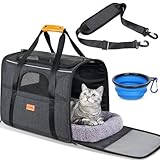
- 【 Spacious & Comfortable Cat Carrier 】The large cat carrier provides ample space for your feline friend to move, turn, and stretch during travel. Measuring 17.3 x 12.2 x 13.4 inches, it is wider and taller than most cat carriers, ensuring your pet feels comfortable and at ease while on the go.
- 【Balanced Mesh Design】Unlike other cat carrier hard, our cat carrier soft strikes the perfect balance with 40% mesh surface area. This ensures your pet can observe the surroundings and breathe easily while feeling safe and secure at the same time. The cat carrier large is suitable for pets in all kinds of situations.
- 【Built-in Dual-Sided Cushion】The detachable pad offers two distinct comforts: a cool side for summer and a super-soft, warm side for winter. You can easily flip it to match the season, providing the perfect temperature for your pet in any weather.
- 【Includes Foldable Bowl】Designed for on-the-go use, our foldable bowl carries 410g of food or 20oz of water. After use, simply collapse it and attach it directly to your pet's collar or leash, perfect for keeping your pet fueled and hydrated anywhere.
- 【Safe & Durable】Safety is our top priority, and the pet carrier for cat is equipped with a secure buckle to prevent your pet from escaping. The cat carrier soft is made of reinforced snow silk fabric and hard mesh material, ensuring durability and preventing any tearing during long-distance travel.
The CDC recommends carrying your veterinarian’s contact information, a poison-control resource, and the contact details for a 24-hour emergency veterinary hospital near the destination. A pet first-aid kit can help with minor problems such as a small scrape, but it is not a replacement for veterinary care. Do not give a pet human medication or attempt treatment beyond your veterinarian’s instructions.
During a delay, keep the pet secured, hydrated, and away from unfamiliar animals when possible. Do not sacrifice safe restraint, temperature control, or required veterinary care to protect the original budget.
Four low-cost trip patterns that work
Short regional trip with a small dog or cat
Compare driving with Amtrak. Amtrak may be attractive if the route is eligible, the combined pet-and-carrier weight is 20 pounds or less, and the journey—including transfers—is no more than seven hours. Reserve the pet space early and verify exclusions, carrier dimensions, and the fee shown for the exact itinerary.
Do these 3 things before closing this tab:
1Scan for outdated or missing drivers - takes under a minute2Clear out junk files and repair common Windows errors3Fix the driver behind crashes, sound loss and screen glitchesMulti-day domestic road trip
Use a secured crate or back-seat harness, practice before departure, and schedule regular stops. Choose lodging with transparent pet rules and bring the pet’s usual food and medications. Build at least one backup lodging option into the route, especially when traveling during a busy season or through areas with few properties.
National-park-focused trip
Check the pet page for every park before committing to the route. Build the itinerary around permitted developed areas, campgrounds, nearby public lands, and verified dog-friendly trails rather than assuming that the park’s most famous trails allow pets. Include an alternative activity in the budget in case heat, wildlife restrictions, or park rules change your plans.
International trip
Begin with APHIS and the destination government’s requirements. Consult an accredited veterinarian early, map every vaccination, test, treatment, certificate, permit, and endorsement deadline, and confirm airline rules separately. Avoid nonrefundable bookings until the documentation timeline and U.S. re-entry requirements are clear.
A final booking checklist
- Compare driving, rail, and air using the complete itinerary cost.
- Confirm that the transportation provider accepts your pet, route, carrier, and travel dates.
- Measure and test the carrier, crate, or vehicle restraint before departure.
- Verify state, territory, international, and return-entry requirements.
- Ask lodging hosts or properties to confirm pet rules and all charges.
- Check every park, trail, campground, and outdoor stop individually.
- Pack food, medication, documents, water, restraint equipment, cleaning supplies, and emergency contacts.
- Reserve money and a plan for delays, cancellations, breakdowns, and veterinary care.
- Never leave the pet unattended in a parked vehicle, loose in a moving car, or in an aircraft overhead bin.
Frequently Asked Questions
Is driving always the cheapest way to travel with a pet?
Not always. Driving often offers the most flexibility, but fuel, tolls, parking, extra lodging, and added travel time can make a long road trip more expensive than another option. Compare the complete itinerary, including pet fees and supplies.
Can I take my dog or cat on Amtrak?
Amtrak allows small dogs and cats on most eligible services when the combined pet-and-carrier weight is 20 pounds or less. The carrier may be no larger than 19 by 14 by 10.5 inches, reservations are required, and pet travel is generally limited to seven hours including transfer time. Route and accommodation exclusions apply.
Does my pet need a passport to travel?
There is no universal U.S. pet passport that replaces destination-specific rules. Interstate requirements come from the receiving state or territory. International requirements come from the destination country and may include a microchip, vaccinations, tests, treatments, permits, a specific health certificate, and USDA APHIS endorsement.
What should I ask a hotel or vacation-rental host before booking?
Yes. Confirm the property’s rules before booking, including accepted species and number of pets, fees and deposits, weight or breed restrictions, whether the pet can be left alone, and rules for furniture or shared spaces. A pet-friendly filter is not proof that your specific pet is approved.
The Bottom Line
Budget pet travel works best when you compare the full trip rather than the headline fare. Driving is often the most flexible domestic choice, Amtrak can suit eligible short trips with small pets, and flying requires the most advance verification. Save money on timing, route, lodging, and duplicate purchases—not on safe restraint, required documents, temperature control, or veterinary care.
Outdated Drivers Are Slowing You Down
One free scan finds every outdated or missing driver and matches the right update for your exact hardware.Free scan · exact hardware matchPC Slower Than It Used to Be?
A free scan shows the junk files, broken settings and background clutter dragging Windows down - then fixes them in one click.Free scan · Windows 10 & 11Quick Recap
Product prices and availability are accurate as of the date/time indicated and are subject to change. Any price and availability information displayed on Amazon at the time of purchase will apply.





Leave a Reply