
The Tool Desk
Outbyte Driver Updater FREEFix the driver behind crashes, sound loss and screen glitchesFind Drivers →Outbyte PC Repair FREEClear out junk files and repair common Windows errorsFree Scan →Some links on this page are affiliate links: if you buy through them we may earn a commission, at no extra cost to you.
Bearded dragons are friendly, daytime-active reptiles, but they are not low-maintenance pets. A healthy dragon needs a large enclosure, a measured basking zone, effective UVB lighting, varied food, regular cleaning, and access to a veterinarian who treats reptiles.
Most preventable problems—metabolic bone disease, dehydration, obesity, impaction, respiratory illness, and nutritional deficiencies—begin with an enclosure or feeding routine that is slightly wrong every day. Set up the habitat and run it for at least a week before bringing your dragon home so you can measure and correct its temperature, lighting, and humidity.
As an Amazon Associate I earn from qualifying purchases.
Before getting a bearded dragon
Plan for more than the animal itself. You will need:
- A large, secure enclosure with separate warm and cool areas.
- Heat equipment, a linear UVB tube, timers, a thermostat or suitable temperature controller, and several measuring instruments.
- A continuing supply of live feeder insects and fresh greens.
- Cleaning supplies that are kept away from food-preparation areas.
- Routine and emergency veterinary care from a reptile-experienced veterinarian.
Bearded dragons can carry and shed Salmonella without appearing ill. The CDC does not recommend reptiles for households with children younger than 5, adults older than 65, or people with weakened immune systems because these groups are more likely to develop severe illness. Everyone who handles the dragon or its equipment should follow careful hand-washing practices.
Popular on Amazon

- Low Degradation & Longer-Lasting UVB Radiation - LUCKY HERP 23W UVB 10.0 reptile light bulb is continuously updated with technology to ensure low degradation of UVB radiation, providing long-lasting and stable UVB output. This continuous and stable UVB radiation is crucial for the health of reptile pets. Our UVB light bulb can provide your pet with longer-lasting UVB exposure, with a UVB lifespan of up to 1 year, reducing the need for frequent bulb replacements.
- Simulate Natural Sunlight Environment - The UVA UVB reptile light bulb can simulate the sunlight exposure environment found in the natural habitats of desert areas, providing 10% UVB and 30% UVA output. UVB helps reptile pets synthesize vitamin D3, promotes calcium absorption, and supports bone and metabolic health. UVA light not only enhances reptiles' appetite, digestion, and reproduction but also stimulates natural activities such as foraging, mating, and exploring.
- High Brightness & High Color Rendering Index - Our UVB bulb is constantly improved to be brighter than ordinary reptile lamps, providing a bright and natural lighting environment for your reptiles. With a color rendering index as high as 90%, it is closer to the sun spectrum, realistically restoring the natural colors of reptiles. This means your pet's colors will appear more vivid and lifelike under the light, allowing you to better observe their natural beauty and enhance their visual comfort.
- Wide Applications - This UVB 10.0 light bulb is specifically designed for desert and high sunlight-requiring reptiles, suitable for all desert-dwelling reptiles such as bearded dragons, lizards, leopard geckos, iguanas, tortoises, snakes, and other desert reptiles and amphibians. It is compatible with various standard E26 lamp bases, 120V, making installation and replacement convenient. We recommend replacing the bulb every 6 to 12 months to ensure continuous effective UVB output.
- Excellent After-Sales Service - LUCKY HERP is committed to providing every reptile enthusiast with the best customer experience. If you have any questions, you can contact LUCKY HERP customer service at any time. Our light bulb is the ideal choice for providing reptile lighting.
Never release an unwanted dragon outdoors. Contact a reptile rescue, qualified rehoming organization, pet store, zoo, or aquarium instead.
Set up the enclosure
Size and layout
Use the largest practical habitat. A current veterinary recommendation is an enclosure at least three times the dragon’s total body length, with more space preferred. The enclosure should be long enough for a clear thermal gradient: one end should be warm for basking and the opposite end should remain cooler.
Do these 3 things before closing this tab:
1Scan for outdated or missing drivers - takes under a minute2Repair Windows errors before they cause bigger problems3Fix the driver behind crashes, sound loss and screen glitchesArrange the habitat with:
- A stable basking platform directly beneath the heat and UVB sources.
- A shaded cool end.
- At least one secure hide on each side.
- Branches, rocks, or climbing structures that cannot collapse.
- A shallow water dish in the cool end.
- A separate digging area if you provide one, rather than making the entire enclosure humid.
Do not house two bearded dragons together or mix a dragon with another reptile species. Territorial disputes, food competition, injuries, chronic stress, and disease transmission can occur even when the animals initially appear tolerant.
Choosing a substrate
Rough stone tile or slate is an easy-to-clean choice. For a healthy adult kept with excellent temperature, hydration, and feeding practices, clean reptile-safe sand or a sand-and-soil mixture may also be appropriate. Do not use sharp builders’ sand.
Loose substrate deserves extra caution when a dragon is young, newly acquired, dehydrated, poorly heated, ill, or fed directly on the floor. Accidental ingestion combined with poor husbandry can contribute to digestive complications. Ask a reptile veterinarian before using loose substrate for a juvenile or debilitated dragon.
Heat, humidity, and ventilation
A bearded dragon must be able to move between warmer and cooler areas to regulate its body temperature. Do not heat the entire enclosure uniformly.
What’s actually slowing this PC down?
Pick the symptom - the matching free tool is one click away.
| Location or measurement | Practical target |
|---|---|
| Basking zone | 100–108°F (38–42°C) |
| Cool end | 72–79°F (22–26°C) |
| Night air temperature | About 68–72°F (20–22°C) |
| Humidity at the cool end | Approximately 30–40% |
These are target ranges, not figures to estimate from bulb wattage. Enclosure size, ventilation, room temperature, fixture height, and the material under the basking lamp all change the actual temperature.
Measure rather than guess
- Place a digital thermometer at the warm end.
- Place a second digital thermometer at the cool end.
- Use an infrared thermometer to check the basking surface itself.
- Monitor humidity with a hygrometer at the cool end.
- Check the readings daily, including after changing bulbs, décor, ventilation, or room heating.
Use a secure wire guard around heat bulbs. Keep the enclosure away from radiators, heating vents, and bright windows, which can cause dangerous overheating.
Also popular on Amazon
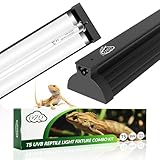
- T5 UVB Reptile Light Fixture Combo Kit: The QZQ T5 UVB reptile light features a 5.9ft detachable power cord, a convenient on/off switch, and multiple mounting accessories for easy installation. Whether you're setting up a reptile tank or terrarium, this reptile light fixture meets your reptile lighting needs, providing your pets with the perfect 10.0 UVB lighting environment for healthy growth
- High UVB & UVA Output for Healthy Growth: Equipped with a highly polished, curved alloy reflector, this UVB light for reptiles delivers high-output UVB rays with 10% UVB and 30% UVA, just like natural sunlight. This helps your reptiles absorb calcium, synthesize vitamin D3, and stay strong and healthy. It’s ideal for preventing metabolic bone disease and promoting natural behaviors such as basking, eating, and exploring
- Safe Design & Energy Saving: Both ends of the fixture are equipped with flame-retardant plastic protective covers for added safety. Our T5 10.0 UVB reptile light fixture is designed for energy efficiency, reducing power consumption while providing lighting. Energy-efficient and reliable, it’s an excellent long-term addition to your reptile lighting setup. It helps simulate real sun exposure, so your reptiles thrive, grow, and look more vibrant
- Easy to Install: Setting up is a breeze! This UVB light for bearded dragon can be placed directly on mesh covers or installed inside wooden vivariums and reptile tanks, letting you adjust the distance for optimal UVB exposure. It’s portable, safe, and easy to install, making reptile care more convenient. An excellent choice for both reptile care accessories and vivarium decor
- Friendly Customer Service: We’re reptile lovers too, so we care about your experience. If your UVB lamp arrives damaged or has any issues, reach out to us on Amazon. This UVB light is the perfect fit for desert and tropical reptiles, such as bearded dragons, tortoises, chameleons, iguanas, turtles, Russian tortoises, snakes, frogs, salamanders, crested geckos, lizards, leopard geckos, and more. Your pet will thank you with brighter colors and better health!
Night heating
Turn visible lights off at night. If the room falls too cold, a non-light-emitting ceramic heater can be used with suitable temperature control. Red, blue, and purple “night bulbs” are unnecessary and can interfere with the dragon’s day-night cycle.
Provide effective UVB lighting
UVB allows a bearded dragon to produce vitamin D3 and use calcium. Inadequate UVB can cause metabolic bone disease, leading to weakness, swollen limbs, fragile bones, muscle twitching, and permanent deformities.
Free tools Windows power users keep installed
One-click scans. No signup required.
Use a high-output linear UVB fluorescent tube covering approximately half of the enclosure and positioned over the basking end. A commonly recommended setup is a 10–12% UVB tube producing a basking-zone UV Index of 3.0–5.0, measured with a UV Index meter. Albino and other light-sensitive morphs may need lower exposure; ask your veterinarian about the appropriate level.
Follow the manufacturer’s instructions for mounting distance and replacement. A UVB bulb can continue to produce visible light after its useful UVB output has declined.
- A screw-in “full-spectrum” bulb is not automatically a UVB source.
- Sunlight through ordinary window glass is not adequate UVB because the glass blocks UVB.
- Do not put the UVB tube behind glass or plastic.
- Fine mesh and excessive distance can substantially reduce UVB exposure.
- Brightness is not a reliable test of UVB output.
A timer can provide a consistent photoperiod. Twelve hours on and 12 hours off is one commonly used schedule.
Feed a varied diet
Bearded dragons eat both animal and plant foods. Their needs change with age, growth, body condition, activity, and reproductive status, so no single feeding chart suits every dragon.
Adults should not remain on an insect-heavy diet. A recent veterinary nutrition review recommends at least 50% high-fiber plant matter and less than 50% adult and lower-fat larval insects for companion dragons. Another practical guide describes a shift from more live food for young dragons to approximately 60% greens and 40% live food for older dragons. Use these proportions as starting points and ask your reptile veterinarian to adjust them for your individual animal.
Plant foods
Offer a changing selection of safe greens and vegetables, such as:
Also popular on Amazon

- T5 Reptile Light Fixture with UVB 10.0 Bulb Kit - The REPTIDLDB T5 reptile light fixture comes with a UVB 10.0 bulb kit, offering 10% UVB and 30% UVA output. This lighting system provides a natural and balanced lighting environment, ensuring your reptiles receive the proper UVB radiation for optimal health. The fixture is designed with minimal heat emission, making it perfect for your reptile's habitat without overheating the enclosure. The UVB 10.0 bulb is replaceable, giving you flexibility and convenience in maintaining your reptile’s environment.
- Promote Reptile Health and Well-being - Our T5 UVB reptile light is essential for your reptiles’ health. UVB light for bearded dragons and other reptiles helps stimulate appetite, digestion, and supports the synthesis of Vitamin D3, which is crucial for calcium absorption and maintaining strong bones and skin. Provide your pets with a comfortable and active lifestyle, powered by natural light.
- Efficient and Long-lasting Performance - The REPTIDLDB T5 UVB reptile light features a high-quality filament and a built-in T5 HO electronic ballast, ensuring stable and efficient lighting without flickering. This unique design offers an impressive lifespan, minimizing the need for frequent replacements. The reptile UVB light bar also features an alloy reflective layer that maximizes UVB output, providing consistent light for your reptiles.
- Easy to Install and Space-saving Design - Our T5 reptile lights are designed for easy installation and flexibility. Whether mounted externally over wire mesh or internally on the tank lid, this linear UVB reptile light fits seamlessly into your setup. It also comes with a detachable cable and an on/off switch for added convenience. The sleek, slim design ensures that it won’t take up unnecessary space in your reptile’s enclosure.
- Versatile UVB Lighting for Different Reptiles - Choose between UVB 5.0 for tropical species such as chameleons and frogs or UVB 10.0 for desert-dwelling reptiles like bearded dragons and tortoises. The T5 UVB reptile light fixture is perfect for various reptiles and amphibians, ensuring they receive the appropriate UVB light for their specific habitat needs. Enhance your pet’s health with tailored light exposure.
- Watercress
- Arugula or rocket
- Chicory and cress
- Dandelion, clover, and plantain leaves collected from pesticide-free areas
- Grated or finely chopped butternut squash
Remove uneaten fresh food every day. Do not make one green or vegetable the whole diet. Avoid spinach because it interferes with calcium absorption, and limit excessive cabbage or kale.
Feeder insects
Suitable feeders include crickets, locusts, and calcium-rich black soldier fly larvae, often sold as calciworms. Offer insects no larger than the dragon’s mouth.
Gut-load feeder insects for 24–48 hours before feeding. Give them an appropriate formulated diet and hydration so they pass more nutrients to the dragon. Remove uneaten live insects from the enclosure; some can bite or injure a resting dragon.
Do not use high-fat larvae as the sole feeder. Rotate several suitable insects and include adult or lower-fat larval insects in the insect portion of the diet.
How often to feed
- Babies may need two meals daily.
- Juveniles and adults are commonly fed once daily, with portions adjusted to body condition.
- Feed early enough in the day for the dragon to bask and digest.
- Weigh the dragon regularly during growth, illness, or seasonal appetite changes.
Calcium and vitamin supplements
Most feeder insects are calcium-poor, so supplementation and effective UVB are both important. A veterinary nutrition review recommends pure calcium on plant matter and feeder insects, with a reptile multivitamin weekly or at least monthly.
Do not combine several calcium and vitamin products without a plan. Excess supplementation can also cause harm. Follow the product label and have a reptile veterinarian establish the schedule, especially for juveniles, breeding females, dragons with metabolic bone disease, or animals receiving strong UVB.
Recommended Free Tools
Vitamin D3 supplements cannot compensate for defective UVB, inadequate heat, or a poor diet. Correct the enclosure and feeding routine rather than trying to cover the problem with extra powder.
Water and humidity
Provide fresh water continuously in a shallow dish placed at the cool end. Replace it at least daily and immediately if it becomes contaminated. A dragon may rarely be seen drinking because much of its moisture can come from food, but it should still have access to water.
Also popular on Amazon

- [2 Pack 10.0 UVB Bulbs] Voltage:110-130V, Base type: E26, Wattage: 23W. Each 23 Watt Desert UVB 10.0 CFL Reptile Bulb offers stable 10% UVB and 30% UVA output with no harmful UVC output.
- [Simulate Desert Environment] The UVB output will stimulate activity and appetite in your reptile, metabolizing calcium for healthy bone growth while in captivity. Jugbuy 23-Watt Desert Reptile Light Bulb provide necessary UVB rays to keep them healthy. In addition, UV Light Bulbs also provide the necessary UVA light which helps to regulate natural behaviors, including feeding, daily activity and movement, mating and similar activities.
- [Perfect for Desert Reptiles] UVB 10.0 Reptile Light Bulbs are ideal for all desert-dwelling reptiles desert lights, including bearded dragon, tortoises, geckos, snakes, iguanas, lizards, chameleons, frogs, toads & more. Use them to increase natural behaviors and prevent illnesses.
- [High Quality & Long Lasting] Uses a special UVB transmitting quartz glass for stable UVB output and fading rate of UVB is low. The quality circuit board and electronic components ensure a stable current output. Safe and Secure to Use, Up to 10,000 Hours of Lighting Life, 80% Energy Saving.
- [After-sales Service] We provide 1 month of quality assurance service. If you have any questions, please contact us at any time, and we will handle it for you immediately. Timely communication can solve your problem.
Keep overall humidity low, generally around 30–40% at the cool end, with adequate ventilation. Persistently high humidity can contribute to skin and respiratory problems.
Do not humidify the whole enclosure to help with shedding. If extra humidity is needed, use a controlled digging or humid-hide area while keeping the main habitat appropriately dry.
Quick wins for a faster PC:
Repair Windows errors before they cause bigger problemsFix Now →Scan for outdated or missing drivers - takes under a minuteDriver Scan →Clear out junk files and repair common Windows errorsFree Scan →Cleaning and Salmonella safety
Spot-clean feces as soon as possible. Clean the entire enclosure about monthly with a reptile-safe disinfectant, then rinse thoroughly and allow everything to dry before returning the dragon.
Wash your hands with soap and running water:
- After handling the dragon.
- After touching feeder insects, food, feces, tank water, décor, or equipment.
- After cleaning the enclosure.
- Before eating, drinking, preparing food, or handling an infant.
Keep the dragon, its enclosure, feeder insects, food containers, and cleaning tools out of kitchens and other food-preparation areas. Never clean reptile supplies in a kitchen sink. Do not let the dragon roam through areas where infants or young children crawl or play.
Do not kiss or snuggle the dragon, and do not eat or drink while handling it. Change clothing after handling a reptile before interacting with an infant or young child.
Independent reader supportYour contribution helps us test, update, and keep practical guides available for everyone.Handling and enrichment
Approach calmly and support the entire body and all four feet. Never grab the tail or restrain the dragon unnecessarily.
PC Slower Than It Used to Be?
A free scan shows the junk files, broken settings and background clutter dragging Windows down - then fixes them in one click.Free scan · Windows 10 & 11Crashes, No Sound, or Screen Glitches?
Random freezes, missing sound and display glitches usually trace back to one bad driver. Find and replace yours safely.Free scan · under a minuteKeep out-of-enclosure handling brief so the dragon does not become chilled. Around 10–15 minutes can be a reasonable example depending on room temperature, but stop sooner if the dragon becomes cold or stressed. Outdoor time requires constant supervision, shade, escape prevention, and separation from other pets.
Useful enrichment includes stable climbing branches, rocks, hides at both ends, a secure digging area, and furnishings that let the dragon choose between light, heat, shade, and cover.
Also popular on Amazon

- T5 UVB Reptile Light Fixture Combo Kit: The QZQ T5 UVB reptile light features a 5.9ft detachable power cord, a convenient on/off switch, and multiple mounting accessories for easy installation. Whether you're setting up a reptile tank or terrarium, this reptile light fixture meets your reptile lighting needs, providing your pets with the perfect 10.0 UVB lighting environment for healthy growth
- High UVB & UVA Output for Healthy Growth: Equipped with a highly polished, curved alloy reflector, this UVB light for reptiles delivers high-output UVB rays with 10% UVB and 30% UVA, just like natural sunlight. This helps your reptiles absorb calcium, synthesize vitamin D3, and stay strong and healthy. It’s ideal for preventing metabolic bone disease and promoting natural behaviors such as basking, eating, and exploring
- Safe Design & Energy Saving: Both ends of the fixture are equipped with flame-retardant plastic protective covers for added safety. Our T5 10.0 UVB reptile light fixture is designed for energy efficiency, reducing power consumption while providing lighting. Energy-efficient and reliable, it’s an excellent long-term addition to your reptile lighting setup. It helps simulate real sun exposure, so your reptiles thrive, grow, and look more vibrant
- Easy to Install: Setting up is a breeze! This UVB light for bearded dragon can be placed directly on mesh covers or installed inside wooden vivariums and reptile tanks, letting you adjust the distance for optimal UVB exposure. It’s portable, safe, and easy to install, making reptile care more convenient. An excellent choice for both reptile care accessories and vivarium decor
- Friendly Customer Service: We’re reptile lovers too, so we care about your experience. If your UVB lamp arrives damaged or has any issues, reach out to us on Amazon. This UVB light is the perfect fit for desert and tropical reptiles, such as bearded dragons, tortoises, chameleons, iguanas, turtles, Russian tortoises, snakes, frogs, salamanders, crested geckos, lizards, leopard geckos, and more. Your pet will thank you with brighter colors and better health!
Shedding and brumation
Young dragons shed more frequently. Dull coloration before a shed can be normal. Never pull off retained skin, since this can damage the new skin underneath. Retained skin around a toe can restrict blood flow; seek veterinary advice promptly if it does not resolve.
Some adult dragons become less active, sleep more, and eat less during cooler seasons in a process called brumation. Do not automatically label lethargy or complete loss of appetite as brumation. Weight loss and illness should be ruled out by a reptile veterinarian, particularly before allowing prolonged fasting.
Daily health checks
While feeding and cleaning, check for:
- Normal alertness and movement.
- Clear eyes and normal breathing.
- A normal appetite and stable body weight.
- A thick tail base without prominent hip bones.
- Normal feces and white urates.
- Intact toes and completed sheds.
- No swelling, wounds, mites, or unusual discoloration.
When to call a reptile veterinarian
Arrange prompt veterinary care for persistent lethargy, loss of appetite, weight loss, jaw or limb deformities, muscle twitching, weakness, tremors, difficulty walking, swollen legs or jaw, diarrhea, constipation, foul-smelling feces, or repeated abnormal stools.
Nasal or eye discharge, bubbles, wheezing, rapid breathing, open-mouth breathing, mouth swelling, bleeding gums, thick mucus, or cottage-cheese-like material in the mouth also require veterinary attention. Visible mites or ticks should be treated professionally.
Parasites may cause few obvious signs, so a veterinarian may recommend fecal testing. Do not use leftover medication or attempt to treat metabolic bone disease, respiratory disease, parasites, or mouth problems with supplements alone.
Transporting a dragon to the veterinarian
- Use a secure, ventilated carrier or plastic tub.
- Line it with soft, absorbent paper.
- Keep the carrier warm when necessary, but prevent direct contact with a heat pack.
- Minimize transport time and unnecessary handling.
The mistakes that cause the most trouble
- Providing heat but no linear UVB. Heat alone cannot support normal calcium metabolism.
- Assuming a glowing bulb is still producing UVB. Output declines before visible light disappears.
- Using window sunlight as a UVB solution. Ordinary glass blocks UVB.
- Heating every part of the enclosure equally. The dragon needs a warm-to-cool gradient.
- Feeding only insects or only one vegetable. Adults need varied plant matter as well as insects.
- Skipping gut-loading and calcium planning. Feeder insects alone are not a balanced diet.
- Calling every period of lethargy brumation. Illness and weight loss must be excluded.
- Cleaning reptile equipment in the kitchen. Contaminated water, food, and equipment can spread Salmonella.
- Allowing free roaming around infants or young children. Contaminated hands, clothes, and surfaces can transmit infection.
- Keeping two dragons together. Separate housing is the safer default.
FAQ
Are bearded dragons easy pets for beginners?
They can be manageable for a prepared beginner, but they are not low-maintenance. Correct heat, UVB, enclosure size, diet, hygiene, and veterinary access are essential from the first day.
How big should a bearded dragon enclosure be?
Use the largest practical enclosure, with a habitat at least three times the dragon’s total body length as a minimum veterinary guideline. It must also be long enough to provide a basking end and a cooler end.
Do bearded dragons need UVB at night?
No. Turn visible lights off at night. If the room is too cold, use a non-light-emitting ceramic heater with appropriate temperature control rather than a red, blue, or purple night bulb.
Can bearded dragons live together?
Housing them separately is the safer choice. Shared housing can lead to territorial conflict, injuries, chronic stress, competition for food and heat, and disease transmission.
The Bottom Line
A well-cared-for bearded dragon needs measured conditions, not assumptions: a warm basking zone around 100–108°F, a cool end around 72–79°F, effective linear UVB, low humidity, varied plant and insect foods, planned calcium supplementation, and clean water. Monitor the dragon every day, wash your hands after contact, and treat appetite loss, breathing changes, weakness, deformities, or abnormal stools as reasons to contact a reptile veterinarian rather than problems to watch indefinitely.
The Tool Desk
Outbyte Driver Updater FREEScan for outdated or missing drivers - takes under a minuteDriver Scan →Outbyte PC Repair FREEClear out junk files and repair common Windows errorsFree Scan →




Leave a Reply