What’s actually slowing this PC down?
Pick the symptom - the matching free tool is one click away.
The rediscovered species is Moema claudiae, a seasonal killifish found in a temporary pond in a small forest remnant surrounded by crops. It had gone unrecorded in the wild for more than 20 years—not formally declared extinct. The discovery offers the first published live photographs and new observations of the fish, but it does not mean its habitat or population is secure.
Which species was rediscovered?
Heinz Arno Drawert and Thomas Otto Litz report the rediscovery of Moema claudiae, a Bolivian fish in the rivulid family, in a 2025 paper in Nature Conservation. Rivulids include seasonal fishes adapted to temporary or ephemeral water bodies. These fish are also called annual fishes because their habitats can dry out.
The paper says M. claudiae had not been recorded in the wild for more than 20 years. It describes the species as Critically Endangered and possibly extinct. That is different from a formal classification of extinct: the long gap in observations led to concern that the species might be gone, but the rediscovery documents a living population.
Where was it found, and what did researchers learn?
The population was found in a temporary pond within a small forest remnant surrounded by crops. The accessible article record does not provide precise coordinates, so the exact site cannot be identified from that information.
#1 Best Overall
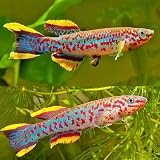
- 🔥 JEWEL OF THE FRESHWATER WORLD – EXPLOSIVE COLOR THAT RIVALS MARINE FISH | Gardner's Killifish (Fundulopanchax gardneri) is one of the most vividly colored freshwater fish in existence, with males displaying a breathtaking mosaic of electric blue, green, and red spotting across their entire body and fins. A species that consistently stops experienced hobbyists in their tracks — because nothing in freshwater looks quite like this.
- 🌟 RARE & EXOTIC – A COLLECTOR'S SPECIES WITH SERIOUS PRESTIGE | Gardner's Killifish remains one of the most prized species among killifish enthusiasts and serious freshwater collectors worldwide. Rarely seen in mainstream fish stores, owning a pair or colony of these fish represents a genuine step into the upper tier of the freshwater hobby — a species that commands respect and admiration from anyone who knows their fish.
- 🤝 PEACEFUL COMMUNITY FISH – SURPRISINGLY CALM FOR SUCH A BOLD SPECIES | Despite their intense coloration and bold personality, Gardner's Killifish are peaceful tankmates that coexist well with similarly sized, non-aggressive species such as small tetras, rasboras, corydoras, and dwarf loaches. Males may display mild rivalry with each other, making a single male with one or two females the ideal social setup for a harmonious aquarium.
- 🌿 THRIVES IN PLANTED TANKS – FEELS AT HOME IN LUSH, WELL-DECORATED SETUPS | Native to the forested streams and pools of West Africa, Gardner's Killifish are most comfortable and most colorful in densely planted aquariums with floating plants, gentle filtration, and plenty of visual cover. The combination of rich green planting and dark substrate brings out the full intensity of the male's extraordinary coloration like nothing else.
- 🍽️ ENTHUSIASTIC FEEDER – THRIVES ON LIVE, FROZEN & PREPARED FOODS | Gardner's Killifish are active, eager feeders that accept a wide variety of foods including high-quality micro pellets, freeze-dried and frozen bloodworms, daphnia, and brine shrimp. A varied diet rich in protein not only keeps them healthy and robust but directly enhances the depth and vibrancy of the male's spectacular coloration.
The authors say the discovery provides the first live photographs of the species and observations of previously unknown aspects of its biology and ecology. The available record does not detail those observations or report a current population estimate.
Why the rediscovery does not mean the fish has recovered
The paper describes severe degradation at the only known locality and across much of the species’ potential distribution. Extensive agroindustrial crops occupy those areas. Finding a living population establishes that the species persists, but the available evidence does not establish that its habitat is protected, that its population is stable, or that its conservation status has changed.
Rank #2

- ✅ Nano Tank Friendly – Perfect for small aquariums! Least Killifish are one of the smallest livebearers, maxing out around 1.2 inches, making them ideal for 5-10 gallon setups or species tanks.
- ✅ Peaceful & Community Safe – A gentle and non-aggressive species that thrives with similarly sized peaceful tank mates like shrimp, snails, and micro rasboras.
- ✅ Livebearers with Personality – Watch natural schooling behavior and enjoy the ease of breeding in a well-maintained planted tank. No special effort needed—fry often survive in dense vegetation!
- ✅ Easy Care & Hardy – Adaptable to a range of water parameters and great for both beginners and experienced aquarists. Enjoy low-maintenance fishkeeping with this underrated gem.
- ✅ Tank-Raised & Disease-Free – Responsibly bred in controlled environments to ensure healthy, parasite-free fish ready to thrive in your aquarium.
The authors place the finding in the context of Bolivian rivulids: of 32 recorded species, 19 are endemic, according to the paper. It also reports that eight of the 20 rivulid species occurring in Bolivia that had been assessed by the IUCN were classified in a threat category. Those figures describe the country’s rivulid fauna, not M. claudiae alone or a new assessment prompted by this discovery.
Independent reader supportYour contribution helps us test, update, and keep practical guides available for everyone.Not the same as Bolivia’s rediscovered devil-eyed frog
Another Bolivian rediscovery story concerns the devil-eyed frog, Oreobates zongoensis, which Conservation International reported after an expedition in the Zongo Valley. That is a separate species and account. The 2025 paper discussed here concerns a killifish found in a crop-surrounded forest pond.
Free tools Windows power users keep installed
One-click scans. No signup required.
Quick Recap
Best Value

- The Clown Killifish (Epiplatys annulatus), is one of the most colorful nano fish there is. Its stunning color makes it an amazing choice to add to a nano aquarium
- even those that house shrimp. Due to its native habitat, it is recommended that tanks have low flow or possibly no flow at all depending on weekly maintenance
- These fish are great as they are micro-preadators that occupy the top portion of tanks and eat small live foods.
- Females will have a rounded caudal fin with slightly less vibrant coloration. If breeding these fish is your goal we would recommend a species only tank as other fish will eat the fry
Rank #4
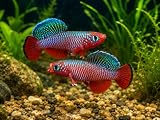
- RARE ANNUAL KILLIFISH – Highly sought after for its rarity, vibrant appearance, and fascinating natural life cycle.
- BRILLIANT RED FIN COLORATION – Displays vivid red fins with iridescent body colors that create an eye-catching aquarium display.
- ACTIVE TROPICAL SPECIES – Energetic swimmers with engaging behavior that bring movement and personality to freshwater aquariums.
- GREAT FOR SPECIES COLLECTIONS – An excellent choice for hobbyists looking to expand their collection with a unique annual killifish.
- HEALTHY AQUARIUM-RAISED STOCK – Carefully selected, conditioned, and professionally packed to promote healthy arrival and successful acclimation.
Rank #3
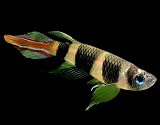
- CLOWN KILLIFISH 5-PACK NANO FISH – Includes five small freshwater fish with bright striped patterns, creating a colorful and unique aquarium display
- IDEAL FOR NANO AND PLANTED AQUARIUMS – Perfect for smaller setups with gentle flow and stable water conditions
- SURFACE-DWELLING SPECIES – Naturally occupies the top level of the tank, adding movement and activity to unused space
- PEACEFUL COMMUNITY FISH – Compatible with other small and non-aggressive species
- SUITABLE FOR ESTABLISHED FRESHWATER SYSTEMS – Best kept in properly maintained tanks with stable parameters
Sources
- Drawert and Litz, “Rediscovery of Moema claudiae Huber, 1995 (Cyprinodontiformes: Rivulidae), a critically endangered and possibly extinct annual fish from Bolivia,” Nature Conservation, volume 60, 2025, pages 115–124.
- Conservation International’s account of the devil-eyed frog rediscovery in Bolivia.
Product prices and availability are accurate as of the date/time indicated and are subject to change. Any price and availability information displayed on Amazon at the time of purchase will apply.




