
Recommended Free Tools
A kitten fosterer’s day is built around the kittens’ age, health, and ability to eat without help. Neonates may need bottle or syringe feeds every two hours, including overnight, while healthy four- to eight-week-old kittens that eat independently may manage three or four meals around a caregiver’s workday. Every foster day also includes cleaning, health checks, safe rest, gentle socialization, and communication with the rescue or veterinarian.
There is no universal foster schedule. Use the intervals below as examples from Kitten Lady’s guide, not as a diagnosis or a substitute for the instructions supplied for your particular litter.
As an Amazon Associate I earn from qualifying purchases.
How age changes a fosterer’s schedule
The first question each morning is not “What time is breakfast?” but “How old are these kittens, and what can they do on their own?” A newborn that cannot regulate body temperature or eliminate without stimulation requires a very different routine from a five-week-old that eats wet food, uses a litter tray, and spends part of the day playing.
Free tools Windows power users keep installed
One-click scans. No signup required.
| Kitten age | Example feeding and care interval | What that usually means for a fosterer |
|---|---|---|
| 0–1 week | Every 2 hours | Round-the-clock bottle or syringe feeding may be required, along with warmth, weighing, and help with elimination. |
| 1–2 weeks | Every 2–3 hours | Frequent feeds continue; the kittens still need close observation and hands-on care. |
| 2–3 weeks | Every 3 hours | A shallow litter box can be introduced, while kittens that are not eliminating independently still need stimulation. |
| 3–4 weeks | Every 4 hours | Mobility and curiosity increase, so the pen needs more room and careful kitten-proofing. |
| 4–5 weeks | Every 5–6 hours while weaning | Wet food and a shallow dish may be introduced as directed; formula or nursing support may still be needed. |
| 5–6 weeks | Every 6–8 hours | Many kittens can eat independently, leaving more time for play, litter learning, cleaning, and observation. |
| 6–8 weeks | Every 8 hours | Meals are less frequent, but socialization, monitoring, and a safe, stimulating environment remain essential. |
These intervals come from Kitten Lady’s fostering guidance. Illness, low weight, poor appetite, or a medical treatment plan can change them. Follow the rescue organization’s written plan and ask the veterinarian before changing a feeding interval or formula.
#1 Best Overall

- SQUEEZE BOTTLE - 60ml nursing bottle for newborn kittens and puppies, 2.1 ounce capacity, small animal feeding bottle is easy to squeeze and easy to control the amount of milk.
- SMALL ANIMAL FEEDER SET - 1ml for small nipples, 3ml, 5ml, 10ml for medium and large nipples, 60ml feeding bottles can be freely combined with (small, medium, large) nipples.
- 5 REPLACEABLE NIPPLES - Different sized nipples to meet the needs of small animal at every stage, the soft rubber-tipped nipple prevents scratching the gums of newborn kittens and puppies.
- 5ML BROWN FEEDER - The brown 5ml syringe is made of light-safe material to prevent photosynthesis of medication, use a separate dedicated feeder for better use when your pet is sick.
- NEWBORN KITTENS & PUPPIES GIFT - Suitable for newborn and not yet teething small animals, kittens, puppies, hamsters, chinchillas, squirrels, rabbits, etc. you will be a very gentle owner, take care of it, love it and grow with it.
For a concrete comparison, ASPCA caregiver Milena describes caring for five-week-old kittens with feeds and cleanup at 7 a.m., noon, 5 p.m., and 10 p.m., with play and socialization between meals. That is one litter’s routine, not a timetable for every five-week-old kitten.
What a foster day includes
Start of day: feed, clean, and assess
Begin with the care task due for the kittens’ age. Prepare formula exactly as the program or veterinarian directs, or offer the prescribed wet food to kittens that are weaning or eating independently. Keep each kitten in a comfortable position during bottle-feeding and watch that it is swallowing normally; ask the program to demonstrate technique before you attempt a feed.
After feeding, clean bowls, bottles, nipples, bedding, and any soiled surfaces. Then look at each kitten rather than judging the litter as a group. Note appetite, alertness, breathing, mobility, stool and urine, and whether a kitten is warm and responsive. A kitten that is suddenly quiet, cold, weak, vomiting, having diarrhea, or refusing food warrants a prompt call to the foster coordinator or veterinarian.
The Tool Desk
Outbyte Driver Updater FREEScan for outdated or missing drivers - takes under a minuteDriver Scan →Outbyte PC Repair FREERepair Windows errors before they cause bigger problemsFix Now →Between meals: rest and positive contact
Young kittens sleep for much of the day. Keep handling brief and gentle when they need to rest, and provide positive interaction when they are awake. ASPCA describes socialization through holding, play, and other safe, pleasant experiences. Let kittens approach at their own pace, support their bodies, and stop when they show fear or fatigue.
Socialization is not a substitute for sleep or medical care. A calm voice, a soft towel, a short play session, and ordinary household sounds at a tolerable volume can help kittens learn that people and routine are safe. Keep interactions supervised and separate from resident pets unless the rescue has approved introductions.
Litter care and elimination
Attend to the litter area every day and remove waste promptly. Kitten Lady recommends a shallow litter box for kittens older than two weeks and placing kittens older than three weeks in it to begin learning. Use non-clumping litter for young kittens because they may accidentally ingest it.
Rank #2
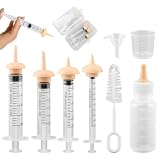
- One-Stop Scientific Feeding: Designed specifically for newborn kittens, puppies, and various small animals, this kit includes a 50ml professional feeding bottle, four precision syringes of different capacities (1ml, 3ml, 5ml, 10ml), four biomimetic nipples, as well as a funnel and measuring cup. From precise feeding immediately after birth to supplemental feeding during the transition period, this single kit meets all your care needs.
- Precise Measurement for Safe Feeding: Recognizing that newborn pets are extremely sensitive to feeding amounts, the kit includes four syringes of different sizes, each featuring clear, durable graduations. This allows you to control feeding with milliliter-level precision based on your pet’s weight and age, effectively preventing choking or digestive strain caused by overfeeding.
- Bio-Mimetic Nipples: Made from ultra-soft, food-grade silicone, these bio-mimetic nipples replicate the natural feel of a mother dog or cat’s mouth. They are bite-resistant and gentle on the mouth. Multiple nipple shapes are available to suit pets of different sizes and developmental stages, increasing the success rate of feeding.
- Easy to Clean, Comes with a Dedicated Storage Case: The included cleaning brush easily reaches the bottom of bottles and syringes, ensuring no milk residue remains. All accessories are neatly stored in a transparent storage jar/container, making it convenient for home storage and keeping your tools organized and ready to use—whether you’re traveling with your pet or on the go.
- Essential Professional Tools for Young Pets: Whether caring for orphaned puppies or kittens, administering medication to sick adult pets, or providing nutritional support for frail premature pets, this multifunctional kit offers the most professional support. The included measuring cup and funnel make the process of mixing formula more precise and spill-free, making it the ideal assistant for pet owners and animal rescuers.
Kittens that are not yet eliminating independently need stimulation as part of their care. Ask the rescue to show you the method and frequency. Do not assume a kitten is constipated or start a treatment without veterinary guidance; changes in elimination can be an important health signal.
Evening and overnight
Repeat the feed, observation, and cleanup cycle due at that age. Before you turn in, check that the sleeping area is dry, secure, warm, and free of cords, gaps, loose strings, and other hazards. Neonate caregivers may need alarms for overnight feeds. A caregiver of older, independently eating kittens may have a longer uninterrupted sleep period, provided the program’s plan allows it and the kittens are thriving.
Setting up a safe home base
Use a small, climate-controlled room or enclosure with a door that closes. Kitten Lady recommends separating foster kittens from other animals and kitten-proofing the space before arrival. Remove access to electrical cords, reclining furniture, toxic plants, open windows, buckets, and narrow spaces where a kitten could become trapped.
Provide a warm resting zone and an unheated zone. A low-set heating pad should be fully covered with a soft blanket, with enough room for kittens to move away from the heat if they become too warm. Check the surface with your hand and monitor the kittens rather than relying on the device’s setting alone. Kittens need undisturbed sleep and should never be forced to remain on a heat source.
An incubator is not required for fostering. Kitten Lady describes a heat disk as a more portable and affordable option and emphasizes prioritizing timely medical care over buying an expensive appliance. Ask the program what it uses and what it expects you to provide.
Do these 3 things before closing this tab:
1Scan for outdated or missing drivers - takes under a minute2Repair Windows errors before they cause bigger problems3Fix the driver behind crashes, sound loss and screen glitchesSupplies: what you may need and what the rescue may provide
Supply policies differ. Some ASPCA foster programs provide food, equipment, medical care, and other supplies, while local shelters and rescues may use different arrangements. Ask before purchasing anything, especially formula, medication, heating equipment, or specialized bottles.
Rank #3

- Comes with soft nursing nipples designed to fit the oral structure of newborn kittens and puppies, simulating natural sucking feeling to let little pets feed comfortably without rejection.
- Featured replaceable accessories design, you can easily swap out worn or aging parts individually, no need to throw away the whole feeding set for long time use.
- Equipped with practical portable storage to organize all feeding tools neatly in one place, keep items tidy and avoid loss at all times.
- Designed as emergency ready feeding supplies, perfect for unexpected newborn pet care, stray pet rescue and daily emergency feeding needs anytime.
- All-in-one newborn pet feeding kit matches daily nursing demands of kittens and puppies, also suitable for small birds, hamsters and rabbits for multi-purpose use.
Depending on the kittens’ age and medical needs, an orphan-kitten supply list can include:
- Kitten formula, a nursing bottle, and spare nipples for bottle-fed kittens.
- A small digital scale that measures grams and ounces for tracking weight as directed.
- Wet kitten food and shallow dishes for weaning or independently eating kittens.
- A shallow litter box and unscented, non-clumping litter for young kittens.
- Washable bedding, towels, and cleaning supplies.
- A safe, covered heat source with an area the kittens can leave.
This is an age- and situation-dependent list, not a universal shopping requirement. A foster coordinator can tell you which items are supplied, which brands or formulas are approved, and how to replace damaged equipment.
Can you foster if you work outside the home?
Sometimes. ASPCA says healthy kittens aged four to eight weeks that eat independently may be fed three or four times a day, socialized, and monitored before and after a caregiver’s workday. A five-week-old litter may therefore fit around a morning, midday, late-afternoon, and evening routine such as the one described by its caregiver.
That answer changes for neonates. Bottle babies may need feeding every two hours, and some require round-the-clock care. Medical or ringworm fosters may also need medication, cleaning, isolation, or appointments that are difficult to manage during a full workday. Before accepting kittens, tell the program exactly how many hours you are away, whether another trained person can cover a feed, and how quickly you can reach a clinic.
Independent reader supportYour contribution helps us test, update, and keep practical guides available for everyone.Health monitoring and veterinary support
Daily observation is part of fostering, not an optional extra. Keep the rescue’s contact details visible and learn its reporting rules. ASPCA asks foster caregivers to monitor health daily, report concerns promptly, and be able to take kittens to a veterinary clinic immediately if an emergency occurs.
Confirm these details before the kittens arrive:
- The name and phone number of the daytime foster coordinator.
- The after-hours or emergency number and whether you should call a specific clinic.
- Who authorizes treatment and pays for approved veterinary care.
- How to record weight, food intake, medication, stool, urine, and symptoms.
- Which signs require an immediate trip rather than a message left for the next day.
Kitten Lady identifies FVRCP as the standard feline distemper vaccine and notes that kittens need routine veterinary treatments. The exact vaccine, parasite-control, examination, and spay or neuter plan depends on the kitten, location, and foster organization. Kittens over eight weeks may move toward spay scheduling and adoption when the rescue considers them ready.
Rank #4

- Product:2 feeding bottles (50 ml each), 6 syringes (2 of 1 ml, 2 of 3 ml, 2 of 5 ml), 10 nipples (2 small short nipples, 2 small straight nipples, 3 medium straight nipples, 3 large nipples), 1 storage measuring cup (250 - 300 ml)
- Features:The items included in this product can meet the feeding needs of kittens and puppies. Syringes and nipples of different specifications can be flexibly matched and used according to the age, food intake and oral size of pets. Nipples of various sizes can be installed on the feeding bottles or syringes according to the oral size of pets
- Instructions for Using the Syringe:If newborn kittens and puppies are unable to drink milk on their own, syringes can be selected for auxiliary feeding. There are syringes of different specifications, such as 1 ml, 3 ml and 5 ml, which can be adapted to different food intake requirements and accurately control the feeding amount
- Instructions for Using the Feeding Bottle:If newborn kittens and puppies are able to suck milk on their own, it is recommended to use a feeding bottle for feeding. The 3 medium straight nipples and 3 large nipples provided can be replaced according to the growth stage of the pets
- Attention:If your kittens or puppies have already grown teeth, please be careful to prevent them from biting the nipples during use, so as to avoid the risk of the nipples being bitten and the pets accidentally swallowing pieces of the nipples
Choose the foster role that matches your time and experience
Programs may offer separate tracks rather than one generic “kitten foster” assignment.
What’s actually slowing this PC down?
Pick the symptom - the matching free tool is one click away.
Neonate or bottle-baby foster
These kittens may need bottle or syringe feeds around the clock, help with elimination, temperature support, and frequent weight checks. Availability and willingness to wake overnight are more important than having a large home.
Medical foster
Medical fosters care for kittens recovering from illness or treatment. The role can involve medication, restricted activity, wound or symptom monitoring, isolation, and scheduled rechecks. Request written instructions and a demonstration for every unfamiliar task.
Ringworm foster
Ringworm fostering follows a treatment and sanitation plan designed to limit spread to people, animals, and surfaces. Ask about isolation space, laundry, protective clothing, cleaning products, and the length of treatment before agreeing.
Matching the assignment to your schedule and experience protects both you and the kittens. It is reasonable to decline a role that requires care you cannot reliably provide.
If you find kittens outdoors
Do not assume outdoor kittens have been abandoned. ASPCA advises observing to see whether a mother cat is nearby, checking whether the kittens have an owner, and contacting a local shelter or rescue for help. Watch from a discreet distance unless a kitten is in immediate danger.
ASPCA’s public guidance says kittens may be brought into a home for fostering once they can eat wet food on their own, around four to five weeks. Ill or injured kittens should be taken promptly to a shelter, rescue, or veterinary clinic. A local professional can help decide whether to reunite kittens with their mother, provide temporary care, or arrange treatment; the right response depends on the situation.
A practical pre-arrival checklist
- Get the care plan. Confirm each kitten’s estimated age, feeding method and interval, weight-monitoring instructions, medications, and litter or elimination needs.
- Set up the room. Use a closable, kitten-proof area separated from resident animals, with bedding, a warm zone, and a cooler zone.
- Confirm supplies. Ask what the organization supplies before buying formula, bottles, litter, food, a scale, or heating equipment.
- Write down contacts. Save the coordinator, veterinarian, emergency clinic, and after-hours procedure in your phone and on paper.
- Plan coverage. Make sure every required feed and appointment is covered, including overnight care for neonates.
- Prepare records. Keep a simple log for feeds, weight, medication, elimination, behavior, and concerns so the program receives precise updates.
Fostering is a repeating cycle of feeding, cleaning, checking, resting, and connecting kittens with people. The cycle becomes less frequent as kittens mature, but careful observation and a safe environment remain part of every day until the rescue’s veterinary and adoption plan is complete.
Quick Recap
Product prices and availability are accurate as of the date/time indicated and are subject to change. Any price and availability information displayed on Amazon at the time of purchase will apply.





Leave a Reply