
Free tools Windows power users keep installed
One-click scans. No signup required.
Alaska’s largest officially recorded sport-caught lake trout weighed 47 pounds. Daniel Thorsness caught it at Clarence Lake in July 1970. The Alaska Department of Fish and Game (ADF&G) identifies that fish as the state’s current lake trout record, and the agency’s Northern Alaska trophy table supplies the angler, lake, year and weight.
A separate lake trout weighing 102 pounds is often brought into the discussion. It was not Alaska’s sport-fishing record: ADF&G says that fish was taken in a commercial gill net at Lake Athabasca, Saskatchewan, in 1961. The different weight reflects a different record category, place and capture method.
As an Amazon Associate I earn from qualifying purchases.
The Alaska record at a glance
| Record detail | Officially listed information |
|---|---|
| Species | Lake trout (Salvelinus namaycush) |
| Weight | 47 pounds |
| Angler | Daniel Thorsness |
| Location | Clarence Lake, Alaska |
| Date | July 1970 |
| Record scope | Alaska sport fishing |
| Current-status source | ADF&G species profile; corroborated by the 2024–2025 Northern Alaska sport-fishing regulations summary |
ADF&G’s species profile states: “The current record is a 47-pound laker caught in Clarence Lake in July 1970.” The agency’s trophy-fish table names Thorsness and lists the fish at 47 pounds, Clarence Lake and 1970. Because records can be revised or replaced, “current” here means the status shown by those ADF&G publications, including the 2024–2025 regulations summary—not a guarantee that no later table update exists.
Why the 102-pound figure is not Alaska’s sport record
Weight alone makes the two numbers look contradictory. They describe different kinds of records:
#1 Best Overall

- 2026 New Release Fishing Spinners Set:The Fishing Spinner is FONMANG 2026 new release fishing lures, featuring different sizes and weights, beautiful colors, unique spinners, and a portable tackle box.
- Multiple Weights for More Fish:1/8 oz (3.5g) for panfish, bluegill, and small trout; 1/6 oz (4.5g) for trout and bass; 1/4 oz (7g) for larger trout, bass, pike, salmon, and steelhead.
- Flash and Vibration Attraction:Providing spinnerbait ideal combination of flash and vibration to trigger strikes in both clear and murky waters.
- Premium Components Performance:Made using the best possible components, featuring a premium blade, top-of-the-line clevis for smooth running, and a reliable treble hook.
- Great for All Anglers & Gifts:Perfect for beginners and professionals, rooster tail fishing lures help catch more fish in rivers and lakes and make a great fishing gift.
| Fish | Weight | Place | Year | Capture method | What it represents |
|---|---|---|---|---|---|
| Daniel Thorsness’s fish | 47 pounds | Clarence Lake, Alaska | 1970 | Sport catch | Alaska’s listed sport-fishing record |
| Historic fish cited by ADF&G | 102 pounds | Lake Athabasca, Saskatchewan | 1961 | Commercial gill net | Separate historic lake-trout maximum, not an Alaska sport record |
In its “Dinosaurs of the Deep” article, ADF&G calls the 102-pound fish the largest lake trout ever recorded and places it in Lake Athabasca, Saskatchewan. A U.S. Fish & Wildlife Service lake-trout profile also gives a 102-pound maximum but attributes the fish to Alaska. That location attribution conflicts with ADF&G’s more specific account of Lake Athabasca and the commercial gill-net capture. The safest explanation is to present the 102-pound fish as a separate historic record and to identify the ADF&G location and method when discussing it.
Neither number should be silently substituted for the other. A state sport-fishing table measures a regulated angling category; a commercial-net fish is not a like-for-like competitor. A reader asking for the Alaska state record is asking for the 47-pound Clarence Lake fish.
What “largest lake trout in Alaska” actually means
“Largest” needs a defined boundary. In this case, the boundary is an Alaska sport-fishing record, not every lake trout ever reported in the state, every fish taken by commercial gear, or the largest specimen in the species’ worldwide range. ADF&G’s species profile says some Alaskan populations probably exceed 50 pounds, while 8- to 10-pound fish can be taken in many Alaska fisheries. Those statements describe biological potential and typical catches; they do not overturn the published 47-pound sport record.
Rank #2

- 【Package Specification】 You will receive 5 pieces of spinner fly lures packed in one box, each lure measures 5 cm in length and weighs 1/16 oz (2.7 g), with multiple classic color options to match different water conditions and fishing scenarios
- 【Premium Brass Construction】 The textured spinner blades are made of quality brass material, polished surface produces steady flash and vibration during retrieval, effectively drawing fish attention in streams, lakes and reservoirs.
- 【Hand-Tied Fly Hook Design】Each lure is fitted with hand-tied fly dressing paired with sharp steel hooks, the realistic forage mimicry triggers natural feeding strikes from target fish like trout, perch and small bass.
- 【Stable Retrieval Performance】 Built with balanced weighted body and smooth swivel connector, the spinner maintains stable rotating action at slow to moderate retrieve speeds, suitable for both beginner and experienced anglers.
- 【Wide Fishing Application】These inline spinner fly combos work well for freshwater shore fishing and light tackle kayak fishing, ideal for targeting trout and other common freshwater game fish across different seasonal fishing trips.
The distinction matters for other apparent discrepancies as well. A fish can be heavier than 47 pounds yet fall outside the record category if it was not caught under the sport-fishing rules used for the state table, if its location was outside Alaska, or if the report is not accepted in the agency’s record system. Always compare the same species, geography, year, measurement standard and capture category.
Where Clarence Lake fits the lake-trout story
The record’s exact catch site is Clarence Lake, but the published record accounts do not describe the day’s weather, depth, lure, line, boat or landing procedure. No named-person account of Thorsness’s tackle appears in the cited ADF&G material. It would therefore be inaccurate to claim that the fish was caught by trolling a particular spoon, using cut bait or fishing through the ice.
ADF&G’s broader species guidance does explain why a lake such as Clarence can produce large lake trout. Lake trout favor large, deep, cold lakes. Their position changes with season: they may be near the surface and shoreline in spring, then move toward deeper water as the water warms and the season advances. Depth, temperature and structure are more useful clues than a single famous lure or a story about the record catch.
Rank #3

- Easy Catch Design – Trembly Sinking + Vibrating Swim. The Shadtale delivers two actions in one lure: steady retrieve triggers a tight vibrating swim with paddle tail kick; jigging hops create a unique trembling fall. This combination triggers strikes from curious and aggressive fish alike
- Unique Trembly Sinking – Trembles All the Way Down. After each jigging hop, the Shadtale doesn't just drop – it trembles. This high‑frequency vibration during the fall mimics a stunned or injured baitfish, drawing reaction bites even from pressured bass, trout, crappie, and walleye
- Vibrating Swim Action – Steady Retrieve, Solid Vibration. Reel it in at a constant speed, and the paddle tail produces a powerful, tight vibrating swim. The lifelike tadpole profile and tail kick send out water displacement and flash that predator fish can't resist – perfect for covering water
- BKK Premium Hooks – Ready to Fish. Equipped with sharp, corrosion‑resistant BKK hooks straight from the factory. No need to upgrade – these hooks penetrate deep and hold firm, giving you confidence on every hookset
- Multi‑Lure Pack – Multiple Colors, Better Value, Any Water Condition. Each pack contains multiple Shadtale lures in a variety of colors. Dark colors for murky/low‑light water, light colors for clear/bright conditions – you'll always have the right color for the moment. More lures, less cost per bait, and great for family fishing trips
How lake-trout behavior changes through the season
Spring: shallow water can be productive
After ice-out, lake trout can move into relatively shallow water and along shorelines. Cold spring conditions keep suitable temperatures accessible, and fish may be easier to reach from a boat or shoreline than they are later in the year. A slow presentation near banks, points and shallow structure follows the habitat pattern ADF&G describes.
Do these 3 things before closing this tab:
1Scan for outdated or missing drivers - takes under a minute2Clear out junk files and repair common Windows errors3Fix the driver behind crashes, sound loss and screen glitchesSummer and later open-water months: look for depth and breaks
As surface water warms, lake trout generally seek colder water. ADF&G recommends slow trolling through colder deep water and along steep rock walls or drop-offs. Those features give fish access to depth and temperature changes without requiring a long horizontal move. Electronics can help an angler find depth changes, but the agency guidance does not establish the exact equipment used for the 1970 record.
Winter: large spoons and cut bait are general guidance
For ice fishing, ADF&G describes large spoons, often paired with cut bait, as common choices. The agency also mentions bright spinners or spoons as broadly successful lake-trout options. These are general recommendations for pursuing the species, not evidence about Thorsness’s rig. Treat them as starting points and follow the regulations, access rules and bait restrictions that apply to the particular Alaska water.
Rank #4
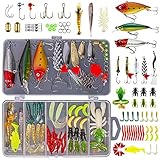
- 【Lifelike Realism & High-Reflective Flash】 Engineered with precision 3D stereo fisheyes and realistic scale patterns, these lures mimic live bait in any water clarity. The genuine-plated fishing spoons offer a brilliant underwater flash, creating highly reflective surfaces that trigger aggressive strikes from predatory fish. Perfect for "cheating" cautious targets into biting
- 【Universal Versatility: Saltwater & Freshwater】 Whether you are ocean boat fishing, rock fishing, or exploring lakes and rivers, this kit excels in all water layers. Each lure is carefully selected to target Bass, Trout, Walleye, and Salmon. From calm ponds to rushing streams, this assorted tackle set meets the diverse needs of any fishing environment or season
- 【Complete 78Pcs Comprehensive Assortment】A professional-grade collection in one Tackle Box. Includes: 1x Crankbait, 1x VIB, 1x Topwater Lure, 33x Soft Plastic Worms, 5x Jigs, 2x Soft Baits, 2x Shrimp Simulations, plus 32 additional realistic accessories. This all-in-one gear set provides a full spectrum of options for anglers to adapt to changing water conditions instantly
- 【Premium Anti-Corrosion Materials】Crafted from high-quality stainless steel and soft, resilient plastic, our lures are designed to resist deformation and saltwater corrosion. Each piece undergoes precision processing for a longer service life compared to standard baits. Durable and practical, this gear ensures you are always ready for the next big catch
- 【Portable Tackle Organizer & Ideal Gift】 All gear is organized in a compact, 17.5cm x 9.5cm x 3cm storage box, making it easy to carry in your vest or backpack. A thoughtful and practical fishing gift for men, fathers, and beginners. Buy with confidence—this portable kit ensures you have the exact bait you need, anywhere, anytime
A practical approach to pursuing large lake trout
The following plan translates ADF&G’s habitat guidance into decisions an angler can make without pretending to recreate the historic catch.
- Confirm the water and rules. Check the current ADF&G sport-fishing regulations for the lake, management area, season, bag limit, tackle restrictions and any special trophy provisions. The 2024–2025 Northern Alaska summary is the publication that lists the 47-pound record, but regulations and record tables can change.
- Start with temperature and depth. In spring, search shorelines, points and shallow structure. As the season progresses, shift toward deep basins, steep rock walls and drop-offs where colder water is available.
- Choose a presentation suited to the depth. A bright spinner or spoon is consistent with ADF&G’s general open-water guidance. For winter, the agency describes large spoons, often with cut bait. Select a size and weight that can reach the target depth while remaining controllable.
- Fish slowly. ADF&G specifically describes slow trolling through cold deep water. Vary the depth and speed methodically rather than racing across a basin; lake trout may be concentrated in a narrow temperature band.
- Cover structure, not just open water. Make passes along drop-offs and steep rock walls, then work the depth where fish are marking or where the temperature is suitable. The useful pattern is the transition between depths, not a claim that every lake trout occupies one fixed contour.
- Handle a large fish carefully. A 47-pound trout is an exceptional fish. Have landing equipment ready, keep the fish supported in the water when possible, and know the legal harvest and recording requirements before you begin. The historical sources do not describe Thorsness’s handling or weighing procedure, so do not infer one from the record listing.
How the record is documented
The 47-pound figure is unusually well defined because two ADF&G publications agree on the core facts. The species profile supplies the July 1970 date and calls the fish the current record. The Northern Alaska sport-fishing regulations summary for 2024–2025 lists 47 pounds, Clarence Lake, 1970 and Daniel Thorsness in its trophy-fish table. Together, those entries establish the record as an Alaska sport-fishing achievement.
What’s actually slowing this PC down?
Pick the symptom - the matching free tool is one click away.
The publications do not provide a photograph, exact length, girth, tackle list, water depth or a first-person account from the angler. Those details should not be added as if they were part of the official record. If a future ADF&G trophy-table revision changes the listing, the agency’s updated table should take precedence.
Best Value
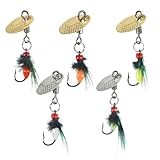
- These lifelike fly fishing lures mimic real mosquitoes in five distinct colors, replicating insects in various life stages. Their vibrant hues enhance underwater visibility to attract fish more effectively.
- Each lure comes pre-assembled with reflective fish-scale-like spinners that create water splashes and reflect light, significantly boosting your chances of a successful catch right after tying to your line.
- Crafted with razor-sharp alloy steel hooks, these durable tips penetrate effortlessly and resist damage, ensuring reliable performance during intense fishing sessions.
- Designed by fly-fishing experts, these versatile lures excel in rivers, lakes, and streams. They’re deadly effective for bass, trout, pike, and sunfish across diverse water conditions.
- Perfect for both beginners and seasoned anglers, the compact box stores all five lures conveniently. Note: Actual lure size is smaller than product images depict.
How this fish compares with ordinary Alaska lake trout
ADF&G’s size context helps put 47 pounds in perspective. The agency says 8- to 10-pound lake trout can be taken in many Alaska fisheries, while some Alaskan populations probably exceed 50 pounds. The record fish is therefore far above the size many anglers encounter, yet it is within the species’ documented capacity in Alaska. “Common” and “possible” are not the same as “record”: a population statement cannot be used to award a new state mark.
| Figure | How to interpret it |
|---|---|
| 8–10 pounds | Size ADF&G says can be taken in many Alaska fisheries; a broad fishery description, not an average for every lake |
| 47 pounds | Published Alaska sport-fishing record associated with Clarence Lake and Daniel Thorsness |
| More than 50 pounds | ADF&G’s statement that some Alaskan populations probably exceed this size; population potential, not a listed sport catch |
| 102 pounds | Separate 1961 Lake Athabasca commercial-gill-net fish cited by ADF&G; not an Alaska sport-fishing entry |
Common questions about Alaska’s largest lake trout
What is the Alaska state-record lake trout?
It is a 47-pound fish caught by Daniel Thorsness at Clarence Lake in July 1970, according to ADF&G’s species profile and trophy table.
Was the 102-pound lake trout caught in Alaska?
ADF&G’s detailed account places the 1961, 102-pound commercial-gill-net fish in Lake Athabasca, Saskatchewan. A U.S. Fish & Wildlife Service profile attributes a 102-pound fish to Alaska, creating a location conflict. That fish is separate from Alaska’s 47-pound sport record.
Recommended Free Tools
Do we know what lure caught the record fish?
Not from the cited official record entries. ADF&G recommends bright spinners or spoons generally and large spoons, often with cut bait, for ice fishing, but it does not identify Thorsness’s tackle.
Are lake trout over 47 pounds possible in Alaska?
ADF&G says some Alaskan populations probably exceed 50 pounds. That biological statement does not change the currently listed 47-pound sport-fishing record.
Could the record change?
Yes. A trophy table can be updated if a qualifying catch is accepted. The listing discussed here is the one shown in ADF&G’s 2024–2025 Northern Alaska summary and species profile; consult the latest ADF&G publication when a current-status claim matters.
Quick Recap
Product prices and availability are accurate as of the date/time indicated and are subject to change. Any price and availability information displayed on Amazon at the time of purchase will apply.





Leave a Reply