
Do not put alcohol on a cat to kill fleas. Veterinary toxicology guidance warns that ethanol, isopropyl alcohol and methanol can poison cats through swallowing, breathing vapour or absorption through the skin. No safe, effective alcohol concentration for feline flea treatment has been established. Use a flea comb for inspection, then ask a veterinarian about a product labeled for cats and treat the home environment to stop reinfestation.
Why alcohol is a poor flea-treatment choice for cats
The question has two separate parts: whether alcohol might kill a flea on contact, and whether it is safe or dependable to apply to a cat. The available veterinary guidance does not establish a concentration-specific flea-kill rate on cats, a safe application method or a lasting protective effect. That leaves efficacy unresolved while the toxicity concern is clear enough to rule alcohol out as a home treatment.
As an Amazon Associate I earn from qualifying purchases.
Alcohol is not one single chemical. VCA identifies ethanol, isopropanol (often called rubbing alcohol) and methanol as alcohols that can cause poisoning. Ethanol can enter the body when a cat licks it from the coat, inhales vapour, or absorbs it through the skin. Cats are particularly sensitive. As VCA veterinary toxicologists Renee Schmid, DVM, DABT, DABVT, and Ahna Brutlag, DVM, MS, DABT, DABVT, put it: “All animals are at risk of alcohol poisoning, but cats are especially sensitive.”
What’s actually slowing this PC down?
Pick the symptom - the matching free tool is one click away.
Applying a liquid to the coat also creates a grooming problem. Even if a product is sprayed only on the fur, a cat can ingest residue while cleaning itself. A soaked coat, a poorly ventilated room or a spill on the skin can increase exposure. The fact that a household product is sold for cleaning, disinfecting or another human use does not make it suitable for feline skin.
#1 Best Overall

- Advantage II Large Cat is a leading brand in cat flea treatment and prevention for large cats over 9 lbs., at least 8 weeks of age
- Vet-recommended, easy-to-apply monthly topical treatment – no hard-to-swallow pills, no prescription needed
- Delivers total flea protection – kills adult fleas, flea larvae and flea eggs through contact
- Same-day effectiveness – kills fleas within 12 hours of application and keeps working for 30 days
- Fragrance-free formula, waterproof after 24 hours of application
Alcohol in a flea spray is not the same as pouring alcohol on a cat
Some commercial flea sprays contain alcohol as one ingredient. The ASPCA warns that a pet soaked with such a product can become intoxicated and advises veterinary or poison-control help after an adverse reaction or excessive exposure. That warning does not mean every cat-labeled flea product is unsafe when used exactly as its label directs; it does mean that excess application, soaking or licking can be dangerous. Never infer that straight rubbing alcohol is an acceptable substitute for a regulated product.
What alcohol poisoning can look like
After a toxic dose, VCA says signs are likely to begin within 15 to 90 minutes. This is an estimate, not a safe waiting period: a cat can become ill sooner or later, and an apparently normal cat still needs professional advice after a meaningful exposure.
| Possible finding | What it can look like | Why it matters |
|---|---|---|
| Neurologic depression | Unusual sleepiness, weakness, poor responsiveness or difficulty walking | Alcohol can depress the nervous system and impair coordination. |
| Gastrointestinal signs | Nausea or vomiting | Vomiting can worsen dehydration and may spread liquid onto the coat for more grooming exposure. |
| Temperature or glucose changes | Low body temperature or low blood sugar | These changes can become emergencies, especially in small cats and kittens. |
| Fluid-balance changes | Increased thirst or urination | These are listed signs of alcohol poisoning and warrant veterinary assessment. |
| Severe poisoning | Slow breathing, heart-rate changes, tremors, seizures, coma or death | These signs require emergency care immediately. |
Not every exposure produces every sign. The amount, alcohol type, concentration, route, the cat’s size and health, and how quickly treatment begins all affect risk. Do not wait for symptoms to decide whether to call.
Rank #2

- EFFECTIVE, WATERPROOF FLEA TREATMENT FOR CATS: PetArmor Plus is a waterproof, flea & tick topical prevention for cats that kills fleas, flea eggs, flea larvae, ticks, and chewing lice for up to 30 days after application.
- TRUSTED, VET QUALITY FORMULA: Containing fipronil and (S)-methoprene, the same active ingredients as FRONTLINE Plus for Cats. PetArmor Plus for Cats has a powerful formula that starts to kill fleas within 24 hours.
- BREAK THE FLEA CYCLE: Unlike other flea and tick treatments that may temporarily suppress flea activity, PETARMOR Plus Cat Flea Treatment works by effectively breaking the flea life cycle Kill flea eggs and larvae to prevent re-infestation.
- FLEA AND TICK PROTECTION: PetArmor Plus for Cats flea drops protects your furry family members from brown dog ticks, American dog ticks, Lone Star ticks, and deer ticks (which may transmit Lyme disease).
- EASY-TO-USE, LONG-LASTING: PetArmor Plus flea and tick treatment comes with three (3) waterproof topical applications that provides your pet flea protection and control for three (3) months.
What to do if alcohol got on your cat
Treat a spill, spray, lick or suspected ingestion as a veterinary poison question. The safest response is prompt, product-specific advice rather than a home antidote.
- Remove the source. Move the cat away from the bottle, sprayed area or fumes and prevent further licking. Keep the cat warm and quiet while you call.
- Call a veterinarian or emergency veterinary clinic immediately. Tell them the alcohol type if known, concentration, estimated amount, route of exposure, time, cat’s weight and any signs.
- Keep the container or label. Bring it with you or photograph every panel, including active ingredients and concentration. Product identity can change the treatment decision.
- Do not induce vomiting unless a veterinary professional specifically directs you. Cornell’s cat-hazards guidance gives this instruction because inducing vomiting can create additional injury or aspiration risk.
- Follow bathing or rinsing instructions from the professional. Do not improvise with solvents, essential oils, detergents or another chemical. A veterinarian may advise a particular decontamination method based on the product and the cat’s condition.
- Go to emergency care for symptoms. Trouble walking, extreme sleepiness, vomiting, low body temperature, tremors, seizures, slow breathing or collapse should be treated as urgent.
Cornell lists ASPCA Animal Poison Control at 888-426-4435 and Pet Poison Helpline at 855-289-0358; confirm current contact details when you call. Poison-control services may charge a consultation fee, and the veterinarian may still need to examine the cat.
How to check for fleas without putting chemicals on the coat
A fine-toothed flea comb is useful for finding evidence, not for solving an established infestation by itself. Cornell recommends combing through the coat over a white surface. Adult fleas may be visible, and dark specks that turn reddish when moistened can be flea dirt (digested blood). Check areas such as the neck, back, belly and base of the tail, while handling an irritated cat gently.
Rank #3
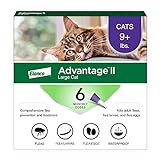
- Advantage II Large Cat is a leading brand in cat flea treatment and prevention for large cats over 9 lbs., at least 8 weeks of age
- Vet-recommended, easy-to-apply monthly topical treatment – no hard-to-swallow pills, no prescription needed
- Delivers total flea protection – kills adult fleas, flea larvae and flea eggs through contact
- Same-day effectiveness – kills fleas within 12 hours of application and keeps working for 30 days
- Fragrance-free formula, waterproof after 24 hours of application
What a comb can and cannot tell you
- It can: reveal live fleas, flea dirt and whether activity is still present after cleaning or treatment.
- It cannot: reliably remove every flea, kill eggs and immature stages in the home, or provide the continuing protection that a labeled preventive may provide.
- It should not: be used as proof that a cat is flea-free after one pass. Fleas can be missed, especially in a thick coat.
Fleas can cause intense itching, skin injury and secondary irritation. Cornell notes that kittens with heavy infestations can be at risk of anemia, so a very young, weak, pale-gummed or heavily infested kitten needs prompt veterinary attention rather than repeated home experiments.
Quick wins for a faster PC:
Clear out junk files and repair common Windows errorsFree Scan →Fix the driver behind crashes, sound loss and screen glitchesFind Drivers →Safer flea-control choices to discuss with a veterinarian
Veterinary flea control is selected by cat, product label and exposure setting. The right choice depends on age, weight, health, pregnancy or nursing status, other medicines, and whether dogs or other animals share the home. Use only a product explicitly labeled for cats and for the cat’s weight range. Never substitute a dog product, split a dose without professional direction or combine insecticides because one product seems slow.
| Category | How it is used | What the guidance says | Questions to ask |
|---|---|---|---|
| Oral flea products | Given by mouth on the schedule on the label | VCA lists oral products as one veterinary flea-control category. Protection period and flea stages affected vary by product. | Is it suitable for this cat’s age, weight, illnesses and other medicines? When is the next dose due? |
| Topical (spot-on) products | Applied to a specified area of skin, not randomly over the coat | Use only a cat-labeled formulation and exact application directions. Licking, wrong species or wrong weight can create risk. | Where exactly should it be placed, and how long must the cat stay away from other pets or children? |
| Shampoos and sprays | Applied during a treatment or bathing event | They may kill fleas present at application but can have little lasting effect. Some sprays contain alcohol, so soaking or excess exposure is hazardous. | Does the label permit use on this cat, and what ventilation, rinsing and reapplication rules apply? |
| Powders | Worked into the coat or environment as the label specifies | VCA cautions that powders may have limited lasting effect and can be hazardous if misapplied or inhaled. | Is this formulation appropriate for a cat that grooms frequently or has respiratory disease? |
These categories are not a product ranking. A veterinarian can match an option to the individual cat and explain which life stages it affects, how long the stated protection lasts and whether another treatment is needed. Read the entire label every time, including age minimums, weight bands, contraindications, storage and instructions for other animals in the household.
Rank #4

- SHIPMENT CONTAINS: One 6-dose pack of Amazon Basics Flea Topical for Large Cats (over 9 pounds)
- FAST ACTING: Eliminates fleas in just 12 hours, providing your cat with swift relief from discomfort with our effective flea medication
- DUAL INGREDIENT FORMULA: Formulated with Imidacloprid and Pyriproxyfen to kill adult fleas and prevent flea infestations
- LONG-LASTING PROTECTION: Protect your cat from infestations for up to 4 weeks with each application, killing reinfesting fleas within 2 hours and efficiently halting the flea lifecycle
- EASY APPLICATION: Designed for monthly use, apply directly to dry skin between the shoulder blades for best results
Why treating the home is part of treatment
Adult fleas on a cat are only one part of the infestation. Eggs and immature stages can remain in bedding, carpets, furniture, cracks and outdoor areas where pets spend time. Cornell summarizes the task this way: “There are only two ways to counter flea infestation: You must rid your cat of the insects, and you must also get them out of the environment where your cat spends time – your home and outdoor property if your cat or his animal roommate is allowed to wander outside.”
A practical environmental plan
- Wash washable bedding. Launder the cat’s blankets, carrier liners and frequently used fabric items according to their care instructions.
- Vacuum methodically. Concentrate on sleeping areas, carpet edges, upholstery, under furniture and floor gaps. Empty the vacuum safely and frequently so captured material does not remain indoors.
- Handle every pet in the household. Ask a veterinarian which cat- or species-labeled products are appropriate for each animal. A dog flea treatment can be acutely toxic to cats.
- Address outdoor areas when relevant. If the cat or another pet goes outside, discuss likely resting areas and practical environmental control with a veterinarian.
- Continue monitoring. Comb over a white surface and watch for new flea dirt. Seeing an occasional flea soon after treatment does not by itself prove product failure; immature stages can emerge from the environment.
Environmental work reduces the number of new fleas reaching the cat, but it does not replace a cat-labeled treatment when an infestation is active. Follow the product’s reapplication interval rather than adding extra doses because fleas are still visible.
Do these 3 things before closing this tab:
1Clear out junk files and repair common Windows errors2Scan for outdated or missing drivers - takes under a minute3Repair Windows errors before they cause bigger problemsCommon mistakes to avoid
- Using rubbing alcohol as a “quick kill.” Isopropyl alcohol can poison cats, and there is no established safe flea-treatment concentration.
- Assuming natural or household means safe. Cats groom residues from their coats, and inhalation or skin absorption can matter as much as swallowing.
- Using a dog flea product on a cat. Cornell warns that flea treatments intended for dogs can be acutely toxic to cats.
- Layering several insecticides. Combining collars, spot-ons, sprays, shampoos or powders without veterinary direction can increase exposure.
- Relying only on a bath or powder. These may remove or kill some adult fleas during application but often provide little continuing control.
- Waiting for severe signs after a spill. The 15-to-90-minute estimate applies to likely onset after a toxic dose, not to a safe observation period.
- Ignoring the environment. Untreated bedding, carpets, other pets or outdoor resting areas can keep the cycle going.
When a veterinarian should be involved urgently
Call immediately after any alcohol exposure, suspected ingestion or soaking with an alcohol-containing spray. Seek emergency care for impaired walking, marked drowsiness, repeated vomiting, low body temperature, tremors, seizures, slow breathing, collapse or pale gums. Also call promptly for a kitten, elderly cat, underweight cat or cat with a chronic illness, because the margin for error may be smaller.
Best Value
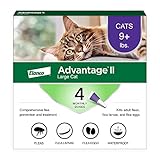
- Advantage II Large Cat is a leading brand in cat flea treatment and prevention for large cats over 9 lbs., at least 8 weeks of age
- Vet-recommended, easy-to-apply monthly topical treatment – no hard-to-swallow pills, no prescription needed
- Delivers total flea protection – kills adult fleas, flea larvae and flea eggs through contact
- Same-day effectiveness – kills fleas within 12 hours of application and keeps working for 30 days
- Fragrance-free formula, waterproof after 24 hours of application
For ordinary flea findings without poisoning signs, arrange veterinary guidance soon if the cat is intensely itchy, has open skin, is losing hair, appears weak or pale, or has a heavy burden of fleas. The clinician can check for anemia or skin complications and choose a treatment plan that includes the cat and the environments in which it spends time.
The safe answer to the alcohol question
There is no veterinary basis for applying alcohol to a cat as a flea remedy. The evidence does not define a safe or reliably effective concentration, while ethanol, isopropanol and methanol can cause poisoning through ingestion, inhalation or skin contact. Use a comb to investigate, obtain cat-specific treatment advice, follow the label exactly and include environmental control. If alcohol has already touched the cat, contact a veterinarian or animal poison service rather than trying to neutralize it at home.
Quick Recap
Product prices and availability are accurate as of the date/time indicated and are subject to change. Any price and availability information displayed on Amazon at the time of purchase will apply.





Leave a Reply