
Some links on this page are affiliate links: if you buy through them we may earn a commission, at no extra cost to you.
The American Cocker Spaniel—registered by the American Kennel Club simply as the Cocker Spaniel—is an affectionate, trainable sporting dog that fits many active households. It is not, however, a low-maintenance decorative breed: its feathered coat needs frequent care, its long ears need regular inspection, and its people-oriented nature makes daily companionship and training important.
This guide covers the American Cocker Spaniel’s size, temperament, exercise, grooming, feeding, health considerations, and how to decide whether one is a good match for your household. It refers to the American breed, not the separate English Cocker Spaniel.
As an Amazon Associate I earn from qualifying purchases.
The Tool Desk
Outbyte Driver Updater FREEFix the driver behind crashes, sound loss and screen glitchesFind Drivers →Outbyte PC Repair FREERepair Windows errors before they cause bigger problemsFix Now →American Cocker Spaniel at a glance
| Characteristic | Typical information |
|---|---|
| U.S. AKC name | Cocker Spaniel |
| Breed group | Sporting Group |
| Typical male height | 14.5–15.5 inches |
| Typical female height | 13.5–14.5 inches |
| Typical male weight | 25–30 pounds |
| Typical female weight | 20–25 pounds |
| Life expectancy | 10–14 years |
| Coat | Long, silky, flat or slightly wavy, with feathering |
| Daily needs | Companionship, exercise, training, coat care, and ear monitoring |
These are breed-guide ranges, not targets for every individual dog. Size varies with sex, breeding line, structure, conditioning, and body condition. The American Kennel Club identifies the Cocker Spaniel as the smallest sporting spaniel and notes that it was recognized by the AKC in 1878.
American Cocker Spaniel vs. English Cocker Spaniel
Despite the shared name, these are separate breeds in the United States. The AKC recognizes the American Cocker Spaniel as the Cocker Spaniel and the English Cocker Spaniel as a different breed. They share spaniel ancestry and sporting abilities, but they differ in conformation, coat presentation, and typical proportions.
Popular on Amazon

- All SIZE SUPPLIED: EHEYCIGA dog beds for medium, large and extra large dogs have many sizes which can fit all kinds of scenes including using in dog kennels and crates, and placing directly on the floor to bring you convenience to choose the best suitable dog bed for large dogs.
- SUPPORTIVE EGG-CRATE FOAM: Our orthopedic dog bed large constructed with 3.5 inches high density egg foam and will provide great support and comfort for dogs and cats.
- SUPPORTIVE FOAM CHOSEN: Our foam dog mat constructed with 3.5-inch high density finest quality foam slab give your pal a perfectly comfy place.
- ULTIMATE SLEEP SURFACE: Plush sherpa top and non-skid bottom of EHEYCIGA flat dog mattress bed creates ultimate softness and coziness for your pets without moving everywhere.
- CARE INSTRUCTIONS: Zippered removable cover is machine washable. Tumble dry on low heat. DO NOT BLEACH. DO NOT IRON. Please note that the inner foam is not washable. After receiving it, leave it for 24-48h for rebound.
When researching breeders, rescues, health records, grooming advice, or food and exercise recommendations, check that the information applies to the American breed. The American Spaniel Club is the AKC parent club and describes itself as the primary guardian of the Cocker Spaniel breed.
Appearance, size, and coat
The American Cocker Spaniel has a compact but sturdy sporting-dog build, a soft expression, large dark eyes, and long, feathered ears. Feathering also appears on the chest, legs, abdomen, and underside. The coat is generally long and silky, and may be flat or slightly wavy.
Recognized color categories include:
- Black varieties, including black coats with permitted markings;
- ASCOB (“any solid color other than black”), including shades such as red, buff, and chocolate; and
- Parti-color varieties, with two or more clearly defined colors.
A show-style coat can be especially demanding. Feathering catches burrs, mud, moisture, and loose undercoat, while areas behind the ears, beneath the legs, around the chest, and on the underside can mat quickly. The American Spaniel Club standard emphasizes that the coat should remain manageable and should not obscure the dog’s functional outline.
Temperament and family life
A well-bred, well-socialized American Cocker Spaniel is typically merry, affectionate, outgoing, eager to please, and responsive to its people. Many are friendly with children, strangers, other dogs, and household pets. That description is a tendency, not a guarantee: genetics, early experiences, training, environment, and the individual dog all influence behavior. Children should always be taught to interact respectfully, and interactions should be supervised.
This is a sporting dog that became a popular companion—not a dog bred solely to sit quietly. Cockers often enjoy retrieving, scent work, chasing, exploring, and taking part in family activities. A dog that is bored or regularly left alone for long periods may bark, whine, dig, or create its own entertainment. A household that wants an affectionate dog involved in daily life is generally a better fit than one looking for a highly independent pet.
Who is this breed suited to?
An American Cocker Spaniel can suit an active family, couple, or single person who can provide companionship, reward-based training, regular outings, and ongoing grooming. It is a weaker match for someone seeking a very low-maintenance coat, a reliably sedentary dog, or a dog that can routinely be isolated for an entire workday without preparation and support.
PC Slower Than It Used to Be?
A free scan shows the junk files, broken settings and background clutter dragging Windows down - then fixes them in one click.Free scan · Windows 10 & 11Outdated Drivers Are Slowing You Down
One free scan finds every outdated or missing driver and matches the right update for your exact hardware.Free scan · exact hardware matchExercise and mental stimulation
Plan daily activity, adapting the amount and intensity to age, health, weather, body condition, and fitness. Useful outlets include:
- brisk walks and energetic play;
- retrieving games;
- hiking on suitable terrain;
- swimming where the water is safe and the dog is supervised;
- scent games and food puzzles;
- obedience and rally;
- agility or other appropriate dog sports.
The AKC describes Cockers as energetic sporting dogs that enjoy play and brisk walks, while veterinary guidance also recommends combining physical activity with obedience or other mental work. A long walk or energetic game may be appropriate for a healthy adult, but there is no single exercise duration that suits every Cocker.
Puppies need age-appropriate play, socialization, and training rather than forced endurance. Older, overweight, or medically compromised dogs may do better with shorter, more frequent outings. Because the breed was developed for hunting and retrieving, use a leash or secure fencing in areas where chasing or wandering could be dangerous. That is a sensible management recommendation, not a claim that every individual will run away.
Also popular on Amazon
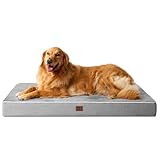
- FULLY WATERPROOF & DURABLE LINER: A tear-resistant waterproof liner beneath the cover protects the memory foam from spills, accidents, and moisture, greatly extending the dogs bed mat lifespan.
- ORTHOPEDIC SUPPOR & EGG CRATE MEMORY FOAM:This orthopedic pet mattress features a dual-layer memory foam core (CertiPUR-US and Oeko-Tex Standard 100 certified) combined with a high-density egg crate base, providing plush comfort and strong support. It is especially suitable for senior dogs or those with joint issues.
- REMOVABLE & MACHINE WASHABLE COVER: The zip-off cover makes cleaning easy—just unzip, remove the foam, and machine wash the cover. No scrubbing needed, keeping your pet beds fresh and odor-free.
- COZY FLEECE TOP & ANTI-SLIP BOTTOM: Dogs love the soft fleece surface that feels like their favorite blanket. The rubberized anti-slip bottom keeps the pet mattress securely in place on any floor.
- VERSATILE SIZES & MULTI-USE: EHEYCIGA dog beds are available in various sizes for small, medium, and large breeds. Perfect for indoors, outdoors, in cars, or even dog crates—wherever your dog loves to rest!
Training and socialization
Cockers are often quick to learn and eager to please, but excitement and distractions can compete with their attention. Keep sessions short, upbeat, and specific. Food rewards, play, praise, and repetition usually make training more productive than intimidation or punishment.
Core skills should include:
- name recognition and attention;
- loose-leash walking;
- recall practiced first in safe, enclosed places;
- “leave it” and impulse control;
- polite greetings;
- settling on a mat or bed;
- safe interaction with people, dogs, surfaces, sounds, and household routines.
Socialization is not simply exposing a puppy to as many things as possible. It means controlled, positive experiences with breaks when the puppy is overwhelmed. Start cooperative handling early: gently practice touching ears, paws, nails, coat, mouth, and tail while pairing handling with rewards. The AKC’s puppy-handling guidance is particularly relevant to a breed that will need lifelong grooming.
Grooming: the commitment many owners underestimate
The coat is beautiful but maintenance-heavy. A full-coated dog generally needs brushing and combing at least two or three times weekly; daily brushing may be more practical for a long, active, or easily tangled coat. A shorter trim reduces—but does not eliminate—the need for brushing and ear care.
A workable home routine
- Brush in sections. Separate the feathering and work methodically from the skin outward so hidden mats are not missed.
- Follow with a metal comb. A comb helps reveal small tangles that a brush may slide over.
- Check high-risk areas. Inspect behind the ears, the armpits, chest, legs, belly, and tail furnishings.
- Inspect after outdoor activity. Remove burrs, mud, and plant material before they tighten into mats.
- Schedule coat trimming. Many owners use a professional groomer about monthly or at an interval suited to the dog’s coat and trim. Others learn to groom with proper instruction.
A professional groom or trained owner may bathe, dry, trim or clip the coat, manage feathering, tidy the paws and sanitary areas, trim nails, and check the ears and eyes. Do not cut tight mats or clip sensitive areas casually; skin can be pulled into a mat, and a frightened dog can be injured. Veterinary guidance from VCA provides additional breed-care context.
For home maintenance, a slicker brush for dogs and a metal comb are practical tools to consider. Product choice should match the individual dog’s coat and skin sensitivity; this is a general shopping starting point, not a claim that one brush or brand is best, and it has not been personally tested here.
Free tools Windows power users keep installed
One-click scans. No signup required.
Ear, dental, and nail care
Long ears
Long, pendulous ears can reduce airflow and trap moisture and debris, and Cocker Spaniels are among the breeds more prone to ear problems. Inspect the ears regularly for redness, swelling, odor, discharge, debris, pain, or frequent head shaking. Dry them carefully after bathing or swimming.
Routine hygiene is not the same as treating an infection. If the ear is painful, inflamed, foul-smelling, or producing discharge, contact a veterinarian instead of repeatedly cleaning it or applying a medicated product without a diagnosis. A dog ear-cleaning solution may be useful for routine care when selected or approved with veterinary guidance, but it cannot prevent every infection and should not substitute for an examination.
For general ear-cleaning technique, see the AKC’s ear-cleaning guidance. Never force a painful ear or insert objects deeply into the canal.
Teeth
Daily tooth brushing is ideal; brushing several times a week is a more realistic minimum for many households. Use toothpaste formulated for dogs, not human toothpaste, and introduce the brush gradually. Home brushing helps control plaque but does not replace veterinary dental examinations or professional treatment when dental disease is present.
Also popular on Amazon

- 【Safe & Certified】Our CertiPUR-US certified foam is made without harmful chemicals to ensure zero toxic off-gassing, while the OEKO-TEX certified fabric is free from allergens and skin irritants. We prioritize your pet’s health so every nap is truly safe and worry-free.
- 【Reversible Orthopedic Support】Crafted with supportive memory foam paired with breathable egg-crate foam in a dual-layer structure, this reversible dog bed evenly disperses body weight to soothe pressure on joints and relieve physical stress. It offers targeted orthopedic care suitable for growing puppies and senior dogs, delivering steady support to enhance comfort and promote sound sleep.
- 【Waterproof & Machine Washable】A premium waterproof inner liner acts as a strong barrier against moisture, preventing liquids from seeping into the core foam. The removable outer cover is completely machine washable and dryer-safe, making it effortless to clean away dirt, fur, or odors for quick and hassle-free maintenance. DESIGN NOTE: The waterproof feature is applied to the top sleeping surface.
- 【Built to Last】Designed with durability in mind, the cover features reinforced stitching (at least 6 stitches per inch) and neatly bound fabric edges built to withstand frequent use and machine washing. It retains its shape, softness, and appearance over time, keeping your pet’s bed looking and feeling new.
- 【Perfect for All Scenarios】: Multiple sizes available for different pet breeds, body types and usage needs. Ideal for dog crates, car rides, outdoor trips and more, catering to your pet’s diverse lifestyle. Whether you need a bed for large dogs, a compact crate mat, or a portable travel pad, we’ve got the perfect fit for you.
A dog toothbrush and toothpaste can help establish a repeatable routine. Choose a size and texture the dog can tolerate, and stop if handling becomes frightening or painful.
Nails
Monitor nail length and trim as needed. Introduce clippers or a grinder in tiny steps: show the tool, reward calm behavior, make a brief sound at a distance, and gradually work toward touching and trimming one nail. A quiet dog nail grinder is one option, but some dogs prefer clippers and not every dog will tolerate a grinder. A groomer or veterinary professional can demonstrate safe technique.
Feeding and weight management
Feed a complete and balanced diet appropriate for the dog’s life stage, activity, body condition, and medical needs. Use the food label as a starting point rather than an unquestionable prescription, and assess body condition regularly with your veterinarian. Cocker Spaniels can gain excess weight when portions, treats, and table food are not controlled.
- Measure meals instead of estimating by eye.
- Count training treats within the daily calorie budget.
- Keep high-fat table foods limited and avoid cooked bones.
- Change diets gradually unless your veterinarian directs otherwise.
- Ask a veterinarian about unexplained weight gain or loss, persistent digestive signs, or a special diet.
A healthy weight protects mobility and makes exercise safer. The right amount depends on the dog—not simply on its sex or the number printed on a feeding chart. The AKC’s nutrition guidance also reinforces portion control and cautious treat use, although owners should apply diet advice to their individual dog with veterinary input.
Quick wins for a faster PC:
Fix the driver behind crashes, sound loss and screen glitchesFind Drivers →Repair Windows errors before they cause bigger problemsFix Now →Health considerations
American Cocker Spaniels can be healthy, but responsible breeding, preventive care, and early attention to symptoms matter. Breed health materials commonly discuss concerns involving the eyes, hips, ears, and weight. The American Spaniel Club’s health resources provide breed-specific information and health-registry context.
Arrange routine veterinary care for wellness examinations, vaccinations, parasite prevention, dental assessment, and age-appropriate screening. Seek veterinary advice for recurrent ear odor, discharge or pain; eye abnormalities; skin changes; dental disease; lameness; seizures; unexplained weight change; or a significant change in behavior.
This information cannot diagnose or treat a dog. Ear symptoms, in particular, may have different causes, and using the wrong cleaner or medication can delay appropriate treatment.
What health testing should a puppy buyer ask about?
No breeder can honestly promise a perfectly healthy dog. A more useful standard is documented, appropriate screening of the parents, honest discussion of family history, and willingness to provide records and support.
What’s actually slowing this PC down?
Pick the symptom - the matching free tool is one click away.
Ask:
- Which eye examination was performed, by whom, and when?
- Are hip evaluations documented?
- Which DNA or other breed-relevant tests are appropriate for these lines?
- Can the parents’ results be independently verified through the Orthopedic Foundation for Animals or an equivalent registry?
- What health conditions have appeared in close relatives?
- What veterinary support, contract terms, and return policy does the breeder provide?
OFA explains that the CHIC program consolidates breed-recommended tests, testing ages, and publicly available results. A CHIC number means the required screenings were completed and made available; it does not mean every result was normal. Breed-club recommendations and available tests can change, so verify current requirements directly with the breeder, parent club, and OFA.
Also popular on Amazon

- Orthopedic Support: The dual-layer, high-density memory foam dog crate mat designed gives your pet optimal support. A soft memory foam top layer combines with a supportive bottom layer to help distribute weight evenly and relieve pressure on joints. ( Not recommended for pets with chewing behavior!!!)
- Easy Care Removable Washable Cover: Bedsure's orthopedic dog bed features an easy-to-remove zippered washable cover that makes deep cleaning a breeze. Simply machine wash and tumble dry.
- Pet Safe Materials & Non-Slip Base: CertiPUR-US certified foam and luxurious flannel come together to create a dog bed that is as safe as it is comfortable. The non-skid bottom reduces slips, keeping your dog's joints safe.
- Various Sizes: Available in 4 sizes for all dog breeds. S size 24×16×3" for dogs up to 20 lbs like Miniature Schnauzers and Pomeranians; M size 29×18×3" for dogs 20-30 lbs like Beagles and French Bulldogs; L size 35×22×3" for dogs 30-50 lbs like Border Collies and Corgis; XL size 41×29×3.5" for dogs 50-90 lbs like Labradors and Pitbulls.
- Versatile Design: Ideal for use at home and on the go as a crate bed or pillow in your car, at a hotel, or wherever life takes you. Easily movable and portable. Features a minimalist design that will fit seamlessly with any decor.
Finding the right American Cocker Spaniel
Speak with several owners and breeders before committing. A responsible breeder or rescue organization should ask questions about your schedule and experience, explain grooming and exercise needs, share relevant health information, and remain willing to support the placement.
Rescue can be an excellent option. With an adult dog, you may have more information about its temperament, grooming tolerance, energy level, and compatibility with children or other pets. That does not remove the need for careful evaluation, veterinary care, and a realistic transition plan.
Use the American Spaniel Club’s guidance on choosing a Cocker as one starting point, but evaluate the individual dog and the source rather than relying on breed popularity, attractive photos, or verbal health promises.
Starter-care checklist
- Slicker brush and metal comb;
- veterinarian-guided, dog-safe ear-cleaning product;
- dog toothbrush and dog-formulated toothpaste;
- nail clippers or a nail grinder introduced gradually;
- secure leash, identification, and a properly fitted harness or collar;
- food-measuring tool and a defined treat allowance;
- a groomer familiar with feathered sporting breeds;
- a veterinary plan covering wellness visits, dental care, vaccinations, parasite prevention, and prompt evaluation of ear or eye symptoms.
These are task-enabling suggestions, not endorsements of particular brands. Choose equipment according to the dog’s coat, size, sensitivity, handling tolerance, and the advice of your veterinarian or groomer.
Frequently Asked Questions
Are American Cocker Spaniels good family dogs?
They can be excellent family dogs when well-bred, socialized, trained, and included in daily life. Many are affectionate and friendly with children and other pets, but supervision, respectful handling, and evaluation of the individual dog are still essential.
How often does an American Cocker Spaniel need grooming?
Brush and comb a full coat at least two or three times weekly, and often daily when the coat is long or the dog is active outdoors. Many dogs also need professional grooming about monthly or on a coat-appropriate schedule.
Are Cocker Spaniels difficult to train?
They are generally eager to please and quick to learn. Short, positive sessions work best, because excitement and distractions can affect attention. Harsh punishment is a poor fit for this sensitive, people-oriented breed.
Recommended Free Tools
What is the difference between an American and an English Cocker Spaniel?
They are separate AKC-recognized breeds. In the United States, the American breed is registered as the Cocker Spaniel, while the English Cocker Spaniel has its own breed designation and characteristics.
Does a CHIC number mean a Cocker Spaniel puppy is guaranteed healthy?
No. A CHIC number indicates that required breed-recommended screenings were completed and made publicly available. It does not mean every test result was normal or guarantee the future health of the dog.
The Bottom Line
The American Cocker Spaniel is a small, affectionate sporting dog with the energy to participate and the coat and ears to maintain. Choose one only if you can provide regular companionship, reward-based training, daily activity, frequent brushing, routine ear and dental care, and responsible veterinary oversight. When those needs fit your household, the breed can be an exceptionally engaging family companion.





Leave a Reply