
No. Veterinary guidance does not establish apple cider vinegar as an effective flea killer for cats, and it provides no safe vinegar dose or application method for treating a cat. Because vinegar is acidic, applying it can irritate or damage tissue, depending on concentration. Ask a veterinarian for a flea product labeled for cats and address the flea stages living in your home as well as those on your cat.
What the evidence actually shows
Vinegar is not an established cat-flea treatment
The feline flea guidance from VCA Animal Hospitals describes veterinary flea-control products and environmental control, but does not recommend apple cider vinegar. The reviewed veterinary sources provide no clinical trial, efficacy percentage, or controlled comparison showing that apple cider vinegar kills fleas on cats.
As an Amazon Associate I earn from qualifying purchases.
That distinction matters. “Not established” is not the same as a clinical trial proving that vinegar has no effect under every condition. It does mean there is no evidence-based cat treatment protocol here: no validated concentration, amount, contact time, frequency, or application technique. A recipe copied from a people-focused or dog-focused source cannot fill that gap.
Recommended Free Tools
Even an anecdotal report that a flea seemed less active after contact with a liquid would not establish a dependable treatment. It would not tell you whether the flea was actually killed, whether eggs and larvae were affected, or whether the cat could safely tolerate repeated exposure. Flea control needs a plan that is predictable enough to protect the animal and reduce reinfestation.
#1 Best Overall

- Advantage II Large Cat is a leading brand in cat flea treatment and prevention for large cats over 9 lbs., at least 8 weeks of age
- Vet-recommended, easy-to-apply monthly topical treatment – no hard-to-swallow pills, no prescription needed
- Delivers total flea protection – kills adult fleas, flea larvae and flea eggs through contact
- Same-day effectiveness – kills fleas within 12 hours of application and keeps working for 30 days
- Fragrance-free formula, waterproof after 24 hours of application
Why a home remedy can be a poor experiment
Fleas are not confined to the fur you can see. Eggs, larvae, and pupae can remain in carpets, furniture, bedding, and other resting areas. Even if an acidic liquid appeared to affect a flea on the coat, it would not by itself control the immature stages elsewhere in the home. Effective control therefore has to be planned for both the cat and the environment.
There is also no reliable way to estimate a vinegar exposure from a household recipe. “A splash,” a spray bottle, or a mixture intended for cleaning can represent very different concentrations. The cat’s size, skin condition, grooming habits, and whether the liquid reaches the eyes or mouth all change the risk. Without a cat-specific label or veterinary instruction, repeating the application is guesswork rather than treatment.
Why putting vinegar on a cat can cause problems
Acidity and tissue injury
Cornell’s Small Animal Toxins guidance lists vinegar among acids that can cause severe tissue damage depending on concentration. The risk depends on the product and the exposure, so “natural,” “food-grade,” or diluted does not automatically mean safe on skin, eyes, paws, or inside the mouth.
A cat’s skin may already be inflamed from bites, scratching, or an allergy. Applying an acid to broken or irritated skin can add another source of pain and tissue injury. The face is especially vulnerable: a spray can reach the eyes, and a cat may rub its face after a wetting application.
Cats also groom themselves. A liquid placed on the coat can be licked and swallowed, and a cat may transfer it to the eyes while rubbing its face. The ASPCA’s Poisonous Household Products information says vinegar-and-water solutions used for household cleaning may cause stomach upset or irritation; it does not establish that such a solution is safe or effective as a flea treatment applied to an animal.
There is no validated “safe recipe”
Neither Cornell nor the ASPCA gives a vinegar concentration, spray method, rinse schedule, or treatment interval for cats with fleas. Do not improvise one by increasing the amount, leaving it on longer, or repeating applications. A stronger mixture does not solve the lack of flea-control evidence and can increase the chance of chemical irritation.
Rank #2

- EFFECTIVE, WATERPROOF FLEA TREATMENT FOR CATS: PetArmor Plus is a waterproof, flea & tick topical prevention for cats that kills fleas, flea eggs, flea larvae, ticks, and chewing lice for up to 30 days after application.
- TRUSTED, VET QUALITY FORMULA: Containing fipronil and (S)-methoprene, the same active ingredients as FRONTLINE Plus for Cats. PetArmor Plus for Cats has a powerful formula that starts to kill fleas within 24 hours.
- BREAK THE FLEA CYCLE: Unlike other flea and tick treatments that may temporarily suppress flea activity, PETARMOR Plus Cat Flea Treatment works by effectively breaking the flea life cycle Kill flea eggs and larvae to prevent re-infestation.
- FLEA AND TICK PROTECTION: PetArmor Plus for Cats flea drops protects your furry family members from brown dog ticks, American dog ticks, Lone Star ticks, and deer ticks (which may transmit Lyme disease).
- EASY-TO-USE, LONG-LASTING: PetArmor Plus flea and tick treatment comes with three (3) waterproof topical applications that provides your pet flea protection and control for three (3) months.
Do not put vinegar in a cat’s food or water as a flea strategy, either. The cited safety information does not establish an oral flea-control benefit, and ingestion can produce stomach upset or irritation. A household cleaner that is generally tolerated when diluted, rinsed, and dried on a surface is not automatically appropriate for a living animal.
Why fleas require more than a quick coat treatment
The life cycle can outlast your first attempt
VCA states that, under ideal conditions, a flea can complete its entire life cycle in as little as two weeks; under adverse conditions, the cycle can take as much as a year. Eggs, larvae, and pupae may be protected in household locations while adult fleas feed on the cat. A single treatment of visible adult fleas therefore may be followed by new adults emerging later.
This timing can make owners think a treatment “failed” immediately or that a new product is needed every time a flea is seen. Instead, emerging stages may reflect the biology of an infestation. Follow the veterinarian’s schedule and product directions rather than shortening the interval or adding an unapproved remedy.
Fleas multiply rapidly
The Cornell Feline Health Center’s Fleas page quotes William Miller Jr., VMD: under ideal conditions, one mated female lays at least 20 eggs a day, and half of those eggs hatch as females. That reproductive capacity explains why a small number of fleas can become a household problem and why treating only the animal may fail.
Because eggs can accumulate where a cat sleeps or rests, the visible number of fleas on the cat is not a measure of the total infestation. Finding only one or two adults does not prove that the home has only one or two fleas. It is a reason to discuss both animal treatment and environmental steps.
Outdated Drivers Are Slowing You Down
One free scan finds every outdated or missing driver and matches the right update for your exact hardware.Free scan · exact hardware matchPC Slower Than It Used to Be?
A free scan shows the junk files, broken settings and background clutter dragging Windows down - then fixes them in one click.Free scan · Windows 10 & 11The environment is part of treatment
VCA identifies pet beds, furniture, carpets, and other areas where pets rest as common locations for flea stages. Cornell likewise says owners must rid fleas from both the animal and its environment. Any household insecticide or other environmental product must be used according to its label, with particular attention to instructions about removing pets, ventilation, re-entry, and drying. The available guidance does not support vinegar as a substitute for environmental flea control.
Rank #3
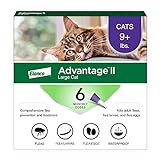
- Advantage II Large Cat is a leading brand in cat flea treatment and prevention for large cats over 9 lbs., at least 8 weeks of age
- Vet-recommended, easy-to-apply monthly topical treatment – no hard-to-swallow pills, no prescription needed
- Delivers total flea protection – kills adult fleas, flea larvae and flea eggs through contact
- Same-day effectiveness – kills fleas within 12 hours of application and keeps working for 30 days
- Fragrance-free formula, waterproof after 24 hours of application
Before using a home product, verify the intended location and which flea life stage it addresses. A product for a carpet is not necessarily intended for direct use on an animal. Keep cats away for the period stated on the label, ventilate as directed, and do not let a cat contact a treated surface until the instructions say it is safe. If the label is unclear about cats, ask a veterinarian or choose a product specifically labeled for the situation.
How to treat a cat that has fleas
Use a veterinary plan rather than experimenting with kitchen products. These steps keep the decision tied to your cat’s age, health, weight, and exposure risk.
- Contact a veterinarian. Ask which flea-control product is appropriate for your cat and describe the cat’s age, approximate weight, medical conditions, pregnancy or nursing status, and any products already used. Kittens, older cats, and debilitated cats may need especially careful selection. Tell the veterinarian whether the cat has skin wounds, heavy scratching, weakness, or a history of reactions to medications.
- Choose only a product labeled for cats. VCA describes oral and topical preparations as well as shampoos, sprays, and powders. The label should specifically identify cats and provide directions for that species, weight range, age, dose, and interval. A product that is safe for a dog, a different weight range, or a different life stage is not automatically safe for your cat.
- Follow the label exactly. Do not substitute a dog product, split a dose unless the label says to do so, or apply a product intended for another species. VCA warns that some dog products may be poisonous to cats. Check the active ingredients and the minimum age and weight requirements before opening the package.
- Do not combine insecticides without veterinary advice. Using several products at once can increase exposure without improving control. Tell the veterinarian about every flea, tick, deworming, or household product in use, including anything applied recently and anything used on another pet that shares the home.
- Plan environmental control at the same time. Treat the cat’s resting areas and household flea stages using only products and methods whose labels permit use around cats. Follow directions for carpets, furniture, bedding, and other locations rather than applying an unapproved substance to the animal. Household treatment may require preparation such as moving pets, allowing surfaces to dry, and observing re-entry instructions.
- Continue monitoring. Seeing an occasional flea after treatment does not tell you whether the product was used correctly or whether newly emerging fleas are present. Follow the prescribed interval and contact the veterinarian if fleas persist, the cat develops skin damage, or the cat seems unwell. Do not respond by applying doses more frequently than directed.
Choosing among treatment formats
The following comparison reflects what the veterinary guidance establishes. It does not rank brands or claim that one format is best for every cat.
| Approach | What the guidance supports | What you must verify |
|---|---|---|
| Cat-labeled topical preparation | VCA lists topical flea-control products as an option. | Species, weight range, application site, dose, interval, age restrictions, and whether the cat can be groomed or handled immediately afterward. |
| Cat-labeled oral preparation | VCA lists oral flea-control products as an option. | Species and weight labeling, dosing schedule, health restrictions, and instructions for giving the dose safely. |
| Shampoo, spray, or powder | VCA describes these formats but notes that some have limited lasting effect. | Whether the product is labeled for cats, how often it may be used, required contact time, and precautions for licking or inhalation. |
| Household flea-control product | Environmental treatment may be necessary because immature flea stages persist in the home. | Intended location and flea life stage addressed, ventilation and re-entry rules, drying time, and exact safety directions for cats and people. |
| Apple cider vinegar | No reviewed source establishes it as an effective cat-flea treatment. | There is no validated feline dose, application method, efficacy percentage, or controlled comparison to rely on. |
When comparing real options, the useful questions are practical: Is it labeled for cats? Is the dose matched to this cat’s weight and age? How often is it used, and how long does the label say its effect lasts? Is a veterinarian comfortable with it given the cat’s health and other medications? Those questions are more informative than choosing a product because it is marketed as natural or because it worked for a different animal.
What untreated fleas can do to a cat
Skin injury and secondary infection
Flea bites and the scratching they provoke can injure skin. Cornell describes skin damage and infection risks associated with flea infestations. A cat that is persistently scratching, chewing at its coat, developing scabs, or losing hair should be examined rather than repeatedly exposed to home remedies. Damaged skin can make grooming painful and can complicate assessment of the original flea problem.
Blood loss and anemia
Heavy infestations can remove enough blood to cause anemia, with particular concern for kittens and for debilitated or older cats, according to VCA. Weakness, unusual tiredness, pale gums, rapid breathing, or collapse warrants urgent veterinary attention. A kitten with many fleas should not be managed by waiting to see whether vinegar works. Flea control and an examination may both be needed when a cat appears weak or unwell.
Rank #4

- SHIPMENT CONTAINS: One 6-dose pack of Amazon Basics Flea Topical for Large Cats (over 9 pounds)
- FAST ACTING: Eliminates fleas in just 12 hours, providing your cat with swift relief from discomfort with our effective flea medication
- DUAL INGREDIENT FORMULA: Formulated with Imidacloprid and Pyriproxyfen to kill adult fleas and prevent flea infestations
- LONG-LASTING PROTECTION: Protect your cat from infestations for up to 4 weeks with each application, killing reinfesting fleas within 2 hours and efficiently halting the flea lifecycle
- EASY APPLICATION: Designed for monthly use, apply directly to dry skin between the shoulder blades for best results
If vinegar has already been used
Stop applying it and prevent further licking or contact. Watch for signs such as drooling, vomiting, diarrhea, mouth or skin irritation, squinting, rubbing the face, coughing, or unusual behavior. The seriousness depends on the substance, concentration, route, and amount, so contact your veterinarian or an animal poison-control service for case-specific advice.
Do these 3 things before closing this tab:
1Clear out junk files and repair common Windows errors2Fix the driver behind crashes, sound loss and screen glitches3Repair Windows errors before they cause bigger problemsDo not induce vomiting after a possible acid exposure. Cornell specifically advises against inducing vomiting after acid exposure because the material can damage tissue again on the way back up. Have the product container, ingredients, concentration, estimated amount, and time of exposure available when you call. If the cat has trouble breathing, collapses, has severe pain, or has obvious eye injury, seek emergency veterinary care.
If the product reached the eyes, mouth, or a large area of damaged skin, do not wait for symptoms to become severe before calling. A veterinarian or poison-control professional can tell you what first aid is appropriate for the particular product. Do not apply another household substance to “neutralize” the vinegar unless a professional specifically directs you.
Questions to ask your veterinarian
- Which flea product is labeled for this cat’s species, age, and weight?
- Is an oral or topical format more appropriate given the cat’s medical history and grooming behavior?
- What environmental steps are needed for carpets, furniture, bedding, and other resting areas?
- How should existing flea or household products be spaced, and which combinations should be avoided?
- What symptoms would mean the cat needs an urgent examination?
- How long should I expect to see occasional fleas while household stages are being controlled?
- What should I do if I accidentally use a dog product or the wrong dose?
The practical answer
Apple cider vinegar is not a proven flea killer for cats, and the available safety guidance does not provide a safe feline application protocol. A veterinarian can select a cat-labeled treatment and help you address fleas in the home, where eggs, larvae, and pupae may continue the infestation. Avoid improvising with vinegar or dog products, and seek professional advice promptly if a cat has been exposed or shows signs of illness.
Frequently Asked Questions
Does apple cider vinegar kill fleas on cats?
It has not been established as an effective cat-flea treatment. Veterinary guidance provides no validated dose, application method, efficacy percentage, or controlled comparison for using it on cats.
Can I spray diluted vinegar on my cat?
Do not rely on a homemade spray. Vinegar is an acid that can irritate or damage tissue depending on concentration, and cats may lick it or get it in their eyes. Ask a veterinarian for a cat-labeled product instead.
Best Value
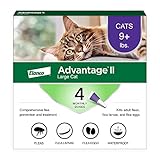
- Advantage II Large Cat is a leading brand in cat flea treatment and prevention for large cats over 9 lbs., at least 8 weeks of age
- Vet-recommended, easy-to-apply monthly topical treatment – no hard-to-swallow pills, no prescription needed
- Delivers total flea protection – kills adult fleas, flea larvae and flea eggs through contact
- Same-day effectiveness – kills fleas within 12 hours of application and keeps working for 30 days
- Fragrance-free formula, waterproof after 24 hours of application
How do I treat my cat if she has fleas?
Contact a veterinarian, choose a product labeled for cats and matched to the cat’s age and weight, follow the label exactly, and address flea stages in bedding, carpets, furniture, and other resting areas.
Are dog flea products safe for cats?
Not necessarily. VCA warns that some dog products may be poisonous to cats. Use only products specifically labeled for cats unless a veterinarian gives different instructions.
Why do I still see fleas after treating my cat?
Eggs, larvae, and pupae can persist in the home. VCA says the life cycle can take as little as two weeks under ideal conditions and as long as a year under adverse conditions, so newly emerging adults may appear while environmental control continues.
What’s actually slowing this PC down?
Pick the symptom - the matching free tool is one click away.
What should I do if my cat licked vinegar?
Stop further exposure and contact a veterinarian or animal poison-control service with the product, concentration, amount, and time of exposure. Do not induce vomiting after a possible acid exposure; seek emergency care for breathing trouble, collapse, severe pain, or eye injury.
The Bottom Line
Bottom line: Apple cider vinegar has no validated, cat-safe flea-treatment protocol. Use a veterinarian-recommended product labeled for cats, treat the household environment according to product directions, and get prompt help after an exposure or if your cat is weak, painful, or showing signs of anemia.
Quick Recap
Product prices and availability are accurate as of the date/time indicated and are subject to change. Any price and availability information displayed on Amazon at the time of purchase will apply.





Leave a Reply