
Some links on this page are affiliate links: if you buy through them we may earn a commission, at no extra cost to you.
Aquarium essentials for beginners are a correctly sized tank, stable stand, filter with biological media, water conditioner, test kit, substrate and maintenance tools, plus a heater and thermometer for tropical fish. Cycle the aquarium before stocking: clear water is not proof that ammonia and nitrite are safe or that the filter is mature.
A beginner aquarium is a managed ecosystem, not a decorative bowl. Equipment selection, treated water, biological cycling, compatible stocking and routine maintenance all work together to protect fish welfare.
As an Amazon Associate I earn from qualifying purchases.
Key takeaways
- A beginner aquarium needs a correctly sized tank, stable stand, filter, suitable biological media, water conditioner, test equipment and maintenance tools before fish arrive.
- A clear aquarium is not necessarily safe: ammonia and nitrite must reach 0 mg/L and remain there before normal stocking.
- PetMD’s 2026 beginner guide estimates that a new aquarium may take four to six weeks to fully cycle, but the test results—not the calendar—decide readiness.
- OATA recommends testing at least weekly once a freshwater aquarium is stable, with more frequent testing during setup, cycling and after adding fish.
- OATA gives up to 25% weekly as a general freshwater water-change figure, but the correct schedule depends on tank size, species, stocking and test results.
- Fish should be chosen for adult size, compatibility, social needs and water requirements rather than a universal “fish per gallon” formula.
What aquarium supplies do beginners need?
A beginner freshwater aquarium needs more than a glass tank and a fish. The basic setup should include an appropriately sized aquarium, a level stand, a filter with biological media, a heater and thermometer for tropical fish, water conditioner, a water test kit, substrate, suitable lighting, a secure cover where appropriate, shelter or plants, a siphon or gravel vacuum, and a dedicated bucket.
| Supply | What it does | Important buying check |
|---|---|---|
| Tank and stand | Holds the water and provides a stable habitat | Choose a tank that accommodates the fish at adult size; use a stable, level stand designed for the aquarium |
| Filter | Moves water and houses biological media where beneficial bacteria grow | Match the filter to the tank volume and allow room for biological media and replacement parts |
| Heater and thermometer | Maintain and monitor temperature for tropical species | Check the fish’s temperature range and the heater’s rated tank volume |
| Water conditioner | Treats replacement tap water for chlorine or chloramine | Use an aquarium-specific conditioner according to its label |
| Test kit or strips | Measures ammonia, nitrite, nitrate and pH; hardness may also matter | Confirm that ammonia and nitrite are tested directly, not inferred |
| Substrate | Provides a base for the aquarium and can support plants | Choose gravel or sand that suits the fish and is practical to clean |
| Light and cover | Supports normal day/night presentation and plants; the cover helps contain fish where appropriate | Match lighting to plant needs and leave safe cable routes |
| Plants or decorations | Provide hiding places, shelter and environmental enrichment | Avoid sharp or toxic materials and leave adequate swimming space |
| Siphon and bucket | Remove waste and aquarium water during maintenance | Keep the bucket exclusively for aquarium use |
OATA’s freshwater aquarium setup checklist covers the overlapping essentials, including the aquarium, filter, heater, lighting, substrate, tap-water conditioner, siphon, decorations or plants, bucket and water-testing equipment. PetMD’s 2026 freshwater aquarium guide also lists a thermometer, tank cover and nitrifying bacteria among setup supplies.
Popular on Amazon

- Efficient Filtration: The high-density and unique structure of the sponge provide exceptional mechanical filtration. It effectively captures and removes impurities, suspended particles, and waste from the water, maintaining a clear and stable aquatic environment for the well-being of your aquatic organisms.
- Premium Material: Manufactured from high-quality sponge material, this product ensures durability and long-term stability. The sponge is resistant to deformation, decomposition, and dissolution, maintaining its filtration efficiency and longevity.
- Easy Installation: Users can accurately cut it to the desired size and easily place it into the filtration system.
- Reusable: This Sponge is easy to clean and maintain. It can be washed and reused multiple times, allowing you to restore its filtration performance regularly and prolong its lifespan, offering an economical and eco-friendly filtration solution for aquarium enthusiasts.
- Size: 20x20x1 inch, 20PPI
How should you choose a beginner aquarium?
Choose the largest aquarium that is practical for your space, budget and maintenance routine, while making sure the aquarium can house the selected fish at full adult size. A larger water volume is generally more forgiving because temperature and chemistry changes are less rapid than in a very small aquarium.
When comparing a freshwater aquarium starter kit, do not assume that every included component is suitable for every fish. Check the actual tank dimensions, filter capacity and biological-media space, heater inclusion and rating, light, cover, maintenance tools and the adult size and number of fish the aquarium can responsibly support. A kit that omits a heater, thermometer, conditioner or usable test equipment may still require substantial additional purchases.
Quick wins for a faster PC:
Scan for outdated or missing drivers - takes under a minuteDriver Scan →Repair Windows errors before they cause bigger problemsFix Now →Fix the driver behind crashes, sound loss and screen glitchesFind Drivers →| Decision | Prefer | Why it matters |
|---|---|---|
| Tank shape | Useful swimming length and adequate water volume | Fish need space suited to their adult behavior, and greater volume is usually more stable |
| Filter | Appropriate flow with accessible biological media | The filter must support bacterial colonization as well as circulate water |
| Heater | Adjustable heater with a clear tank-volume rating and a thermometer | Wattage and temperature control must suit the aquarium and species |
| Maintenance access | Easy access to the filter, heater and tank interior | Equipment that is difficult to clean or service is more likely to be neglected |
| Safety | Level support, secure cover where appropriate and safe cable arrangements | Water, electricity and an unstable stand create avoidable hazards |
Do tropical fish need a filter and heater?
Tropical fish generally need both a filter and a suitable heater, while an unheated aquarium is a separate choice for species that can live safely at the available room temperature. A heater should not be selected from a generic wattage rule alone: match the manufacturer’s rating to the tank volume and verify the result with a thermometer.
PetMD gives 72–82°F as a broad tropical-fish orientation in its 2026 setup guide, but the selected species’ care requirements take priority. Aqueon’s official catalog documents 10-watt heaters for aquariums up to 5 gallons, illustrating why heater size must be checked against the specific product and aquarium rather than guessed.
A filter is not merely a pump that moves water. OATA’s filtration training describes filtration as the aquarium’s “Life Support System (LSS)” because filtration supports water quality and fish welfare. Filter flow should suit the fish: excessive turbulence can stress some species, while inadequate circulation or insufficient biological media can leave the aquarium unstable.
Why does a new aquarium need to cycle?
A new aquarium needs to cycle so beneficial nitrifying bacteria can establish in the filter media and process fish waste. Fish waste and uneaten food contribute ammonia; the biological filter converts ammonia to nitrite and then nitrate. Ammonia and nitrite are toxic, even when the aquarium water looks perfectly clear.
The Tool Desk
Outbyte Driver Updater FREEScan for outdated or missing drivers - takes under a minuteDriver Scan →Outbyte PC Repair FREEClear out junk files and repair common Windows errorsFree Scan →Also popular on Amazon

- Efficient Purification: Designed for both freshwater and saltwater aquariums; Helps capture floating particles and impurities; Promotes clearer and cleaner water; Improves overall water quality over time; Works continuously to maintain a balanced aquatic environment
- Porous Filtration Structure: Features a hollow and porous design that allows smooth and even water flow; Offers an expanded filtration area to reduce clogging; Physically traps debris from the water column; Supports a more stable filtration process; Enhances circulation in your tank
- Multiple Applications: Ideal for use in freshwater and saltwater tanks; Compatible with ponds, fish tanks, and filter cartridges; Versatile for different filtration systems; Can be placed in various container types; Suitable for both home and professional aquarium setups
- Simple To Use: Rinse the ceramic rings with clean water before use; Place into a filter container or directly into the filter chamber; Replace part of the media every six months to one year for best results; No tools required for setup; Easy to handle and store
- Model Compatibility: Works with filter systems including 106, 206, 306, 406, FX5, FX6, 105, 205, 305, 405, 104, 204, 304, and 404; Designed to fit standard filtration chambers; Can be used alongside other filter media types; Helps upgrade your current filter performance; Offers flexible placement options
OATA explains that a new filter does not initially contain the bacterial population required for a stocked aquarium. During maturation, ammonia and nitrite can rise and later fall, while nitrate generally rises. OATA’s freshwater guidance describes the practical readiness signal as ammonia and nitrite falling to zero and remaining there; stocking should then proceed gradually rather than all at once.
“The aquarium filter then needs to ‘mature’.” — Ornamental Aquatic Trade Association, freshwater aquarium care guidance
How long should you cycle a fish tank?
Plan on approximately four to six weeks for a new aquarium to fully cycle, but use water-test results rather than elapsed time as the decision rule. PetMD gives four to six weeks as a planning estimate in its 2026 beginner setup guide; cycling speed varies with temperature, the cycling method, bacterial seeding, the ammonia source, filter media and biological load.
- Set up the tank, substrate, decorations, filter and heater.
- Treat the water before it enters the aquarium.
- Establish an appropriate ammonia source for the chosen cycling method rather than adding fish as a test.
- Test ammonia, nitrite and nitrate regularly during cycling.
- Wait until ammonia and nitrite are 0 mg/L and remain there under the conditions that will exist when fish are added.
- Add a small initial group, then continue testing before increasing the stock.
“Clear water” describes appearance, not biological maturity. A tank can be bright and transparent while ammonia or nitrite is dangerous, so visual inspection cannot replace testing.
How do you make tap water safe for fish?
Use an aquarium water conditioner on every batch of replacement tap water before that water enters the aquarium. OATA specifically advises treating replacement water to remove harmful chlorine or chloramine; allowing tap water to stand is not a universal substitute, particularly where the water supply uses chloramine.
Use a conditioner designed for aquarium water, follow its label, and add it to replacement water before that water enters the tank. Seachem describes Seachem Prime as one example of a concentrated freshwater and saltwater conditioner that removes chlorine and chloramine and detoxifies ammonia, nitrite and nitrate when used according to its directions. The example is not a claim that one brand is mandatory.
Also popular on Amazon

- UNASSEMBLED REPLACEMENT CARBON FILTER Keeps aquarium water crystal clear – removes odors and discoloration
- CATCHES DEBRIS Dense dual-sided mesh filters debris and fish waste
- FITS TETRA WHISPER WATER FILTERS Color coded to make it simple to remember which replacement cartridge size to purchase
- CONVENIENT Easy to assemble and easy to replace
- USAGE Change monthly or sooner if needed
How often should you test aquarium water?
Test aquarium water more frequently during setup, cycling and the period after fish are added. Once the aquarium is stable, OATA’s care guidance recommends testing at least weekly for ammonia, nitrite, nitrate, pH and water hardness; hardness is particularly relevant when the selected species has specific chemistry requirements.
Ammonia and nitrite are the most urgent readings. OATA gives 0 mg/L for both ammonia and nitrite in coldwater and tropical freshwater home aquaria. Nitrate requires species-specific interpretation and may already be present in tap water. A freshwater aquarium water test kit or suitable test strips can make routine monitoring easier; Aqueon’s official aquarium product catalog documents 7-in-1 aquarium test strips and ammonia test strips for water-quality monitoring.
Free tools Windows power users keep installed
One-click scans. No signup required.
| When | What to test or observe | What the result means |
|---|---|---|
| During cycling | Ammonia, nitrite and nitrate regularly | Shows whether the biological filter is developing and processing the ammonia source |
| Before adding fish | Ammonia and nitrite | Both should be 0 mg/L and remain there before normal stocking |
| After adding fish | Ammonia and nitrite more frequently | Detects a biological-load increase before fish show severe stress |
| Stable aquarium | At least weekly: ammonia, nitrite, nitrate, pH and hardness | Builds a record and identifies gradual changes |
| When behavior changes | Water quality first, then temperature and other husbandry factors | Finds common, preventable environmental causes quickly |
How often should you change fish-tank water?
Perform partial water changes to remove dissolved waste and help control nitrate, using a gravel vacuum or siphon to remove solid waste at the same time. OATA gives up to 25% every week as a general freshwater-maintenance figure, but tank size, species, stocking level and test results determine whether that schedule is sufficient.
- Prepare replacement water in the dedicated bucket.
- Add aquarium water conditioner according to the product label.
- Adjust the replacement water to a temperature appropriate for the aquarium.
- Use an aquarium gravel vacuum or siphon to remove a partial volume while lifting waste from the substrate.
- Add the treated replacement water gently to avoid disturbing fish, plants or substrate.
- Check that the filter and heater restart correctly and that the fish behave normally.
Cleaning is not the same as sterilizing. The aim is controlled waste removal while preserving the biological filtration that keeps the aquarium stable. Do not rinse biological filter media under chlorinated tap water. Lightly rinse the media in water removed from the aquarium instead, as OATA explains in its aquarium care guidance.
How many fish can you put in a beginner aquarium?
There is no universally reliable number of fish per gallon. OATA explains that aquarium capacity depends on body size, species requirements, water parameters and compatibility, so fish should be selected for adult size and behavior rather than fitted to a simple formula.
Add fish slowly. Each additional fish and every increase in feeding raises the biological load, and the filter’s bacterial population may need time to adjust. Test ammonia and nitrite after each stocking increase, and be prepared to pause further additions or perform appropriate maintenance if readings rise.
Also popular on Amazon
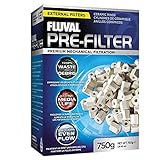
- Mechanical filter media prevents finer filter media from clogging
- Solid ceramic rings trap large and medium solid particles
- Works to prevent clogging of finer filter modules
- Helps reduce the replacement frequency of filter media
- Ideal for medium and coarse filtration in freshwater and saltwater aquariums
Which fish are easiest for beginners?
Potentially suitable beginner tropical-fish categories include tetras, guppies, mollies, platies, swordtails, corydoras and gouramis, according to OATA’s freshwater aquarium guidance. The list is not a universal community-tank recipe.
Before buying any fish, verify the species’ adult size, minimum tank dimensions, temperature range, pH and hardness preferences, social requirements, swimming level, feeding needs and aggression or predation risk. Some fish need groups, some become much larger than they appear in a store, and some otherwise peaceful species are unsuitable with particular tank mates.
A specialist fish retailer can be useful for checking local water chemistry, species compatibility and realistic stocking plans. Ask for the scientific name where common names are ambiguous, and compare the advice with a reliable species-care source before purchasing.
Independent reader supportYour contribution helps us test, update, and keep practical guides available for everyone.How should you acclimate new fish?
Acclimate new fish gradually to reduce temperature shock and the stress of a sudden change in water chemistry. OATA describes floating-bag acclimation for temperature equalization and gradually adding aquarium water to the transport bag, with drip acclimation as an option for sensitive fish or major chemistry differences.
- Bring the fish home promptly and avoid leaving the transport bag in bright conditions.
- Dim or switch off the aquarium light.
- Float the sealed bag to equalize its temperature with the aquarium.
- Add small amounts of aquarium water to the bag gradually.
- Release the fish carefully without adding unnecessary transport water to the aquarium.
- Monitor behavior and test ammonia and nitrite during the first week.
What warning signs should beginners watch for?
Changes in swimming, position, color, aggression, hiding, breathing, body condition, feeding or visible lesions can indicate a problem. Check water quality first when fish behavior changes, because poor water conditions are a common and preventable source of stress.
Warning signs listed by OATA include hanging at the surface, sitting on the bottom, erratic swimming, altered breathing, white spots, fluffy growths, and loss of fins or scales. If a fish is struggling at the surface or breathing abnormally, test ammonia and nitrite immediately and take corrective action based on the readings rather than adding medication blindly.
Also popular on Amazon

- Chemical filter media that removes toxic ammonia as water passes over it
- Provides a healthy environment for well-stocked freshwater aquariums
- Controlling ammonia levels reduces stress on fish
- For freshwater use only; for best results, replace once a month
- Includes three 180-gram nylon bags
Beginner aquarium setup checklist
- Choose a tank that suits the fish at adult size and place it on a stable, level stand.
- Install a filter with suitable biological media.
- Add a heater and thermometer for tropical fish, or choose genuinely suitable unheated species.
- Rinse appropriate substrate as directed and arrange shelter, plants and decorations safely.
- Fill the aquarium with tap water treated with aquarium conditioner.
- Install the light, cover and equipment with safe cable arrangements.
- Cycle the aquarium and test ammonia, nitrite and nitrate.
- Do not add normal fish stocking until ammonia and nitrite are 0 mg/L and remain there.
- Add fish gradually and continue testing after each increase.
- Perform partial water changes with treated, temperature-matched water.
- Clean biological media only in removed aquarium water, not chlorinated tap water.
Frequently Asked Questions
What aquarium supplies do I need as a beginner?
A beginner freshwater aquarium needs a tank and stable stand, filter with biological media, heater and thermometer for tropical fish, water conditioner, test equipment, substrate, suitable lighting, a cover where appropriate, shelter or plants, a siphon or gravel vacuum, and a dedicated bucket. Fish should be added only after the aquarium cycles and ammonia and nitrite reach 0 mg/L.
How long should I cycle a fish tank before adding fish?
Plan for roughly four to six weeks, based on PetMD’s 2026 beginner setup guidance, but do not add fish solely because that time has passed. The aquarium is ready when ammonia and nitrite test at 0 mg/L and remain there under the intended biological load.
Recommended Free Tools
Do I need a filter and heater for a fish tank?
Yes, tropical fish generally need a filter and a suitable heater. An unheated aquarium is a different setup intended only for species that can safely live at the available room temperature; use a thermometer to verify conditions.
How often should I test aquarium water?
Once a freshwater aquarium is stable, OATA recommends testing at least weekly for ammonia, nitrite, nitrate, pH and hardness. Test more often during setup, cycling, after adding fish or whenever fish behavior changes.
The Bottom Line
The safest beginner aquarium is a cycled, tested and lightly stocked ecosystem—not a decorative bowl. Buy equipment around the adult needs of the fish, condition every batch of replacement tap water, test ammonia and nitrite, add fish gradually, and preserve the filter’s biological media during maintenance.





Leave a Reply