
Do these 3 things before closing this tab:
1Scan for outdated or missing drivers - takes under a minute2Clear out junk files and repair common Windows errors3Fix the driver behind crashes, sound loss and screen glitchesThe right aquarium filtration system combines mechanical filtration to catch debris with biological filtration to process nitrogenous waste. Choose equipment for your tank’s volume, livestock, bioload, flow tolerance, available media space, and your willingness to maintain it. Install the media in the manufacturer’s specified order, run the filter reliably, monitor the nitrogen cycle, and protect established biological media during cleaning. Chemical media, such as activated carbon, is an optional tool for a defined purpose—not a substitute for a mature biofilter or regular water changes.
What an aquarium filter actually does
“Filtration” describes several different jobs that may happen in one housing. A filter pump moves water through media, but the pump alone does not make water biologically safe. Each stage addresses a different type of problem, and the stages work together.
As an Amazon Associate I earn from qualifying purchases.
Mechanical filtration removes suspended debris
Mechanical media physically traps uneaten food, feces, plant fragments, dust, and other particles suspended in the water. Foam, sponge, floss, and pads are common examples. This stage keeps visible waste from circulating and protects finer or biological media from becoming clogged. Because it collects solids, mechanical media is normally the first stage water encounters. The Merck Veterinary Manual states, “Mechanical filtration should precede biofiltration.” Follow your filter’s marked flow direction and media diagram rather than rearranging cartridges by guesswork.
Biological filtration processes nitrogenous waste
Fish, invertebrates, and decomposing organic matter add ammonia to the system. During the nitrogen cycle, nitrifying bacteria convert ammonia to nitrite and then nitrate. Biological media—such as porous ceramic material, sponge, or other surfaces designed for colonization—gives these microbes a large, protected place to live. The filter is important, but it is not the only habitat: gravel, decorations, aquarium walls, live rock, and other wet surfaces can also support bacteria.
#1 Best Overall

- QUIET AQUARIUM FILTER: The Tetra Whisper IQ Power Filter with Stay Clean technology contains a sound shield for quiet filtration less than 40 dB.
- SELF PRIMING: Submerged motor starts up with no priming required.
- CAPACITY: The Tetra Whisper IQ 20 Power Filter works in filters up to 20 gallons (130 GPH).
- STAY CLEAN TECHNOLOGY: By maintaining healthy pH levels, creates easier maintenance for healthier fish.
- CARTRIDGE REFILLS: Change cartridges monthly; uses large-sized Tetra Whisper Bio-Bag Filter Cartridges (refills sold separately).
A new filter contains little or none of the mature microbial community required for a fully stocked aquarium. Installing the motor and filling the media does not instantly establish biological filtration. The community develops as the aquarium cycles, so water testing and gradual stocking are essential.
Chemical filtration targets selected dissolved compounds
Chemical media changes or adsorbs particular substances dissolved in water. Activated carbon is a familiar example, but chemical media is purpose-specific and has a finite service life. It can be useful when the product is appropriate for the problem and the filter is designed to use it. It cannot replace mechanical debris removal, biological colonization, testing, or water changes. Some treatments and medications are removed by carbon, so remove or bypass it when the treatment label requires that.
How to choose the right aquarium filter
Start with the aquarium as a system, not with a pump’s largest number. The same nominal flow can behave very differently once water passes through media, tubing, elbows, and a dirty intake. Consider all of these questions before buying:
The Tool Desk
Outbyte PC Repair FREEClear out junk files and repair common Windows errorsFree Scan →Outbyte Driver Updater FREEFix the driver behind crashes, sound loss and screen glitchesFind Drivers →- Tank volume: Match the filter’s stated capacity to the actual water volume, allowing for substrate, décor, and equipment that displace water.
- Livestock and bioload: More fish, larger animals, heavy feeding, and messy species create more waste and may require more media capacity or more than one filter.
- Flow tolerance: Strong circulation may suit some setups but stress inhabitants that prefer gentle water. A spray bar, prefilter, baffling, or adjustable output can make flow more usable if the filter supports it.
- Media capacity: A larger media chamber gives you room for mechanical and biological stages and makes it easier to preserve mature biological material during maintenance.
- Access and maintenance: A filter that is difficult to open, prime, or clean is less likely to be maintained consistently.
- Installation constraints: Check clearance behind the aquarium, water depth, rim design, electrical access, tubing routes, and whether the filter can run safely at the intended water level.
Aqueon gives four to six aquarium volumes per hour as general flow guidance. Treat that as a starting rule of thumb, not a universal standard. Nominal pump ratings may exceed the flow delivered after media and plumbing resistance, and species, aquascape, and system design determine whether that circulation is appropriate. Maximizing flow does not automatically create adequate biological filtration.
Filter-type comparison
| Filter type | Typical strengths | Limitations to plan for | Best fit considerations |
|---|---|---|---|
| Sponge filter | Simple mechanical and biological surface, gentle circulation, easy visual inspection, and usually low maintenance complexity. | Requires an air pump or compatible circulation source; a single sponge may offer less polishing of very fine particles than layered media. | Useful where gentle flow, low power complexity, or easy biological preservation matters. |
| Hang-on-back (HOB) | Hangs on the rim, keeps much of the equipment outside the tank, and commonly offers separate chambers or cartridges for mechanical and biological media. | Needs rear clearance and a safe water level; an intake or impeller can become noisy or lose flow when clogged or when the water evaporates. | Convenient access for many community aquariums when the tank rim and clearance are compatible. |
| Internal filter | Fits inside the aquarium, avoids external tubing, and can provide adjustable or directed circulation in compact systems. | Uses swimming space, places the motor in the display, and may require more frequent access if the small media compartment clogs. | Useful when external space is limited or an internal, self-contained unit is preferred. |
| Canister filter | Usually provides substantial room for staged mechanical and biological media and can route return flow through a spray bar or other outlet. | External hoses and seals add installation points; opening, priming, and leak-checking require a deliberate routine. | Useful when media capacity and flexible flow routing are priorities and the cabinet or floor can support the equipment. |
There is no universally best type. A modestly stocked tank with gentle-flow inhabitants may be better served by a simple, well-maintained sponge than by an oversized, turbulent unit. A heavily stocked aquarium may need additional biological capacity, prefiltration, or redundant circulation. Select the arrangement you can keep clean and running continuously.
Rank #2

- QUIET AQUARIUM FILTER: The Tetra Whisper IQ Power Filter with Stay Clean technology contains a sound shield for quiet filtration less than 40 dB.
- SELF PRIMING: Submerged motor starts up with no priming required.
- CAPACITY: The Tetra Whisper IQ 45 Power Filter works in tanks up to 45 gallons (215 GPH).
- STAY CLEAN TECHNOLOGY: By maintaining healthy pH levels, creates easier maintenance for healthier fish.
- CARTRIDGE REFILLS: Change cartridges monthly; uses large-sized Tetra Whisper Bio-Bag Filter Cartridges (refills sold separately).
Use flow numbers in context
Turnover is calculated as the water volume moved in an hour divided by the aquarium volume. For example, the general four-to-six-times guidance would put a nominal 100-litre aquarium in a broad starting range of 400–600 litres per hour. That calculation does not promise that the installed filter will deliver its rated flow, nor does it account for inhabitants that need calmer water.
Do not transfer government design examples directly to home aquariums. Hong Kong’s Food and Environmental Hygiene Department gives an example of a 600-litre fish tank using 20 litres per minute to achieve a 30-minute whole-system turnover. That is a specific example in fish-tank filtration and disinfection guidance, not a recommended target for every home tank.
Quick wins for a faster PC:
Clear out junk files and repair common Windows errorsFree Scan →Fix the driver behind crashes, sound loss and screen glitchesFind Drivers →Arrange the media and water path
Water should encounter stages in a logical order: remove larger particles first, then expose the water to biological media, and add chemical media only when there is a stated reason. The exact basket, cartridge, and tray order is model-specific, so the instruction manual takes priority over a generic diagram.
- Intake and prefilter: Position the intake where it can draw water from the aquarium without being buried or blocked. A sponge prefilter can protect small animals and catch coarse debris if the model supports one.
- Coarse mechanical stage: Place the washable or coarse sponge where it receives the dirtiest incoming water. This captures large particles before they reach finer media.
- Fine mechanical stage: Use floss or a finer pad only where the manual allows it. Fine material clogs quickly if coarse debris reaches it first.
- Biological stage: Keep the designated biological media in continuous, oxygenated flow. Do not pack it so tightly that water bypasses the media or the pump strains.
- Chemical stage, if justified: Add activated carbon or another chemical medium in its supplied bag or cartridge, after the mechanical stage and where the manufacturer specifies. Remove it when a treatment label says it will interfere.
- Return outlet: Aim the outlet to create surface movement and complete circulation without producing a harmful jet. Use the supplied spray bar, diffuser, or flow control when available.
Never assume that a replacement cartridge with a different internal layout is interchangeable. If the manufacturer identifies one side as the intake or labels a tray sequence, preserve that sequence.
How to set up an aquarium filter
Set up the aquarium, filter, media, and electrical equipment before adding the full livestock load. The following sequence applies broadly; use the model’s manual for priming, impeller access, and water-level limits.
Rank #3

- WITH ROTATING BIO-WHEEL: Patented Bio-Wheel technology provides excellent wet/dry biological filtration.
- MULTI-STAGE FILTRATION: Delivers mechanical, chemical and biological aquarium filtration to maintain a clean aquatic environment.
- MARINELAND FILTRATION PRODUCTS: Count on Marineland brand for the most reliable, technically advanced aquariums and accessories on the market.
- COMPATIBILITY: Use with Marineland Rite-Size Filter Cartridges (see individual filter for sizing recommendations).
- FIVE SIZES: Available in 75 GPH, 100 GPH, 150 GPH, 200 GPH and 350 GPH sizes.
- Inspect every component. Check the housing, impeller, seals, tubing, suction cups, clips, media baskets, and power cord for shipping damage. Do not operate equipment with a cracked housing or damaged cable.
- Rinse new media as directed. Remove manufacturing dust from sponges, ceramic media, and carbon bags with dechlorinated water or the method stated by the manufacturer. Do not use soap or household cleaners.
- Install media in the specified order. Confirm the direction of water flow and ensure each basket or cartridge seats fully. Leave enough space for water to pass through the media rather than around it.
- Secure the intake and return. Keep the intake submerged to the depth specified by the manual. Fit the return outlet so it cannot spray outside the aquarium or siphon unexpectedly during a power interruption.
- Fill and prime safely. Fill the aquarium to the operating level and prime an external unit exactly as instructed. Never run a pump dry; a dry impeller can overheat or fail.
- Start the filter and observe it. Confirm that water is moving through every intended stage, the outlet is not obstructed, and the surface has appropriate movement. Listen for persistent grinding or rattling.
- Check for leaks and bypass. Wipe all external connections dry, wait, and inspect again. Look for water escaping around seals, hoses, clips, or the aquarium rim. Verify that water is not simply bypassing a poorly seated cartridge.
- Let the system stabilize. Keep the filter running continuously unless the manual or a specific treatment requires otherwise. Record the normal water level, sound, and flow so a later change is easy to recognize.
Does a new aquarium filter need to cycle?
Yes. The equipment can circulate water immediately, but its biological stage is not mature on day one. Nitrifying bacteria establish over time while processing ammonia, then nitrite, and finally producing nitrate. Until that community is established and stable, adding the full intended livestock load can cause dangerous ammonia or nitrite accumulation.
What’s actually slowing this PC down?
Pick the symptom - the matching free tool is one click away.
Monitor the cycle instead of guessing
- Use a reliable aquarium test kit appropriate for the system and follow its instructions consistently.
- Track ammonia, nitrite, and nitrate trends rather than treating one reading as proof that the filter is mature.
- Allow the intended biological load to build gradually. A filter that handled a lightly stocked tank yesterday may not instantly handle a large new addition today.
- Avoid overfeeding while the bacterial community develops; excess food becomes additional waste.
- Perform water changes and other husbandry required by test results and livestock needs. Filtration reduces waste compounds but does not make water changes unnecessary.
Aqueon’s nitrogen-cycle guidance emphasizes gradual stocking, avoiding overfeeding, regular testing, and water changes. Follow the same principle whether the filter is a sponge, HOB, internal, or canister model.
Marine aquariums have additional biological surfaces
In marine systems, live rock and live sand can contribute to biological filtration, as described in the University of Florida IFAS marine aquarium guide. That arrangement is specific to marine-system design. Do not assume that live rock or live sand is required for, or automatically transfers to, every freshwater aquarium.
Maintenance without destroying the biofilter
Maintenance is a sequence of inspections and targeted cleaning, not an automatic replacement of every cartridge. Follow the filter manual for opening the housing, cleaning the impeller, lubricating or replacing seals, and changing media. Keep a written log of what you changed and when.
Inspect flow first
Watch the return outlet and compare it with the normal pattern you recorded after installation. Reduced flow can result from a clogged intake, dirty mechanical media, trapped air, a blocked hose, a fouled impeller, low water level, or media packed too tightly. Correct the simplest obstruction before replacing biological media.
Rank #4
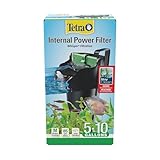
- INTERNAL POWER FILTER: Tetra Whisper Internal Power Filter for 5- to 10-gallon aquariums uses medium Whisper BioBag filter cartridges that are easy to change.
- QUIET 85 GPH MOTOR: The internal pump efficiently filters up to 85 gallons per hour.
- POWERFUL FILTRATION: Water flows through the cartridge floss, trapping debris and fish waste, while Ultra-activated carbon helps remove odor and discoloration.
- SPACE-SAVING DESIGN: Your aquarium can be 1” from the wall with the internal filter designed to clip directly on your aquarium wall and be hidden by décor.
- EASILY ADJUSTABLE: Adjustable clip allows for a variety of setups to easily adjust to high or low water levels.
Clean mechanical media as it captures waste
Remove trapped debris according to the manufacturer’s instructions. If the manual permits rinsing, use removed aquarium water or otherwise suitable dechlorinated water rather than chlorinated tap water. Replace disposable fine pads when they can no longer be cleaned effectively, but do not discard all stages at once if doing so would remove the main biological surface.
Preserve biological media
Established biological media carries much of the microbial community that processes nitrogenous waste. Avoid replacing or thoroughly scrubbing every biological component in one session. If cleaning is necessary, handle only the portion required to restore flow and preserve the remaining colonized surface. Never leave biological media dry for an extended period while the filter is disconnected.
Replace chemical media for its stated purpose
Chemical media is not permanent. Aqueon says its chemical media may require replacement every four to six weeks, depending on filter size, water conditions, and fish load. Treat that as Aqueon-specific guidance, not a universal interval. Replace media sooner or later when the product instructions, test results, or the defined treatment objective require it.
Independent reader supportYour contribution helps us test, update, and keep practical guides available for everyone.Common setup and maintenance problems
The filter is running but the water is cloudy
First determine whether the cloudiness is suspended debris, a new-system bacterial bloom, or a dissolved-color issue. Confirm that mechanical media is installed before biological media and that water is actually passing through it. Do not respond by repeatedly replacing all biological media; that can delay establishment of the bacterial community. Continue testing and follow the maintenance plan while the system stabilizes.
Flow suddenly drops
Unplug the equipment before inspecting it. Check the intake guard or prefilter, mechanical pads, tubing, water level, and impeller for blockage. Reassemble the housing and confirm that every seal and media basket is seated. If flow returns only briefly, the media may be clogging rapidly because the aquarium is producing more debris than the current mechanical stage can hold.
Best Value

- UNASSEMBLED REPLACEMENT CARBON FILTER Keeps aquarium water crystal clear – removes odors and discoloration
- CATCHES DEBRIS Dense dual-sided mesh filters debris and fish waste
- FITS TETRA WHISPER WATER FILTERS Color coded to make it simple to remember which replacement cartridge size to purchase
- CONVENIENT Easy to assemble and easy to replace
- USAGE Change monthly or sooner if needed
The outlet is too strong
Do not solve excessive current simply by turning the filter off. Redirect the outlet toward a wall, use the supplied spray bar or diffuser, reduce the setting if adjustable, or add an appropriate baffle or prefilter. Observe whether inhabitants can rest and feed normally while maintaining adequate circulation.
The filter is noisy
Persistent rattling, grinding, or splashing often indicates trapped air, a low water level, a loose cover, a dirty impeller, or a misaligned component. Check the manual’s priming procedure and water-level requirement. Disconnect power before touching the impeller. If noise continues after cleaning and correct assembly, replace the worn part or contact the manufacturer rather than operating a damaged unit.
Ammonia or nitrite appears after adding livestock
Assume the biological capacity is insufficient for the current load until testing shows otherwise. Stop adding animals, avoid overfeeding, verify that the filter is running, and perform water changes appropriate to the test result and livestock. Investigate dead material, clogged media, recent medication, or a complete media replacement that may have removed colonized surfaces. Resume stocking only after readings remain stable under the actual load.
A practical selection checklist
- Measure the aquarium’s real operating volume.
- List current and planned livestock, feeding intensity, and any species that require gentle flow.
- Choose a filter with enough room for both mechanical and biological media.
- Compare the manufacturer’s nominal flow with the circulation you can achieve after media and plumbing are installed.
- Confirm that the unit fits the tank rim, cabinet, water depth, and electrical layout.
- Make sure you can open, clean, prime, and restart it without moving the entire aquarium.
- Plan a prefilter or intake guard if small inhabitants could be drawn in.
- Keep replacement mechanical media and a suitable water-test kit available.
- Decide in advance what problem, if any, chemical media will solve.
- Write down normal flow, water level, and maintenance actions so changes are obvious.
What filtration cannot do
A filter cannot compensate for chronic overstocking, excessive feeding, decaying material left in the aquarium, or untreated source water. It also cannot guarantee that every species will tolerate the same circulation. Water testing, appropriate stocking, feeding control, water changes, temperature and chemistry management, and observation remain part of aquarium care.
The strongest setup is therefore not the one with the biggest pump or the most cartridges. It is the one whose mechanical stage stays clear enough to protect biological media, whose biological community is given time to mature, whose optional chemical media has a defined job, and whose owner can maintain it consistently.
Quick Recap
Product prices and availability are accurate as of the date/time indicated and are subject to change. Any price and availability information displayed on Amazon at the time of purchase will apply.





Leave a Reply