
Automatic litter boxes are optional, not a universal necessity. They can reduce the amount of scooping some households do, but they do not remove cleaning, litter replacement, inspection, or the need to provide a box that your cat can comfortably and confidently use. The right choice depends on your cat’s size, age, mobility, preferences, health, and your ability to maintain the machine.
Are automatic litter boxes really necessary?
No. The veterinary guidance reviewed for this article does not describe an automatic box as required for feline health. Merck Veterinary Manual guidance prioritizes a clean, accessible box that suits the individual cat. A veterinarian-authored overview reaches a similar practical conclusion: automation may reduce scooping for some owners, but the device is useful only if the cat accepts it and the owner continues the required care.
As an Amazon Associate I earn from qualifying purchases.
A conventional tray that is large enough, placed in a quiet and reachable location, scooped regularly, and cleaned properly can meet a cat’s toileting needs. An automatic unit is best understood as an accessibility or workload aid. It may be worthwhile when daily scooping is difficult because of work schedules, mobility limitations, multiple cats, or a need for more consistent waste removal. It is not a substitute for observing your cat or responding to changes in elimination.
There is also no established independent study showing that automatic boxes are universally safer, healthier, or time-saving than well-maintained ordinary boxes. Product pages may contain useful specifications, but claims such as odor performance or the number of days between tray changes are manufacturer claims rather than independent statistics.
#1 Best Overall

- Superior Pet Safety Protection:Built-in infrared motion sensors instantly halt the cleaning cycle once your pet is nearby. The upgraded safety structure guarantees comprehensive pet safety even when operating under remote app monitoring
- Extra Large Capacity for Multi-Cat Homes 95L spacious litter drum comfortably serves multiple cats, paired with a 15L sealed waste storage compartment for long uninterrupted use. Perfect for busy families and traveling owners, compatible with most clumping and silica cat litters
- Intuitive Smart App ControlRemotely manage automatic cleaning, customize waste disposal schedules, and monitor real-time litter consumption through the dedicated app. Receive instant notifications for full waste bins; supports only 2.4GHz WiFi connection
- Leak-Proof & Eco-Friendly Reusable StructureReinforced sealed edges and detachable waste tray effectively eliminate litter spills and messes. Comes with a washable reusable liner to simplify daily maintenance, cut down disposable waste and lower long-term consumable costs
- Ultra-Quiet Night Operation ModeLow-decibel running design delivers nearly silent performance with little disturbance. Great for light sleepers and households with active nighttime cats.
How self-cleaning litter boxes work
“Self-cleaning” describes the waste-collection mechanism, not a maintenance-free appliance. Most units separate waste from usable litter after a delay, then hold it in a drawer, bag, tray, or covered compartment.
| Mechanism | What moves | Where waste goes | Important trade-offs |
|---|---|---|---|
| Rotating or sifting bowl | A drum, bowl, or screen rotates to separate clumps | An internal or attached waste drawer | Needs enough interior room for a cat to turn and posture; moving parts and noise can deter cautious cats |
| Rake-and-tray | A rake travels across the litter surface after a cycle delay | A covered compartment or disposable tray | Tray and litter compatibility are often tightly specified; rakes can jam if clumps are wet or oversized |
| Conveyor-style system | A slow conveyor carries clumps away from a bowl | A collection bin lined with a bag | Requires the specified clumping litter and unobstructed access to the conveyor |
| App-connected unit | The mechanical separator works with sensors and software | A bin or tray, with usage data sent to an app | Wi-Fi, power, sensor cleaning, and software access add failure points; readings are observations, not diagnoses |
For example, the manufacturer describes the PetSafe Simply Clean model PAL17-10786 as using a slow-moving conveyor and a bowl that completes one rotation each hour. Its instructions specify clumping cat litter and recycled plastic bags for the collection bin. That describes how this model is designed; it does not prove that it will suit every cat or outperform a clean traditional tray.
When an automatic box may be worth the trade-offs
It can reduce a repetitive task
If scooping several times a day is physically difficult or frequently missed, a machine can remove waste more consistently between your visits. That benefit applies only while the unit is powered, operating correctly, and supplied with the right litter and bags or trays.
The Tool Desk
Outbyte PC Repair FREEClear out junk files and repair common Windows errorsFree Scan →Outbyte Driver Updater FREEScan for outdated or missing drivers - takes under a minuteDriver Scan →It may help in a multi-cat home
More cats create more waste and require more frequent cleaning. Merck recommends generally providing at least one more litter box than the number of cats in the household. An automatic unit can be one of those boxes, but it should not be the only option if another cat refuses it or if a fault takes it out of service.
It can make access easier for an owner
For an owner with limited bending, lifting, or hand strength, a larger waste drawer emptied less often may be a meaningful accessibility improvement. Check the drawer’s weight when full, the height of the opening, and whether disassembly is manageable before buying.
When a standard tray is the better choice
- Your cat is frightened by motors, movement, vibration, or enclosed spaces.
- The machine’s entry is high, the interior is cramped, or your cat has arthritis or another mobility limitation.
- You cannot reliably buy the specified litter, trays, liners, deodorizer, or replacement parts.
- You need a simple setup that continues working during power, Wi-Fi, sensor, or software failures.
- You are unwilling to inspect and clean the unit as often as the manual requires.
A familiar, open tray is often the least stressful option for a nervous cat, a kitten learning litter habits, or an older cat that needs a low-sided entry. Merck also advises a secluded, low-traffic, easily accessible location; noisy appliances and cold, hard floors can discourage use regardless of the box’s automation.
Check the cat fit before checking the features
Measure usable toilet space
Exterior dimensions can be misleading. Measure the area where the cat actually stands, turns, digs, and squats. The cat should be able to enter without squeezing, turn around without touching the walls, and adopt its normal posture. Compare those measurements with the manufacturer’s interior dimensions, not just the footprint on the floor.
Quick wins for a faster PC:
Scan for outdated or missing drivers - takes under a minuteDriver Scan →Repair Windows errors before they cause bigger problemsFix Now →Fix the driver behind crashes, sound loss and screen glitchesFind Drivers →Assess entry height and footing
High steps or slippery ramps can be difficult for kittens, senior cats, and cats with arthritis. A lower-sided tray may be safer for an arthritic cat even if it requires more frequent manual cleaning. Place a stable, non-slip mat outside the opening and keep the approach clear.
Rank #2
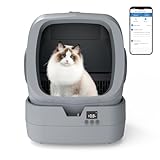
- 😸Perfect for medium-sized cats and kittens: This automatic cat litter box is ideal for medium-sized cats and kittens, making it a great choice for households with one or more cats. Product size: 19.84*18.23*22.44inch
- 🔕Quiet and Peaceful Operation: With cleaning noise below 35 dB—comparable to a whisper or a refrigerator hum—this litter box ensures a tranquil environment for your home and pets.
- 📱Smart App Integration: Seamlessly connect the litter box to the app using 2.4GHz Wi-Fi or Bluetooth. Monitor your cat's health in real-time and access detailed usage history, including weight, time spent, and frequency of use.
- 💦Easy to Maintain: The litter box’s intuitive design makes cleaning straightforward. No complicated steps—just lift the drum for quick and efficient cleaning to keep your pet’s space hygienic. The drum part is fully washable with water.
- 🔧Requires assembly: This product takes approximately 30 minutes to assemble. We also offer a version that requires no assembly in our store. To ensure smooth installation, please watch the assembly video and read the user manual in advance. After powering on and adding new cat litter, please run the "Level" mode.
Check age and weight limits
Limits are model-specific. The European-market distributor page for the Kerbl Smart Cat Litter Box, reference 85787, states eligibility at 1.5 kilograms or more and from about four months of age. That threshold applies to that model and market only; it is not a universal rule for automatic boxes. Follow the exact manual for kittens, small cats, large breeds, and cats with medical conditions.
Consider sound, motion, and enclosure
Watch how your cat reacts to the unit while it is unplugged, then during a supervised cycle. Never assume a cat will tolerate a sudden rake or rotating chamber because it uses ordinary boxes. A frightening cycle can lead to avoidance or accidents.
Litter, trays, and consumables are model-specific
Do not choose litter by appearance alone. The separator must be able to recognize and move clumps, crystals, or waste in the way the manufacturer designed it.
| Example model | Specified supplies or operation | Claims and limits to remember |
|---|---|---|
| PetSafe Simply Clean, PAL17-10786 | Clumping cat litter; recycled plastic bags for the collection bin; conveyor and one bowl rotation per hour | Use the manual’s litter and bag guidance; operating details are manufacturer specifications, not independent performance testing |
| PetSafe ScoopFree Crystal Plus, PAL00-18016 | Official disposable or reusable ScoopFree crystal trays; a rake moves waste into a covered area | “Up to 30 days” and “5x better odor control” are manufacturer claims with no independent comparative validation in the reviewed material |
| Kerbl Smart Cat Litter Box, reference 85787 | Waste bags, replacement deodorizer, app operation, sensor monitoring, and Wi-Fi | Age and weight eligibility, supplies, and connectivity requirements apply to this European-market model |
Proprietary trays can simplify disposal but create an ongoing supply dependency. Reusable trays may reduce purchases while adding washing and drying work. Before buying, confirm the exact litter type, liner dimensions, tray availability in your country, deodorizer requirements, and what happens when a component is out of stock.
Introduce the machine without forcing the cat
- Place it correctly. Choose a quiet, low-traffic location away from food and water, with a clear route and enough room for the cat to turn around.
- Keep the familiar tray. Put the new unit beside the old box rather than removing the old one immediately. The familiar option prevents a forced transition.
- Let the cat investigate while it is off. Add the approved litter and allow sniffing and exploration without activating movement.
- Run supervised cycles. Observe the cat’s reaction to sound and motion. Keep hands, paws, and tails away from moving parts.
- Wait for voluntary use. Do not place a cat inside, block access to the old tray, or punish accidents. Gradually reduce reliance on the old tray only after the cat uses the new one calmly.
- Keep both options during problems. If avoidance begins, restore access to a clean familiar tray and check for noise, odor, an entry problem, a jam, or a litter mismatch.
Duncan Houston, veterinarian and founder of Ask A Vet, summarizes the acceptance test plainly: “A clean machine that a cat avoids is not a successful upgrade.”
Independent reader supportYour contribution helps us test, update, and keep practical guides available for everyone.What maintenance still remains
Every automatic box needs human care. Depending on the model, that includes emptying the waste drawer, replacing a disposable tray or liner, topping up litter, removing stuck clumps, wiping surfaces, cleaning sensors, checking power and connectivity, and inspecting moving parts for wear. Follow the device manual for which components may be washed, how they must dry, and where lubricants or cleaning fluids are prohibited.
Merck’s general litter-box guidance recommends scooping daily and cleaning the entire box at least weekly, with more frequent cleaning when more cats use the boxes. Those are general cat-litter recommendations, not a universal automatic-device schedule. An automatic cycle does not change the need to keep the litter bed clean or to follow a model’s maintenance instructions.
Public-health cleaning
The CDC’s February 18, 2026 guidance says items that touch feces or urine, including a cat litter box, should be disinfected as often as one would disinfect a toilet or bathroom. Follow both the cleaner label and the device manufacturer’s instructions. Never mix bleach with ammonia or other cleaners, and do not use disinfectants containing phenol around cats.
Rank #3
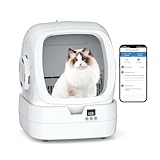
- 😸Ideal for small to medium cats: Designed to accommodate kittens and medium-sized cats, this litter box is suitable for pets weighing between 3.5 lb and 15 lb. A great option for single or multiple cat homes.
- 🔕Low-Noise Performance: With operating sound kept below 35 dB—similar to a soft whisper or gentle appliance hum—it won’t disturb your daily life or your pet’s rest.
- 📱App Connectivity: Connect quickly via 2.4GHz Wi-Fi or Bluetooth and stay informed with real-time monitoring. The app provides detailed data, including your cat’s weight, visit duration, and frequency.
- 💦Simple Cleaning Process: The user-friendly structure allows for easy maintenance. Just remove the drum for quick cleaning, and the washable design ensures better hygiene.
- 🔧Assembly Required: Setup takes about 30 minutes. For best results, please review the instruction manual and watch the installation video before starting.
Pregnant people and people with weakened immune systems should have someone else clean the box if possible. If that is not possible, the CDC advises daily scooping, disposable gloves, and thorough handwashing. These precautions apply whether waste is removed by hand from a tray or emptied from an automatic drawer.
Monitor the cat, not just the app
Some connected units report visit counts, weight, or cycle status. Those records can help you notice a change, but they cannot diagnose illness. A cat may visit without urinating, another cat may trigger the sensor, or a disconnected device may miss an event.
Soiling outside the box can signal illness or a behavior problem and requires veterinary attention. Straining, repeated trips with little or no urine, crying, vomiting, or obvious distress needs urgent veterinary advice; urinary blockage is a life-threatening emergency, especially in a male cat. Do not wait for an app alert or assume the machine’s data rules out a medical problem.
Recommended Free Tools
Troubleshooting common failures
The cat refuses the box
Restore the old tray, verify that the opening and interior are large enough, move the unit away from noise, and check whether a cycle starts while the cat is nearby. Use the familiar litter if the manual permits it; otherwise, transition gradually. Persistent avoidance or new house-soiling warrants veterinary guidance.
The unit jams or leaves waste behind
Turn it off before investigating. Check for litter outside the approved type, oversized or poorly formed clumps, an overfilled waste drawer, a blocked rake or conveyor, and sensors covered with dust. Reassemble only as the manual directs and test an empty cycle before allowing the cat near moving parts.
Odor is still a problem
Empty the waste compartment before it is full, clean urine or litter residue from accessible surfaces, replace saturated crystals or deodorizer as directed, and improve room ventilation. Do not add fragrances or chemicals that the manual does not approve; masking odor can make the box less acceptable to the cat.
The app or sensor is unreliable
Confirm power, Wi-Fi, permissions, and firmware requirements for that model. Clean the sensor area and check the manufacturer’s error code instructions. Until readings are reliable, inspect the box and observe the cat directly rather than treating missing data as proof that nothing happened.
Free tools Windows power users keep installed
One-click scans. No signup required.
A practical decision checklist
- Cat fit: Can every cat enter, turn, posture, dig, and leave comfortably?
- Health and age: Are entry height, movement, and the model’s stated limits appropriate?
- Acceptance: Can you keep a familiar tray during a gradual introduction?
- Supplies: Are approved litter, bags, trays, filters, and deodorizers available locally?
- Maintenance: Can you empty, clean, inspect, and troubleshoot the unit on schedule?
- Fallback: Do you have another clean box if the machine jams or loses power?
- Observation: Will someone still notice changes in urine, stool, frequency, posture, or behavior?
If the answer to these questions is yes, automation may justify its cost and complexity. If not, investing in a larger open tray, additional boxes, better placement, and a dependable cleaning routine is likely to deliver more reliable benefits.
Quick Recap
Product prices and availability are accurate as of the date/time indicated and are subject to change. Any price and availability information displayed on Amazon at the time of purchase will apply.





Leave a Reply