Recommended Free Tools
Fish gills are not considered poisonous by default, but that does not mean every fish’s gills are safe to eat. Risk depends on the fish species, where it was caught, possible contamination, and how it was handled. There is no general rule that makes gills safe—or unsafe—as a class.
What “poisonous” means for fish gills
Three different hazards can be confused under the word “poisonous”:
As an Amazon Associate I earn from qualifying purchases.
- Natural toxins: Some fish can carry toxins associated with their species or habitat. The FDA identifies ciguatera risk in certain tropical and subtropical reef fish and treats puffer-fish poisoning as a distinct hazard. Those risks do not apply to every fish or automatically to every fish organ. FDA guidance on seafood-related toxin illnesses.
- Environmental contamination: Fish may accumulate contaminants from their surroundings. How much is present can differ by species, location, and tissue.
- Spoilage and mishandling: Time and temperature abuse can create hazards in susceptible fish, even when the fish does not appear obviously spoiled. The FDA discusses these seafood hazards in its Fish and Fishery Products Hazards and Controls guidance.
Gills filter water, but that fact alone does not prove they are poisonous or that eating them causes illness. Similarly, detecting particles or contaminants in gills is not, by itself, evidence of harm to a person who eats them.
Do these 3 things before closing this tab:
1Fix the driver behind crashes, sound loss and screen glitches2Repair Windows errors before they cause bigger problems3Scan for outdated or missing drivers - takes under a minuteCan you eat fish gills?
The evidence does not establish a blanket answer for all species. It neither provides an authoritative general recommendation that gills are edible across fish species nor a universal prohibition against eating them. A safety decision needs to apply to the actual fish: its species, harvest location, relevant local advisories, and handling history.
#1 Best Overall
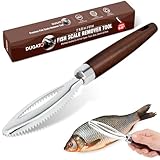
- Premium Stainless Steel Fish Scaler: Crafted from high-quality 304 stainless steel, this fish scale remover tool is durable, and food-safe. The serrated edge removes scales quickly and efficiently without dulling over time—making it an essential seafood cleaning tool for home kitchens, restaurants, or outdoor cooking.
- Comfortable Wooden Handle: Crafted with an ergonomic beech wood handle, this fish scaler scraper provides a secure grip. Its extended length minimizes wrist strain and hand fatigue, enabling you to clean fish comfortably and with enhanced control.
- Quick, Safe & Mess-Free Cleaning: The double-row serrated blade easily removes scales from fish of all sizes while protecting the meat underneath. This kitchen fish descaler is safer to use thanks to its blunt-edge design. Built-in grooves catch loose scales to minimize mess and keep your prep area clean.
- Easy to Clean & Store: The hollow scraper prevents clogging, ensuring smooth and continuous scaling. Simply rinse under running water after use and hang it up with the built-in hanging hole. This stainless steel fish scraper keeps your kitchen tools organized and ready for the next seafood meal.
- Versatile Seafood Tool for Any Occasion: Ideal for descaling salmon, trout, sardines, sea bass, and more. Beyond fish scaling, it can also serve as a lung remover or food scraper. A must-have kitchen gadget for seafood lovers, perfect for home cooking, professional kitchens, fish markets, BBQs, and outdoor fishing trips.
Start with the species and harvest location
Some natural-toxin concerns are linked to particular fish and regions. Check official local fish-consumption advisories for wild-caught fish, especially when the source or harvest area is uncertain. FDA mercury advice helps consumers compare seafood types because methylmercury levels vary among them; it is not a gill-specific safety certification. FDA advice on mercury in food.
Consider handling and temperature history
For susceptible fish, poor time-and-temperature control can lead to scombrotoxin (histamine) poisoning. The FDA states that the histamine toxins associated with this hazard are not destroyed by cooking, freezing, smoking, curing, or canning. That warning is specific to the histamine hazard; it should not be taken as a statement about every seafood toxin. FDA information on scombrotoxin poisoning and decomposition.
Rank #2
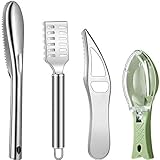
- Quality material: these fish scaler brushes are mainly made of quality stainless steel and ABS plastic material, durable construction, solid and lightweight, anti-rust and wear resistant, long lifetime use and won't break or bend
- Safely remove stubborn scales: eating fish provides you with many health benefits, but removing scales can be difficult, our fish scaler removers let you easily remove scales quickly and safely without fuss, practical to use in kitchen
- Multifunction: scaling a fish is a tedious job, but not with the our fish scalars; This fish skin graters set features serrated edged teeth for quick and clean scale removal, one of them also comes with a built-in bottle opener, provides you diverse usages
- Safety design: this kitchen accessory can be applied to kill fish and remove the fish scales, non-slip handle is designed with the ergonomic in sturdy shape for easy turning without hurting you, fast and convenient to use, lightweight and durable, and easy for you to scraping scales, a good helper for you in kitchen
- Package includes: you will receive 4 pieces different designed fish scalers brushes, not only can meet your kitchen use and replacements, also can a practical and nice gifts for your friends and neighbors who love eating fish
Do not rely on appearance alone to decide whether a fish is safe, and do not assume washing or cooking makes uncertain gills safe. The cited guidance does not establish a universal household test or a gill-specific contaminant threshold.
The Tool Desk
Outbyte Driver Updater FREEFix the driver behind crashes, sound loss and screen glitchesFind Drivers →Outbyte PC Repair FREEClear out junk files and repair common Windows errorsFree Scan →What studies have found in gills
Anthropogenic particles in marine fish tissues
A 2023 study examined 84 fresh fish samples from seven commercial marine fish species and reported 62 anthropogenic particles in 33 samples (39.3%). The authors found particles in different tissues and reported significantly higher amounts in gills than in muscle. Of the 62 particles, 47 (75.8%) were identified as pigments; the remainder included plastic particles and anthropogenic cellulose fibers. These are results from the study’s sampled fish, not a population-wide estimate or proof that eating gills causes illness. Heliyon study on anthropogenic particles in marine fish tissues (2023).
Rank #3
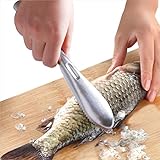
- High Quality: Fish Scaler Brush is made of High-quality food safe 304 stainless steel, it is sturdy, lightweight, anti-rust.
- Safety Design: High-quality food safe 304 stainless steel Fish Scaler Remover, non-slip handle is designed with the ergonomic in sturdy shape. Safe Fish Scaler Brush for your family.
- Safely Remove Stubborn Scales: Eating fish provides you with many health benefits, but removing scales can be difficult. Fish scaler lets you easily remove scales quickly and safely without fuss unlike using a knife.
- NO FLY ZONE :Specifically designed grooves help catch loose scales without it splattering all over the place or onto your clothes.
- Customer Care Promise:If you don't like our products for any reason at all, just feel free contact us and you will get 100% money back.
The same paper reported a mean of 0.018 anthropogenic-particle items per gram of fish muscle. Using that muscle result and a reported Malaysian fish-consumption figure of 59 kg per person per year, the authors estimated intake at 1,062 items per person per year. Those figures concern the study’s muscle-based estimate, not gill consumption, and do not establish a health effect.
Trace metals and hydrocarbons in catfish organs
A 2020 study of African sharptooth catfish (Clarias gariepinus) reported that measured contaminants differed among gills, intestines, and muscle, with gills prominent for some contaminants in that study setting. Its findings do not establish a safety threshold for other fish, waters, or consumers. Scientific Reports study of trace metals and hydrocarbons in Clarias gariepinus tissues (2020).
Rank #4
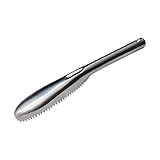
- High Quality: Fish descaler tool is made of High-quality food safe 304 stainless steel, it is sturdy, durable,anti-rust,lightweight,long lifetime use .
- Simple and efficient: sawtooth design makes this fish scaler very efficient and simple to scraping scales. Fish scaler lets you easily remove scales quickly, No more pain when removing fish scales for novices.
- Safety Design: High-quality fish scaler remover, non-slip handle is designed with the ergonomic in sturdy shape with hanging holes on the edge of the handle for easy storage, Safe fish scaler brush for your family.
- Suitable for most fish: Suit for all fish with large or fine scales: Salmon, Sea Bass, Sardine, Trout and so on. Specifically designed grooves help catch loose scales without it splattering all over the place or onto your clothes.
- Operation Method:Simply lay the fish on a flat work surface and hold it firmly. Then use the fish scale brush to scrape the length of the fish from the tail to the head to remove all fish scales and no spoil the fish skin.
How to make a practical decision
- Identify the fish. Use the species name when checking safety information; common names can refer to different fish.
- Check where it came from. For locally caught fish, consult the relevant official consumption advisory. Advice about one waterway or species should not be applied to another without support.
- Consider whether it was kept cold. If the fish’s handling or temperature history is uncertain, cooking is not a dependable fix for histamine poisoning in susceptible fish.
- Do not infer safety from clean-looking gills. The reviewed sources do not provide a validated home test, universal washing method, or gill-specific threshold that can certify them as safe.
- When key information is missing, do not eat the gills. Avoid treating a study about a different species, location, or tissue as proof that your fish is safe.
What the evidence does—and does not—establish
FDA seafood guidance describes natural toxins, environmental contaminants, and hazards linked to storage and handling, but it does not label all fish gills inherently poisonous or certify gills as safe to eat. The tissue studies show that contaminants and particles can vary by organ and study setting; they do not establish a human dose-response or a clinical risk from eating gills. There is no universal gill-specific safety threshold in the cited material.
Quick Recap
Best Value

- ANTI-RUST: Constructed of premium stainless steel, it is anti-rust and corrosion resistant, durable to use. Come with 6 Self-Tapping mounting screws, easy to mount to any surface
- CLAMP SIZE: Approx. 4"L x 3.1"W x 1.4"H ,115g / 0.25lb. Ideal for DIY fish cleaning table station, fillet table or bait cutting board, use with filet knifes(not included)
- HOLD FISH FIRMLY: The Deep-jaw clamp with upper and lower bite design, it can hold the fish by the tail firmly for easy cleaning and filleting. Anti-slip grip design ensures precise operation without slipping
- THICKER SPRING: Different from other fish clips on the market, we use thicker springs for greater clamping force. You don't have to worry about the fish slipping away from the fillet table
- WIDELY USE: Heavy duty clamp secures fish to a table, board or bench. great fishing cleaning tool for outdoor camping, picnic, or just at home
Product prices and availability are accurate as of the date/time indicated and are subject to change. Any price and availability information displayed on Amazon at the time of purchase will apply.




