
No—not as a species in the usual conservation-status sense. The western honeybee, Apis mellifera, is listed as Least Concern in the European Environment Agency’s species database. But managed colonies are under serious pressure, and large annual hive losses are a genuine agricultural and conservation concern.
The crucial distinction is between a species’ risk of extinction and the number of managed colonies that die during a particular year.
As an Amazon Associate I earn from qualifying purchases.
Short answer: honeybees are not generally classified as an endangered species, but managed honeybee colonies are under serious pressure. The western or European honeybee, Apis mellifera, is listed as Least Concern in the European Environment Agency’s species database. That status describes the species’ assessed extinction risk; it does not mean that every colony is healthy or that beekeepers are not experiencing severe losses.
The key distinction is between species-level conservation status and managed-colony losses. A species can remain widespread and commercially propagated while individual hives die at alarming rates. In the United States, beekeepers replace queens, split colonies, buy replacement bees and move hives between locations. Those practices can keep the managed population supplied even when many individual colonies are lost.
#1 Best Overall

- FULL STING PROTECTION:This sting-proof bee and wasp suit delivers complete anti-sting defense, ideal for both home hobbyist beekeepers and professional apiary workers for all beekeeping tasks.
- BREATHABLE FABRIC | Hot Summer Ready:Made of a 65% cotton 35% polyester polycotton blend, this beekeeping suit stays well-ventilated even in hot summer. It features a resin zipper with metal pull tab for greater durability than standard zippers, built to hold up to daily backyard and apiary use.
- DETACHABLE FENCING VEIL:This beekeeper suit comes with a detachable mesh fencing veil that offers a wide, unobstructed view and roomy ventilated space for comfortable, flexible head movement.
- TIGHT SEAL & GOATSKIN GLOVES:High-elastic bands at the wrists, waist, cuffs and ankles create a secure seal to effectively block bees. This unisex suit for men and women includes goatskin gloves for added sting protection and precise dexterity.
- COMPLETE KIT | Multi-Scenario Use:Includes 1 beekeeping suit and 1 pair of goatskin gloves. Perfect for backyard home beekeeping, daily apiary maintenance, and also works well as a Halloween costume.
What is the conservation status of honeybees?
For this article, “honeybees” primarily means the western honeybee, Apis mellifera—the species kept by most commercial and hobbyist beekeepers. The European Environment Agency species record lists A. mellifera as Least Concern.
“Least Concern” is not the same as “no conservation problems.” It means that the available assessment does not place the species in an elevated extinction-risk category at the species level. Honeybees are also maintained as managed agricultural livestock and reproduced commercially on a large scale. That makes the question “Are honeybees endangered?” different from questions such as:
- How many managed colonies are dying each year?
- Are beekeepers able to replace those colonies?
- Are wild or unmanaged honeybee populations becoming less resilient?
- Which pests, diseases, environmental conditions and management practices are causing losses?
The evidence supports a careful answer: Apis mellifera is not generally considered endangered, but honeybee health and beekeeping resilience are significant conservation and agricultural concerns.
Species extinction is not the same as losing hives
| Question | What it measures | What it does not prove |
|---|---|---|
| Is the species endangered? | The risk that the species could disappear across its range. | It does not tell us that every colony is thriving. |
| How many colonies were lost? | The percentage or number of managed hives that died or disappeared during a defined period. | It does not mean the same percentage of the entire species became extinct. |
| How many colonies exist? | The number of managed colonies recorded in a country or survey. | It may not show how many colonies had to be replaced, moved or split to maintain that total. |
This distinction matters because managed honeybees are not a fixed population. A beekeeper may replace a dead colony with a package of bees, a nucleus colony or a purchased queen. Commercial operations may move colonies hundreds or thousands of miles for crop pollination. A new colony can therefore appear in the statistics even though another colony was recently lost.
The U.S. Department of Agriculture’s Agricultural Research Service says that the number of managed U.S. colonies fell from approximately 5 million in the 1940s to about 2.66 million in the modern estimate cited by the agency. It also emphasizes that high annual losses have continued for reasons broader than the specific syndrome known as Colony Collapse Disorder. USDA-ARS explains the long-term colony-loss and CCD context.
How many honeybee colonies are being lost?
There is no single number that captures honeybee health worldwide. Different surveys cover different countries, types of beekeepers, colony sizes and definitions of “loss.” U.S. figures are among the most frequently cited, but they describe managed colonies—not the extinction risk of Apis mellifera.
The 2024–2025 U.S. Beekeeping Survey, conducted by the Bee Informed Partnership with the Apiary Inspectors of America and Oregon State University, estimated that 55.6% of managed U.S. colonies were lost between April 2024 and April 2025. The survey described that as the highest annual loss recorded since its annual tracking began in 2010–2011. Auburn University summarizes the 2024–2025 survey results.
That figure is alarming, but it should not be translated into “55.6% of honeybees are going extinct.” It is an estimate of managed-colony losses over one year. Colonies may be added, split, renovated or replaced during the same period, and the survey does not measure every honeybee in the world.
The USDA’s National Agricultural Statistics Service separately publishes its Honey Bee Colonies reports. These reports cover colony inventories, additions, renovations, losses, reported Colony Collapse Disorder symptoms and beekeeper-identified stressors. The survey distinguishes operations with five or more colonies from smaller operations and collects quarterly data from larger operations. That design is one reason numbers from different reports should not be treated as interchangeable.
Rank #2
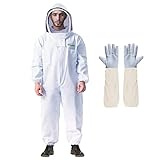
- 【Never be Stung】Nothing is more important than your safety , so we choose the premium fabric. Tests prove that the fabric can effectively cover your skin from sting. The beekeeping suit can cover every inch of your skin from head to ankle from angry bees when you harvest honey or inspect bees
- 【Goatskin Gloves】A pair of full-length sleeves beekeeping gloves attached to bee suit can provide additional cover for your arm. The gloves are made of soft goatskin and pliable fabric, allowing you to handle various tools and beehives very flexibly. You can enjoy beekeeping freely
- 【Ventilated & Comfortable】While ensuring your safety, comfort of beekeeping suit are considered. Ventilated material and about 2lbs weight make the beekeeper suit comfortable to wear and the soft fabric is flexible enough while maintaining thickness of beekeeper suit
- 【Detachable Veil & Elastic Bands】The detachable fencing veil of beekeeper suit has the most suitable mesh opening, the spacious interior and wide views on the front and sides. The high elastic bands on the wrist, waists and glove cuff can form a tight fit to ensure no bee can get in
- 【Package & Guarantee】You will get 1*Beekeeping suit + 1* pair Goatskin Gloves+ 1*year worry-free repair service. We provide 100% Satisfaction Assurance. If you have any problem after receiving this bee suit kit, please don't hesitate to contact us, we resolve all issues in 24 hours
USDA-ARS also reported that commercial beekeepers began reporting unusually severe losses in January 2025. Researchers found viruses associated with miticide-resistant parasitic mites in affected colonies. This is important evidence about a possible driver of those collapses, but the agency continued investigating other stressors; the finding does not establish that one cause explains every 2025 loss. Read the USDA-ARS update on the 2025 colony collapses.
The biggest threats to honeybee colonies
Honeybee losses are usually best understood as the result of several stressors acting together. The U.S. Environmental Protection Agency identifies pests, pathogens, viruses, poor nutrition, pesticide exposure, migratory management practices and limited genetic diversity among the major factors affecting honeybee health. EPA’s overview of pollinator-health concerns cautions against reducing the problem to one universal “bee killer.”
1. Varroa mites and the viruses they transmit
Varroa destructor is widely regarded as the central biological threat in modern honeybee management. The parasitic mite feeds on honeybees and can transmit numerous viruses. It weakens bees, shortens their lives and can ultimately destroy a colony. According to the EPA, an untreated infestation will likely kill the colony. EPA’s Varroa advisory explains the mite’s effects and control challenges.
Varroa management is difficult for several reasons:
- Mite populations can grow inside capped brood, where they are harder to reach.
- Mites spread viruses as they feed and move among bees.
- Some mite populations have developed resistance to commonly used control products.
- Timing, weather, colony condition and treatment choice all affect results.
- Products must be used according to their legal label, and state requirements may differ.
Existing beekeepers can research a registered Varroa mite treatment, but no product should be treated as universally appropriate. The EPA maintains a list of federally registered products approved for use against Varroa mites and advises beekeepers to check state requirements and current labels before purchase or application. In 2025, the agency also reported new Varroa-control registrations, including a September 2025 final registration decision for Vadescana, a double-stranded RNA product designed to target Varroa mites. Check EPA’s current registered Varroa-product information.
2. Viruses, bacteria, fungi and other pests
Varroa mites are only part of the biological problem. Honeybee colonies can also be affected by viral, bacterial and fungal diseases, along with pests such as small hive beetles and wax moths. A colony weakened by one stressor may become more vulnerable to another. For example, parasites can increase virus transmission, while inadequate nutrition can reduce a colony’s ability to withstand disease.
This interaction is why a dead hive often cannot be assigned a reliable cause simply by looking at the number of dead bees outside it. Beekeepers and researchers may need to consider mites, pathogens, queen condition, forage, pesticide exposure, weather and management history together.
3. Pesticide exposure
Pesticides are one documented contributor to pollinator-health problems, but the evidence does not support saying that pesticides alone cause all honeybee losses. Exposure can occur through spray, dust, residues on plants, contaminated forage and other routes. The risk depends on the chemical, dose, formulation, timing, application method and condition of the colony.
Some exposures may cause immediate harm, while others may add chronic stress or interact with parasites and poor nutrition. The EPA has developed risk-assessment and risk-management measures intended to reduce acute and chronic risks to bees. EPA’s pollinator-protection resources describe pesticide-risk considerations.
Rank #3
- 【Never be Stung】Nothing is more important than your safety , so we choose the premium fabric. Tests prove that the fabric can effectively cover your skin from sting. The beekeeping suit can cover every inch of your skin from head to ankle from angry bees when you harvest honey or inspect bees
- 【Goatskin Gloves】A pair of full-length sleeves beekeeping gloves attached to bee suit can provide additional cover for your arm. The gloves are made of soft goatskin and pliable fabric, allowing you to handle various tools and beehives very flexibly. You can enjoy beekeeping freely
- 【Ventilated & Comfortable】While ensuring your safety, comfort of beekeeping suit are considered. Ventilated material and about 2lbs weight make the beekeeper suit comfortable to wear and the soft fabric is flexible enough while maintaining thickness of beekeeper suit
- 【Detachable Veil & Elastic Bands】The detachable fencing veil of beekeeper suit has the most suitable mesh opening, the spacious interior and wide views on the front and sides. The high elastic bands on the wrist, waists and glove cuff can form a tight fit to ensure no bee can get in
- 【Package & Guarantee】You will get 1*Beekeeping suit + 1* pair Goatskin Gloves+ 1*year worry-free repair service. We provide 100% Satisfaction Assurance. If you have any problem after receiving this bee suit kit, please don't hesitate to contact us, we resolve all issues in 24 hours
The practical conclusion is not that every pesticide use is equally dangerous or that one category is responsible for every loss. It is that indiscriminate use, drift, application during bee activity and contamination of flowering forage can increase risk, so product labels and local regulations matter.
4. Habitat loss and poor nutrition
Honeybees need a steady supply of nectar and pollen. When grasslands, conservation lands and other flowering areas disappear, colonies may have less forage and a less varied diet. A landscape can contain many acres of crops yet still provide poor nutrition if flowers are available only briefly or if the crop does not meet the colony’s needs throughout the season.
USGS identifies habitat loss as one factor affecting managed-hive numbers and notes that declining grasslands and conservation lands can reduce flowers for honeybees and native pollinators. USGS discusses the relationship between habitat and honeybee health.
USDA research provides a useful landscape example: colonies foraging on areas with strong clover and alfalfa cover performed better than colonies near some crop-dominated landscapes. That does not mean clover and alfalfa are a universal solution, but it illustrates why the quality, diversity and continuity of forage matter. USDA-ARS summarizes the forage-landscape research.
5. Commercial transportation and migratory beekeeping
Commercial beekeepers transport colonies long distances to pollinate crops. This practice is economically important, but EPA lists long migratory routes and management practices as potential contributors to colony stress.
Repeated movement can expose colonies to changing forage, weather and agricultural environments. Large pollination events may involve crowded colonies and rapid nutritional transitions. Queen problems, parasites, disease and pesticide exposure can then compound the stress associated with transportation and intensive management.
6. Weather and climate-related stress
Weather affects when plants flower, how much forage they produce and whether colonies can build stores before winter. Drought can reduce flowers, heat can add physiological stress and unusual seasonal conditions can disrupt the timing between bee activity and plant bloom.
These conditions are best described as interacting or aggravating factors. The evidence summarized here does not establish one universal percentage of honeybee decline caused by climate change, so claims that climate is the single proven explanation for current colony losses go beyond the available evidence.
7. Limited genetic diversity
EPA also identifies lack of genetic diversity as a factor in honeybee health. Genetic diversity can affect how populations respond to parasites, disease, environmental change and management pressures. It is one part of the broader resilience question—not a standalone explanation for every colony loss.
Rank #4

- STING PROOF FULL BODY PROTECTION:This premium beekeeping suit is crafted from a durable 65% cotton and 35% polyester blend, providing complete head-to-ankle coverage against stings. Featuring heavy-duty metal zippers and reinforced seams, it doubles as a dependable wasp suit, delivering ultimate protection against aggressive bees, wasps, and hornets during honey harvesting, hive inspections, or removal jobs. Beekeeping hat: Hand wash only. Suit: Machine or hand washable.
- PREMIUM A+ GOATSKIN GLOVES INCLUDED:This professional beekeeper suit comes complete with a pair of thick, genuine A+ goatskin gloves — core bee keeping supplies that offer superior sting protection while preserving excellent dexterity. The gloves are designed with elastic cuffs that seal tightly against the suit sleeves, leaving no gaps for bees to enter. Perfect for both delicate hive work and heavy-duty beekeeping tasks.
- DETACHABLE FENCING VEIL & LOOSE COMFORTABLE FIT:Equipped with a removable fencing-style veil with enhanced ventilation, this bee keeping suit keeps bees safely separated from your face. Our bee suits for men and women adopt a roomy, loose fit design that allows unrestricted movement and easy layering underneath. Multiple sizes are available to ensure a comfortable fit for all adult beekeepers.
- VERSATILE FOR BEGINNERS & PROFESSIONALS:This all-in-one beekeeping kit is an essential tool for both hobbyists and professional apiarists. Versatile enough for all beekeeping activities, it also serves as a realistic Halloween bee costume for adults. Ideal for backyard beekeeping, commercial apiaries, wasp nest removal, and costume parties, it covers all your daily bee keeping supplies needs.
- PACKAGE CONTENTS & CUSTOMER SUPPORT: Each order includes 1 complete ANDES beekeeping suit with attached veil, plus 1 pair of A+ goatskin gloves. We stand behind our products with reliable after-sales support — if you encounter any issues, contact us and we will assist you promptly. 20% of all ANDES profits go to non-profit organizations supporting local beekeeping and bee conservation efforts.
Colony Collapse Disorder is not the same as general bee decline
Colony Collapse Disorder, or CCD, is a specific syndrome, not a synonym for every dead hive. USDA-ARS defines CCD as a colony in which most adult bees disappear, leaving few or no adult bees behind, while the queen remains alive and food and immature bees are often still present. There is no substantial accumulation of dead adult bees at the colony.
A colony that dies with large numbers of dead bees, a colony that starves, and a colony overwhelmed by Varroa mites may all be described casually as a “bee loss,” but they do not necessarily meet the definition of CCD. USDA-ARS reports that CCD reports have waned even though high colony losses from other causes have continued. USDA-ARS provides the formal CCD definition and background.
Using CCD as a catch-all can obscure the problems beekeepers are actually trying to solve. A colony-health investigation needs to distinguish among parasites, viruses, starvation, queen failure, pesticide exposure, weather and other causes rather than assuming that every disappearance is CCD.
Independent reader supportYour contribution helps us test, update, and keep practical guides available for everyone.Are honeybees native to North America?
No. The western honeybee was introduced to North America from Europe in the seventeenth century. In the United States, it is primarily a managed agricultural pollinator rather than a native wild species. The country has approximately 4,000 native bee species, each with its own habitat needs and conservation challenges. USGS explains honeybees’ introduced status in North America.
This does not make honeybees unimportant. Honeybees produce honey and wax, support beekeeping businesses and provide valuable pollination services. But protecting honeybee colonies is not identical to protecting native bees.
Native bees include species that nest in soil, stems, wood or other specialized places and that may depend on particular plants or seasons. A managed honeybee hive cannot substitute for conservation of those species. USGS cautions against introducing honeybee colonies into conservation areas, parks or places intended to foster native plants and native bees, particularly where floral resources are limited.
What can people do to help honeybees and other pollinators?
The most useful household actions generally improve habitat and reduce unnecessary risks. They do not require installing a honeybee hive.
- Provide diverse flowering plants. Choose plants that flower at different times so pollinators have access to food across the growing season. Prioritize species appropriate to your region and avoid invasive plants.
- Improve forage quality, not just flower count. A lawn or garden with one short flowering period may be less useful than a varied planting that supplies nectar and pollen over a longer season.
- Use pesticides cautiously. Avoid indiscriminate applications, do not assume that a product is harmless simply because it is marketed as garden-friendly, and follow the product label and local requirements.
- Preserve nesting habitat for native bees. A garden can support pollinators without adding a managed hive. Protecting the places where native bees nest is part of conservation.
- Support responsible local beekeeping. If you want honey or a hive, work with a beekeeper who monitors colonies, manages Varroa and follows applicable regulations.
- Match the action to the species. A honeybee hive may help managed honeybees, while regionally appropriate habitat can support honeybees, bumblebees, solitary bees and other pollinators together.
For a straightforward planting project, a regionally appropriate pollinator flower seed mix can be useful when it contains suitable, non-invasive species for your area. Check the label, avoid pesticide-treated seed when possible and consult a local extension service or native-plant organization if you are unsure which plants belong in your region. A seed packet labeled “bee-friendly” is not automatically appropriate everywhere.
Disclosure: Product-category mentions in this practical section are informational. Regional suitability, invasive-species safeguards and current product labeling should be checked before purchase.
Best Value
- 【Never be Stung】Nothing is more important than your safety , so we choose the premium fabric. Tests prove that the fabric can effectively cover your skin from sting. The beekeeping suit can cover every inch of your skin from head to ankle from angry bees when you harvest honey or inspect bees
- 【Goatskin Gloves】A pair of full-length sleeves beekeeping gloves attached to bee suit can provide additional cover for your arm. The gloves are made of soft goatskin and pliable fabric, allowing you to handle various tools and beehives very flexibly. You can enjoy beekeeping freely
- 【Ventilated & Comfortable】While ensuring your safety, comfort of beekeeping suit are considered. Ventilated material and about 2lbs weight make the beekeeper suit comfortable to wear and the soft fabric is flexible enough while maintaining thickness of beekeeper suit
- 【Detachable Veil & Elastic Bands】The detachable fencing veil of beekeeper suit has the most suitable mesh opening, the spacious interior and wide views on the front and sides. The high elastic bands on the wrist, waists and glove cuff can form a tight fit to ensure no bee can get in
- 【Package & Guarantee】You will get 1*Beekeeping suit + 1* pair Goatskin Gloves+ 1*year worry-free repair service. We provide 100% Satisfaction Assurance. If you have any problem after receiving this bee suit kit, please don't hesitate to contact us, we resolve all issues in 24 hours
What should beekeepers do differently?
People who already keep honeybees face a more specialized task than gardeners do. Hive health depends on regular observation, accurate diagnosis, queen and brood assessment, adequate forage and an integrated approach to Varroa and disease management.
Do not select a mite product based only on a marketplace rating or a general internet recommendation. Before using any treatment:
- Confirm that it is currently registered for the intended use.
- Read and follow the complete product label.
- Check state or local requirements.
- Consider resistance and whether the treatment is appropriate for the colony’s condition and season.
- Use local extension, veterinary or apiary-inspector guidance when diagnosis is uncertain.
The EPA’s registered-product list is a better starting point than a generic “best bee treatment” list because registrations, labels, formulations and legal requirements can change. It also reinforces an important limitation: Varroa control is essential for many colonies, but it does not replace attention to nutrition, viruses, pesticides, queens, weather or other stressors.
Why the phrase “honeybees are going extinct” is misleading
The phrase combines two real facts but draws the wrong conclusion from them:
- Real fact: beekeepers have experienced persistent and sometimes extreme colony losses, including the 55.6% managed-colony loss estimate for April 2024 to April 2025 in the U.S. survey.
- Real fact: honeybee colonies face serious, interacting threats, especially Varroa mites and associated viruses, disease, inadequate forage, pesticides, transportation stress, weather and limited genetic diversity.
- Incorrect conclusion: the species Apis mellifera is therefore on the verge of extinction.
Managed-colony losses are a warning about the sustainability, cost and resilience of beekeeping. They can also affect agricultural pollination. But they are not a species-extinction measurement. The responsible conclusion is more precise: honeybees are not generally classified as endangered, yet the colonies people depend on require active management and better habitat and health conditions.
How current are these figures?
The evidence summarized here was reviewed through August 12, 2026. The specific figures used are the latest accessible releases identified in the research: the USDA annual material dated August 1, 2025, the 2024–2025 beekeeper survey and a 2025 USDA-ARS research update. The USDA publication page also identified an August 3, 2026 release, but the contents of that release were not available in the material reviewed here. No 2026 colony estimate is therefore inferred.
Because honeybee-loss surveys differ in sampling, timing and definitions, future reports may revise the picture. The species-status answer and the colony-health warning can both remain true at the same time.
The Bottom Line
Honeybees are not generally classified as endangered as a species. The western honeybee is recorded as Least Concern in the European Environment Agency’s database. However, managed colonies face severe and persistent losses, driven by interacting pressures including Varroa mites and viruses, other diseases, poor nutrition, pesticides, migratory management, weather and limited genetic diversity. Supporting diverse, regionally appropriate habitat helps honeybees and native pollinators—but installing a honeybee hive is not the same as conserving native bees.
Quick Recap
Product prices and availability are accurate as of the date/time indicated and are subject to change. Any price and availability information displayed on Amazon at the time of purchase will apply.





Leave a Reply