What’s actually slowing this PC down?
Pick the symptom - the matching free tool is one click away.
No cat breed is reliably hypoallergenic. Hairlessness, short or curly fur, and low shedding do not mean a cat is free of allergens or safe for someone with cat allergy. If you are considering an unusual-looking breed, the useful next step is an allergy evaluation—not choosing by coat or breed label.
Are unusual cat breeds hypoallergenic?
No. There is no cat breed that can be counted on to avoid allergic reactions. The American Academy of Allergy, Asthma & Immunology (AAAAI) states on its patient guidance page, dated July 7, 2026, that there are no truly hypoallergenic breeds of cats or dogs. A 2018 clinical consensus likewise found no scientific evidence supporting the label for particular breeds and says patients should not be advised that acquiring a purportedly hypoallergenic cat is safe.
As an Amazon Associate I earn from qualifying purchases.
This applies to breeds often described as unusual or allergy-friendly, including hairless cats such as the Sphynx and cats with short or curly coats such as the Cornish Rex. Their appearance does not establish how much allergen they produce, how much reaches the home, or whether a particular person will have symptoms around them.
Some cats may differ in allergen production, and individuals vary. But “may produce a different amount” is not the same as “allergen-free” or “safe for a person with an allergy.” Neither a breed name nor a breeder’s assurance can predict an individual owner’s response with certainty.
#1 Best Overall

- WHY CHOOSE AHAM VERIFIDE AIR PURIFIERS: AHAM (Association of Home Appliance Manufacturers) is an ANSI-accredited organization that sets strict standards for appliance performance. Air purifiers with the AHAM VERIFIDE seal have been independently tested for air cleaning performance and energy efficiency. When you choose an AHAM certified air purifier, you're choosing a product trusted for reliable and effective indoor air quality improvement
- HIGH-PERFORMANCE AIR PURIFICATION: A powerful 56W high-torque motor and 143 CFM CADR delivers fast, effective cleaning. The Levoit Original Filter is HEPA-grade while operating in Sleep Mode (Based on IEST RP C001.7). Ideal for home, bedroom, or office
- AHAM VERIFIDE, PROVEN PERFORMANCE: AHAM VERIFIDE with a CADR (Clean Air Delivery Rate) rating of 143 CFM for smoke, 153 CFM for dust, and 167 CFM for pollen—refreshing air in a 222 ft² room 4.8 times per hour and a 1,073 ft² room once per hour
- GENUINE REPLACEMENT FILTERS: For the best performance and longest lifespan, use official Levoit filters designed specifically for Levoit air purifiers. Levoit replacement filters ensure the best fit and high-efficiency filtration, while off-brand filters may be unreliable and may damage your Levoit air purifier
- FIND COMFORT: Our filter has strong filtration performance of fine particles. 99.97% filtration efficiency for 0.1 to 0.3μm airborne particulates, including pollen, dust, and animal dander allergens. Tested by an independent lab
That distinction matters when comparing claims. A cat might produce a different amount of an allergen than another cat, but that does not show that the first cat will be tolerated by a particular person. There is no reliable breed-by-breed ranking or guaranteed safe threshold to use as a shopping guide. In practical terms, “unusual,” “hairless,” and “low-shedding” describe appearance or coat behavior—not a clinical safety category.
What causes cat allergy if it is not the fur?
Cat allergy is a reaction to proteins, not to fur as a material. Potentially allergenic proteins are found in cat dander and skin flakes, saliva, and urine. Fur can carry allergens, but the cat’s visible coat is not a dependable measure of whether a sensitized person will react.
Fel d 1 is a major cat allergen. The Purina Institute explains that it is produced primarily in salivary and sebaceous glands. When a cat grooms, saliva transfers the protein to its coat and skin. It can then spread with dander and hair around the animal and through the home. The Institute says all cats produce Fel d 1, including hairless cats, and that individual cats vary widely. Its explanation is educational information from a company that also sells products in this area; it does not override the clinical guidance from AAAAI or the 2018 consensus.
PC Slower Than It Used to Be?
A free scan shows the junk files, broken settings and background clutter dragging Windows down - then fixes them in one click.Free scan · Windows 10 & 11Outdated Drivers Are Slowing You Down
One free scan finds every outdated or missing driver and matches the right update for your exact hardware.Free scan · exact hardware matchBecause allergens can travel on shed material and persist in the home environment, shedding less does not mean releasing no allergens. AAAAI says allergic dander is not determined by fur length or shedding. A hairless cat still has skin, produces saliva, and grooms; removing a visible coat does not remove the sources of allergenic proteins.
AAAAI describes Fel d 1 as a major trigger for cat-allergen-sensitized people. The Purina Institute summarizes cited literature as finding it causes reactions in up to 95 percent of people sensitized to cat allergens. That figure is the Institute’s summary of cited literature, not an estimate for all people, all cat owners, or the likelihood that a particular cat will trigger one person.
Rank #2

- Effortless Operation: Simplified control panel with intuitive design makes it easy to operate. No complicated setup—just one tap, and you're on your way to cleaner air, saving time and letting you relax with ease
- Compact Yet Powerful: Covers up to 1,076 ft² while maintaining a compact size of just 6.69 x 6.69 x 9.84 inches. Its small frame makes placement a breeze—whether on your desk or in a corner, it's ready to work hard wherever you need it (Laboratory Tested: Our air purifier efficiently cleans 250 ft² every 15 minutes, covering up to 1,076 ft² per hour)
- 360° Airflow & High Efficiency Filtration: The elegantly engineered 360° surround air intake, coupled with the sophisticated a triple-layer filtration system, meticulously captures an astounding 99.97% of airborne pollutants, transforming your living space into a sanctuary of purity and vitality
- Quiet with Essential Oil Option: Operates as quietly as 22dB, perfect for undisturbed sleep. The built-in essential oil tray lets you add 3–5 drops to infuse your space with soothing scents while enjoying purified air
- Fully Certified: Backed by DOE, ETL, FCC, CARB, CE, and ROHS certifications, our air purifier meets the highest standards for performance, giving you peace of mind with every use
Allergen exposure is not limited to touching a cat. Proteins can be carried on shed material and can remain in the air, on clothing, or in furnishings after the animal has left a room. This is one reason a room that looks clean—or a coat that leaves little visible hair—cannot tell you how much allergen is present or how your body will respond.
Why breed labels and quick visits are poor safety tests
A breed label cannot tell you whether you are sensitized, how severe your symptoms may be, or how you will respond to sustained exposure. Individual cats can vary, but no dependable breed-by-breed ranking or safe allergen threshold has been established in the sources cited here. Treat claims such as “hypoallergenic,” “low-allergen,” or “safe for allergy sufferers” as marketing or anecdote unless they are supported by an allergist’s assessment of your situation.
Do these 3 things before closing this tab:
1Repair Windows errors before they cause bigger problems2Scan for outdated or missing drivers - takes under a minute3Clear out junk files and repair common Windows errorsA short visit with a cat is not proof that living with one will be manageable. Dander may linger in air, clothing, and furnishings after the animal has left, and symptoms can be less obvious with longer-term exposure. A kitten or a visit to a clean room also cannot establish what your reaction will be after the cat lives throughout your home. Do not use a brief, symptom-free encounter as a substitute for clinical advice.
Even if you feel well during an initial meeting, that experience answers only how you felt in that setting and at that time. It cannot predict repeated contact with the cat, exposure in rooms where it rests, or contact with allergens carried around the household. Conversely, if symptoms occur, an allergist can help determine whether a cat allergy is the cause rather than leaving you to infer it from the breed or coat.
How to decide before bringing a cat home
- Arrange an appointment with an allergist or immunologist. If you have symptoms around cats or suspect a cat allergy, ask a specialist about allergy testing. AAAAI identifies specialist testing as the best way to determine what is causing symptoms and to develop an individualized plan.
- Describe your symptoms and exposure history. Note what happens around cats, how soon symptoms begin, how long they last, and whether you experience breathing symptoms. This information helps the specialist assess the allergy rather than relying on a breed description.
- Ask about the risks and a realistic management plan. Discuss the likely effect of living with a cat, the measures your household could sustain, and what to do if symptoms occur. A specialist can also discuss treatment options, including immunotherapy.
- Do not treat an individual-cat encounter as a guarantee. If your clinician considers contact useful, ask how to interpret it. A single visit cannot establish that ongoing household exposure will be tolerated.
- Make the household decision with the limits in view. Exposure controls may reduce allergen exposure, but they cannot make a breed allergy-safe or guarantee clinical benefit. Consider whether everyone in the household can maintain the routines needed to manage exposure.
Testing and clinical assessment answer different questions from a breeder’s description: they can help identify what is causing symptoms and guide a plan for you. They cannot turn a breed into a guaranteed safe choice. Before committing to a cat, consider whether you can maintain boundaries and cleaning routines over time, and discuss with your specialist what to do if symptoms persist or worsen.
Rank #3

- 𝐇𝐢𝐠𝐡𝐞𝐫 𝐀𝐢𝐫 𝐈𝐧𝐭𝐚𝐤𝐞 & 𝐋𝐚𝐫𝐠𝐞𝐫 𝐂𝐨𝐯𝐞𝐫𝐚𝐠𝐞 𝐟𝐨𝐫 𝐏𝐞𝐭 𝐋𝐨𝐯𝐞𝐫𝐬: This air purifier for home pets is designed with a larger front air inlet and wider dual-side air inlet, which can pull air from multiple sides and trap airborne pet hairs and odors more easily. Engineered to tackle the wildfire smoke, floating ash, and heavy smog, this high-performance air purifier creates a safe haven indoors, keeping your indoor air fresh during severe air quality alerts
- 𝐒𝐦𝐚𝐫𝐭 𝐏𝐌𝟐.𝟓 𝐀𝐐𝐈 𝐃𝐢𝐬𝐩𝐥𝐚𝐲 & 𝐀𝐮𝐭𝐨 𝐌𝐨𝐝𝐞: Built-in high-precision PM2.5 air quality sensor, real-time monitoring and digital display of indoor air quality. In Auto Mode, the purifier automatically ramps up to higher speed the moment it detects incoming wildfire smoke or household odors, ensuring no-hassle, round-the-clock purification.
- 𝐖𝐚𝐬𝐡𝐚𝐛𝐥𝐞 𝐏𝐫𝐞-𝐅𝐢𝐥𝐭𝐞𝐫 & 𝟑-𝐒𝐭𝐚𝐠𝐞 𝐃𝐞𝐬𝐢𝐠𝐧: Equipped with a high-efficiency 3-stage filtration system, the air cleaner can capture micro-sized airborne particles, including harmful PM2.5 particulates, dusty combustion ash, seasonal pollen, and pet dander. Cleaning the pre-filter helps save your daily replacement cost and extend the life of the HEPA filter. More activated carbon pellets help absorb unpleasant odors
- 𝟒 𝐒𝐩𝐞𝐞𝐝𝐬 𝐚𝐧𝐝 𝐓𝐢𝐦𝐞𝐫𝐬 & 𝐄𝐧𝐞𝐫𝐠𝐲-𝐒𝐚𝐯𝐢𝐧𝐠: The room air purifier has 4 adjustable fan speeds. You can choose the fan speed according to the air quality. The higher the wind speed, the faster the purification speed. When you are out or resting, you can set the air purifier to automatically shut off after 2/4/6/8 hours to reduce energy costs. Running at maximum wind speed for 24 hours only consumes 0.63 kW·h of electricity
- 𝐐𝐮𝐢𝐞𝐭 𝟐𝟎𝐝𝐁 𝐒𝐥𝐞𝐞𝐩 𝐌𝐨𝐝𝐞 𝐟𝐨𝐫 𝐋𝐢𝐠𝐡𝐭 𝐒𝐥𝐞𝐞𝐩𝐞𝐫𝐬: Choose our quiet air purifier for bedroom. Noise is as low as 20dB in sleep mode. Low noise, low speed and no lights make it perfect for a good night's sleep. Even light-sleeping babies or pets can enjoy fresh and clean air on quiet nights
If you already have wheezing, chest tightness, or difficulty breathing around cats, raise that with a clinician before arranging further exposure. Breathing symptoms warrant clinical attention; do not deliberately increase exposure to test your tolerance on your own.
Recommended Free Tools
If a cat already lives with you: reduce exposure in layers
AAAAI suggests several household measures. These target different routes and places where allergen exposure can occur, so they are more practical as a sustained combination than as a one-time fix. The 2018 consensus discusses combining measures such as bedroom exclusion, HEPA filtration, high-efficiency vacuuming, and bedding covers. It cautions that exposure reduction may not produce clinical benefit or change disease progression.
| Measure | What to do | Practical limit |
|---|---|---|
| Bedroom boundary | Keep the cat out of the bedroom and off upholstered furniture. Keep the boundary consistent. | It requires a household routine; it does not remove allergens elsewhere in the home. |
| Air and settled dust | Consider a HEPA air cleaner and use micro-filter vacuum bags or high-efficiency vacuuming. | These are exposure-reduction tools, not allergen eliminators or proof that living with a cat is safe. |
| Allergen-trapping furnishings | Consider removing carpeting and rugs that can trap dander; the consensus also discusses bedding covers as part of a combined approach. | Changing furnishings takes effort and does not replace other controls. |
| Direct contact | Avoid hugging and kissing the cat. Ask a non-allergic person to brush it outdoors. | Reducing close contact does not prevent all exposure to allergens around the home. |
Choose measures your household can keep up over time. A purifier without bedroom boundaries, for example, addresses a different part of exposure than reducing close contact or removing carpet. The consensus emphasizes combined, sustained measures, while making clear they may still not improve symptoms or alter the course of disease.
These approaches also differ in effort and what they target. A HEPA air cleaner is aimed at airborne exposure; vacuuming and reducing carpet address settled material and places where dander can collect; bedroom rules create a lower-exposure area; and delegating brushing outdoors reduces direct handling for the allergic person. None replaces the others, and none promises that symptoms will resolve. A practical plan is one the household can follow consistently, not a single device or occasional deep clean.
If you are considering equipment, treat a HEPA air cleaner or micro-filter vacuum bags as supporting tools rather than a way to make a cat safe. AAAAI includes them among possible exposure-reduction measures, but does not say they eliminate allergens. The guidance also does not establish that every household will receive the same benefit.
Rank #4

- Air Quality Monitoring: This air purifier is designed with a built-in PM2.5 sensor and real-time display, eliminating the need for guesswork about air quality. In auto mode, when it detects a decline in air quality, the purifier with the indicator changing to green, blue, yellow or red, and the fan accelerating to purify the air more efficiently.
- Remarkable Filtration: Featuring an advanced filtration system, the air purifier effectively removes airborne particles (such as dust, pollen, pet dander, and smoke ). When activated, this air cleaner can refresh the atmosphere in a space up to 2400 sq ft / 223 m² every 30 minutes, ensuring you enjoy a fresh and comfortable air quality throughout the day in your home or office. (Note: For significant amounts of pet hair on floors or fabric surfaces, we recommend use other cleaning products.)
- 3-Stage Advanced Filtration: Our air filter combines a high-efficiency purification filter with 3 layers to can effectively filter out the impurities in the air. This high-performance system delivers thorough air purification, creating a healthier living environment for you and your loved one. (Note: The filter needs to be replaced every 3 to 6 months, and must not be cleaned with water or other liquids.)
Symptoms and treatment: involve a clinician
Cat allergy symptoms can include sneezing, itchy or watery eyes, a runny or congested nose, and hives. Some people have wheezing, difficulty breathing, or chest tightness. Breathing symptoms deserve medical attention; seek care rather than trying to manage them by changing breeds or relying on cleaning alone.
AAAAI says an allergist can discuss immunotherapy. It also notes that over-the-counter antihistamines may relieve symptoms but are not ideal as long-term treatment. The right approach depends on the person, symptoms, and overall health, so discuss medicines and other treatment choices with a clinician rather than starting a long-term plan based on a breed claim.
Symptom relief and exposure reduction are separate parts of a plan: medication does not make a cat hypoallergenic, and cleaning or filtration is not a substitute for medical care. Ask a clinician which options fit your circumstances, especially if symptoms involve breathing. Avoid treating over-the-counter medicine as a standing solution for long-term exposure without discussing it with a healthcare professional.
What a prospective owner should take from the evidence
- Coat appearance is not an allergy test. Hairless, short-haired, curly-coated, or low-shedding cats still produce allergens.
- Some individual variation does not create a safe breed. No reliable ranking or guaranteed threshold identifies a cat that will be tolerated by a given person.
- Diagnosis comes before selection. An allergist or immunologist can assess suspected allergy and help plan next steps.
- Home controls manage exposure, not certainty. Boundaries, cleaning, filtration, and reduced direct contact may help, but results are not guaranteed.
- Breathing symptoms change the stakes. Discuss them with a clinician instead of experimenting with increased exposure.
Frequently Asked Questions
Are hairless cats better for people with allergies?
Not reliably. Hairless cats such as Sphynx still produce Fel d 1, and hair length or shedding does not determine whether a sensitized person will react. A hairless coat is not evidence that a cat is allergy-safe.
Quick wins for a faster PC:
Clear out junk files and repair common Windows errorsFree Scan →Fix the driver behind crashes, sound loss and screen glitchesFind Drivers →What cat breeds are hypoallergenic?
No cat breed is reliably hypoallergenic. AAAAI says there are no truly hypoallergenic cat breeds, and a 2018 clinical consensus says patients should not be advised that acquiring a purportedly hypoallergenic cat is safe.
Best Value
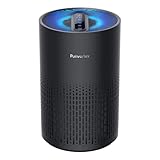
- Cleaner Air In Minutes: Purivortex is proven to filter common pollutants from your home’s air. This air purifier purifies rooms up to 880 ft² in one hour. It can purify a 215 ft² room in about 15 minutes, giving you noticeably fresher air in a short time. Breathe clean, crisp air and feel the difference in your space. (*Tested in an ISO 17025 certified laboratory under typical residential room ventilation conditions.)
- Breathe Easier with 99.97% Filtration: Purivortex HEPA air purifiers for home feature a powerful 3-layer filtration system — a pre-filter, HEPA filter, and activated carbon—that filter up to 99.97% of pollutants, including dust, smoke, pollen, pet dander, and VOCs. Purivortex air filters filter out particles as small as 0.1 microns, while the carbon filter helps reduce light household odors from smoke, pets, and cooking.**(**Independently tested in an ISO 17025 laboratory.)
- Bigger Filter, Better Purification: Purivortex goes beyond the standard—while most purifiers of this size use a 4 inch filter, Purivortex air filters stand tall at 6 inches. That’s nearly 1.5× larger, pulling in more air and delivering cleaner results, faster. Filter made of FSC-Certified paper, sourced from responsibly managed forests, ensuring both high performance and care for the environment.
- Backed by Science, Trusted by Standards: Purivortex air purifiers are rigorously tested to deliver powerful purification performance. Certified by ETL, FCC, and CARB for safety and energy efficiency, and verified through independent SGS laboratory testing to prove their effectiveness. With Purivortex, you get science-backed confidence in every breath.
- 2 Years of Guaranteed Confidence: Purivortex stands behind the quality and performance of every purifier, which is why Purivortex air purifiers come with a full 2-year warranty. More than 500,000 families have already chosen Purivortex for cleaner, fresher air. With added convenience features such as 3 timer settings (4H/8H/12H), 4 fan modes (Sleep/Low/Med/High), and 4 night light modes (Multicolor, Blue, Green, Purple), Purivortex delivers comfort tailored to your lifestyle.
Can I tell whether I will react by visiting a cat first?
A brief visit is not a dependable test of long-term tolerance. Exposure during a visit may differ from living with a cat, and allergens can linger in air, clothing, and furnishings. Ask an allergist or immunologist about testing and how to assess your symptoms.
Will a HEPA air purifier or vacuum make living with a cat safe?
No. AAAAI includes HEPA air cleaners and micro-filter vacuum bags among possible exposure-reduction measures, but they are not allergen eliminators and cannot guarantee clinical benefit. They work best as part of a sustained combination of measures.
What should I do if I wheeze or have chest tightness around cats?
Discuss breathing symptoms with a clinician. Wheezing, difficulty breathing, or chest tightness deserves medical attention; do not increase exposure on your own to test whether you can tolerate a cat.
Are antihistamines a long-term solution for cat allergy?
AAAAI notes that over-the-counter antihistamines may relieve symptoms but are not ideal as long-term treatment. An allergist can discuss an individualized plan, including whether immunotherapy is appropriate.
The Bottom Line
Bottom line: No unusual-looking cat breed is reliably hypoallergenic. Hairlessness, coat type, and low shedding cannot show whether a cat will trigger your symptoms. If you are considering a cat, start with an allergist’s evaluation; if a cat is already at home, discuss treatment and combine practical exposure-reduction measures without assuming they guarantee relief.
Quick Recap
Product prices and availability are accurate as of the date/time indicated and are subject to change. Any price and availability information displayed on Amazon at the time of purchase will apply.




