Recommended Free Tools
The best brush for a shedding cat depends on the coat: a rubber grooming brush is a strong choice for short fur, while a long-toothed metal comb is useful for loose hair and minor tangles in medium or long coats. A stiff-bristle brush can also suit short coats or cats with sparse undercoats. Choose a tool your cat tolerates, use it gently, and treat tight mats or unusual hair loss as problems that need professional attention—not more brushing.
There is no single best brush for every shedding cat. Coat length, undercoat, tangles, and your cat’s comfort all matter. The right tool should help with the specific grooming task without requiring you to pull or press hard.
As an Amazon Associate I earn from qualifying purchases.
How to choose a brush for your cat’s coat
Start by matching the tool to coat length and the job you need it to do. Routine removal of loose hair is different from carefully checking for a small tangle, and no brush is right for every cat. The guidance below reflects recommendations from the ASPCA and VCA Animal Hospitals; it is not a ranking from a controlled comparison of brush products.
Do these 3 things before closing this tab:
1Clear out junk files and repair common Windows errors2Fix the driver behind crashes, sound loss and screen glitches3Repair Windows errors before they cause bigger problemsConsider four things as you choose: how long and dense the coat is, whether you want to collect loose hair or address a minor tangle, whether the tool moves through the coat without pulling, and whether your cat tolerates it. A tool category suited to a coat is only a starting point; a cat’s reaction matters too.
#1 Best Overall
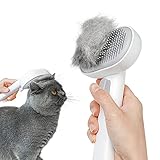
- 【Professional Cat Hair Brush】Perfect gift for pet owners, vets, and pet groomers. Using this cat brush for long haired cats on a regular basis can gently and effectively remove loose hair, tangles, knots, dander and trapped dirt. Suitable for short, medium or long, thick, thin or curly haired dogs/cats/rabbits, making your pets shiny and healthy.
- 【Skin-friendly Massage Needles】The mental pins on the cat brush with release button have round rubber tips on the ends. As a cat deshedding brush, it's perfect for shedding and massaging your pets without scratching your pet's skin, even the sensitive skin. After use, you can hang it with the silicone loop strap to protect the bent needle.
- 【Upgraded High Quality Material】The our long hair cat grooming brush made of durable 304 stainless steel and fine ABS material. Our wire bristles is 1.2 times as thick as bristles of other deshedding brush for cats. More sturdy and not easy to deform, can be used for a long time. 150° bent needles designed to penetrate deep into the coat are really easier to groom the undercoat well.
- 【One-click Cleaning Button】After brushing your pet, simply click the button. The shutter will pop out, separating the brushed hair from the metal needle, then wipe the hair off. The button of cat shedding brush on the handle saves time and energy when grooming and cleaning.
- 【SUPPORT · 365 Days】If the pet hair brush have any problems during use, we will provide you with replacement or 100% money back. And we have a professional customer service team and pet experts to provide you with the pre-sales and after-sales service. aumuca is always at your side.
| Coat or grooming need | Tool type | How to use it |
|---|---|---|
| Short fur with loose dead hair | Rubber grooming brush | Brush gently through the coat. The ASPCA specifically identifies rubber brushes as especially effective at removing dead hair from short fur. |
| Short coat or sparse undercoat | Stiff-bristle brush | Use for loose hair, with light strokes rather than forceful scrubbing. |
| Medium or long coat with loose hair or minor tangles | Long-toothed metal comb | Work carefully through small sections and stop if the comb catches or pulls. |
| Heavy seasonal shedding with loose undercoat clumps | Some undercoat-removing combs | Consider one only if it suits your cat’s coat and can be used gently. VCA describes this category for heavy seasonal shedding but does not set a universal schedule or endorse a specific product. |
| Tight or extensive mats | Professional groomer or veterinary professional | Do not try to cut mats out with scissors. VCA warns that scissors can injure a cat’s skin. |
Short-haired cats
For a short coat, a rubber brush is a practical starting point for collecting dead hair. The ASPCA specifically calls rubber brushes especially effective for removing dead hair from short fur. A stiff-bristle brush is another option for short coats or sparse undercoats, particularly when the task is removing loose hair.
These are related but not identical recommendations: the ASPCA highlights rubber brushes for dead hair on short fur, while VCA identifies stiff bristle brushes for short coats or sparse undercoats. Choose between them based on how your cat responds and whether the tool moves through the coat without scraping or tugging. A tool that is uncomfortable is unlikely to make grooming easier for either of you.
Use a gentle touch rather than trying to press the brush into the coat or remove all the shedding hair at once. For short-haired cats, the ASPCA advises brushing in the direction the coat grows and concentrating on one section at a time. That gives you a simple way to work methodically without repeatedly brushing a single area.
Medium- and long-haired cats
A long-toothed metal comb can help remove loose hair and locate minor tangles in medium and long coats. Use it patiently, section by section. If it meets resistance, do not yank it through; pulling can hurt your cat and make future grooming harder.
The comb’s role is not to force its way through every knot. A minor tangle may be manageable with careful, gentle combing, but resistance is a signal to stop and reassess rather than increase pressure. Check the coat for knots before starting, and pay particular attention to areas where mats commonly form. A comb that catches in a tight knot is not a reason to tug harder.
Long coats generally need more frequent maintenance than short coats, but frequency is not one-size-fits-all. Coat texture and tendency to tangle matter: the ASPCA recommends grooming long-haired indoor cats every few days, while VCA recommends daily brushing for long, silky, or curly coats to prevent tangles and mats. See the schedule section below for how to interpret these recommendations.
Rank #2

- Cat brushes for long haired cats and short haired cats
- Soft Tip Bristles:Cat comb with soft tip bristles, helping to break up tangles and mats effectively,Your pet will enjoy the gentle massaging
- Soft Gel Handle:Super soft handle with anti-skid curved silicone gel, keeps your hand comfortable while grooming
- Self-Cleaning Button:Simply push the release button, and all the fur will come off the bristles, no more digging in between bristles to get the hair out
- Premium Material:The cat grooming brush is made of resistant and durable material, free of toxins and chemicals, healthy and easy to use
Seasonal undercoat shedding
Some combs are designed to lift loose undercoat clumps during heavy seasonal shedding. That does not make an undercoat comb the right everyday tool for every cat. VCA describes these combs as an option for periods of heavy seasonal shedding; it does not provide a universal frequency, a brand endorsement, or a claim that this tool is best for every coat.
What’s actually slowing this PC down?
Pick the symptom - the matching free tool is one click away.
Think of an undercoat-removing comb as a qualified option for a particular situation, not a default purchase simply because your cat sheds. Match it to the coat and use it gently. If you are unsure whether a comb suits your cat, ask your veterinarian or groomer to show you how to use it safely. No specific make, model, or product-performance ranking is supported by the guidance here.
What the brush comparison can—and cannot—tell you
The useful comparison is by coat and task, not by a universal winner. A rubber grooming brush is specifically supported for dead hair on short fur. A stiff-bristle brush is an option for short coats or sparse undercoats. A long-toothed metal comb serves medium and long coats when removing loose hair or checking minor tangles. Some undercoat combs may help with loose undercoat clumps during heavy seasonal shedding.
Those categories do not establish which brand lasts longest, which tool collects the most hair in a test, or which is most comfortable for every cat. No controlled performance comparison or specific product endorsement is provided. Let fit, gentle use, and your individual cat’s comfort guide the decision.
How often should you brush a shedding cat?
There is no single schedule for every coat. The ASPCA says one or two brushings per week can help maintain a healthy coat generally. It also says long-haired indoor cats need grooming every few days to remove dead hair and help prevent tangles. VCA recommends daily brushing for long, silky, or curly coats to prevent tangles and mats, while short coats may need less frequent grooming.
These are different source-specific recommendations, not one agreed interval. Use them as coat-based guidance and adjust to your cat’s coat, tendency to tangle, and comfort. A short coat may need less frequent brushing than a long, silky, or curly coat. For a long coat, the possibility of tangles and mats makes regular maintenance especially important; some cats may need grooming every few days, while the VCA recommendation for long, silky, or curly coats is daily brushing.
Rank #3

- 【Easy Desheding】: Swihauk self cleaning dog brush for long haired dogs with release bottom helps effortlessly reduce shedding. A must have dog brush for short haired dogs, cat brush for indoor cats, cat brush for shedding, slicker brush for dogs.
- 【Safe Design】: Soft and protective plastic round head bristles creating a comfortable feeling while deshedding without hurting your pet. Ideal puppy brush for small dogs, dog brush for shedding and grooming.
- 【Sturdy & Durable】: Premium stainless steel metal and compact design make our product sturdy and durable for long term use.
- 【Ergonomic Design】: Press bottom for easy cleaning, high-quality & lightweight TPR handle make your grooming effortlessly.
- 【Effective to Remove Loose Fur】: Swihauk pet grooming brush is effective to remove loose fur, suitable for dogs, cat with long and short hair, perfect for your lovely pet like puppies, golden retriever, rabbit, kitten, bunny, yokie and more.
Indoor cats may shed throughout the year, so shedding is not limited to one seasonal grooming period. Regular grooming can collect loose hair before it spreads around the home, and vacuuming can help minimize the inconvenience of indoor shedding. Brushing should remain comfortable, though, and should not become an effort to remove every loose hair in one session.
How to brush without pulling or upsetting your cat
- Choose a calm moment. Let your cat settle before you start. Keep the first sessions short so you can learn which areas and tools your cat accepts.
- Check the coat before brushing. Look and feel for knots, especially in places where mats commonly form. If you find a tight mat, do not force a brush or comb through it.
- Use gentle strokes. Follow the direction the coat grows on a short-haired cat, as the ASPCA advises. Work on one section at a time rather than repeatedly brushing the same spot.
- Adjust your approach for a long coat. The ASPCA suggests starting with the abdomen and legs, then grooming the neck and tail. Move slowly and use a comb carefully where you encounter a minor tangle.
- Stop if the tool catches or your cat resists. Avoid excessive pulling on tangles. If grooming causes distress or you cannot work through a knot gently, get help rather than escalating pressure.
The central technique is to let the tool do its intended job without forcing it. A rubber brush or bristle brush for a short coat should be used gently; a long-toothed comb should be worked carefully when you are checking loose hair or a minor tangle. If it catches, stop. Continuing with more pressure can turn a small grooming problem into an uncomfortable experience.
For a long-haired cat, the ASPCA’s suggested order—abdomen and legs first, followed by the neck and tail—offers a way to work through the coat in sections. For a short-haired cat, follow the direction of growth. In either case, inspect for knots and do not pull hard at tangles. The goal is routine coat care, not removing every shed hair in a single session.
When brushing is not enough
Tight mats and extensive tangling
Extensive mats are not a routine brushing problem. VCA recommends professional grooming or veterinary care for them. Do not cut a mat close to the skin with scissors: a cat’s skin can be caught in the mat, and scissors can cause a serious cut. A professional can determine a safer way to remove it.
This is an important distinction when choosing a tool: a long-toothed metal comb may help with loose hair and minor tangles, but it is not a solution for tight or extensive mats. Do not try to solve a severe mat by pulling harder with a comb, switching to a more aggressive brush, or cutting it out yourself. VCA says clippers should be used for mat removal because scissors can cut the cat’s skin; extensive mats should be handled by a professional groomer or veterinary professional.
Bald patches, substantial hair loss, or persistent itching
Shedding alone does not identify a medical cause. The ASPCA advises veterinary assessment for bald patches or significant hair loss, and for persistent scratching, licking, or biting. Possible causes it lists include allergies, ringworm, bacterial infection, fleas, hormonal imbalance, poor diet, and stress. These signs need an examination; changing brushes cannot diagnose or treat the underlying problem.
Rank #4

- WORLD’S #1 CAT HAIR BRUSH: Our cat grooming brush / cat shedding brush is the world's best patented pet grooming brush for cats, small dogs, and rabbits. It is the perfect cat deshedding brush, short hair cat brush, & cat brush for long haired cats.
- EASY AND FAST CLEANUP: SleekEZ Deshedding Grooming Tool is great for removing hair and fur from carpets, pet bedding, cat trees, and more! Our cat comb for shedding is also an amazing pet hair remover and cat fur remover / cat hair remover brush.
- ALL HAIR & FUR TYPES: It is the perfect cat comb for long haired cats and cat brush for short haired cats. SleekEZ works as a deshedding brush for cats, cat deshedding tool, undercoat brush for cats, cat fur brush, cat deshedder, & small dog brush.
- PAINLESS AND ENJOYABLE: SleekEZ serves as a versatile kitten brush, puppy brush for small dogs, & bunny brush / rabbit brush. It's the best pet hair brush on the market and is an absolute essential for cat shedding control!
- GREAT GIFT: SleekEZ makes the industry's leading cat combs for indoor cats & shedding brush cat hair. It is a must have for any cat grooming kit, cat essentials for indoor cats, & cat supplies. Also an amazing cat dander remover & cat undercoat brush
In other words, a brush is a grooming tool, not a way to determine why hair is coming out. If you see bald patches or substantial hair loss, or your cat keeps scratching, licking, or biting, contact a veterinarian rather than relying on a different brush or an undercoat comb. The possible causes vary, and the ASPCA’s list is not a diagnosis for any individual cat.
Windows Errors? Fix Them Before They Spread
Repair common Windows errors and clear accumulated junk for a smoother, more stable PC - no reinstall needed.Free scan · no reinstallOutdated Drivers Are Slowing You Down
One free scan finds every outdated or missing driver and matches the right update for your exact hardware.Free scan · exact hardware matchWhat to expect from routine grooming
Brushing can help remove loose hair and reduce minor tangles, but it is not a substitute for veterinary care when the coat or skin changes noticeably. Nor does shedding mean a cat needs a bath: VCA notes, “Most healthy adult cats are fastidious groomers and rarely require a bath.”
Regular grooming and vacuuming can help manage the practical inconvenience of indoor cats shedding year-round. Still, grooming should be tailored to the cat in front of you. The right brush is the one suited to the coat and task that you can use gently, without persistent tugging or distress.
For most owners, the decision is straightforward: choose a rubber brush or stiff-bristle brush for a short coat, a long-toothed metal comb for loose hair and minor tangles in a longer coat, and seek professional help for extensive mats. Consider an undercoat comb only as a possible aid during heavy seasonal shedding, not a universal daily tool. Keep sessions gentle and tailor their frequency to the individual cat.
Frequently Asked Questions
What’s the best brush for a cat that sheds?
There is no single best brush for every shedding cat. For short fur, the ASPCA identifies a rubber brush as especially effective for removing dead hair; a stiff-bristle brush is another option for short coats or sparse undercoats. For medium or long coats with loose hair or minor tangles, VCA recommends a long-toothed metal comb. Choose based on coat and comfort, and use it gently.
Free tools Windows power users keep installed
One-click scans. No signup required.
What brush should I use for a short-haired cat?
A rubber grooming brush is a strong starting point for dead hair on short fur. A stiff-bristle brush can also suit a short coat or sparse undercoat. The ASPCA advises brushing in the direction the coat grows and focusing on one section at a time.
Best Value

- REMOVES LOOSE FUR & UNDERCOAT: The 5-inch EquiGroomer deshedding brush gently pulls loose hair and undercoat from cats and dogs without cutting healthy fur.
- PERFECT SIZE FOR CATS & SMALL DOGS: The compact 5-inch blade fits smaller pets and tight spots - face, legs and paws - for easy, precise grooming.
- WORKS ON SHORT & LONG HAIR: Rounded stainless-steel teeth glide through any coat, reducing shedding while keeping your pet calm and comfortable.
- LESS SHEDDING, LESS MESS: Regular use dramatically cuts loose hair on furniture, floors and clothes and leaves a softer, shinier coat.
- COMFORT-GRIP HANDLE: A lightweight, ergonomic handle gives you full control for quick, stress-free grooming sessions.
What should I use on a long-haired cat?
A long-toothed metal comb can help with loose hair and minor tangles in medium and long coats. Work carefully in sections and do not pull if the comb catches. Long, silky, or curly coats may require daily brushing according to VCA; the ASPCA recommends grooming long-haired indoor cats every few days.
Should I use an undercoat comb every day?
Not as a universal rule. VCA says some combs are designed to remove loose undercoat clumps during heavy seasonal shedding, but it does not set a universal schedule. Whether one suits your cat depends on the coat and the cat’s comfort.
How often should I brush a shedding cat?
It depends on the coat. The ASPCA says one or two brushings per week can help maintain a healthy coat generally and recommends grooming long-haired indoor cats every few days. VCA recommends daily brushing for long, silky, or curly coats to prevent tangles and mats; short coats may need less frequent grooming.
What should I do if a brush catches on a tangle?
Stop rather than pulling harder. VCA advises gentle tool use and avoiding excessive pulling on tangles. A long-toothed metal comb can help with minor tangles, but tight or extensive mats should be handled by a professional groomer or veterinary professional.
Can I cut a mat out with scissors?
No. VCA warns that scissors can cut a cat’s skin during mat removal. For extensive mats, seek professional grooming or veterinary care rather than trying to cut them out yourself.
When should shedding prompt a vet visit?
The ASPCA advises veterinary assessment for bald patches or significant hair loss, as well as persistent scratching, licking, or biting. Potential causes include allergies, ringworm, bacterial infection, fleas, hormonal imbalance, poor diet, and stress, so a brush change cannot identify or treat the cause.
Does a shedding cat need a bath?
Not necessarily. VCA states, “Most healthy adult cats are fastidious groomers and rarely require a bath.” Shedding by itself is not a reason to assume your cat needs one.
Quick wins for a faster PC:
Scan for outdated or missing drivers - takes under a minuteDriver Scan →Repair Windows errors before they cause bigger problemsFix Now →Fix the driver behind crashes, sound loss and screen glitchesFind Drivers →The Bottom Line
Match the tool to the coat and the task: rubber or stiff-bristle brushes suit short coats, while a long-toothed metal comb can help with loose hair and minor tangles in medium and long coats. Some undercoat combs may help during heavy seasonal shedding, but they are not a universal everyday choice. Brush gently, stop rather than pulling at knots, and ask a professional about extensive mats. Contact a veterinarian for bald patches, significant hair loss, or persistent scratching, licking, or biting.
Quick Recap
Product prices and availability are accurate as of the date/time indicated and are subject to change. Any price and availability information displayed on Amazon at the time of purchase will apply.




