
Quick wins for a faster PC:
Repair Windows errors before they cause bigger problemsFix Now →Scan for outdated or missing drivers - takes under a minuteDriver Scan →Some links on this page are affiliate links: if you buy through them we may earn a commission, at no extra cost to you.
Feline asthma is an inflammatory disease of the small airways. Typical clues include coughing, wheezing, rapid or difficult breathing, and sometimes open-mouth breathing, but none of these signs proves asthma by itself. Several infections, parasites, and other lung disorders look similar, so a veterinarian must evaluate the cat and rule out competing causes.
If your cat is struggling to breathe, breathing with its mouth open, or has blue lips or a blue nose, treat it as an emergency. Contact a veterinarian immediately rather than trying a home remedy, an air-cleaning product, or medication that was not prescribed for that cat.
As an Amazon Associate I earn from qualifying purchases.
What’s actually slowing this PC down?
Pick the symptom - the matching free tool is one click away.
What feline asthma is
Asthma is generally understood as an abnormal immune response to something inhaled. The lower airways become inflamed, their muscles can constrict, and mucus may accumulate. The combined swelling and narrowing obstruct airflow. The Cornell Feline Health Center describes an allergic reaction to inhaled allergens, while the Merck Veterinary Manual characterizes feline bronchial asthma as a syndrome involving airway hyperresponsiveness, airflow obstruction, airway remodeling, and eosinophilic inflammation.
Cornell estimated in its July 2014 update that asthma affects 1% to 5% of cats. That is an estimate from that source, not a current worldwide prevalence study. Cornell reports that diagnosed cats average four to five years of age. Merck notes that young cats and Siamese and Himalayan cats are often represented, but Cornell says a Siamese predisposition has not been definitively proved. Age or breed can provide context, never a diagnosis.
Popular on Amazon

- The #1 Vet recommended easy-to-use AeroKat inhaler spacer for cats and kittens comes with two (2) masks for best fit.
- Vet tested, cat approved: spacer for inhaler cat inhaler mask for cats with asthma, bronchitis, allergies, and breathing difficulties.
- Effective treatment means better health: exclusive Flow-Vu inhalation indicator moves as your cat breathes to confirm correct use and medication delivery.
- Reduced medication cost: makes more medication available for longer with low or no leaks - less waste saves money.
- Easy to use: fits with any MDI metered dose inhaler, can activate inhaler into spacer away from cat to keep kitty calm.
The disease is considered incurable and may be progressive, with flare-ups ranging from mild to fatal. With an individualized treatment plan, observation, and veterinary follow-up, many affected cats can nevertheless live comfortably for years.
Signs of asthma and how an attack can look
Watch for changes in breathing effort as well as the familiar “hairball” cough. Reported signs include:
Free tools Windows power users keep installed
One-click scans. No signup required.
- Repeated coughing or hacking, sometimes mistaken for trying to bring up a hairball
- Wheezing or a high-pitched sound, especially when breathing out
- Fast breathing or visibly increased effort from the chest and abdomen
- Difficulty drawing breath
- Open-mouth breathing or panting
- Crouching low with the neck extended during a severe episode
- Occasional vomiting associated with a bout of coughing
A cat can cough from chronic bronchitis, lungworms or other parasites, pneumonia, and several other conditions. Conversely, a cat with asthma may have quiet intervals between attacks. Record a video from a safe distance if an episode is brief; it can help the veterinarian distinguish coughing from vomiting and assess posture and effort.
When breathing trouble is an emergency
Open-mouth breathing, severe effort, collapse, or blue or gray lips or nose means oxygenation may be failing. Cornell veterinarian Richard Goldstein, DVM, warns that “At this point, you have an emergency situation, and veterinary care is mandatory,” referring to those life-threatening attack signs. He also cautions: “If the initial signs of dyspnea are ignored, the condition can rapidly progress to the more severe stage. Then the cat may die unless emergency treatment is immediately obtained.”
Also popular on Amazon
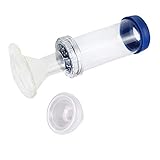
- Feline Aerosol Chamber allows your Cats to breathe normally while inhaling medication
- Works with all metered dose inhalers prescribed by veterinarians for Cat wheezing, asthma, etc.
- Delivers medications directly to the lungs, requiring a lower dose of drugs with fewer side effects
- NOTE:If you want to change the mask,please by running hot water over it
Move the cat as calmly as possible into a carrier, minimize handling, and call the veterinary hospital while traveling. Do not force food, water, steam, essential oils, or another cat’s inhaler. A respiratory emergency is not a situation to monitor at home while waiting for an environmental change to work.
Possible causes and triggers
The trigger for an individual cat often cannot be identified. Suspected airborne irritants and allergens include:
- Cigarette or other tobacco smoke
- Dusty litter and household dust mites
- Perfumes, cleaning vapors, and aerosol sprays
- Pollen, mold, and mildew
- Smoke from fireplaces, candles, or burning materials
- Some foods, which Cornell lists as a possible but unconfirmed contributor
Merck likewise lists cigarette smoke, perfumes, pollens, molds, and dust as aeroallergens to consider. These are possibilities, not proven causes for every cat. Removing one item does not establish that it caused the disease, and no sex-related susceptibility has been definitively demonstrated. Genetic contributions remain unclear.
How veterinarians diagnose feline asthma
There is no single test that definitively confirms asthma. The veterinarian combines the history, physical examination, imaging, and—when appropriate—airway testing while excluding disorders that produce similar signs.
Also popular on Amazon
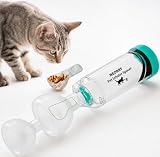
- Feline Aerosol Chamber with Unique Comfort Feeder : Training a cat to accept an aerosol chamber can be challenging. The Neobay spacer features a unique 'Comfort Feeder' spoon attachment that holds treats, helping your cat associate the mask with positive rewards. This design aims to reduce resistance and help transition cats to their daily routine, as most cats are food-motivated.
- Chamber Inhaler with High-Sensitivity Flow Indicator: The ultra-thin (0.1 mm) flow indicator is designed for high sensitivity. This visual aid moves visibly with your cat's breathing, helping you coordinate MDI actuation with inhalation. It provides a visual cue to help you observe airflow and count breaths during use.
- Anti-Static & Latex-Free Materials: The masks are crafted from soft, latex-free liquid silicone for a gentle fit. The main spacer body is made with anti-static polymers to help minimize medication adherence to the inner walls. The universal silicone backpiece is compatible with most standard prescribed Metered Dose Inhalers (MDI). (Medication not included).
- Cat Inhaler Spacer with Two Mask Sizes (Small/Med): Two mask sizes are included to accommodate kittens and adult cats. A properly fitted mask helps form a seal around your cat's nose and mouth. The chamber holds aerosol released by a compatible metered-dose inhaler (MDI) for your cat to inhale through the mask. A close fit helps limit leakage and reduce medication waste.
- Designed for Feline Respiratory Care: The Neobay spacer is designed to assist cats with a respiratory condition. It acts as an effective bridge between the MDI and your pet, which allows the medication to be released into the chamber first, allowing the cat to inhale it at their own pace. It includes a detailed instruction manual to guide you through the process of helping your cat breathe easier. Ideal for pet owners managing feline respiratory conditions.
History and examination
Tell the veterinarian when coughing began, how often it occurs, whether episodes follow litter changes, cleaning, smoke, or outdoor exposure, and what the cat looks like during an attack. Bring videos and a list of all medicines and supplements. The clinician listens for wheezes, measures breathing effort, and checks the mouth and gums for oxygen-related color changes.
Imaging and laboratory evaluation
Chest radiographs may show airway-pattern changes or overinflation, but they are not always conclusive. Blood work, fecal testing, or other parasite and infection tests may be indicated. Cornell specifically lists chronic bronchitis, lungworms, other lung parasites, and infectious diseases such as pneumonia among conditions that must be considered.
Do these 3 things before closing this tab:
1Clear out junk files and repair common Windows errors2Fix the driver behind crashes, sound loss and screen glitches3Repair Windows errors before they cause bigger problemsAirway sampling in selected cats
When the diagnosis remains uncertain or treatment is not working as expected, a veterinary team may evaluate airway cells and, in selected cases, perform bronchoscopy with airway sampling. Cornell notes that allergy testing may sometimes contribute information, but no result should be interpreted in isolation. Sedation or anesthesia carries additional considerations for a cat already having respiratory difficulty, so the veterinarian weighs the benefit against the risk.
Treatment: controlling inflammation first
The central treatment goal is to suppress airway inflammation. Veterinarians commonly use corticosteroids in oral, inhaled, or injectable forms. The route, drug, and schedule depend on the cat’s severity, ability to take medicine, and other health conditions. Never give a human inhaler or change a prescribed dose without veterinary direction.
Also popular on Amazon
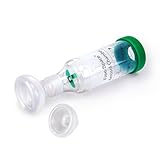
- FITS ALL CATS – comes with one chamber and two different sized masks to ensure optimal fit for your cat,a small mask for cats weighing 10lbs or less, a large mask for cats > 10lbs
- BREATHING INDICATOR – The Breathing Indicator will help to ensure the delivery of the medication to your cat by indicating your cat’s breathing, this will in turn help you optimize the delivery of medication for your cat
- DESIGNED FOR CATS – product was designed specifically for cats. The breathing chamber, which works with most Metered Dose Inhalers (MDI), delivers inhaled medication deep into your cat
- EASY TO OPERATE AND CLEAN – Comes with instruction manual for operation of use as well as cleaning instructions.
- EFFECTIVENESS GUARANTEE: Our products are jointly developed with several veterinarians and tested for more than half a year and improved more than thirty times. The materials used, the shape of the mask, the breathing indicator, and the chamber,have been improved many times,we strive for the best.If you are not satisfied, please contact us and we have a 100% refund
A bronchodilator such as albuterol or terbutaline may relax airway muscle during appropriate episodes or as part of a plan. Merck emphasizes that bronchodilators are adjuncts to glucocorticoids, not stand-alone treatment for the underlying inflammation.
| Approach | What it does | Practical and safety considerations |
|---|---|---|
| Corticosteroid | Reduces airway inflammation, the core disease process | May be oral, inhaled, or injectable. Cornell associates frequent, extended use with increased risk of pancreatitis, diabetes, and other conditions; the veterinarian balances control against those risks. |
| Bronchodilator | Relaxes constricted airway muscle and can improve airflow | Used as an adjunct when prescribed. It does not replace anti-inflammatory treatment. |
| Inhaled corticosteroid | Delivers anti-inflammatory medicine through the airways | VCA reports inhaled steroids appear more effective for symptoms and have fewer side effects than oral steroids, but they are not automatically suitable or risk-free for every cat. |
| Oral or injectable medicine | Provides systemic treatment when inhaled delivery is impractical or rapid treatment is needed | Choice and monitoring are veterinary decisions, especially when a cat has diabetes, pancreatitis risk, infection, or another chronic disease. |
Do not stop a long-term corticosteroid abruptly unless the prescribing veterinarian gives a taper or stopping plan. If coughing worsens, contact the clinic rather than adding extra doses yourself.
Recommended Free Tools
Using an inhaler and cat aerosol chamber
A metered-dose inhaler can be connected to a cat-sized aerosol chamber (spacer) with a soft mask. The chamber holds the medication so the cat can breathe it in rather than needing to coordinate a human-style inhalation. The chamber is an accessory, not a treatment by itself; the medicine and dosing frequency must be prescribed.
Acclimate before the first medicated dose
- Ask the veterinarian to demonstrate the exact inhaler, chamber, mask seal, shaking or priming requirement, and prescribed frequency.
- For about a week, leave the equipment near the cat and reward calm investigation with treats.
- Touch the mask briefly to the face, reward, and gradually increase contact. Practice with room air so the cat learns that the mask does not predict discomfort.
- Only begin medication once the cat can tolerate the mask without struggling. Stop and ask the clinic for a slower plan if the cat panics or becomes breathless.
Giving a prescribed dose
- Assemble the inhaler and chamber exactly as the product instructions and veterinary demonstration show.
- Place the soft mask over the nose and mouth, creating a gentle seal without pressing the throat.
- Release the prescribed puff into the chamber while the mask remains in position. VCA’s instructions say to keep it in place for five to six breaths and watch the chamber’s indicator tab; follow your veterinarian’s directions if they differ.
- Remove the mask calmly, reward the cat, and note the dose. Track remaining actuations so an empty canister is not mistaken for a failed treatment.
Never substitute a different strength, canister, spacer, or frequency because the equipment looks similar. Ask whether the chamber and mask need cleaning, how to store them, and what to do after a missed dose.
Also popular on Amazon
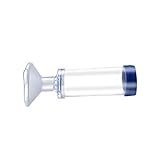
- Design For Cats/Dogs,To Help Your cat/dog Inhale Medicine When They Have Asthma & Breathing Difficulties (Wheezing,Laboured Breathing, Persistent Cough e.c.t).
- The mask made of soft PVC material, non-toxic,.The Chambe is Anti-static, prevent drug adhesion.Come with two different size masks to ensure that your cat/dog can use it comfortably
- With a low-resistance, highly-optimized inhalation valve, you can easily know how many times your cat has inhaled. At the same time, the breathing valve can stop the exhaust gas from the cat/dog from entering the chamber and avoid mixing with the drug.
- Detailed instructions was included to help you use and cleanin.
- Order now with peace of mind due to Amazon's 100% guarantee. No catches. If you don't like our product for any reason, simply send it back for a full and complete refund. Help Your cat/dog Catch Their Breath Again, Get The Aerosol Chamber Today!
Long-term management at home
Track breathing and signs
Keep a simple log of coughs, wheezing, appetite, activity, medication times, and possible exposures. Count breaths only while the cat is asleep or deeply resting and not purring: one chest rise and fall equals one breath. VCA says a sleeping rate above 30 breaths per minute, or a consistent increase from that cat’s usual rate, could indicate worsening asthma. Treat that as a reason to contact the veterinary team, not as a stand-alone diagnosis or permission to change medication.
Attend rechecks at the interval recommended for the medicine and the cat’s other conditions. Bring the log and videos. The veterinarian may adjust treatment based on clinical signs, examination, and, when needed, repeat testing.
Reduce suspected irritants without claiming a cure
Do not smoke around the cat. Use unscented cleaning products where possible, avoid aerosol sprays and candles, control visible mold, and discuss a lower-dust litter with the veterinary team if litter dust appears linked to episodes. Make environmental changes one at a time when practical so you can observe whether signs change.
Cornell and Merck advise considering irritant avoidance, but Cornell notes that indoor air purification and allergen avoidance have not been rigorously tested or proven to work in feline asthma patients. An air purifier, litter change, supplement, or “natural” remedy cannot replace prescribed anti-inflammatory treatment and should not delay emergency care.
What to expect over time
Some cats have infrequent, mild episodes; others need continuing medication and close monitoring. Exacerbations can become severe without warning, so keep the veterinary clinic’s emergency number available and know the nearest hospital’s route. The absence of coughing for a period does not prove that airway inflammation has disappeared. Conversely, a new cough does not prove that the asthma has progressed: infection, parasites, heart disease, and other lung problems still require consideration.
Work with the veterinarian to define the cat’s personal baseline, the signs that warrant a same-day call, and the signs that require immediate transport. Consistent medication, careful observation, and prompt action during deterioration offer the best chance of maintaining comfortable breathing while limiting avoidable treatment risks.
The Tool Desk
Outbyte PC Repair FREEClear out junk files and repair common Windows errorsFree Scan →Outbyte Driver Updater FREEFix the driver behind crashes, sound loss and screen glitchesFind Drivers →Quick Recap
Reliable veterinary references
- Cornell Feline Health Center: Feline Asthma: What You Need To Know (updated July 2014)
- Merck Veterinary Manual: Feline Bronchial Asthma (updated September 2024)
- Cornell Feline Health Center: Feline Asthma: A Risky Business for Many Cats
- VCA Animal Hospitals: Treatment Instructions for Asthma and Bronchitis in Cats (updated October 24, 2025)





Leave a Reply