
Some links on this page are affiliate links: if you buy through them we may earn a commission, at no extra cost to you.
There is no single water temperature that makes all fish active. Fish are ectothermic, so water temperature affects their body processes, movement and feeding—but the response varies by species, season, life stage, oxygen and habitat. A preferred feeding range is a guide, not a guarantee that fish will bite.
Why does water temperature affect fish behavior?
Because fish are ectothermic, the temperature of their surroundings influences their physiology. In general, cold water slows activity and food intake for many species. The Missouri Department of Conservation’s 2024 instructor guide puts it plainly: “For most species, lower temperatures slow their activity and decrease food intake.” That does not mean every fish becomes active at the same temperature, or that temperature alone determines whether it feeds.
As an Amazon Associate I earn from qualifying purchases.
Sunlight, air temperature, wind, storms, weather patterns and spawning can also affect behavior. Temperature may change where fish hold as well as how actively they feed. A fish may move into warmer shallows during a cool morning or seek deeper water on a hot, sunny day; these are broad angling suggestions, not rules for every species or waterbody. See the Missouri Department of Conservation’s angler education guide.
How do preferred temperatures differ by species?
Temperature figures describe different things: preferred feeding conditions, spawning conditions, aquaculture optima or local fish-care guidance. They are not interchangeable. For example, a spawning range is not necessarily a feeding range, and an aquaculture optimum is not a wild-fishing bite threshold.
Popular on Amazon
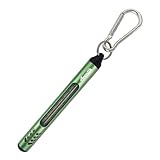
- DUAL F/C DISPLAYS: Temperature range is from -10 to 50°C, 20 to 120°F, turn the black nylon handle on top to read you prefer.
- Item Weight: 35g, Length: 6.2"/15.7cm, durable aluminum case and cap.
- Durable enough for stream, brook, and river fly fishing, must have accessory for fly fishing
| Species and source | Feeding or adult thermal range | Spawning range | How to interpret it |
|---|---|---|---|
| Largemouth bass, Florida Fish and Wildlife Conservation Commission | Preferred feeding: 65–80°F | Preferred spawning: 62–75°F | FWC says its preferred ranges can vary widely; they are not guaranteed bite windows. |
| American shad, Florida Fish and Wildlife Conservation Commission | Preferred feeding: 45–70°F | Preferred spawning: 50–65°F | FWC preferred ranges, subject to wide variation. |
| Black crappie, Florida Fish and Wildlife Conservation Commission | Preferred feeding: 70–75°F | Preferred spawning: 62–65°F | FWC preferred ranges, subject to wide variation. |
| Largemouth bass, FAO fish-culture training material | Optimum adult thermal range: 23–30°C | Not stated in the cited material | A fish-culture reference, not a wild angling activity threshold. |
| Channel catfish, FAO fish-culture training material | Optimum adult thermal range: 25–30°C | Not stated in the cited material | A fish-culture reference, not a wild angling activity threshold. |
The Florida figures come from the Florida Fish and Wildlife Conservation Commission’s temperature-preference table. FWC says the feeding ranges are drawn from USFWS Fish Culture Guidelines or subjective recommendations by FWC biologists and are subject to wide variation. The adult thermal ranges are from the FAO’s fish-culture training material; they should not be read as predictions of wild fish activity.
What happens to fish in cold or warm water?
Cold conditions can slow feeding
For many species, lower temperatures mean slower activity and less food intake. An angler may try a slower retrieve in cold water, as the Missouri guide suggests, but species, oxygen, structure and local conditions still matter.
Windows Errors? Fix Them Before They Spread
Repair common Windows errors and clear accumulated junk for a smoother, more stable PC - no reinstall needed.Free scan · no reinstallCrashes, No Sound, or Screen Glitches?
Random freezes, missing sound and display glitches usually trace back to one bad driver. Find and replace yours safely.Free scan · under a minuteAlso popular on Amazon

- DUAL F/C DISPLAYS: Temperature range is from -10 to 50°C, 20 to 120°F.
- Weight: 35g, durable aluminum case and capots attract more fish.
- Durable enough for stream, brook, and river fly fishing, must have accessory for fly fishing
- Special type II hard anodized aluminum body for the best protection and corrosion resistance. Suitable for all type fishing. Stainless steel split ring and aluminum safety clip at the end prevent accidental loss.
Warm surface water can shift fish deeper
Fish may seek a different depth as water warms. In a USGS-recorded study, researchers tagged 20 adult lake whitefish in Clear Lake, Maine, between November 2004 and June 2009. The fish descended below the developing thermocline when surface water exceeded 20°C and used summer thermal habitat below 15°C. The study also measured activity twofold higher in spring, summer and fall than in winter. Those observations describe lake whitefish at that site—not a universal depth or temperature rule for other fish.
The case illustrates why a surface reading cannot always tell you what conditions are like where fish are holding. Read the USGS record for the lake whitefish study.
Also popular on Amazon

- BRING YOUR FISHING SKILL INTO A SCIENTIFIC STAGE: Many fish will not feed under color water temperature. Warm spots attract more fish.
- Aventik fishing thermometer is an essential tool to read the water and to understand fish behavior, and bring your fishing skill into a scientific stage.
- ACCURATE MEASURMENT IN GREAT PROTECTION ALU BODY: It accurately measures the water temperature with a range of 20 to 120 degrees Fahrenheit or -10 to 50 degrees Celsius.
- Special type II hard anodized aluminum body for the best protection and corrosion resistance. Suitable for all type fishing. Stainless steel split ring and aluminum safety clip at the end prevent accidental loss.
Warm water can raise fish-care concerns
For salmonids, Finnish agency Metsähallitus/Eräluvat advises that feeding activity decreases at 17–21°C and says salmonids stop feeding above 21°C. Its guidance recommends fishing at cooler times of day in the 17–21°C range. At its managed rapid-fishing destinations, it recommends avoiding salmonid fishing when water exceeds 20°C, and permit sales may be suspended above 21°C. These are local recommendations for salmonids in that authority’s jurisdiction, not universal fishing rules. In warm conditions, it also advises playing, handling and releasing fish quickly and carefully. Check Eräluvat’s warm-weather fishing guidance and follow the rules where you fish.
Quick Recap
How should you use a water-temperature reading?
- Measure the water. Use a waterproof fishing thermometer rather than relying on the air temperature. A waterproof fishing thermometer can give you a direct reading; it cannot predict fish behavior by itself.
- Match the reading to your target species. Consult local fishery or wildlife agency guidance. Do not apply Florida species ranges or Finnish salmonid thresholds to a different fishery as if they were universal.
- Consider depth and time of day. Surface water may differ from deeper habitat, and conditions can change through the day. FAO training material recommends measuring near the bottom as well as at the surface in deeper ponds.
- Account for oxygen, not temperature alone. Warmer water holds less dissolved oxygen. In a deep pond, layers can form: warmer surface water, a thermocline and cooler bottom water. Oxygen may be depleted in the lower layer, so cooler water is not automatically better habitat. See the FAO fish-culture material on water temperature and pond conditions.
- Adjust your approach cautiously. In cold conditions, a slower retrieve may be worth trying; on a hot, sunny day, deeper water may be worth checking. Treat these as starting points and account for local conditions and fishery guidance.





Leave a Reply