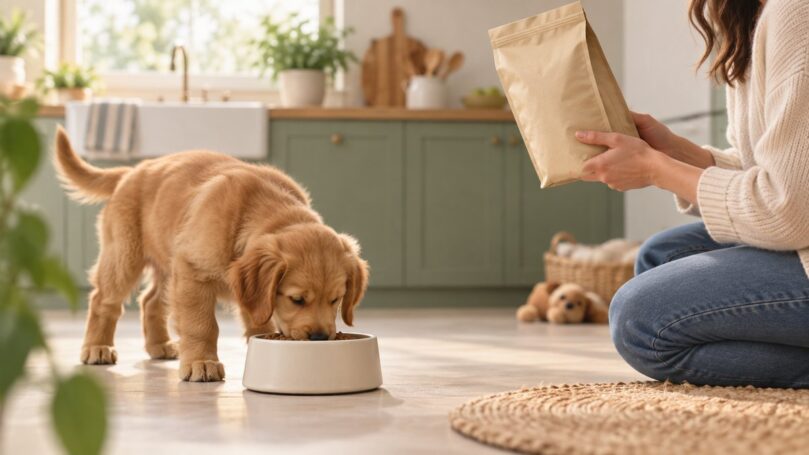
The best puppy food is a commercial diet labeled complete and balanced for growth. If your puppy is expected to weigh 70 lb (32 kg) or more as an adult, choose a food whose nutritional-adequacy statement specifically includes growth of large-size dogs. Look for a manufacturer that can explain who formulates its food and how it tests ingredients and finished products.
No single food is best for every puppy. Match the food to your puppy’s expected adult size, health, body condition, tolerance, and preferences, and check the exact product label before buying.
As an Amazon Associate I earn from qualifying purchases.
Quick picks: suitable puppy-food examples
These are examples of currently listed products whose manufacturers publish an appropriate growth nutritional-adequacy statement. They are not the only suitable choices, and formulas can change. Check the exact label on the bag or can you buy.
| Puppy | Example | Label information |
|---|---|---|
| Small- or medium-breed puppy | Purina Pro Plan Puppy Chicken & Rice Formula | Complete and balanced for all life stages, including growth of large-size dogs |
| Large-breed puppy | Purina Pro Plan Puppy Large Breed Formula Chicken & Rice Formula | Complete and balanced for all life stages, including growth of dogs expected to reach 70 lb or more |
| Large-breed puppy | Hill’s Science Diet Puppy Large Breed Chicken & Brown Rice Recipe | Complete and balanced for growing puppies; formulated with controlled calcium |
| Large-breed puppy weighing 56–100 lb as an adult | Royal Canin Large Puppy Dry | Complete and balanced for growth, including growth of large-size dogs |
| Large-breed puppy | IAMS Puppy Large Breed Dry Dog Food with Real Chicken | 100% complete and balanced for growth of large-breed puppies |
Availability, package sizes, feeding instructions, and formulas may change. Use the product label—not an old online listing—as the final check.
#1 Best Overall
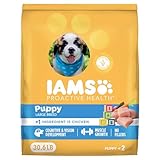
- Veterinarians Recommend IAMS: IAMS large breed dog food recipe is made with real chicken as the #1 ingredient and contains no fillers or artificial flavors; ingredients are natural as defined by the Association of American Feed Control Officials (AAFCO)
- Healthy Cognitive & Vision Development: IAMS Dog Food Proactive Health Large Breed Dry Puppy Food is formulated with Omega-3 DHA to support smarter, more trainable puppies, providing a great start with essential nutrients
- Healthy Bones & Joints: IAMS dog food large breed puppy dry is formulated with essential nutrients and optimal calcium levels to support healthy bones & joints
- Immune System Support: IAMS proactive health dog food is enriched with essential antioxidants Vitamin E and Selenium to help develop a strong immune system
- The Proactive 5 Difference: The Proactive 5 health benefits for IAMS Dog Food Dry Recipe for Large Breed Puppies are scientifically designed to support five key areas of your dog's health, keeping them full of life, for more of life
What to look for on the label
Find the nutritional-adequacy statement on the package. For a puppy’s main food, it should say one of the following, or use equivalent wording:
- “Complete and balanced for growth”
- “Complete and balanced for puppies”
- “Complete and balanced for all life stages”
- For a large-breed puppy: “including growth of large-size dogs (70 lb or more as an adult)”
“Growth” includes puppies. “Maintenance” is for adult dogs and should not be your puppy’s sole food unless your veterinarian specifically recommends it. “All life stages” includes growth, but large-breed owners still need to confirm that growth of large-size dogs is covered.
Do not use a treat, topper, mixer, snack, or product labeled “intermittent or supplemental feeding only” as the puppy’s complete diet. These products are not designed to supply all required nutrients.
What’s actually slowing this PC down?
Pick the symptom - the matching free tool is one click away.
Large-breed puppies need more than a generic puppy label
A puppy expected to weigh 70 lb or more as an adult should receive food whose adequacy statement specifically includes growth of large-size dogs. Large- and giant-breed puppies are more vulnerable to skeletal problems from excessive calories and inappropriate calcium or mineral intake.
Measure meals and keep your puppy lean. Do not add calcium, phosphorus, vitamin D, bone meal, or a general vitamin-and-mineral supplement to complete and balanced puppy food unless your veterinarian prescribes it. Extra supplementation can be harmful, particularly during large-breed growth.
Dry, wet, or mixed food?
Dry and canned foods can both provide complete and balanced puppy nutrition. The format alone does not make one nutritionally superior.
- Dry food: generally easier to store and measure.
- Canned food: may suit puppies that prefer soft food, have difficulty chewing, or need additional water intake.
- Mixed feeding: can work when both products are appropriate for growth and total daily calories are controlled.
Canned food contains substantially more water, so do not compare a cup of canned food with a cup of kibble as if they provide the same nutrition. Use calorie information and feeding directions, and check that the exact product—not merely the brand—has a growth adequacy statement.
Rank #2

- High-Quality Protein: This Pedigree puppy dry dog food is made with high-quality protein sources to support muscle development in growing pups
- Support Healthy Vitality: This Pedigree puppy food recipe is made with 36 vitamins, minerals, and amino acids to support your puppy’s health and vitality
- Immune Health: Pedigree Puppy Dry Food, Chicken, Rice, and Vegetable Flavor is fortified with vitamins & minerals to support a healthy immune system
- Complete and Balanced: Pedigree puppy dog food with Chicken, Rice & Vegetable Flavor is specifically designed for puppies, providing 100% complete and balanced nutrition to your pet
- Made with Key Nutrients: Pedigree Puppy dog food is packed with key nutrients similar to mother's milk and essential for puppy development
How much food does a puppy need?
Start with the feeding table on the package. Treat it as a starting point, not a precise prescription: puppies of the same weight can have different energy needs.
Adjust portions using your puppy’s body condition, growth pattern, stool quality, and veterinary examinations. A healthy puppy should generally have:
- Ribs that are easy to feel without a thick layer of fat
- A visible waist when viewed from above
- An abdominal tuck when viewed from the side
Do not try to maximize growth or make a puppy reach adult size faster. Overfeeding can increase body fat and is especially undesirable in large breeds. Portion-controlled meals are preferable when your puppy overeats or gains excess weight.
General meal schedule
| Age | Typical meals per day |
|---|---|
| 6–12 weeks | 4 |
| 3–6 months | 3 |
| 6–12 months | 2 |
| Older than 12 months | 1–2, depending on the dog |
This general schedule is from the Merck Veterinary Manual. Toy-breed puppies, underweight puppies, and puppies with gastrointestinal disease or hypoglycemia risk may need a different schedule. Ask your veterinarian rather than relying on a general chart.
Free tools Windows power users keep installed
One-click scans. No signup required.
How to judge the manufacturer
Marketing terms reveal less than a company’s nutrition and quality-control practices. The World Small Animal Veterinary Association (WSAVA) recommends asking the manufacturer practical questions such as:
- Who formulates the food?
- Is that person a qualified veterinary nutritionist or animal nutritionist?
- Does the company employ a full-time nutritionist?
- Where is the food manufactured?
- What quality-control tests are performed on ingredients and finished products?
- Does the company analyze the finished food for nutrient content?
- Can it provide a typical or average analysis for nutrients not printed on the label?
- Does it conduct feeding trials or publish nutrition research?
- Is there a working phone number or email address for product questions?
A manufacturer that cannot provide basic information about formulation, testing, and customer support deserves more caution. An AAFCO nutritional-adequacy statement is useful, but it is not an “AAFCO-approved” or “AAFCO-certified” brand seal. AAFCO does not approve, certify, or endorse individual pet-food brands.
Why the ingredient list can mislead you
Ingredients are listed by weight as formulated, but the list does not tell you everything important about the finished diet. It does not show an ingredient’s digestibility, the company’s safety controls, the complete nutrient profile, or the qualifications of the person who formulated the food.
Rank #3

- Real chicken is the first ingredient in this dog food for puppies to help provide the protein he needs for strong, growing muscles, including a healthy heart
- Purina ONE puppy kibble made with DHA, a nutrient found in mothers' milk, to support vision and brain development and four antioxidant sources to support a healthy immune system
- Easily digestible puppy dog food featuring a SmartBlend of high-quality ingredients, including omega-6 fatty acids, vitamins and minerals, for a shiny coat and healthy skin
- Deliciously crunchy bites and tender meaty morsels deliver great taste in this Purina puppy dry food formula made with no artificial flavors or preservatives
- Purina ONE dry dog food for puppies crafted in Purina-owned, U.S. facilities provides 100 percent nutrition for puppies with 0 percent fillers, so every ingredient has a purpose
These popular rules are unreliable ways to choose puppy food:
Recommended Free Tools
- “The first ingredient must be meat.”
- “By-products are automatically poor quality.”
- “Corn, wheat, or rice are fillers.”
- “A shorter ingredient list is healthier.”
- “Natural,” “premium,” “holistic,” or “human-grade” automatically means superior.
- “More protein is always better.”
- “Grain-free” is automatically healthier.
The finished food’s nutrient content, suitability for growth, calorie density, quality controls, and your puppy’s response matter more than a dramatic ingredient list.
Should puppies eat grain-free food?
Healthy puppies do not have a general nutritional requirement to avoid grains. Grain-free food should not be chosen merely because the label sounds more natural or meat-focused.
The FDA has investigated reports of canine dilated cardiomyopathy associated with diets—both grain-free and some grain-containing diets—with high proportions of peas, lentils, other pulses, or potatoes among prominent ingredients. The FDA has not established one confirmed cause and has not concluded that every grain-free food or every legume-containing food is dangerous.
If your puppy has a diagnosed allergy or another medical reason to avoid a particular ingredient, follow your veterinarian’s recommendation. Otherwise, discuss a grain-free diet with the veterinarian before making it the puppy’s regular food.
Why raw and improvised homemade diets are risky
Raw diets are not a safer default for puppies. WSAVA reports no properly documented evidence that raw meat-based diets provide health benefits over balanced commercial diets or balanced homemade cooked diets. Risks include bacterial and parasitic contamination, nutritional imbalance, broken teeth, obstruction, and constipation. Freezing, dehydration, and freeze-drying do not eliminate every bacterium.
Growing puppies are especially vulnerable to deficiencies and excesses that can cause skeletal disease. A meat-and-rice recipe, an online recipe, or a diet assembled without precise supplementation is not a balanced puppy diet.
Rank #4

- Real chicken is the first ingredient in this dog food for puppies to help provide the protein he needs for strong, growing muscles, including a healthy heart
- Purina ONE puppy kibble made with DHA, a nutrient found in mothers' milk, to support vision and brain development and four antioxidant sources to support a healthy immune system
- Easily digestible puppy dog food featuring a SmartBlend of high-quality ingredients, including omega-6 fatty acids, vitamins and minerals, for a shiny coat and healthy skin
- Deliciously crunchy bites and tender meaty morsels deliver great taste in this Purina puppy dry food formula made with no artificial flavors or preservatives
- Purina ONE dry dog food for puppies crafted in Purina-owned, U.S. facilities provides 100 percent nutrition for puppies with 0 percent fillers, so every ingredient has a purpose
If homemade food is medically necessary or you strongly prefer it, have the recipe formulated by a board-certified veterinary nutritionist and follow the recipe, cooking method, and supplements exactly.
Treats and training rewards
Treats, chews, table food, and training rewards should generally provide no more than 10% of your puppy’s daily calories. The other 90% should come from complete and balanced food. For frequent training, measure part of the puppy’s daily kibble and use it as rewards.
Avoid cooked or raw bones, antlers, excessively hard chews, and raw animal-based treats. Bones can fracture teeth or cause obstruction, and raw animal products can transmit pathogens. Do not give puppies chocolate, grapes or raisins, onions, garlic, leeks, shallots, chives, xylitol, alcohol, caffeinated drinks, or raw yeast dough.
The 10% treat guidance and safety advice are from WSAVA’s guide to feeding treats to dogs.
Independent reader supportYour contribution helps us test, update, and keep practical guides available for everyone.When should you switch to adult food?
Small and medium dogs often reach adulthood at about 9–12 months. Large and giant breeds may continue growing for nearly two years. The right time to change food depends on breed, expected adult size, body condition, and the manufacturer’s instructions—not simply on the puppy’s first birthday.
Follow the food manufacturer’s transition instructions. A gradual change over roughly 7–10 days is commonly recommended by commercial food labels to reduce digestive upset. A puppy with persistent vomiting, diarrhea, poor appetite, or lethargy needs veterinary attention rather than repeated food changes.
Windows Errors? Fix Them Before They Spread
Repair common Windows errors and clear accumulated junk for a smoother, more stable PC - no reinstall needed.Free scan · no reinstallCrashes, No Sound, or Screen Glitches?
Random freezes, missing sound and display glitches usually trace back to one bad driver. Find and replace yours safely.Free scan · under a minuteCheck recalls by product and lot
Food-safety notices apply to specific products, lots, or production dates, not automatically to every product made by a company. Before feeding newly purchased food—especially raw, frozen, freeze-dried, or refrigerated food—check the FDA Recalls & Withdrawals database. Keep the package, lot number, and best-by date until the food is finished.
Best Value

- High-Quality Protein: This Pedigree puppy dry dog food is made with high-quality protein sources to support muscle development in growing pups
- Support Healthy Vitality: This Pedigree puppy food recipe is made with 36 vitamins, minerals, and amino acids to support your puppy’s health and vitality
- Immune Health: Pedigree Puppy Dry Food Grilled Steak and Vegetable Flavor is fortified with vitamins & minerals to support a healthy immune system
- Complete and Balanced: Pedigree puppy dog food with Grilled Steak and Vegetable Flavor is specifically designed for puppies, providing 100% complete and balanced nutrition to your pet
- Made with Key Nutrients: Pedigree Puppy dog food is packed with key nutrients similar to mother's milk and essential for puppy development
As of August 7, 2026, the FDA database listed recent actions involving specific products, including Pedigree High Protein Chopped Chicken & Duck Flavor Wet Dog Food (potential foreign plastic contamination; posted July 2, 2026), Steve’s Real Food Freeze-Dried Chicken Recipe Cat and Dog Food (potentially low thiamine; posted June 8, 2026), and Raaw Energy dog food (possible Listeria contamination; posted May 22, 2026). These notices concern the identified products or lots; they are not evidence that every product from those companies is affected.
FAQ
What is the best puppy food overall?
For most healthy puppies, choose a commercial food labeled complete and balanced for growth, made by a manufacturer that provides clear formulation and quality-control information. Match it to the puppy’s expected adult size and keep the puppy lean.
Is grain-free puppy food better?
No. Healthy puppies do not generally need to avoid grains, so grain-free is not automatically healthier. Ask your veterinarian before using a grain-free diet, particularly when peas, lentils, chickpeas, or potatoes are major ingredients.
Do these 3 things before closing this tab:
1Repair Windows errors before they cause bigger problems2Fix the driver behind crashes, sound loss and screen glitches3Clear out junk files and repair common Windows errorsDo large-breed puppies need special food?
Yes. If the expected adult weight is at least 70 lb (32 kg), use a food whose adequacy statement includes growth of large-size dogs. Control portions and do not add calcium or other supplements unless your veterinarian prescribes them.
Can puppies eat adult dog food?
Adult maintenance food should not be a puppy’s sole diet because it may not provide the nutrient profile required for growth. Use food labeled complete and balanced for growth or all life stages, unless your veterinarian gives different instructions.
Is wet food or dry food better for puppies?
Neither format is automatically superior. Both can be appropriate if the exact product is complete and balanced for growth. Wet food supplies more water; dry food is generally easier to store and measure.
How many times a day should a puppy eat?
A general schedule is four meals daily from 6–12 weeks, three meals from 3–6 months, and two meals from 6–12 months. Individual puppies, especially toy breeds or puppies with medical problems, may need a different schedule.
Quick wins for a faster PC:
Fix the driver behind crashes, sound loss and screen glitchesFind Drivers →Repair Windows errors before they cause bigger problemsFix Now →Can I make my puppy’s food at home?
Do not improvise a homemade puppy diet. Growing dogs can develop serious deficiencies or excesses. If homemade food is necessary, use a recipe prepared by a board-certified veterinary nutritionist and follow it exactly.
The bottom line
- Choose food labeled complete and balanced for growth.
- For an expected adult weight of 70 lb or more, choose a formula that specifically includes growth of large-size dogs.
- Use the manufacturer’s feeding chart as a starting point and adjust portions to keep the puppy lean.
- Prefer companies that can explain their nutritionists, manufacturing, testing, and nutrient analysis.
- Do not add routine calcium, vitamins, or minerals to complete puppy food.
- There is no need to choose raw, homemade, grain-free, “premium,” or “human-grade” food without a specific veterinary reason.
The label’s adequacy statement and the puppy’s body condition are more useful than the biggest claims on the front of the package.
Quick Recap
Product prices and availability are accurate as of the date/time indicated and are subject to change. Any price and availability information displayed on Amazon at the time of purchase will apply.




