
Baby elephants arrive after an exceptionally long pregnancy, stand within minutes, and spend years learning how to control a trunk that may weigh more than an adult human. Their survival depends on more than their mother: female relatives guard, feed, guide, and even retrieve calves, while the herd coordinates protection through touch, scent, and very low calls. Here are 10 evidence-based facts about elephant calves, with species and source differences kept clear.
1. An elephant pregnancy lasts almost two years
Asian-elephant gestation lasts 21.5 to 22 months, according to the Smithsonian’s National Zoo. The zoo describes that span as the longest gestation period recorded for any animal. WWF gives a rounded figure of 22 months and calls it the longest gestation of any mammal.
As an Amazon Associate I earn from qualifying purchases.
Such a long pregnancy allows a calf to be relatively developed at birth. An elephant mother is investing nearly two years before delivery, and she typically has only one calf at a time. WWF reports that a single calf is born to a female once every four to five years, so each birth represents a major interval in the life of the mother and her herd.
What’s actually slowing this PC down?
Pick the symptom - the matching free tool is one click away.
2. Newborn calves are already enormous
A newborn elephant is far larger than the word “baby” suggests. Published zoo figures vary by species, measurement method, and source:
#1 Best Overall

- A CUTE IMAGE: This fuzzy stuffed elephant is well-designed. It is made of ultra soft plush which has a awesome touch feeling, it won’t hurt kids and add more enjoyment. There are some plastic particles filled in the elephant’s body and arm to sit steadily. The knitted bib which can be removed, you can remove it, and use the bib to other similar size toy or little pet.
- EXCELLENT COMPANION FOR KIDS: Our elephant toy is designed to last and to be a constant companion for your little one. Elephant stuffed animals are cuddly and cute toys that play a critical role in the development of a child. They help to improve your kid's physical activity as well as hand-eye coordination. This adorable toy is a good item for kids to stimulate their kids to explore the unknown things and enjoy the wonderful world.
- A PERFECT GIFT FOR KIDS: If you are looking for a adorable, funny and hugging elephant stuffed animal for your baby, our cute elephant toy is a great choice. It helps to stimulate imagination and will also be something that your baby takes to bed. Giving the great stuffed animals for your kid can help to build memories, it will be a meaning toy for them. Providing your child with a toy like this is a bonding experience between you and your child.
- A PROPER SIZE TO CARRY: This elephant stuffed animal measures about 9 inches in height which is the perfect size for kids to cuddle with. When they take this plush toy outside, it is very suitable for children to take along in the car and bag, or play it with their friends. And its proper size makes it to be a nice room decoration on the night tables or sofa.
- CONSIDERATIONS: To extend its life time, we advise you can wash it by hand and don’t rub. Put it under the blazing sun and ventilate it for quite a long time. If you have any problems with the product, please contact us though Amazon message in time. We will reply as soon as possible and provide you a satisfying solution. We promise you will be happy with your purchase, and your kids will love it!
| Source | Reported birth weight | How to interpret it |
|---|---|---|
| Taipei Zoo | About 70–110 kg | A zoo-reported range; the source does not present it as a universal value for every elephant species. |
| San Diego Zoo | About 50–120 kg | A broader published range that likewise varies with species and individual calf. |
These ranges overlap but are not identical. African and Asian elephants differ in body size, and even calves of the same species do not all weigh the same. A figure from one zoo should therefore be treated as an informative range, not a single standard birth weight.
3. Calves stand and nurse soon after birth
Smithsonian’s National Zoo states that calves stand and nurse soon after birth. Getting upright quickly matters because a newborn must reach the mother to feed and remain close to the herd. The early period is not a long, helpless stage on the ground: the calf begins using its legs and mouth almost immediately.
Standing is not the same as moving with adult coordination. A young calf still has to strengthen its body, learn where to place its feet, and keep up with family members. The ability to stand and nurse promptly gives it a workable starting point while those skills develop.
4. A newborn’s trunk is a work in progress
The trunk is not fully controlled at birth. Copenhagen Zoo explains that newborns initially need to exercise their trunk muscles; at first, the trunk hangs loosely and purposeful control improves with practice.
This is why a very young calf may swing, drag, or step on its trunk while attempting to use it. The trunk combines muscles, sensory information, and fine movement, so a calf has to learn how much force and direction each action requires. It may use its mouth for tasks that an older elephant handles with the trunk, then gradually add trunk movements as coordination improves.
Trunk development is also social learning. Calves watch and follow older elephants, discovering how to investigate objects, touch relatives, and eventually manipulate food and water. The awkward movements are normal practice, not evidence of an injury.
Rank #2
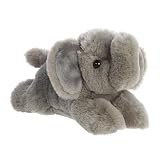
- This plush is approx. 4.5" x 8" x 4" in size.
- Made from deluxe materials for a cloud-like softness!
- This light and fluffy elephant calf plush makes for a great cuddling partner
- Mini Flopsies are designed to lay resting on its belly for easy, fun play
- To ensure stability and quality, this plush contains bean pellets suitable for all ages
5. First-year growth can approach a kilogram a day
Copenhagen Zoo reports that a baby elephant gains about 1 kg per day during its first year. The figure comes from that zoo’s published information and was accessed in 2026; it should not be read as an identical daily rate for every calf, season, or species.
Free tools Windows power users keep installed
One-click scans. No signup required.
Rapid growth places large nutritional demands on the mother and the herd. A calf’s needs are not limited to calories: bones, muscles, immune defenses, coordination, and social skills all develop at the same time. Growth also explains why an elephant that looked small beside adults at birth can become visibly more substantial within months.
6. Milk and solid food overlap for years
Elephant calves do not switch from milk to solid food on a single birthday. Taipei Zoo says calves nurse to about age two while beginning to eat other foods, and that elephants stop nursing around age five or six.
The overlap lets a calf practice foraging while still receiving milk. Early solid-food experiments can include vegetation and other items available to the herd, but the calf’s ability to gather and process food improves gradually. Nursing also remains a dependable source of energy during a prolonged learning period.
The two milestones answer different questions: beginning to eat other foods does not mean nursing has ended, and the end of nursing does not mean the calf has finished growing or learning. Elephant childhood extends well beyond the first year.
Do these 3 things before closing this tab:
1Clear out junk files and repair common Windows errors2Scan for outdated or missing drivers - takes under a minute3Repair Windows errors before they cause bigger problems7. Female relatives help raise the calf
Elephant families use a behavior called allomothering. SANParks describes it as a common practice in which females raise calves belonging to other females in their herd. A calf therefore has access to more than one potential helper.
Rank #3

- A CUTE IMAGE: This fuzzy stuffed elephant is well-designed. It is made of ultra soft plush which has a awesome touch feeling, it won’t hurt kids and add more enjoyment. There are some plastic particles filled in the elephant’s body and arm to sit steadily. The Halloween knitted hat which can be removed makes it look more cute and much more attched to the atmosphere of Halloween. After Halloween, you can remove the hat, it will be a normal plush elephant, you also can use the hat to other similar size toy or little pet.
- EXCELLENT COMPANION FOR KIDS: Our elephant toy is designed to last and to be a constant companion for your little one. Elephant stuffed animals are cuddly and cute toys that play a critical role in the development of a child. They help to improve your kid's physical activity as well as hand-eye coordination. This adorable toy is a good item for kids to stimulate their kids to explore the unknown things and enjoy the wonderful world.
- A PERFECT GIFT FOR KIDS: If you are looking for a adorable, funny and hugging elephant stuffed animal for your baby, our cute elephant toy is a great choice. It helps to stimulate imagination and will also be something that your baby takes to bed. Giving the great stuffed animals for your kid can help to build memories, it will be a meaning toy for them. Providing your child with a toy like this is a bonding experience between you and your child.
- A PROPER SIZE TO CARRY: This elephant stuffed animal measures about 9 inches in height which is the perfect size for kids to cuddle with. When they take this plush toy outside, it is very suitable for children to take along in the car and bag, or play it with their friends. And its proper size makes it to be a nice room decoration on the night tables or sofa.
- CONSIDERATIONS: To extend its life time, we advise you can wash it by hand and don’t rub. Put it under the blazing sun and ventilate it for quite a long time. If you have any problems with the product, please contact us though Amazon message in time. We will reply as soon as possible and provide you a satisfying solution. We promise you will be happy with your purchase, and your kids will love it!
Allomothering can include staying near a calf, guiding it, touching it, and helping recover it when the group moves. It gives inexperienced or tired mothers support and allows younger females to practice care before they have calves of their own. The arrangement is cooperative, but the mother remains the calf’s central nutritional partner during nursing.
Family structure differs between populations and species, so “the herd” is not one identical arrangement everywhere. The consistent point is that elephant calf care is distributed among related females rather than assigned only to the mother.
8. Daughters usually stay, while sons eventually disperse
WWF reports that female calves may remain with their maternal herd for life, whereas males leave as they reach puberty. This sex-linked pattern changes what “growing up” means for a calf.
Outdated Drivers Are Slowing You Down
One free scan finds every outdated or missing driver and matches the right update for your exact hardware.Free scan · exact hardware matchWindows Errors? Fix Them Before They Spread
Repair common Windows errors and clear accumulated junk for a smoother, more stable PC - no reinstall needed.Free scan · no reinstallA female can continue living among the relatives that helped raise her and later contribute to raising new calves. A male’s social path eventually takes him away from that maternal group. The timing and route of departure can vary, but the broad contrast is a long-term female family connection versus eventual male dispersal.
Knowing the sex of a calf can therefore help observers understand its likely future social setting, although a young elephant’s immediate needs are the same: protection, nutrition, and time to acquire physical and social skills.
9. The herd protects young elephants with coordinated communication
Smithsonian describes several channels of elephant communication that help protect calves: tactile trunk contact, scent signals, and low-frequency calls. When danger appears, herd members may cluster around the young elephants.
Rank #4
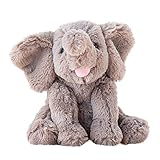
- A CUTE IMAGE: This fuzzy stuffed elephant is well-designed. It is made of ultra soft plush which has a awesome touch feeling, it won’t hurt kids and add more enjoyment. There are some plastic particles filled in the elephant’s body and arm to sit steadily. It is designed for children of all ages, we are committed to create a magic world for kids.
- EXCELLENT COMPANION FOR KIDS: Our elephant toy is designed to last and to be a constant companion for your little one. Elephant stuffed animals are cuddly and cute toys that play a critical role in the development of a child. They help to improve your kid's physical activity as well as hand-eye coordination. This adorable toy is a good item for kids to stimulate their kids to explore the unknown things and enjoy the wonderful world.
- A PERFECT GIFT FOR KIDS: If you are looking for a adorable, funny and hugging elephant stuffed animal for your baby, our cute elephant toy is a great choice. It helps to stimulate imagination and will also be something that your baby takes to bed. Giving the great stuffed animals for your kid can help to build memories, it will be a meaning toy for them. Providing your child with a toy like this is a bonding experience between you and your child.
- A PROPER SIZE TO CARRY: This elephant stuffed animal measures about 9 inches in height which is the perfect size for kids to cuddle with. When they take this plush toy outside, it is very suitable for children to take along in the car and bag, or play it with their friends. And its proper size makes it to be a nice room decoration on the night tables or sofa.
- CONSIDERATIONS: To extend its life time, we advise you can wash it by hand and don’t rub. Put it under the blazing sun and ventilate it for quite a long time. If you have any problems with the product, please contact us though Amazon message in time. We will reply as soon as possible and provide you a satisfying solution. We promise you will be happy with your purchase, and your kids will love it!
Touch provides information at close range. A trunk can reassure, redirect, or locate a calf when visibility is poor. Scent carries identity and environmental information, while low-frequency calls can travel through a habitat beyond the range of ordinary human hearing. These systems work together rather than as isolated signals.
The Tool Desk
Outbyte Driver Updater FREEFix the driver behind crashes, sound loss and screen glitchesFind Drivers →Outbyte PC Repair FREEClear out junk files and repair common Windows errorsFree Scan →Clustering is a visible result of that communication. Adults can place their bodies between a threat and a calf, while the calf remains inside the group. The behavior shows why a calf’s survival cannot be understood only by observing its mother: several elephants may respond to the same warning.
Independent reader supportYour contribution helps us test, update, and keep practical guides available for everyone.10. Young elephants face a serious viral disease risk
Elephant endotheliotropic herpesvirus, commonly shortened to EEHV, is a serious disease risk for young elephants. Smithsonian identifies it as a major concern and describes diagnostic and treatment collaboration aimed at protecting calves.
EEHV is one reason professional elephant programs monitor young animals closely and share clinical information. A calf that appears unwell can require rapid veterinary assessment; the disease is not something keepers or visitors can diagnose from casual observation.
The risk does not cancel the positive story of fast growth and strong family care. It adds an important qualification: elephant calves are physically large but still medically vulnerable, especially during the early years when their immune systems and bodies are developing.
How an elephant calf’s early life fits together
The 10 facts form a connected sequence rather than isolated trivia:
Best Value

- Measures approximately 9" long x 8.5" wide, when sitting down
- Before birth: the mother carries the calf for nearly two years.
- At birth: the calf is already tens of kilograms heavier than most newborn mammals.
- Within minutes: it stands and begins nursing.
- During the first months: it practices trunk control and follows family members.
- During the first year: growth is exceptionally fast, with Copenhagen Zoo reporting about 1 kg per day.
- During the next several years: the calf adds solid foods while nursing continues.
- Throughout childhood: female relatives help care for it, and the herd responds to danger with coordinated communication.
- Later: females may remain with the maternal herd, while males eventually leave as they approach puberty.
This timeline also explains why a calf can be both capable and dependent: it can stand almost immediately, yet it needs years of nutrition, practice, social teaching, and protection.
African and Asian calves: what can and cannot be generalized
“Baby elephant” covers more than one species. Birth-weight ranges differ among published sources, and family details can vary among African and Asian elephant populations. The safest comparisons are qualified ones:
| Feature | What the available sources establish | Important qualification |
|---|---|---|
| Gestation | Asian-elephant gestation is 21.5–22 months; WWF gives 22 months for elephants generally. | Do not turn a rounded figure into a precise value for every species. |
| Newborn size | Taipei Zoo: 70–110 kg; San Diego Zoo: 50–120 kg. | Zoo ranges are not universal species standards. |
| Trunk learning | Newborns exercise trunk muscles and gain control with practice. | The learning process is normal, though its pace differs by calf. |
| Nursing | Calves begin other foods while nursing; weaning is reported around five or six years. | Taipei Zoo supplies these milestones; individual timing can vary. |
| Caregiving | Female allomothering is common in the species described by SANParks. | Social structure is population- and species-dependent. |
| Dispersal | Females may stay with maternal relatives; males leave around puberty. | WWF describes the broad pattern, not an identical age for every male. |
Keeping those qualifications visible prevents a common mistake: combining one species’ measurement with another species’ behavior and presenting the result as a rule for every elephant.
Recommended Free Tools
What these facts mean when you watch elephants
A calf stumbling over its trunk may be practicing normal motor control. A calf chewing vegetation may still be nursing. A female standing close to a calf may be an allomother rather than its mother. Several adults forming a tight group may be responding to a perceived threat through the herd’s protective system.
Observation should remain calm and nonintrusive. Elephants rely on close family bonds and sensitive communication, so visitors and photographers should follow the rules of the zoo, reserve, or sanctuary they are visiting and never attempt to touch, feed, call, or draw a calf away from its group.
Why baby elephants are both resilient and vulnerable
Elephant calves combine unusual advantages with serious risks. They are born large, can stand and nurse quickly, grow rapidly, and receive care from multiple females. At the same time, they must master a highly complex trunk, depend on milk for years, learn how to forage, and remain alert to diseases such as EEHV.
The result is a long childhood supported by an entire social network. A calf is not simply a miniature adult elephant; it is a fast-growing learner whose body, behavior, and place in the family are built over many years.
Quick wins for a faster PC:
Repair Windows errors before they cause bigger problemsFix Now →Fix the driver behind crashes, sound loss and screen glitchesFind Drivers →Clear out junk files and repair common Windows errorsFree Scan →Quick Recap
Product prices and availability are accurate as of the date/time indicated and are subject to change. Any price and availability information displayed on Amazon at the time of purchase will apply.





Leave a Reply