
Quick wins for a faster PC:
Repair Windows errors before they cause bigger problemsFix Now →Scan for outdated or missing drivers - takes under a minuteDriver Scan →Clear out junk files and repair common Windows errorsFree Scan →A baby platypus is commonly called a puggle, although that is an informal name rather than a universally settled zoological term. The Australian Platypus Conservancy uses nestling for the earliest stage. Platypus young hatch from eggs, grow in a sheltered burrow, drink milk that seeps through their mother’s skin and fur, and do not meet the water until they are already well developed.
What is a baby platypus called?
Puggle is the familiar word, but it is best described as an informal name. The Australian Platypus Conservancy’s FAQ explains that Taronga Zoo staff suggested the term in 2003 when reporters asked how to refer to new platypus arrivals. The word had previously been used for a baby echidna. The Conservancy prefers nestling for a platypus in its early development.
As an Amazon Associate I earn from qualifying purchases.
That distinction matters because “puggle” is popular in conversation, books and family education, while “nestling” describes the sheltered, dependent stage more precisely. You can use both: call the animal a puggle for general readers, then explain that a very young individual is also described as a nestling.
From egg to first swim: the approximate timeline
Several authorities describe different parts of development. Their figures are approximate and should not be treated as a timetable that every platypus follows exactly.
#1 Best Overall

- Size: 12inches (30cm)
- A cute stuffed plush fat platypus toy, cute design, soft touch, round cute style, to accompany you warmly.
- The platypus plush toy is filled with high elastic down cotton, which is full of elasticity and is not easily deformed. It is very suitable for hugs. It is the perfect gift for close friends and children, Valentine's Day, Christmas and birthday.
- You can place it anywhere, such as the bedroom, living room, home, office, chair, etc. With it, this winter is no longer cold.
- After receiving the parcel, you need to tap the body of the plush duck several times, it will be restored to its original state, as cute as we described.
| Stage | Approximate timing or description | Source |
|---|---|---|
| Gestation before eggs are laid | 16 ± 4 days | Taronga |
| Egg incubation | 10–11 days | Taronga |
| Hatching interval | About 10 days | NOAA National Ocean Service, 2026; page last updated September 23, 2026 |
| Nursing | Up to four months | NOAA National Ocean Service, 2026; page last updated September 23, 2026 |
| Development in the nesting burrow after hatching | Approximately three months | Australian Platypus Conservancy, 2024 |
| First emergence | About three to four months old; roughly 80% of adult length | Australian Platypus Conservancy, 2024 |
Gestation and incubation are different events: gestation is the period before the eggs are laid, while incubation is the period while the eggs develop. The useful sequence is egg, hatch, protected growth and nursing in the burrow, then emergence and increasingly independent foraging.
Five astonishing baby-platypus facts
1. A platypus is a mammal that hatches from an egg
Platypuses are monotremes, the small group of mammals that lay eggs. That makes a hatchling different from a newborn puppy, kitten or human baby, even though it is still fed on mammalian milk. The young hatch in a nest inside a burrow, where warmth, moisture and the mother’s care protect them during their most vulnerable period.
Egg laying does not make the platypus a reptile or bird. A mammal is identified by traits such as producing milk and having hair at some stage of life; monotremes combine those mammalian traits with egg laying. This unusual combination is why a baby platypus can be both an egg hatchling and a milk-fed mammal.
2. “Puggle” is widely used, but it is not a formal, settled label
For a child, “puggle” is an easy answer to “What is a baby platypus called?” For an accurate explanation, add the qualification that the term is informal. The Australian Platypus Conservancy traces its use for platypus young to the 2003 suggestion by Taronga Zoo staff and prefers “nestling” for early development.
“When asked by reporters how to refer to the new arrivals, zoo staff suggested using the term ‘puggle’ – a word previously used to denote a baby echidna.”
Australian Platypus Conservancy FAQ
Using “puggle” in a caption is therefore reasonable when the caption makes clear that it is a common name, not a special scientific rank. “Platypus nestling” is the more precise wording for a newly hatched, still-burrowed young animal.
Rank #2

- Ready to swim into fun-filled play, this realistic stuffed animal platypus features a lifelike bill, webbed feet and a soft furry body.
- Known for its Australian roots, this soft platypus plush toy is ready to become mates with kids of all ages.
- Get to know the quirky traits of the wild with this platypus stuffed animal with a long, fluffy tail and playful eyes.
- Bring wildlife adventures to play with this platypus plush made with durable stitching and recycled materials.
- Combining play with Earth-sustaining practices, The Petting Zoo is committed to providing little ones with cute and cuddly plush toys that are made from recycled water bottles.
3. The baby spends months developing underground before its first swim
A hatchling does not immediately paddle in a stream. It remains in the nesting burrow while its body grows, its coat develops and its coordination improves. The burrow is a nursery rather than a brief hiding place: the young animal is sheltered there for approximately three months after hatching, according to the Australian Platypus Conservancy.
This explains why a first sighting can be misleading. A juvenile seen leaving the burrow is not a tiny, helpless hatchling. It has already completed a long period of protected development and is prepared to begin learning the demands of an aquatic life.
4. The mother supplies milk without nipples
Female platypuses have mammary glands but no nipples. Milk is released through special skin patches on the mother’s belly and collects in her fur. A young platypus presses against the fur and laps or slurps the milk from the wet area.
This arrangement works in a burrow because the mother can provide nourishment without exposing a protruding nipple that could be damaged while she moves through a narrow tunnel. It also fits the monotreme body plan, which differs from that of placental mammals while retaining the defining mammalian feature of milk production.
Descriptions such as “the baby drinks from the mother’s belly” are shorthand, not a claim that milk comes from a normal open cup or from the mother’s skin everywhere. The milk is concentrated around specialized mammary patches and fur.
PC Slower Than It Used to Be?
A free scan shows the junk files, broken settings and background clutter dragging Windows down - then fixes them in one click.Free scan · Windows 10 & 11Outdated Drivers Are Slowing You Down
One free scan finds every outdated or missing driver and matches the right update for your exact hardware.Free scan · exact hardware match5. A newly emerged juvenile looks surprisingly complete
When a young platypus first leaves the burrow, it is furred, coordinated and close to adult proportions. The Australian Platypus Conservancy reports first emergence at about three to four months of age and a body length around 80% of an adult’s. That is why a photograph of an emerging juvenile should not be captioned as a freshly hatched baby.
Rank #3
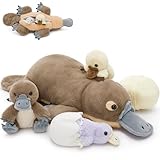
- Adorable Platypus Family Set: This charming set features a mother platypus stuffed animal and three colorful baby platypuses from eggs. Each platypus baby has its own unique color, making the family even more lovable and eye-catching
- Lifelike Design with Intricate Details: Every detail of the platypus family is carefully crafted. The mother platypus toy has expressive, sparkling eyes, a signature flat duck bill, a long, detailed tail, and webbed feet, making it look just like the real thing. The babies are equally adorable, with perfectly formed features and soft, smooth fur
- Soft, Plush, and Cuddly: Made with high-quality materials, this cute stuffed animal set is soft to the touch with a fully filled body, ensuring a cuddly experience. The fur is ultra-smooth, providing a soothing, comforting feel for both kids and adults alike
- CPC Certified Safety: This platypus plush toy is fully compliant with ASTM F963 and CPSIA standards, meaning it meets strict safety requirements. Made with non-toxic materials, it is safe for children of all ages, allowing for worry-free hugs and cuddles
- Versatile Gift and Decor for All Occasions: Whether it is Christmas, Easter, a birthday, or a special celebration, this adorable platypus set makes a delightful gift. It is also a charming decorative piece for platypus lovers, parties, or to add some whimsy to any space
“Baby” covers several very different appearances: a newly hatched nestling is hairless and dependent, while an older juvenile may look like a small adult with a bill, dense coat and strong swimming ability. Age and context are essential when identifying a picture.
How can a baby platypus drink milk if its mother has no nipples?
The answer is skin-and-fur milk delivery. Mammary tissue in the mother’s abdomen produces milk, which reaches the surface through openings in the skin. The liquid spreads over specialized patches and dampens the surrounding fur. The young animal gathers it by licking or slurping.
There is no teat for the baby to latch onto, so the mother’s posture and the fur’s ability to hold liquid are important. Nursing takes place in the protected nesting area, where the mother can return to feed the young. NOAA National Ocean Service states that young may nurse for up to four months; that allowance is an upper limit in its 2026 species explanation, not a promise that every individual nurses for exactly the same duration.
Free tools Windows power users keep installed
One-click scans. No signup required.
Why do platypus babies hatch in a burrow?
Platypuses are freshwater animals of eastern Australia and Tasmania. Their adult lives involve swimming, diving and searching streambeds for aquatic invertebrates, but a hatchling is not ready for those conditions. A nesting burrow provides a stable place to grow before the young must regulate its body, move over uneven ground and forage in water.
The mother’s underground nursery also separates the vulnerable early stage from open water and predators. By the time a juvenile begins emerging, it has fur and much better coordination. The first excursions are a transition toward independent foraging, not the beginning of life itself.
What does a platypus eat when it grows up?
Taronga describes aquatic invertebrates as a major part of the platypus diet. Adults locate prey underwater with electroreceptors in the bill, which detect tiny electrical signals produced by living organisms. A juvenile must eventually learn to use the same sensory equipment while searching through mud, gravel and vegetation.
Rank #4

- This plush is approx. 7" x 10.5" x 5" in size
- Made from deluxe materials for a cloud-like softness!
- This adorable platypus plush is designed to be similar to the shape of a potato (spud)
- Has a filling as fluffy as your favorite mashed potatoes
- Free from bean pellets, suitable for all ages
The bill is therefore more than a duck-like shape. It is a sensitive hunting organ, and its electrical detection system helps a platypus find prey when vision is limited underwater. This adult feeding adaptation is one reason the first swim marks an important developmental step.
Five cute picture ideas—with accurate captions and rights checks
No verified set of five licensed puggle photographs is established here. An editor should obtain each image separately, confirm the animal’s age and subject, and record the photographer, collection and reuse terms. These five briefs keep the pictures cute without mislabeling adults or older juveniles.
Choose a clearly identified, hairless or very lightly developed hatchling photographed under approved captive-care or research conditions. Caption it as a “newly hatched platypus nestling,” not simply “puggle,” if the image shows the earliest stage.
Look for a respectful image showing the mother near the entrance rather than a staged handling scene. Explain that most nursing occurs in the burrow and that milk reaches the young through belly skin and fur.
A juvenile with a full coat and coordinated posture illustrates the long hidden development period. Identify it as an emerging juvenile unless the source documents a younger age.
What’s actually slowing this PC down?
Pick the symptom - the matching free tool is one click away.
Use a photograph that shows the animal’s natural habitat in eastern Australia or Tasmania. The caption can point out that this is the transition from protected burrow life to aquatic foraging.
Best Value

- This plush is approx. 7.5" x 15.5" x 3" in size
- Made from deluxe materials for a cloud-like softness!
- This light and fluffy Platypus plush makes for a great cuddling partner
- Flopsies are designed to lay resting on its belly for easy, fun play
- To ensure stability and quality, this plush contains bean pellets suitable for all ages
A tight, non-invasive image of the bill helps readers connect appearance with function. Explain that electroreceptors in the bill detect electrical signals from prey; do not imply that the bill is a harmless toy or that the animal should be approached.
Image-use checks before publication
- Confirm that the image actually shows a platypus young, not an adult or another monotreme.
- Record the photographer or creator, collection, date and exact credit line.
- Check whether the license permits commercial publication, cropping, captions and social-media reuse.
- Follow any restrictions involving external copyright or Indigenous Cultural Intellectual Property.
- The Australian Museum says images it owns that contain no cultural content may be used for education, research and other non-commercial purposes without prior permission when credited to the Museum and photographer or creator. Commercial use is assessed case by case, so that statement is not a blanket commercial license.
Do not label every platypus photograph “puggle.” A newly hatched nestling, a three- to four-month-old emerging juvenile and an adult are different subjects and should be captioned accordingly.
Are baby platypuses dangerous?
There is no reason to describe a baby platypus as a dangerous animal to handle, and wild young should never be picked up. The well-known venomous hind-foot spurs belong to male platypuses and are an adult defensive feature. That fact should not be transferred to a hatchling or used to suggest that a puggle is a threat.
The Tool Desk
Outbyte PC Repair FREERepair Windows errors before they cause bigger problemsFix Now →Outbyte Driver Updater FREEScan for outdated or missing drivers - takes under a minuteDriver Scan →The safest response to a suspected orphan or injured platypus is to keep people and pets back and contact a licensed wildlife rescue service familiar with local regulations. Platypuses are wild Australian animals, not pets, and close contact can stress them even when no injury is visible.
What scientists can—and cannot—say about puggle numbers
Developmental timings are documented, but there is no single current, robust global count of platypus puggles and no dependable puggle-specific survival statistic to apply to every population. General statements about the species should not be presented as a census of babies. Local monitoring can reveal breeding activity, yet those observations do not create a worldwide total.
The most reliable lesson for families is biological rather than numerical: an egg hatches, the nestling grows under cover while nursing, and a well-developed juvenile eventually begins exploring freshwater.
Quick Recap
Product prices and availability are accurate as of the date/time indicated and are subject to change. Any price and availability information displayed on Amazon at the time of purchase will apply.
Do these 3 things before closing this tab:
1Repair Windows errors before they cause bigger problems2Scan for outdated or missing drivers - takes under a minute3Clear out junk files and repair common Windows errors




Leave a Reply