
The Tool Desk
Outbyte Driver Updater FREEScan for outdated or missing drivers - takes under a minuteDriver Scan →Outbyte PC Repair FREEClear out junk files and repair common Windows errorsFree Scan →Bairdi crab is not king crab. Bairdi is Tanner crab, the species Chionoecetes bairdi. “King crab” is a market category covering several different species, including red, blue, and golden king crab. They differ in taxonomy, typical commercial size, documented range, flavor descriptions, and how fisheries and products are labeled.
The most important shopping warning is the word “snow crab.” Bairdi is sometimes marketed under that name, but NOAA’s identification material distinguishes C. bairdi (Southern Tanner crab) from true snow crab, C. opilio. Check the scientific or common species name, origin, and product documentation rather than relying on a generic label.
As an Amazon Associate I earn from qualifying purchases.
At a glance: the six differences
| Comparison | Bairdi (Tanner crab) | King crab | What the evidence supports |
|---|---|---|---|
| Species | Chionoecetes bairdi | A group that includes red, blue, and golden king crab; documented names include Paralithodes camtschaticus and Lithodes aequispinus | They are separate groups, not two names for one crab. |
| Published size figures | Commercial-size males commonly weigh 2–4 lb | Red king crab can reach up to 24 lb, with a leg span often reaching 5 ft | These are not equivalent statistics: Bairdi is a commercial-size range, while red king is a reported maximum. |
| Identification | Species identity should be confirmed from labeling or seller records | “King crab” still needs a species designation, because red, blue, and golden are different products | No complete visual field key is established. |
| Range and habitat | Eastern North Pacific and Bering Sea; fishery extends from southeastern Alaska north through the Bering Sea | No directly comparable habitat description is established | Do not infer a precise habitat contrast from the available sources. |
| Food descriptions | No controlled Bairdi-versus-king tasting result is established | Alaska Seafood Marketing Institute describes king crab as sweet, firm, rich, and luxurious | Descriptions are source-specific, not a side-by-side sensory test. |
| Fishery and buying context | Alaska fishery began in 1961; managed for maximum sustainable yield; Bitter Crab Disease is a principal threat | Sold live, as fresh legs and claws in season, and frozen year-round, according to the Alaska Seafood Marketing Institute | Open seasons, inventory, and prices change; verify current details with the seller or agency. |
1. Species and taxonomy: Bairdi is Tanner crab, not a king crab
What “Bairdi” means
Bairdi is the common seafood name associated with Chionoecetes bairdi, also called Tanner crab. The name refers to a particular species, not to a size grade or a preparation method. Alaska Department of Fish and Game material uses “Tanner crab” for this species and discusses it as an Alaska fishery resource.
That scientific name matters because similar common names are used inconsistently in seafood commerce. A package that says only “snow crab” may not tell you whether it contains C. opilio (the species generally called snow crab) or C. bairdi (Bairdi/Tanner crab). NOAA’s processors’ identification material distinguishes C. bairdi as Southern Tanner crab from C. opilio as snow crab.
#1 Best Overall

- Rich, Wild-Caught Crab Legs: The Alaskan king crab legs boast a sweet, rich, and luxurious flavor, accompanied by a firm yet tender texture; this delicious seafood can be whipped up for dinners, gourmet holiday meals, special occasions, or a seafood broil
- Cook From Thawed or Frozen: Steam, grill, or broil; simply rinse your Alaskan crab legs in fresh water before and after thawing them; you can also heat your king crab legs directly from frozen by adding cook time to your favorite cooking method
- Freeze Now, Feast Later: The premium crab meat stays fresh in the freezer for months; for the best flavor and texture, enjoy within 2-3 months; when you're ready to cook, thaw in the fridge for 8-12 hours and cook to perfection
- Packed with 16g Protein & Omega-3s: These red crab legs boast 16g of protein, about 350mg of omega 3s, and 9.8 mcg of vitamin B-12 per 3 oz serving
- Hand-Weighed for Accurate Portions: The exact amount of meat in each frozen crab leg will vary and is hand-weighed with a certified scale; we recommend ordering 1-2 pounds per person, depending on appetite and what else you are having with your seafood feast
What “king crab” means
King crab is not one species. The Alaska Seafood Marketing Institute describes three kinds: red, blue, and golden king crab. Its species listings include red king crab, Paralithodes camtschaticus, and golden king crab, Lithodes aequispinus. “King crab” on a menu or carton therefore remains incomplete until the color or scientific species is specified.
Blue king crab is also a distinct member of this market category, but a generic “king” label should not be treated as proof that the product is red king. Species affects size expectations, legal requirements, supply, and the description a seller can accurately use.
Why the distinction changes the answer to every other question
Once Bairdi and king crab are treated as separate taxonomic subjects, apparently conflicting descriptions become easier to interpret. A weight quoted for red king crab cannot be used as a typical Bairdi weight. A flavor description for king crab does not establish how every Bairdi product tastes. Likewise, a fishery closure reported for Alaska snow crab does not automatically describe Bairdi or every king crab fishery.
2. Size and physical scale: published figures are not matched averages
Bairdi’s commercial-size range
Alaska Department of Fish and Game material, citing a 2002 report, gives a commonly encountered commercial-size range of 2–4 lb for male Bairdi. The same material gives 1–2 lb for commercial-size male C. opilio, the crab commonly called snow crab. Those figures are useful for showing that Bairdi can be larger than commercial snow crab, but they are not a maximum size, an average for all animals, or a promise about the weight of a retail cluster.
Sex and legal size matter. The quoted figures are specifically for commercial-size males. They should not be applied to females, juveniles, undersized animals, or a packaged portion after cooking and processing.
Red king crab’s much larger reported maximum
The Alaska Seafood Marketing Institute reports that red king crab can weigh up to 24 lb and that its leg span often reaches 5 ft. Those are strikingly larger figures than the 2–4 lb commercial-size range quoted for male Bairdi, but the comparison has an important qualification: 24 lb is a reported maximum for red king crab, not a typical market weight, while 2–4 lb is a commercial-size range for Bairdi males.
Rank #2

- King crab legs from Alaska
- Approximately 3-6 legs/3 lbs.
- Ships frozen with dry ice
- Fully cooked, ready to reheat (instructions included). Refrigerate for up to 2-3 days or freeze for up to 4 months.
In practical terms, a king-crab leg may look dramatically larger than a Bairdi section, especially when the king crab is red king. That visual impression does not tell you the exact species by itself, because products can be cut, cooked, frozen, or sold as separated legs.
Do these 3 things before closing this tab:
1Fix the driver behind crashes, sound loss and screen glitches2Repair Windows errors before they cause bigger problems3Scan for outdated or missing drivers - takes under a minuteMinimum carapace sizes are fishery rules, not retail specifications
The Alaska Seafood Marketing Institute lists minimum carapace sizes of 6.5 inches for red king crab and 5 inches for golden king crab. These thresholds are tied to the cited king-crab fisheries; they are not universal rules for every king crab species, every location, or every fishery. A minimum legal size also does not mean that every crab sold will be exactly that size.
How to compare size honestly
- Ask whether a number is a maximum, an average, a legal minimum, or a commercial-size range.
- Check whether it refers to a whole crab, a leg span, a carapace, or a processed package.
- Confirm the species before using size as a buying shortcut.
- Do not convert a quoted whole-animal weight into an expected edible-meat yield without product-specific information.
3. Visual identification and labeling: why a photo is not enough
What is documented
NOAA’s identification reference separates Southern Tanner crab (C. bairdi) from snow crab (C. opilio). That establishes the naming distinction, but no complete, reliable visual key is provided for telling Bairdi from each kind of king crab in the field or at a seafood counter.
What not to treat as definitive
Color, leg proportions, shell texture, and a cropped photograph can be misleading after cooking, freezing, glazing, or sectioning. Without a validated identification guide and an intact specimen, those features should not be presented as conclusive. A very large leg may suggest king crab, but it is not a substitute for species documentation; a smaller piece may have lost the traits that would have helped.
The reliable retail check
When identity matters, look for the common name plus a scientific name or an unambiguous species designation. For Bairdi, that means Chionoecetes bairdi or Tanner crab. For king crab, look for red, blue, or golden king crab and, where available, the scientific name. Also ask for harvest area or country of origin and whether the package contains whole sections, legs, claws, or mixed pieces.
What’s actually slowing this PC down?
Pick the symptom - the matching free tool is one click away.
If a label says “snow crab” but the seller’s documentation names C. bairdi, the product may reflect the marketing practice noted by Alaska sources rather than true C. opilio. Request clarification before paying a premium based on the name alone.
Rank #3
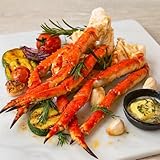
- Wild-Caught Southern King Crab Legs:Sustainably wild-caught Southern King Crab from cold ocean waters, known for its naturally sweet flavor and firm, meaty texture.
- Fully Cooked & Easy to Prepare:Fully cooked and flash frozen at peak freshness. Simply thaw and reheat by steaming, boiling, or baking—convenient to prepare at home.
- Premium Restaurant-Quality Seafood:Meaty crab legs ideal for family meals, holidays, and special occasions.
- Shipped with Cold-Chain Packaging:Professionally packed with insulated materials and dry ice and/or ice packs to ensure the product arrives cold and food-safe. Seafood may arrive partially thawed. If cold upon arrival, it is safe to refrigerate and use within 3 days or refreeze for later use.
4. Range and habitat: a clear Bairdi range, but no equal king-crab comparison
Bairdi’s documented distribution
Alaska Department of Fish and Game describes Tanner crab in the eastern North Pacific and Bering Sea. Its Alaska fishery extends from southeastern Alaska north through the Bering Sea. That range describes where the species and fishery occur; it does not mean every Bairdi product comes from the same port or management area.
Snow crab habitat is not a king-crab habitat proxy
NOAA describes Alaska snow crab (C. opilio) in the Bering, Beaufort, and Chukchi seas. The agency says snow crab generally prefers soft sandy or muddy bottoms, typically at depths of less than 650 ft. This is useful context for distinguishing snow crab ecology from Bairdi naming, but it should not be relabeled as a habitat description for king crab.
What remains unknown in a direct comparison
No directly comparable habitat account for king crab is provided. It would therefore be misleading to claim that Bairdi occupies a particular depth or bottom type while king crab occupies another, or to use habitat alone to authenticate a retail product. For traceability, rely on the documented harvest area and species statement on the product.
Recommended Free Tools
5. Eating characteristics: similar broad appeal, different levels of evidence
How king crab is described
The Alaska Seafood Marketing Institute describes king crab as “sweet and firm,” and characterizes it as rich and luxurious. Its consumer guidance says king crab is easy to prepare by boiling, grilling, steaming, or baking. That wording is a promotional description from the institute, not a controlled sensory trial comparing every king-crab species with Bairdi.
How snow crab is described
NOAA describes Alaska snow crab as sweet, delicate, and flaky. Those terms concern snow crab, generally C. opilio, and should not be silently transferred to Bairdi. Because Bairdi is sometimes sold under “snow crab,” a buyer who wants a particular texture should verify the scientific species rather than infer it from the marketing name.
What can—and cannot—be said about Bairdi versus king
No controlled Bairdi-versus-king flavor comparison is established. It is therefore fair to say that official descriptions present king crab as sweet and firm, while NOAA presents snow crab as sweet, delicate, and flaky. It is not fair to promise that every Bairdi leg will taste exactly like snow crab, or that every king-crab species will deliver the same texture.
Rank #4
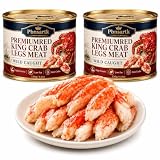
- PREMIUM KING CRAB MEAT – Enjoy flavorful king crab meat with a naturally rich seafood taste and satisfying, meaty texture. A convenient choice for creating restaurant-inspired dishes at home.
- WILD-CAUGHT SEAFOOD – Made with king crab sourced from Russian waters, delivering the distinctive flavor of wild-caught seafood in an easy-to-store canned format.
- READY TO ENJOY – Fully prepared for convenient serving with no complicated cooking required. Enjoy it directly from the can or warm it gently before adding it to your favorite meal.
- VERSATILE MEAL ADDITION – Perfect for pasta, sandwiches, salads, rice bowls, seafood soups and appetizers. An effortless way to add premium crab flavor to everyday recipes.
Preparation also changes the eating experience. Boiling, steaming, grilling, and baking can produce different moisture and browning outcomes, while freezing, thawing, glazing, and the amount of shell left on the product affect what reaches the plate. Those variables are reasons to treat broad flavor adjectives as guidance, not a guarantee.
6. Fishery history, management, and buying context
Bairdi and Tanner crab management
The Alaska Tanner crab fishery began in 1961. Alaska Department of Fish and Game says the fishery is managed for maximum sustainable yield and identifies Bitter Crab Disease as a principal threat to Alaska Tanner crab stocks. “Maximum sustainable yield” describes the management objective; it does not guarantee a particular season, quota, or store supply in a given year.
Historical harvest records show more than 123 million lb of C. bairdi in 1978 and 332 million lb of C. opilio in 1991. These are historical peaks reported by the department, not current harvest levels or forecasts. They should not be used to estimate today’s availability.
Snow crab closures illustrate why dates matter
NOAA’s Alaska snow crab seafood page records that the fishery was closed for fishing years 2022 and 2023 and had no commercial landings in 2024. Those are dated historical statuses. They do not establish the current opening, closing, or inventory position for Bairdi, king crab, or snow crab. Before buying, check the latest agency notice and the seller’s current stock information.
King-crab product forms
The Alaska Seafood Marketing Institute says Alaska king crab is sold live, as fresh legs and claws in season, and in frozen forms year-round. “Year-round” refers to frozen product availability as described by that source; it is not a promise that every retailer has every species or size at all times. Fresh seasonal supply and live sales can be more location-dependent.
Windows Errors? Fix Them Before They Spread
Repair common Windows errors and clear accumulated junk for a smoother, more stable PC - no reinstall needed.Free scan · no reinstallCrashes, No Sound, or Screen Glitches?
Random freezes, missing sound and display glitches usually trace back to one bad driver. Find and replace yours safely.Free scan · under a minuteA species-first buying checklist
- Read the species name. Look for Bairdi/Tanner crab or Chionoecetes bairdi; do not assume that “snow crab” means C. opilio.
- For king crab, identify the type. Ask whether it is red, blue, or golden king crab. “King” alone leaves a material difference unresolved.
- Check the origin. Record the harvest region or country shown by the seller. Alaska fishery descriptions cannot be applied automatically to products from another jurisdiction.
- Clarify the product form. Confirm whether the quoted weight is for whole crab, legs and claws, sections, or a processed package, and whether the product is fresh, live, or frozen.
- Separate dated status from current stock. Historical closures, landings, and harvest records provide context but do not tell you what is legally available or in inventory today.
- Ask for documentation when the name affects price. A reputable seller should be able to explain an unusual “snow crab” or generic “king crab” label.
How to choose between Bairdi and king crab
| If your priority is… | Start by looking for… | Why |
|---|---|---|
| A specific species | C. bairdi for Bairdi, or a named red, blue, or golden king crab | Common marketing names can hide different species. |
| Large, dramatic legs | Named red king crab, with a seller-stated size or leg specification | Red king has the documented maximum scale of up to 24 lb and a leg span often reaching 5 ft. |
| A Bairdi product | Tanner crab or Chionoecetes bairdi, plus origin | This avoids confusing Bairdi with true snow crab or with king crab. |
| A texture expectation | The species name and preparation method, not just “sweet” or “snow crab” | Official descriptions are broad and source-specific; no controlled Bairdi-versus-king tasting result is established. |
| Traceable supply | Harvest area, product form, and current seller documentation | Fishery status and availability vary by species, year, and location. |
Common naming mistakes to avoid
- Calling Bairdi a king crab: Bairdi is Tanner crab, C. bairdi; king crab is a separate group.
- Treating all “snow crab” as C. opilio: Bairdi may be marketed under that name, while NOAA distinguishes the two species.
- Comparing a maximum with an average: Red king crab’s 24-lb figure is a reported maximum; Bairdi’s 2–4 lb figure is a commercial-size range for males.
- Using a historical fishery figure as a current forecast: The 1978 and 1991 harvest records are historical, and the 2022–2024 snow-crab statuses are dated.
- Assuming a visual shortcut proves identity: No complete field key is provided for every retail or cooked specimen.
Bottom line
Bairdi and king crab are different from the species level upward. Bairdi means Tanner crab (Chionoecetes bairdi), while king crab refers to red, blue, and golden species. Bairdi’s documented commercial-size males commonly weigh 2–4 lb; red king crab has a reported maximum of up to 24 lb and a leg span often reaching 5 ft. Flavor descriptions favor a broad contrast—king crab is described as sweet and firm, while snow crab is described as sweet, delicate, and flaky—but no controlled Bairdi-versus-king taste test establishes a universal winner. For a confident purchase, verify the species, origin, product form, and current fishery or inventory information.
Quick Recap
Product prices and availability are accurate as of the date/time indicated and are subject to change. Any price and availability information displayed on Amazon at the time of purchase will apply.





Leave a Reply