
Recommended Free Tools
Some links on this page are affiliate links: if you buy through them we may earn a commission, at no extra cost to you.
Start by teaching your dog what to do, then mark and reward the response immediately. A short spoken word such as “yes” or a clicker can mark the exact moment your dog succeeds; food, play, praise, petting, or a toy can reinforce it. Pair that clear feedback with supervision, predictable routines, and gradual exposure to the world. This approach builds household skills without intimidation and works for puppies and adult dogs.
Training is an ongoing process rather than a single course. An adult dog entering a new home may need time to learn your routines, while a puppy must develop attention and self-control gradually. Keep practice safe and upbeat, manage situations your dog is not ready to handle, and seek qualified help for fear, aggression, or behavior you cannot safely manage.


As an Amazon Associate I earn from qualifying purchases.
Do these 3 things before closing this tab:
1Fix the driver behind crashes, sound loss and screen glitches2Clear out junk files and repair common Windows errors3Scan for outdated or missing drivers - takes under a minuteWhat basic dog training should accomplish
Basic training gives a dog a reliable way to earn good outcomes and gives people a consistent way to communicate. Useful goals include toileting in the right place, responding to a name, settling during household activity, walking without constant pulling, leaving unsafe items, coming when called, and cooperating with everyday handling. “Sit” and “down” are useful foundation behaviors, but practical routines and safety skills matter just as much.
Dogs do not automatically understand human words. A cue becomes meaningful only after you repeatedly say it immediately before a behavior and reinforce that behavior. Use the same word and hand signal for each skill, and make sure everyone in the home follows the same rule.
Popular on Amazon
Choose humane, reward-based training
The American Veterinary Society of Animal Behavior (AVSAB) says its 2021 position statement remains its most current and authoritative expression on training and behavior modification. It recommends reward-based methods and says aversive methods—including electronic collars, prong collars, choke chains, leash corrections, and physical or psychological punishment—should not be used. Read the organization’s public position statements at AVSAB’s position statements page.
Reward-based training is not permissive. You prevent rehearsal of unwanted behavior, teach an alternative, and reinforce that alternative consistently. If a dog is too frightened, excited, or distracted to learn, increase distance, lower the difficulty, or end the session rather than adding pressure.
Prepare the environment and reinforcers
Set realistic expectations
Train at the dog’s current developmental level. Puppies have limited attention and immature bladder control. A newly adopted adult may know skills in another setting but still need to learn your cues and routine. Progress is rarely perfectly linear: a behavior that works in a quiet room may fall apart outdoors, where smells, people, and other animals compete for attention.
Pick rewards your individual dog values
Food is convenient, but it is not the only reinforcer. Offer several options and observe what keeps your dog engaged in each environment. Deliver the reward quickly and in a size that does not interrupt practice.
Also popular on Amazon
| Reward | When it helps | Practical tip |
|---|---|---|
| Small, soft treats | Teaching new behaviors or working around distractions | Use pieces the dog can swallow quickly so you can repeat the exercise. |
| Toy play | Dogs that become more excited by movement than food | Keep play brief, then reset calmly before the next repetition. |
| Praise or petting | Behaviors your dog already enjoys performing | Pair your voice or touch with another reward at first so its value is clear. |
| Access to something wanted | Doorways, sniffing, greeting, or going outside | Ask for a simple behavior, then release the dog to the desired activity. |
The American Kennel Club’s reward-training guidance notes that food, toys, praise, petting, and play can all reinforce behavior. If your dog ignores a reward, the setting may be too difficult, the reward may be unappealing, or the dog may be stressed or tired.
Use a clear marker
A marker bridges the instant your dog performs correctly and the moment you deliver the reward. A clicker is one option; a brief spoken word such as “yes” works too. Choose one marker, practice saying or clicking it and then delivering a treat several times, and keep the sound consistent. The marker is information, not a bribe: it tells the dog exactly which action earned the reward.
The reward-training loop
- Arrange success. Begin in a quiet, familiar place and remove competing temptations. Have rewards ready before you give a cue.
- Give one cue. Say the word once in a calm voice, using the same hand signal each time. Repeating a cue teaches the dog to wait through multiple requests.
- Wait for the response. Give the dog a moment to think. If nothing happens, make the task easier instead of repeating the word louder.
- Mark the instant of success. Click or say “yes” while the dog is doing the behavior you want.
- Deliver the reward promptly. A delayed reward makes the connection harder to understand. Feed near you, offer the toy, or release the dog to the activity immediately after the marker.
- Reset and repeat briefly. Stop while the dog is still interested. If frustration appears—turning away, frantic movement, vocalizing, or grabbing—pause, lower the difficulty, or finish for now.
Once a behavior is reliable, begin varying rewards while still reinforcing often enough to maintain it. Keep the cue-and-marker timing precise when teaching a new skill; later, you can reward with life opportunities such as going outside or sniffing.
Teach foundation behaviors in useful contexts
Name and attention
Say your dog’s name once when the dog is not already looking at you. The moment the dog turns toward you, mark and reward. Practice in several rooms, then in mildly distracting places. Do not use the name to scold; you want it to predict good outcomes and a chance to connect with you.
Sit and down
To teach sit, hold a reward near the dog’s nose and move it slowly upward and slightly back. As the dog’s weight shifts and the hindquarters touch the floor, mark and reward. Add the word “sit” just before the movement once the action is occurring reliably. For down, guide the reward from the nose toward the floor and slightly forward; mark when the elbows reach the ground. If luring causes the dog to follow your hand without thinking, pause, wait for a voluntary movement, or reward smaller steps toward the final position.
Also popular on Amazon
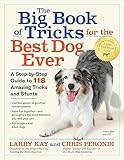
- Book: the big book of tricks for the best dog ever: a step-by-step guide to 118 amazing tricks and stunts
- Language: english
- Binding: paperback
Hand target and leave it
Present an open hand a few inches from the dog’s nose. When the nose touches it, mark and reward. A hand target can guide a dog away from a doorway, onto a scale, or into position without pushing. For “leave it,” begin with a boring object in a closed fist. When the dog stops investigating, mark and reward from your other hand. Gradually work toward an object on the floor, keeping the reward for disengaging better than the item you asked the dog to ignore.
Free tools Windows power users keep installed
One-click scans. No signup required.
Settle on a mat
Place a comfortable mat near you. Mark any calm glance, step, or lie-down on it, then deliver rewards between the dog’s paws. Increase the time between rewards in tiny increments. Practice while you read, prepare food, or answer the door, beginning with distractions your dog can handle. The mat is a management aid, not a place to confine a distressed dog.
Loose-leash walking
Start indoors or in a quiet area. Reward when the leash hangs slack and your dog chooses to stay near you. If the leash tightens, stop or turn calmly and wait for slack; do not jerk the leash. Gradually add distance and distractions. Letting the dog sniff can itself be a reward for a few steps of loose walking.
Recall: why won’t my dog come when called?
Recall fails when the cue predicts something unpleasant, the environment is too distracting, or the dog has not practiced at that distance. Begin close to your dog, say the cue once in a cheerful voice, move backward, and reward generously when the dog follows. Increase distance and distractions gradually, using a long line in safe open areas if appropriate. Never punish a dog for returning, even if the response was slow. Coming to you must remain safer and more rewarding than staying away.
Also popular on Amazon
House-train with routine and supervision
House-training succeeds when you prevent accidents, notice the dog’s signals, and reward toileting in the chosen place. Take the dog to that place on a predictable routine, including after waking, eating, drinking, playing, and sleeping. Watch for sniffing, circling, restlessness, or heading toward a previous accident area; take the dog out before the behavior becomes urgent.
Quick wins for a faster PC:
Repair Windows errors before they cause bigger problemsFix Now →Fix the driver behind crashes, sound loss and screen glitchesFind Drivers →- Bring the dog directly to the designated toilet area on leash or through a secure route.
- Wait quietly and give the dog time to eliminate.
- As soon as toileting finishes, mark and reward there, then allow a short sniff or walk.
- If nothing happens, return indoors under close supervision and try again soon rather than allowing free roaming.
- Clean accidents thoroughly with an appropriate enzymatic cleaner. If you catch an accident in progress, interrupt gently and take the dog outside; do not punish after the fact.
Young puppies and dogs with medical problems may need more frequent opportunities. Persistent accidents, straining, unusual thirst, or a sudden change in an otherwise trained dog warrant a veterinary consultation.
Manage chewing, jumping, and other unwanted habits
Training takes time, so manage the environment while skills develop. Supervise when the dog is loose, use a safe puppy-proofed area or crate only as a comfortable rest space when direct supervision is impossible, and provide legal chewing options. Keep tempting objects, food, medications, and rubbish out of reach. Rotate suitable chews and reinforce the dog for choosing them.
For jumping, remove attention while paws are on people and reward four paws on the floor or a sit. Everyone who greets the dog must follow the same rule. For stealing objects, avoid chasing; trade for a better reward, then retrieve the item. Practice “drop” with low-value toys before you need it in an emergency.
Also popular on Amazon
Socialize safely and positively
Socialization means helping a dog form positive, controllable associations with people, animals, places, surfaces, sounds, handling, and travel. It does not mean forcing greetings or taking a frightened puppy into overwhelming crowds. Let the dog observe from a comfortable distance, pair the sight or sound with rewards, and stop before fear escalates.
Crashes, No Sound, or Screen Glitches?
Random freezes, missing sound and display glitches usually trace back to one bad driver. Find and replace yours safely.Free scan · under a minutePC Slower Than It Used to Be?
A free scan shows the junk files, broken settings and background clutter dragging Windows down - then fixes them in one click.Free scan · Windows 10 & 11For puppies, ask your veterinarian how to balance early learning with local disease risks and vaccination status; there is no single schedule that fits every dog or location. The AKC’s puppy-socialization guidance emphasizes safe, positive exposure and veterinary advice about timing. Choose clean, well-managed classes or outings, and avoid situations where sick or unvaccinated animals may expose a vulnerable puppy.
Adult dogs can learn to handle unfamiliar situations too. Start with one manageable change—such as seeing a bicycle from across a street—reward calm observation, and gradually reduce distance only while the dog remains relaxed. If the dog freezes, lunges, hides, or cannot take food, increase distance and consult a behavior professional rather than forcing exposure.
How long does it take to train a puppy or adult dog?
There is no universal timetable. A simple behavior may appear quickly in a quiet room but require many short practices before it works around distractions. Reliability depends on the dog’s history, health, motivation, environment, and the consistency of everyone handling the dog. Expect maintenance throughout the dog’s life: revisit skills after moves, schedule changes, illness, adolescence, or other stressful events.
Measure progress by observable changes: the dog responds with fewer prompts, recovers more quickly from distractions, chooses an appropriate behavior more often, or can work at a closer distance. If progress stalls, make the exercise easier and check whether pain, poor sleep, hunger, fear, or an overly stimulating setting is interfering.
The Tool Desk
Outbyte Driver Updater FREEFix the driver behind crashes, sound loss and screen glitchesFind Drivers →Outbyte PC Repair FREERepair Windows errors before they cause bigger problemsFix Now →Troubleshoot common training problems
| What you see | Likely reason | Adjustment |
|---|---|---|
| The dog stops taking treats | The environment is too difficult, or the dog is stressed, full, or tired. | Increase distance from distractions, use a more valuable reward, shorten the session, or stop and decompress. |
| The dog performs only when you show food | The lure has not been faded. | Hide the reward in your other hand, give the cue, mark the response, then produce the reward afterward. |
| The dog ignores a familiar cue outdoors | The behavior was not generalized to that level of distraction. | Return to an easier location, reward more frequently, and increase difficulty in small steps. |
| Excitement turns into nipping or barking | The dog is over-aroused and no longer able to think. | Pause, create space, offer a calm activity, and resume later at a lower intensity. |
| Accidents continue despite a routine | Too much unsupervised freedom, an unclear schedule, or a medical issue. | Tighten supervision and toilet opportunities, clean thoroughly, and ask a veterinarian about persistent or sudden changes. |
When to hire a trainer or behavior professional
Seek help promptly for aggression, severe fear, separation-related distress, guarding, repeated escape attempts, or any behavior that could injure a person or animal. A veterinarian can check for pain or illness and refer you to an appropriate behavior professional. Do not wait for a dangerous pattern to become entrenched.
When comparing trainers or classes, ask what methods they use and whether they will demonstrate them. Look for reward-based instruction, relevant education and experience, safe class management, small enough groups for your dog to learn, and a willingness to coordinate with your veterinarian. Avoid anyone who guarantees a rapid cure, relies on intimidation, or refuses to explain equipment and procedures. The AKC’s training tips for new puppy and dog owners also recommend tailored help when owners encounter difficult behavior.
Quick Recap
A practical routine for new owners
- Reinforce calm choices during ordinary activities such as feeding, opening doors, and settling beside you.
- Practice one or two foundation cues in several easy locations, using a marker and prompt rewards.
- Schedule toilet opportunities and supervise whenever the dog has access to the home.
- Provide daily outlets for chewing, play, sniffing, rest, and age-appropriate movement.
- Expose the dog gradually to a new sound, surface, person, or place only when the dog can remain relaxed.
- Record what worked, what distracted the dog, and which reward was effective so the next session can be adjusted.





Leave a Reply