
Some links on this page are affiliate links: if you buy through them we may earn a commission, at no extra cost to you.
Usually, bearded dragons do not need extra heat at night. Turn off basking and other visible lights, let the enclosure cool, and measure the overnight temperature before adding equipment. If the enclosure becomes colder than the husbandry range you follow, use a non-light-emitting heater—typically a ceramic heat emitter—with thermostat control and independent temperature checks. Veterinary and welfare sources do not give one universal minimum: recommendations range from about 65°F to 80°F (18–26°C), depending on the source and which part of the enclosure is being measured.
Why nighttime cooling is normal
Bearded dragons are daytime baskers. Their visible basking lamp and daylight cycle should go off at night so the enclosure becomes cooler and dark. NC State Veterinary Hospital specifically warns that white lights should not be used overnight because dragons need darkness for proper sleep (NC State Veterinary Hospital guidance). VCA likewise says the enclosure should cool when the light goes off and notes that extra nighttime heat and light may not be necessary when the cooler end remains within its stated range (VCA housing guidance).
As an Amazon Associate I earn from qualifying purchases.
That does not mean every room or enclosure stays safe without a heater. Homes can become much colder than the daytime setup, and an enclosure may lose heat faster than the surrounding room. The correct decision is based on the temperature your dragon actually experiences overnight, not on whether a product is marketed as a night heater.
Night-temperature recommendations differ by source
Care sheets use different ranges and sometimes describe different locations in the enclosure. Treat each as source-specific husbandry guidance rather than combining the figures into a single official threshold.
Popular on Amazon
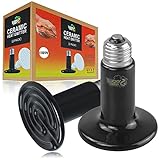
- 🦎No Light Emitted - The heat lamp bulb only generates heat during use, and does not emit light. It provides sufficient heat for your pets so that they can feel the warmth you made for it in a cold environment. Especially when it is used at night, it will not affect the pet's sleep.
- 🦎Heating UP Fast - After turning on the reptile ceramic heat bulb for 10 seconds, you can clearly feel the rapid rise in temperature, and it only takes 4 minutes for the reptile heat lamp to reach the rated temperature.
- 🦎Sturdy - LUCKY HERP reptile heat emitter is made of thick special ceramic material, and the heat light bulb shell is stronger and more durable than ordinary heating lamps. Our reptile light bulbs last up to 10,000 hours. Use in standard E26 lamp base, 120 volts and easy to install.
- 🦎Safety Instructions - You must use good quality ceramic lamp holders. When using the reptile basking bulb, keep a distance of more than 30cm from reptiles. Do not turn on the chicken heat lamp immediately after turning it off, and do not turn the bulb on and off frequently.
| Source | Night guidance | What it says about supplemental heat |
|---|---|---|
| UC Davis School of Veterinary Medicine | 70–75°F (about 21–24°C) | If room temperature is below 70°F at night, use an under-tank heater or ceramic heat emitter. |
| NC State Veterinary Hospital | About 70–75°F (21–24°C) | If additional heat is needed, it prefers ceramic heat emitters; white lights should remain off. |
| VCA Animal Hospitals | Cool end 65–80°F (18–26°C) | Extra nighttime heat may not be needed when the cooler end stays in this range. |
| RSPCA | Do not fall below 20–22°C (about 68–72°F) | A safely installed, non-light-emitting ceramic heater may maintain air temperature. |
| Royal Veterinary College (2024 care sheet) | Do not fall below 20°C (68°F) | Use thermostat-controlled background heat; the sheet lists a ceramic bulb as an option. |
The broadest published range above comes from VCA, while UC Davis and NC State give a narrower 70–75°F target. The RSPCA and Royal Veterinary College express a lower limit instead. Because the documents differ in wording and measurement location, choose one veterinary or welfare protocol to follow consistently and verify the enclosure with instruments.
How to decide whether your dragon needs heat
- Switch off daytime equipment. Turn off the basking bulb and all visible-light lamps at the start of the dark period. Do not substitute a red, blue or white bulb simply to keep the enclosure bright; the NC State guidance calls for darkness at night.
- Measure the overnight environment. Place digital thermometers where your dragon rests and at the cooler end. UC Davis recommends at least two thermometers, and NC State calls a digital thermometer essential (UC Davis; NC State).
- Check readings after the room has cooled. A reading taken immediately after the lamp switches off can be higher than the temperature several hours later. Record the overnight low at the dragon’s sleeping level, not just the room thermostat.
- Compare the result with your chosen guidance. A reading around 70–75°F fits the UC Davis and NC State recommendations. A cooler-end reading between 65°F and 80°F fits the VCA range. The RSPCA advises staying at or above 68–72°F, and the RVC care sheet says background heat should prevent a drop below 68°F.
- Add heat only when the measured setup falls outside that guidance. If your enclosure remains within the selected range, adding a heater can create unnecessary overheating and extra fire or burn risk.
- Recheck after installation. Measure the enclosure again through the night and adjust the control system according to the heater manufacturer’s instructions. Do not choose a wattage from a generic chart alone; UC Davis says wattage should be selected to produce the proper tank temperature.
Which nighttime heat source preserves sleep?
Ceramic heat emitter
A ceramic heat emitter produces infrared heat without visible light, making it the most consistently named option in the cited guidance when supplemental nighttime warmth is needed. NC State prefers ceramic heat emitters for additional heat, and the RSPCA specifies a non-light-emitting ceramic heater. The RVC 2024 sheet also lists a ceramic bulb among background-heat options.
Recommended Free Tools
Mount the emitter in a properly rated fixture, keep it away from surfaces your dragon can touch, and use a thermostat suitable for the equipment. A ceramic emitter can become extremely hot; an exposed or poorly positioned element can cause burns or damage enclosure furnishings.
Also popular on Amazon

- 🦎No Light Emitted - The heat lamp bulb only generates heat during use, and does not emit light. It provides sufficient heat for your pets so that they can feel the warmth you made for it in a cold environment. Especially when it is used at night, it will not affect the pet's sleep.
- 🦎Heating UP Fast - After turning on the reptile ceramic heat bulb for 10 seconds, you can clearly feel the rapid rise in temperature, and it only takes 4 minutes for the reptile heat lamp to reach the rated temperature.
- 🦎Sturdy - LUCKY HERP reptile heat emitter is made of thick special ceramic material, and the heat light bulb shell is stronger and more durable than ordinary heating lamps. Our reptile light bulbs last up to 10,000 hours. Use in standard E26 lamp base, 120 volts and easy to install.
- 🦎Safety Instructions - You must use good quality ceramic lamp holders. When using the reptile basking bulb, keep a distance of more than 30cm from reptiles. Do not turn on the chicken heat lamp immediately after turning it off, and do not turn the bulb on and off frequently.
Under-tank heating
UC Davis lists an under-tank heater as an option when room temperature is below 70°F. NC State cautions that heat mats may cause thermal burns. If you use one, follow the manufacturer’s installation limits, prevent direct contact with the animal, and control it with equipment designed for that heater. A mat should not replace temperature measurements at the dragon’s resting surface and in the air.
Visible-light bulbs
Do not use white basking bulbs or colored “night” bulbs to maintain heat after lights-out. Visible light can disrupt the dark period, and the cited sources identify darkness as part of normal nighttime care. If heat is necessary, choose a non-light-emitting method instead.
Thermostats, thermometers and temperature guns
Thermostat control
Background heat should be thermostat-controlled rather than left to run at an unregulated output. The Royal Veterinary College states: “This should be set on a thermostat so that the overnight temperature does not drop below 20ºC.” In that care sheet, “this” refers to background heat. A thermostat limits the heater as conditions change, but it does not eliminate the need for independent checks.
Also popular on Amazon

- DOMICA Ceramic Heat Emitter, Safeguard Your Reptiles’ Healthy Sleep Cycle - Delivers steady, targeted heat that aligns with your reptiles’ physiological needs, effectively maintaining their healthy sleep cycle. Unlike some heat bulbs that emit light, it provides reliable heat without disrupting natural photoperiods – perfect for both day and night heat supply, even when paired with a daytime heat bulb to avoid light interference at night.
- Heats Up Rapidly & Ensures Excellent Heat Output - Boasting exceptional heat efficiency, this emitter heats up fast (faster than traditional incandescent heat bulbs in low - temp environments) and radiates natural sun - mimicking infrared heat. It guarantees consistent heat distribution and long - lasting heat stability, outperforming many heat bulbs in maintaining a uniform thermal zone – ideal for creating a comfortable living space for your pets.
- Heat Resistant Ceramic Construction - Crafted from high-density ceramic material, the emitter features outstanding durability and stronger high - heat tolerance than most plastic - base heat bulbs. It can withstand extreme temperatures (up to 500°F) without warping or damage, ensuring a longer service life than average heat bulbs. Dimensions: 3” x 3” x 4.3” (compact design fits most pet enclosures effortlessly, saving space compared to bulky heat bulb setups).
- E26 Base for Seamless Heat Integration - Compatible with standard E26 light fixtures (110 - 120 volts) – the same interface as most common heat bulbs, enabling easy heat integration to meet your pets’ heating needs. You can replace an old heat bulb with this emitter directly, no need to change the existing fixture. Important Note: Must be used with lamp fixtures rated to withstand 150W or higher, as the emitter (like high - power heat bulbs) generates significant surface heat. Always keep a safe distance from flammable materials to avoid heat - related risks.
- Wide Range Heat Application - Ideal for providing essential supplemental heat to most reptiles (e.g., bearded dragons, ball pythons), birds, amphibians, and other small pets. It also pairs perfectly with E26 heat lamps to expand heat coverage, fully meeting the diverse heat requirements of different pets.
Digital thermometers
Use at least two digital thermometers so you can see temperatures at relevant ends or levels of the enclosure. Check probe placement, battery condition and sensor accuracy according to the device instructions. One reading on a wall cannot describe every surface your dragon may contact.
Infrared temperature guns
VCA mentions an electronic temperature gun for checking enclosure ends. An infrared gun reads the temperature of the surface it is aimed at—such as a branch, tile or substrate—not the air temperature. Use it as a supplementary tool, while fixed digital probes monitor air conditions over time.
Safety checks before leaving heat on overnight
- Confirm the heater and fixture are rated for the enclosure and installed according to their instructions.
- Use a thermostat appropriate to the heater type and place its probe where it can sense the controlled area without being moved by the dragon.
- Provide a guard or barrier that prevents contact with the hot emitter and secure cables outside the enclosure.
- Check both the warm and cool areas; a safe average can hide an overheated perch or a dangerously cold sleeping spot.
- Observe the setup after lights-out and again in the morning, especially after changing room heating, ventilation or enclosure coverings.
- Never rely on the thermostat display alone. Independent thermometers can reveal a displaced probe or failed controller.
UC Davis warns that heating elements can cause burns when used improperly, and NC State gives a similar thermal-burn warning for heat mats. If equipment behaves erratically, switch it off safely and correct the installation before using it again.
Also popular on Amazon

- 🦎No Light Emitted - The heat lamp bulb only generates heat during use, and does not emit light. It provides sufficient heat for your pets so that they can feel the warmth you made for it in a cold environment. Especially when it is used at night, it will not affect the pet's sleep.
- 🦎Heating UP Fast - After turning on the reptile ceramic heat bulb for 10 seconds, you can clearly feel the rapid rise in temperature, and it only takes 4 minutes for the reptile heat lamp to reach the rated temperature.
- 🦎Sturdy - LUCKY HERP reptile heat emitter is made of thick special ceramic material, and the heat light bulb shell is stronger and more durable than ordinary heating lamps. Our reptile light bulbs last up to 10,000 hours. Use in standard E26 lamp base, 120 volts and easy to install.
- 🦎Safety Instructions - You must use good quality ceramic lamp holders. When using the reptile basking bulb, keep a distance of more than 30cm from reptiles. Do not turn on the chicken heat lamp immediately after turning it off, and do not turn the bulb on and off frequently.
When a cold night needs veterinary advice
A single reading outside a care-sheet range is a reason to correct the enclosure, not a diagnosis. Contact a reptile veterinarian if your dragon has persistent lethargy, weakness, breathing changes, poor appetite, unusual soaking, weight loss or another health concern, or if you cannot keep temperatures stable in an unusual housing setup. Sick, very young, underweight or recovering dragons may need individualized temperature and treatment plans that general care sheets cannot provide.
The Tool Desk
Outbyte PC Repair FREERepair Windows errors before they cause bigger problemsFix Now →Outbyte Driver Updater FREEFix the driver behind crashes, sound loss and screen glitchesFind Drivers →No quantitative population study was identified in these care sources establishing that all bearded dragons require nighttime heat. The figures above are husbandry recommendations from veterinary and welfare organizations, not experimental statistics. Your veterinarian can help select the most appropriate target when those recommendations conflict or your animal has a medical condition.
A simple overnight setup checklist
- Program the daytime basking and visible-light cycle to switch off at night.
- Verify that the enclosure becomes dark and measure the overnight low with digital thermometers.
- Compare readings with the specific guidance you have chosen: UC Davis or NC State (70–75°F), VCA (65–80°F at the cool end), RSPCA (at least 20–22°C), or the RVC minimum of 20°C.
- If readings are too low, install a non-light-emitting ceramic heater or another source named by your veterinarian, with thermostat control.
- Recheck air and surface temperatures after the heater has operated through a full night.
- Inspect for contact hazards, displaced probes, damaged cords and signs of overheating each morning.
Frequently Asked Questions
Can my bearded dragon sleep at 65°F (18°C)?
VCA lists 65–80°F (18–26°C) for the cooler end at night, so 65°F is within that source’s stated range. UC Davis, NC State, the RSPCA and the RVC use warmer targets or minimums. Choose one protocol, measure the actual enclosure and ask a reptile veterinarian if your dragon is ill or the reading is sustained.
Also popular on Amazon

- 【Reliable Heat Source】: 100W heat lamp ensures 24-hour warmth for reptiles and amphibians with the ceramic heat emitter, ideal for maintaining their thermoregulation needs.
- 【Non-Light Emitting】: Designed to not disrupt the sleep patterns of your pets, the infrared heat emitted by the reptile heat bulb penetrates skin tissues, promoting blood circulation without disturbing their natural behavior.
- 【Longevity】: Boasting a lifespan of 10,000 hours, ceramic heat emitter outlasts traditional heat lamps by three times, providing consistent warmth for your pets.
- 【Premium Material】:Crafted from high-purity ceramic material, heat lamp bulbs are crack-resistant and safe to operate in high-humidity environments such as glass terrariums.
- 【Certified and Eco-Friendly】: CE-certified and RoHS-compliant, the heat lamp for lizard base is compatible with most E26 sockets while supporting environmental sustainability. Upgrade to the ceramic heat bulb for a long-lasting and efficient heat source for reptiles and amphibians.
Are red or blue night bulbs safe for bearded dragons?
The cited guidance calls for darkness and recommends non-light-emitting heat when warmth is required. Use a ceramic heat emitter or another veterinarian-approved dark heat source instead of a visible red, blue or white bulb.
Where should I place a thermometer?
Use digital thermometers at the dragon’s sleeping or resting level and at the cooler end, with probes secured where they cannot be moved. An infrared gun can supplement these readings by checking surfaces, but it does not measure air temperature.
What if the room is below the recommended range only briefly?
Measure how low the enclosure actually falls and for how long, then compare it with your selected care guidance. If you cannot maintain a stable temperature, install thermostat-controlled background heat or consult a reptile veterinarian rather than guessing at wattage.





Leave a Reply