
The best way to reduce litter-room odor is not a stronger fragrance. Scoop at least once a day, replace the litter and wash the box weekly, use unscented products, and then add the least intrusive deodorizer that matches the odor’s location. Baking soda or an unscented charcoal additive can support the litter itself; ventilation or an air purifier with activated carbon addresses room air; an enzymatic cleaner is for urine or feces on floors, rugs, and other surfaces.
No source establishes a controlled, head-to-head winner among litter deodorizers. Treat every additive as a supplement to source control, watch your cat’s box habits, and aim for reduced odor rather than a permanently smell-free room.
As an Amazon Associate I earn from qualifying purchases.
How do I get rid of cat litter smell?
Start with the litter box, not the room spray. Odor comes from urine and feces left in the box, residue on the box or floor, damp litter, poor airflow, and accidents that were never fully neutralized. A deodorizer cannot compensate for an overdue cleaning or a urine-soaked rug.
- Scoop at least daily. Remove feces and urine clumps as soon as practical. In a multi-cat home, more frequent scooping may be needed to keep the box usable.
- Clean the box weekly. Empty the litter, wash the box with warm water and unscented soap, baking soda, or no soap, and refill with fresh litter. Rinse away any residue and dry the box before refilling.
- Use an unscented litter your cat accepts. The ASPCA says most cats prefer clumping, unscented litter. A pleasant smell to a person can be an aversive smell to a cat.
- Clean the surrounding area. Check the floor, wall, mat, scoop, waste bin, and the underside of the box for splashes or tracked waste.
- Improve air movement safely. Ventilate the room when weather, screens, and the home’s layout allow it, without blowing odor into bedrooms or other occupied areas.
- Add a targeted deodorizer only after the routine is working. Choose an unscented litter additive for litter odor, activated carbon for room air, or an enzymatic cleaner for an accident on a surface.
Purina US summarizes the realistic goal this way: “The truth is, a no smell cat box is achievable to an extent, but it just requires consistent effort, smart cleaning routines, and the right tools.” The practical target is a cat-friendly room with substantially less odor, not the total absence of any litter-box smell.
#1 Best Overall
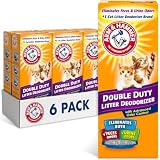
- #1 CAT LITTER DEODORIZER BRAND*: Formulated with ARM & HAMMER Baking Soda Crystals to eliminate tough odors on contact and keep your litter box fresh longer (*Based on units sold).
- EXTRA STRENGTH ODOR ELIMINATION: This kitty litter deodorizer destroys feces and urine odors on contact, leaving your litter box fresher with each sprinkle of this cat litter box deodorizer.
- PROVEN ODOR CONTROL FOR 9 DAYS: Enjoy a prolonged fresh, new-litter scent for up to 9 days with this cat litter odor eliminator. In fact, internal lab tests show lower odor levels with this product compared to using litter alone.
- SAFE FOR DAILY USE AROUND CATS AND OWNERS: This cat litter deodorizer is made with ARM & HAMMER Baking Soda Crystals, safe for daily use when used as directed. Simply sprinkle in this cat litter deodorizer into your litter box.
- COMPATIBLE WITH ANY TYPE OF CAT LITTER: Whether using scented, unscented, clay, scoopable, or natural litter, use this ARM & HAMMER absorbent litter deodorizer daily to deodorize your cat litter box
Why does my house still smell like cat litter even after scooping?
Scooping removes the newest waste but does not remove every odor source. These are the most common explanations.
Urine has reached the box, floor, or wall
Small leaks, high urine streams, tipped boxes, and tracking can leave residue outside the litter. Smell may persist in a rug pad, grout line, baseboard, or the underside of a mat even when the box looks clean. Use an enzymatic pet-accident cleaner made for the affected material, following its label directions and contact time. Spot-test delicate surfaces first.
The litter or box is holding old residue
A box that is only topped up can retain a film of urine and dust. Empty it during the weekly cleaning, wash it with warm water and an unscented option, and dry it fully. Replace a box if cracks, scratches, or absorbed odor make thorough cleaning impossible.
Windows Errors? Fix Them Before They Spread
Repair common Windows errors and clear accumulated junk for a smoother, more stable PC - no reinstall needed.Free scan · no reinstallCrashes, No Sound, or Screen Glitches?
Random freezes, missing sound and display glitches usually trace back to one bad driver. Find and replace yours safely.Free scan · under a minuteThe waste bin is the real source
A sealed liner or lidded pail slows odor but does not eliminate it. Empty the bin regularly, clean its interior, and keep it away from the cat’s food and water. Do not put an air freshener directly beside the box to hide a dirty waste container.
Air is stagnant or odor is migrating
A small enclosed room can accumulate odor between cleanings. A fan, open screened window, or other safe ventilation can help, but check that airflow is not carrying the smell into the rest of the home. A purifier with an activated-carbon stage can treat room air; a HEPA-only filter is designed primarily for particles and should not be presented as a gas-odor solution.
Your cat may be avoiding the box
When a cat urinates outside the box, the resulting odor can be mistaken for a deodorizer problem. A sudden change in box use, unusually strong urine odor, straining, frequent trips, or repeated accidents warrants a veterinarian’s assessment. Adding fragrance can conceal a medical warning and may make the box less acceptable.
Rank #2

- ODOR CONTROL SUPPORT: These cat litter deodorizer crystals are designed to help absorb and neutralize common litter box odors, supporting a fresher smelling home environment while fitting easily into daily litter box maintenance routines.
- LITTER BOX COMPATIBLE: Made to be sprinkled directly into most standard litter boxes, these deodorizing crystals work alongside regular cat litter without replacing it, helping manage smells between full litter changes.
- FRESH SCENT FORMULA: Infused with a light fresh scent, the crystals help reduce unpleasant odors without overpowering the space, making them suitable for shared living areas where litter boxes are present in the home.
- SIMPLE TO USE DESIGN: Easy pour container allows crystals to be added as needed, supporting quick refreshes during routine scooping and helping reduce the need for constant full litter replacements during weekly care.
- FOR MULTI CAT HOMES: Helpful for homes with one or more cats, these litter box deodorizer crystals support odor control in high use litter boxes and busy household environments with frequent daily use and activity.
Choose the deodorizer by where the odor is
| Product type | Use it for | What the available guidance supports | Check before buying or using |
|---|---|---|---|
| Unscented litter deodorizer or activated-charcoal additive | Odor in the litter itself | PAWS discusses a thin layer of baking soda beneath litter. Cat-oriented charcoal products are marketed as odor absorbers, but no controlled comparison establishes a universal best additive. | Unscented formula, ingredients, dust, granule size, litter compatibility, residue, label directions, cat acceptance, and cost per application. |
| Air purifier with activated carbon | Lingering odor in room air | Purina recommends air purifiers near litter areas and identifies activated carbon as the odor-control filter type. | Room-size rating, amount and type of carbon if disclosed, airflow, noise, replacement-filter cost, placement, and whether claims come from independent testing or the manufacturer. |
| Enzymatic pet-accident cleaner | Urine or feces on floors, rugs, upholstery, or other nearby surfaces | The ASPCA recommends an enzymatic cleanser designed to neutralize pet odors after accidents. | Material compatibility, scent, required contact time, rinsing instructions, and a hidden-area spot test. It is not a litter additive. |
| Ventilation and airflow | General odor accumulation in an enclosed room | Purina lists ventilation and airflow as household odor-control measures. | Safe windows and screens, weather, humidity, noise, and whether airflow spreads odor elsewhere. |
Distinguish absorption or neutralization from fragrance. A scented product may make a room smell different without removing the odor molecules, and fragrance near the box can affect a cat’s willingness to enter it.
Quick wins for a faster PC:
Clear out junk files and repair common Windows errorsFree Scan →Fix the driver behind crashes, sound loss and screen glitchesFind Drivers →Unscented additives for the litter
Baking soda
PAWS advises choosing completely unscented litter and mentions a thin layer of baking soda at the bottom of the box as an odor absorber. Use only a small amount and follow the product and litter-box directions. Baking soda is a supplement, not a reason to delay scooping or weekly washing. If your cat refuses the box after any change, remove the additive and return to the last setup the cat used reliably.
Activated charcoal
Activated charcoal can be sold as a granular, unscented litter deodorizer. One product example described by Cats.com uses steam-activated coconut charcoal and natural mineral granules, is promoted for use with several litter types, and is described in that review as low dust. The same review notes coarse granules, higher expense than baking-soda products, and the need for reapplication as possible drawbacks. Those are product-review observations, not independent laboratory results.
When comparing charcoal additives, look for clear ingredient and use instructions. Consider whether the granules fall through the scoop, cling to paws, create visible residue, or alter clump formation. Do not assume that “natural,” “charcoal,” or “mineral” means dust-free, ingestible, or suitable for every cat.
How to introduce an additive
- Read the label and confirm that the product is intended for cat litter.
- Change one variable at a time so you can tell whether the cat accepts it.
- Use the smallest directed amount rather than covering the litter with powder.
- Keep the box in its usual location and retain an unscented, additive-free option if your cat is sensitive.
- For the next several days, watch entry, digging, covering, urine and stool frequency, and any accidents outside the box.
Room-level odor control: ventilation and activated carbon
Ventilation
Air exchange is often the simplest room-level measure. Open a screened window or run an existing ventilation fan when safe. Keep the box away from a forced-air return that would distribute odor through the home, and avoid creating a draft that makes the cat feel exposed. Ventilation cannot remove residue on a floor or in a box, so combine it with cleaning.
Air purifiers with activated carbon
Activated carbon is the filter medium specifically identified in the cited pet-care guidance for odor control. Select a unit whose airflow and room-size specification fit the litter room, place it where air can circulate around the box, and replace filters according to the manufacturer’s schedule. A purifier that contains only a particle filter should not be expected to remove gaseous litter odors.
Rank #3

- #1 CAT LITTER DEODORIZER BRAND*: Formulated with ARM & HAMMER Baking Soda Crystals to eliminate tough odors on contact and keep your litter box fresh longer (*Based on units sold)
- EXTRA STRENGTH ODOR ELIMINATION: This kitty litter deodorizer destroys feces and urine odors on contact, leaving your litter box fresher with each sprinkle of this cat litter box deodorizer
- PROVEN ODOR CONTROL FOR 9 DAYS: Enjoy a prolonged fresh, new-litter scent for up to 9 days, as lab tests show lower odor levels with this product compared to using litter alone
- SAFE FOR DAILY USE: Made with ARM & HAMMER Baking Soda Crystals, this cat deodorizer for litter box odors is safe for daily use around cats and pet owners when used as directed
- COMPATIBLE WITH ALL LITTER TYPES: Whether using scented, unscented, clay, scoopable, or natural litter, use this ARM & HAMMER absorbent litter deodorizer daily to deodorize your cat litter box
No specific purifier model, carbon capacity, room-size match, or independent odor test was established for this guide. Compare those details yourself on current labels rather than treating a generic “odor control” claim as a performance guarantee. Keep cords, intake openings, and the appliance stable and inaccessible to chewing cats.
Cleaning urine and feces from surfaces
When an accident occurs outside the box, blot or remove solid waste promptly, then use an enzymatic pet-accident cleaner intended for that surface. Enzymatic formulas are designed to break down odor-causing organic residue rather than simply perfume it. Follow the label’s saturation and dwell-time instructions; wiping it away immediately may prevent the product from working as intended. Use a hidden-area test on rugs, wood finishes, upholstery, and painted surfaces.
Do not use an ammonia-based cleaner for urine accidents. The ASPCA notes that urine contains ammonia, so an ammonia-based product may attract a cat back to the same spot. Avoid mixing cleaners, and keep the cat away until the treated area is dry and the label says it is safe.
Cat acceptance comes before a fresher-smelling room
Cats have a much more sensitive sense of smell than people. The ASPCA warns that scented cleaners can contribute to scent aversion, while PAWS says, “It is best to choose completely unscented litters.” PAWS also advises against placing room deodorizers or air fresheners near the litter box.
- Prefer unscented litter, box-washing products, and litter additives.
- Do not spray fragrance onto litter, into the box, or beside the entry.
- Do not change litter texture, box location, liner, and deodorizer simultaneously.
- Provide enough boxes for the household and keep them in quiet, accessible locations.
- Track box use after any odor-control change. Avoidance is evidence that the setup needs to be reversed.
If your cat stops using the box, remove the newest product first, restore the previously accepted litter, and arrange veterinary advice if the change is sudden or accompanied by urinary or bowel symptoms.
Household-product safety
Carpet powders
The ASPCA Animal Poison Control Center says carpet deodorizing powder used properly should not cause significant harm, but recommends keeping pets out of the area until the powder has been vacuumed. Small inhaled amounts may irritate the respiratory tract, and minor ingestion may upset the stomach. Do not leave loose powder where a cat can walk through it, lick its paws, or knock over the container.
Rank #4
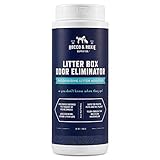
- Cat Litter Deodorizer & Litter Box Odor Eliminator: Our proprietary essential oil blend neutralizes odors at a molecular level, so even the strongest litter box smells stay under control, longer
- Less Scooping, Longer Litter Life: This litter box deodorizer mixes easily into any litter type, wicking away moisture so litter lasts longer between changes and you buy less over time
- Safe For People, Pets & the Planet: Non-toxic, 100% plant-based cat litter odor control made from all-natural corncob granules that absorb moisture and odor from urine and feces
- More Than a Litter Deodorizer: This cat litter odor eliminator also works on trash compactors, garbage cans, kennels, and animal carriers
- Buy With Confidence: Backed by the Rocco & Roxie guarantee — if this cat litter deodorizer doesn't eliminate the smell, contact us and we'll make it right
Essential oils
Cats are particularly sensitive to essential oils. Depending on the oil, amount, and concentration, ingestion can cause gastrointestinal upset, central nervous system depression, or liver damage; inhalation can lead to aspiration pneumonia. The ASPCA does not recommend using essential oils in areas pets can access unless a veterinarian has approved and supervised the use. Avoid diffusers, oil-soaked litter, and DIY drops near the box.
What’s actually slowing this PC down?
Pick the symptom - the matching free tool is one click away.
General precautions
- Read the complete label, including ventilation, dilution, and pet-reentry directions.
- Store powders, concentrates, charcoal granules, and cleaners in closed cabinets.
- Keep cats away while a product is being applied and until the treated area is dry or vacuumed as directed.
- Contact a veterinarian or animal poison service if a cat ingests a product or develops breathing, neurologic, gastrointestinal, or skin symptoms.
Named product examples and how to evaluate them
Examples can illustrate product categories, but they are not a ranked “best” list. Availability, packaging, ingredients, and compatibility can change.
| Example | Category | Reported characteristics | Questions to verify |
|---|---|---|---|
| Coir Wonder Cat Litter Deodorizer | Unscented litter additive | Cats.com describes granular steam-activated coconut charcoal with natural mineral granules. Its review mentions use with several litter types and low dust, while also noting coarse granules, higher cost than baking-soda products, and reapplication. | Current ingredient list, dust behavior in your home, scoop compatibility, application rate, and whether your cat accepts the texture. |
| Petmate Litter Box Filter | Replacement filter for compatible litter boxes | Vetstreet describes a replaceable charcoal/zeolite filter for compatible boxes. | Current box compatibility, dimensions, replacement interval, and whether the filter is positioned where air can pass through it. |
| Generic activated-carbon purifier | Room-air treatment | Purina suggests this category for litter-area odor, but no particular model, carbon quantity, or independent test was verified. | Actual carbon specification, clean-air delivery or airflow information, noise, filter price, and safe placement. |
| Enzymatic pet-accident cleaner | Surface treatment | The ASPCA recommends this category for accident odors; no single cleaner was established as the best choice. | Label-approved surfaces, contact time, spot-test instructions, scent, and drying requirements. |
A practical maintenance schedule
Every day
- Scoop all clumps and feces at least once.
- Check the rim, exterior, mat, and nearby floor for tracked waste or splashes.
- Empty waste before the container becomes a room-level odor source.
- Note any change in the cat’s appetite, comfort, digging, or box use.
Every week
- Empty the box completely and replace the litter.
- Wash with warm water and unscented soap, baking soda, or no soap; rinse and dry thoroughly.
- Wash the scoop and mat according to their material instructions.
- Inspect walls, baseboards, grout, rugs, and furniture for hidden accidents.
- Check purifier or box-filter condition and replace only according to the current manufacturer directions.
After an accident
- Move the cat away from the area and remove solid waste.
- Blot liquid without grinding it deeper into the material.
- Apply a suitable enzymatic cleaner with the required coverage and contact time.
- Allow the area to dry fully before restoring access.
- Investigate why the accident happened instead of masking the smell with fragrance.
Troubleshooting odor-control failures
The additive makes the box smell stronger
Stop the additive, return to unscented litter, and perform a complete box wash. Some products can leave residue or combine poorly with a particular litter. Reintroduce nothing until normal box use is established.
The room smells fine, but the cat avoids the box
Remove room sprays, scented litter, and nearby fragrance products. Restore the former litter and location, and consult a veterinarian if avoidance persists. A human-approved scent is not evidence of feline acceptance.
Odor returns within hours of cleaning
Look underneath the box, in the waste bin, inside the mat, and on nearby porous surfaces. A purifier cannot fix a saturated rug pad or cracked box. Treat the source with an appropriate enzymatic cleaner or replace the affected item.
Recommended Free Tools
There is a sudden ammonia-like smell
Check for a fresh accident, diluted urine under the box, or a cat urinating outside the box. Do not use ammonia-based cleaner. If the cat is urinating more often, straining, vocalizing, or producing little urine, seek urgent veterinary advice.
Best Value

- HELPS TACKLE TOUGH ODORS: The litter deodorizing powder aids litter in removing tough urine and feces odors.
- USE WITH ANY LITTER BOX: This deodorizer can be used in both automatic and manual litter boxes.
- MULTI-CAT HOME: Nature’s Miracle Litter Box Deodorizer is ideal for multi-cat homes.
- FRESH SCENT: The fresh scent keeps your litter box smelling crisp.
- MADE WITH RECYCLED MATERIAL: Our bottles are made with 25% Post-Consumer Recycled Material.
What “best” means for your home
The best deodorizer is the least intrusive option that addresses the actual source without changing your cat’s toilet preferences. For litter odor, begin with daily scooping, weekly washing, and unscented litter; then consider a small amount of baking soda or an unscented charcoal additive. For odor floating in a small room, improve safe airflow or use activated carbon in a properly sized purifier. For urine or feces on a surface, use an enzymatic cleaner rather than a litter additive. Keep fragrances and essential oils away from accessible pet areas, and treat any change in box use as a welfare issue rather than a cue to add more deodorizer.
Frequently Asked Questions
Can I put baking soda directly on top of the litter?
PAWS mentions a thin layer at the bottom of the box. Follow the product and litter directions, use a small amount, and stop if your cat avoids the box.
Will an air purifier remove all litter-box odor?
No. Activated carbon may reduce room-air odor, but it cannot replace scooping, box washing, or cleaning urine from porous surfaces.
Is charcoal litter deodorizer safe for every cat?
No additive is universally suitable. Check ingredients and dust, follow the label, introduce one change at a time, and discontinue it if box use or comfort changes.
What should I do if my cat suddenly urinates outside the box?
Clean the site with an enzymatic pet-accident cleaner and contact a veterinarian to rule out medical or behavioral causes. Do not try to solve a sudden change with fragrance.
Can I use essential-oil diffusers in the litter room?
The ASPCA warns that cats are especially sensitive to essential oils and does not recommend them where pets have access unless a veterinarian approves and supervises their use.
Quick Recap
Product prices and availability are accurate as of the date/time indicated and are subject to change. Any price and availability information displayed on Amazon at the time of purchase will apply.
Free tools Windows power users keep installed
One-click scans. No signup required.





Leave a Reply