
Do these 3 things before closing this tab:
1Clear out junk files and repair common Windows errors2Scan for outdated or missing drivers - takes under a minute3Repair Windows errors before they cause bigger problemsSome links on this page are affiliate links: if you buy through them we may earn a commission, at no extra cost to you.
The best kitten kibble is not a single universally superior recipe. Choose a dry food whose current package says it is complete and balanced for growth or all life stages, then follow the age- and weight-based directions as a starting point. Adjust portions to your kitten’s body condition and growth, provide water at all times, and involve a veterinarian if growth, digestion, appetite, or weight is not normal.
Two defensible examples are Purina Pro Plan Complete Essentials Kitten Chicken & Rice Formula and Purina Pro Plan Kitten Complete Essentials Shredded Blend Chicken & Rice Formula. The evidence supports their life-stage adequacy statements, not a claim that either is the healthiest choice for every kitten.
As an Amazon Associate I earn from qualifying purchases.
What “best kitten kibble” should mean
Kitten food has to support a period of rapid growth, not merely maintain an adult cat. The first screening question is therefore the life-stage statement on the package. The Association of American Feed Control Officials (AAFCO) recognizes growth as the category that includes kittens and also recognizes all life stages. AAFCO explains that “complete” means a product contains all required nutrients, while “balanced” means those nutrients are present in the correct ratios. An active, growing kitten needs nutrient amounts and ratios that differ from those needed by a mature cat. Read the statement on the current bag rather than relying on a product name, an ingredient slogan, or an old review.
A label that says only “adult maintenance” is not the appropriate default for a growing kitten. Likewise, words such as “premium,” “natural,” “high protein,” or a named meat do not replace the nutritional-adequacy statement. The adequacy statement is the quickest way to determine whether the food is intended to provide the full nutrient pattern for the life stage.
Popular on Amazon
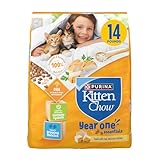
- Dry Kitten Food with Real Chicken: Purina Kitten Chow Year One Essentials dry kitten food made with real farm raised chicken
- Brain and Vision: Dry kitten food with DHA for early growth in every serving to support her brain and vision development as they grow
- Healthy Muscles: Dry kitten food for growth support made with 25 percent more protein (vs. Cat Chow Complete Adult) to support lean muscle development and a playful lifestyle
- Dry Kitten Food for Growth Support: 100 percent complete and balanced kitten food provides the building blocks for a healthy life
- Taste and Texture: Crunchy kitten kibble with a delicious flavor and crunchy texture make this dry cat food for kittens a meal that keeps kittens engaged and eating
AAFCO describes feeding directions as guidance, not an inflexible prescription. A kitten’s activity, size, neuter status, health, and body condition can all change how much food is appropriate. If weight is rising too quickly, falling, or failing to rise as expected, the portion or the underlying health problem needs attention. Keep the package and its lot information so a veterinarian can identify the exact food if a problem develops.
Ingredient lists and guaranteed-analysis numbers can help you compare labels, but they do not by themselves prove that one kibble produces better health outcomes than another complete-and-balanced food. The evidence for the examples below does not include an independent, head-to-head trial that identifies one dry kitten formula as the overall winner.
How kitten energy needs change
Growth demands are especially high during the first months. The 2021 AAHA/AAFP Feline Life Stage Guidelines say kittens can be weaned onto commercially balanced kitten food at about 3–5 weeks of age. The same guidance reports a general energy requirement of approximately 200 kcal per kilogram of body weight per day at 10 weeks, compared with about 80 kcal/kg/day at 10 months. Those are guideline figures, not an individualized feeding prescription: two kittens of the same age can need different amounts.
The decline from roughly 200 to 80 kcal/kg/day illustrates why a feeding chart can change substantially as a kitten matures. Do not keep feeding a young kitten’s largest portion indefinitely. Use the calorie information and feeding chart on the specific package, weigh your kitten regularly, and ask your veterinarian how to adjust the plan if the kitten is unusually small, very active, ill, pregnant, or recovering from a problem. The AAHA/AAFP guidance is available at Nutrition and Weight: Kittens.
Label checklist: a practical way to screen kibble
- Find the nutritional-adequacy statement. Look for wording that the food is complete and balanced for growth, or for all life stages. A product labeled only for adult maintenance is not the appropriate default for a growing kitten.
- Check the substantiation method. A label may say the recipe is formulated to meet a nutrient profile, or it may say that feeding tests substantiate the claim. Record exactly what the package says; a feeding-test statement is evidence about that product’s adequacy claim, not proof that it outperforms every competing food.
- Confirm the intended species and format. The bag should clearly identify cat food and a kitten or growth use. Dry kibble is a low-moisture format, so it must be paired with reliable access to fresh water.
- Read the feeding chart for your kitten’s age and expected size. Start with the stated amount, divide it into the schedule your veterinarian recommends, and adjust based on body condition and growth rather than treating the chart as exact.
- Check the current guaranteed analysis and package date. Formulas, package sizes, and directions can change. Compare the bag you are buying with the manufacturer’s current product page.
- Assess practicality. A nutritionally adequate food is useful only if your kitten will eat it consistently, your household can obtain it, and the feeding plan fits your budget and storage space.
AAFCO’s consumer explanation of these terms is at Selecting the Right Pet Food.
Formulated to meet a profile versus feeding-test substantiated
These phrases describe how the manufacturer supports the adequacy claim. “Formulated to meet” indicates that the recipe was designed against a recognized nutrient profile. A feeding-test statement indicates that the manufacturer reports testing the food with animals under the applicable protocol. Neither phrase alone tells you that a kitten will prefer the food, digest it perfectly, or achieve a better outcome than with another qualifying food. Compare the exact wording on each current package instead of treating one marketing summary as a universal quality ranking.
What’s actually slowing this PC down?
Pick the symptom - the matching free tool is one click away.
Also popular on Amazon
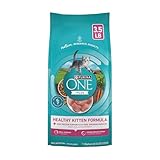
- High protein kitten food made with real chicken as the number 1 ingredient helps support her strong, growing muscles
- DHA, a nutrient found in mother’s milk helps support her vision and brain development, and four antioxidant sources support a strong immune system
- Easily digestible, SmartBlend of high-quality ingredients comes together for a chicken cat food for kittens that supplies 100 percent complete and balanced nutrition to help her thrive
- Great tasting, deliciously crunchy bites of kitten cat food kibble plus added calcium support her strong teeth and healthy gums while giving her a texture she loves
- Feline natural cat food with added vitamins, minerals and nutrients is crafted by a veterinarian-recommended brand in Purina-owned, U.S. facilities with no artificial flavors or preservatives
How to read guaranteed analysis responsibly
Guaranteed analysis values are minimums or maximums for listed nutrients, not a complete nutritional profile and not a clinical-outcome study. For example, a higher crude-protein percentage cannot by itself establish that a food is safer, more digestible, or better for every kitten. Compare values only when the products and their labeling conventions are clear, and consider the adequacy statement, feeding directions, kitten response, and veterinary advice alongside the numbers.
Two evidence-based kibble examples
These are examples that meet the article’s comparison criteria; they are not a ranked list. Confirm the current package before purchase because labels and availability can change.
| Example | Life-stage evidence and format | Published guaranteed analysis or label details | How to use the information |
|---|---|---|---|
| Purina Pro Plan Complete Essentials Kitten Chicken & Rice Formula Dry Cat Food | The manufacturer says AAFCO animal feeding tests substantiate complete and balanced nutrition for growth and gestation/lactation. Dry chicken-and-rice formula. | Crude protein: 42% minimum; crude fat: 19% minimum; DHA: 0.02% minimum; calcium: 1.0% minimum; phosphorus: 0.8% minimum; taurine: 0.18% minimum. | These are the product page’s guaranteed-analysis values. They can describe the label, but they are not a head-to-head health comparison. |
| Purina Pro Plan Kitten Complete Essentials Shredded Blend Chicken & Rice Formula Dry Cat Food | The manufacturer says AAFCO animal feeding tests substantiate complete and balanced nutrition for growth. The food combines crunchy kibble with tender shredded pieces. | The cited product page emphasizes the shredded-and-crunchy texture; the figures above should not be assumed for this formula. | Texture may affect acceptance. It does not establish superior nutrition, so compare the current bag’s analysis and directions. |
The first product’s manufacturer information is available at Pro Plan Complete Essentials Kitten Chicken & Rice Dry Food. The shredded-blend product page is at Pro Plan Complete Essentials Shredded Chicken Kitten Food.
What the comparison can—and cannot—tell you
Both examples have a manufacturer-reported feeding-test substantiation statement for kitten growth. That is a meaningful adequacy detail. It does not answer every individual question, such as whether a particular kitten will tolerate the recipe, maintain an ideal body condition, or prefer one texture. Use the label, your kitten’s response, and veterinary advice together.
Recommended Free Tools
PetMD’s 2026 veterinarian-and-technician panel describes selection factors including life-stage appropriateness, complete-and-balanced nutrition, brand reputation, clinical trials and research, and high-quality protein as a main ingredient. PetMD discloses that panelists are employed by Chewy, the publisher, and that manufacturers and vendors cannot pay for placement in those Vet Verified articles. That disclosure is useful context for understanding the article’s process; it is not an independent comparative feeding trial. The review is at 9 Best Kitten Foods of 2026, Recommended by Vets.
How much kibble to feed
Start with the package chart
Use the chart for the kitten’s current age and weight, or for the expected adult size when the label specifies that approach. Measure food with a consistent scoop, and preferably weigh it with a kitchen scale when precise portion control matters. Treat the printed amount as a starting point. A kitten that is too thin, gaining too slowly, or unusually active may need a different plan from a kitten that is gaining excess fat.
Also popular on Amazon

- High protein kitten food made with real chicken as the number 1 ingredient helps support her strong, growing muscles
- DHA, a nutrient found in mother’s milk helps support her vision and brain development, and four antioxidant sources support a strong immune system
- Easily digestible, SmartBlend of high-quality ingredients comes together for a chicken cat food for kittens that supplies 100 percent complete and balanced nutrition to help her thrive
- Great tasting, deliciously crunchy bites of kitten cat food kibble plus added calcium support her strong teeth and healthy gums while giving her a texture she loves
- Feline natural cat food with added vitamins, minerals and nutrients is crafted by a veterinarian-recommended brand in Purina-owned, U.S. facilities with no artificial flavors or preservatives
Check whether the chart gives a daily amount or an amount per meal. Write down the total, then divide it among the meals you actually serve. Include treats, toppers, and food used for medication in the daily calculation so that extras do not quietly displace complete food. If several people feed the kitten, use one written plan to prevent duplicate meals.
Track growth instead of guessing
Record body weight at regular intervals under similar conditions and watch the silhouette and feel of the ribs. You should be able to feel the ribs under a light covering, while the waist and abdominal tuck remain discernible. A sudden change in appetite, repeated vomiting or diarrhea, lethargy, a dull coat, or a stalled growth curve warrants veterinary advice rather than an abrupt series of food changes.
Windows Errors? Fix Them Before They Spread
Repair common Windows errors and clear accumulated junk for a smoother, more stable PC - no reinstall needed.Free scan · no reinstallOutdated Drivers Are Slowing You Down
One free scan finds every outdated or missing driver and matches the right update for your exact hardware.Free scan · exact hardware matchWeight alone is not enough: a kitten can gain weight while accumulating excess fat, or remain small while otherwise developing normally. Bring your weight log, the food package, and the measured daily amount to veterinary appointments. This gives the clinician concrete information for adjusting calories or investigating illness.
Divide meals appropriately
Young kittens often do better with several measured meals than with an always-full bowl, particularly in homes with multiple pets. Your veterinarian can set the meal frequency and calorie target for the kitten’s age and medical status. Keep treats and extras within the overall daily plan; otherwise, the amount of complete food the kitten receives can be displaced without you noticing.
Dry kibble, water, and moisture
PetMD reports that dry kitten food contains roughly 10% water, citing the Merck Veterinary Manual. Because kibble is low moisture, put clean, fresh water in an easily accessible location and refresh it frequently. Some kittens drink more readily from a wide bowl, multiple stations, or a circulating fountain, but individual preferences vary.
Moisture content alone does not establish that wet or dry food is best for every kitten. Kibble can be convenient to measure and store; wet food can contribute substantially more water. A veterinarian can help choose a combination if your kitten has urinary, kidney, dental, digestive, or other health considerations. Do not substitute a low-moisture food for medical treatment or assume that a texture claim predicts a health outcome.
Free tools Windows power users keep installed
One-click scans. No signup required.
Also popular on Amazon

- Veterinarians Recommend IAMS: Feed your favorite feline IAMS Proactive Health dry kitten food to support their whole-body health
- Discover the Proactive 5 Difference: The Proactive 5 health benefits for IAMS Proactive Health are scientifically designed to support five key areas of your kitten’s health, keeping them full of life, for more of life
- #1 Ingredient is Real Chicken: This nutrient-rich kitten food is made with real chicken, contains high-quality protein sources, and supports a growing body that loves to play
- Brain & Vision Development: IAMS Proactive Health Healthy Kitten contains Omega-3 DHA and taurine to help support your kitten’s healthy brain & vision development
- Supports a Healthy Immune System: This dry kitten food is enriched with Vitamin E to develop a strong immune system
Changing to a new kitten kibble
A sudden switch can make it difficult to tell whether a kitten dislikes the recipe or is reacting to the abrupt change. For the cited Shredded Blend formula, Purina recommends a 7–10 day transition, gradually reducing the old food while increasing the new food. That is the manufacturer’s guidance for that product, not a universal veterinary rule.
- For the first stage, mix a small amount of the new kibble into the familiar food.
- Over the next several days, increase the new proportion while reducing the old proportion if stools and appetite remain normal.
- By about day 7–10, offer the new food alone if the kitten is eating comfortably and has no concerning symptoms.
- Pause the transition and call a veterinarian if the kitten refuses food, develops persistent vomiting or diarrhea, becomes lethargic, or shows signs of dehydration.
Never deliberately withhold food to force a kitten to accept a new recipe. Young cats can become unwell quickly when they do not eat. If a transition is medically necessary, ask the veterinarian whether it should proceed more slowly or use a different format.
When a standard kitten kibble is not enough
A complete-and-balanced growth label is the right baseline for a healthy kitten, but it does not replace diagnosis. Arrange a veterinary examination if a kitten is not gaining as expected, is losing weight, has persistent gastrointestinal signs, appears painful while eating, or has a known allergy or chronic disease. The veterinarian may recommend a different nutrient profile, feeding schedule, texture, or therapeutic diet.
Rescued, orphaned, or very young kittens may need a carefully staged weaning plan. AAHA/AAFP’s 3–5-week weaning range applies to kittens ready to move onto commercially balanced food; it is not permission to stop milk replacer or other care before a kitten is developmentally ready. For general veterinary education, see VCA’s Kitten Nutritional Needs: Veterinarian Recommendations.
Quick wins for a faster PC:
Repair Windows errors before they cause bigger problemsFix Now →Scan for outdated or missing drivers - takes under a minuteDriver Scan →Buying, storing, and checking a bag
- Buy a bag size that can be used while the food is fresh, especially if you have one small kitten. A larger bag may lower the per-unit cost but is not useful if the kitten rejects it or it sits open for too long.
- Compare the total feeding cost, not just the shelf price. A food with a different calorie density may require a different daily volume, so use the package directions when estimating how long a bag will last.
- Inspect the seal, lot information, and best-by date when the package arrives.
- Store kibble in a cool, dry place, ideally in the original sealed bag inside a clean container.
- Keep the packaging until the food is finished in case your veterinarian needs the lot number or you need to report a problem.
- Recheck the label when you reorder. A familiar product name does not guarantee identical formulation, directions, or package size.
- Confirm that the retailer is selling the exact kitten formula, not an adult version with a similar package design. Check the species, life stage, flavor, texture, and bag weight before opening it.
A simple decision process
- Screen for growth adequacy: reject any food whose current label does not identify complete and balanced nutrition for growth or all life stages.
- Compare substantiation: note whether the manufacturer reports nutrient-profile formulation or animal feeding tests, and record the exact wording.
- Compare the useful label facts: review the named protein ingredients, texture, guaranteed analysis, calorie information, bag sizes, and feeding directions without treating any single item as proof of superior health.
- Match the kitten: consider age, size, health history, stool quality, appetite, and texture preference.
- Set a measured routine: begin with the package directions, divide meals as advised, and keep water available.
- Plan the transition: use a gradual change when appropriate, following the manufacturer’s instructions for the particular product or your veterinarian’s plan.
- Reassess: monitor weight and body condition, then adjust with veterinary help when the kitten’s growth or health indicates a change.
This process gives you a defensible way to choose among qualifying kibbles without pretending that ingredient order or one guaranteed-analysis number can identify a universal “healthiest” food.
Frequently Asked Questions
What should I look for in kitten kibble?
Start with the current package’s nutritional-adequacy statement: it should say complete and balanced for growth or all life stages. Then check the substantiation wording, feeding directions, guaranteed analysis, calorie information, bag size, and whether your kitten will eat and tolerate it. Keep fresh water available because dry food contains roughly 10% water.
Also popular on Amazon
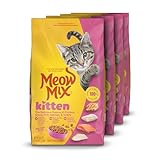
- Contains Meow Mix Kitten Li’l Nibbles Dry Cat Food for kittens, now with a new look
- Introduces kittens to the delicious flavors of chicken, ocean fish, salmon and turkey
- Provides one hundred percent complete and balanced nutrition for growing kittens
- Includes DHA, a nutrient found in mother cats’ milk that helps support vision and brain development
- Produced in the U.S.A. from globally sourced ingredients
What do vets recommend to feed kittens?
For a healthy kitten, veterinary guidance generally starts with a commercially balanced kitten food appropriate for growth, measured according to the package and adjusted for body condition and growth. A veterinarian should individualize the plan for poor growth, weight change, digestive signs, allergies, chronic disease, or very young and orphaned kittens.
Is dry kibble enough for a kitten?
A dry food labeled complete and balanced for growth can provide the required nutrient pattern, but kibble is low moisture. Provide fresh water at all times, and ask your veterinarian whether combining dry and wet food is useful for your kitten’s hydration, medical needs, or preferences.
How much kibble should a kitten eat each day?
Use the specific product’s age- and weight-based chart as a starting point rather than applying a universal number. AAHA/AAFP reports approximately 200 kcal/kg/day at 10 weeks and 80 kcal/kg/day at 10 months as general guideline figures. Track weight and body condition and have a veterinarian adjust portions when growth is abnormal.
How quickly should I change kitten food?
For Purina’s cited Shredded Blend formula, the manufacturer recommends a gradual 7–10 day transition, increasing the new food while reducing the old food. This is product guidance, not a universal rule. Slow down and contact a veterinarian for refusal to eat, persistent vomiting or diarrhea, lethargy, or dehydration signs.
Are the two Purina Pro Plan examples ranked?
No. Both are documented examples whose manufacturers report AAFCO animal feeding-test substantiation for kitten growth. The evidence does not establish that either is healthier than every other qualifying food. Compare the current labels and your kitten’s response.
When can a kitten start eating commercial kitten food?
AAHA/AAFP’s 2021 guidance says kittens can be weaned onto commercially balanced kitten food at about 3–5 weeks. That range does not mean every kitten should stop milk replacer or other support at the same age; a veterinarian should guide orphaned, rescued, or developmentally delayed kittens.
The Bottom Line
Choose a current dry food labeled complete and balanced for growth or all life stages, verify how the adequacy claim is substantiated, and follow the package’s feeding chart as a starting point. Measure meals, keep fresh water available, transition gradually when appropriate, and monitor weight, body condition, appetite, and stools. The Purina Pro Plan formulas listed here are documented examples—not universal winners. Ask a veterinarian to adjust the plan whenever a kitten’s growth or health is not on track.





Leave a Reply