Do these 3 things before closing this tab:
1Scan for outdated or missing drivers - takes under a minute2Clear out junk files and repair common Windows errors3Fix the driver behind crashes, sound loss and screen glitchesFor a flexible outdoor dog-photography setup, compare a lens compatible with your camera mount in the 70–200mm f/2.8 class: the telephoto range helps frame a dog at a distance, and the zoom can also handle portraits. For blurred-background portraits, a fast short-telephoto prime may suit you better. The right choice depends on your camera system, shooting distance, light, the dog’s movement, and how much weight you want to carry.
Start with your camera mount and sensor format
Lens recommendations only make sense for a particular camera system. Check the mount and whether your camera uses a full-frame or APS-C sensor before comparing models. Focal lengths describe the lens; the framing they provide depends on the camera’s sensor format.


For example, Tamron lists its 28–75mm f/2.8 Di III VXD G2 for Sony E and Nikon Z full-frame mirrorless cameras, while its 17–70mm f/2.8 Di III-A VC RXD is listed for Sony E and Fujifilm X APS-C cameras. These examples are not interchangeable across systems. Confirm the exact mount and regional model in the manufacturer’s current product information before buying.
Choose a lens category for the way you photograph dogs
| Use | Lens category to compare | Why it may fit | Tradeoff to consider |
|---|---|---|---|
| Running, fetch, or outdoor action | Compatible 70–200mm f/2.8 telephoto zoom | Reach helps you frame a moving dog from farther away, and the zoom gives framing flexibility. Canon’s pet-photography guide names an EF 70–200mm f/2.8 as one contributor’s action lens; it is an EF DSLR example, not a universal fit. | Weight, cost, mount compatibility, and the need for suitable shutter speed and autofocus tracking. |
| Portraits with a blurred background | Fast short-telephoto prime, such as a compatible 50mm or 85mm | A wide maximum aperture can create shallow depth of field. Canon’s guide gives an EF 50mm f/1.4 as an example. | A prime does not zoom, and shooting wide open can leave parts of a whole dog out of focus. |
| Portraits and everyday flexibility | Compatible standard zoom, such as a 24–70mm or 28–75mm f/2.8 | You can change framing without changing lenses. Tamron describes its 28–75mm f/2.8 G2 as suitable for pet portraits and active pets. | It offers less reach than a telephoto; check whether its range suits your room size and sensor format. |
| Everyday pet photography with an APS-C camera | Compatible APS-C standard zoom | Tamron’s 17–70mm f/2.8 example covers a standard range and includes stabilization for its specified APS-C systems. | The cited lens is limited to particular mounts, and framing differs by sensor format. |
| Outdoor action with a lighter kit | Lighter telephoto zoom, potentially a 70–180mm f/2.8 or 70–300mm variable-aperture zoom | A lighter option may be easier to carry, while a longer zoom can provide more reach. Tamron lists a 70–180mm f/2.8 G2 for animals, sports, and portraits. | Maximum aperture, reach, stabilization, weight, and compatibility vary by exact model. |
These are categories to compare, not a ranking of universally best lenses. Look at equivalent options made for your camera system rather than choosing by focal length or brand name alone.
#1 Best Overall
For action, balance reach with shutter speed and autofocus
A telephoto zoom can help when you cannot get close to a running dog or want to keep some distance without losing the shot. Sony’s lens guidance notes that lenses of 200mm or longer can help when it is difficult to get close to sports action. That is a useful reach reference, not a requirement for every dog-photography situation.
A wide maximum aperture lets in more light and can make faster shutter speeds possible, but it does not freeze motion by itself. The result also depends on the shutter speed you choose, available light, the dog’s speed and direction, and how well the camera tracks focus. Canon recommends continuous tracking autofocus and burst mode for fast-moving pets. Its example of 1/1000 second for running, jumping, or flying is a starting point, not a guaranteed setting; the speed needed varies with the scene and the look you want.
Rank #2
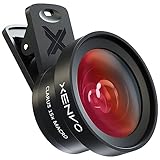
- ✔ COMPATIBLE WITH ALL SMARTPHONES, TABLETS, and LAPTOPS including ALL iPhone models, Samsung Galaxy and Note, Google Pixel, Huawei and more. CONTENTS INCLUDE: TruView 0.45x Wide Angle Lens, Clarus 15x Macro Lens, TruGrip Lens Clip, GlowClip Mini Rechargeable LED Light + Charging Cable, Quick-Release Lanyard, DuraCase, EasyClip, and Cleaning Cloth.
- ✔ TRUVIEW 0.45x WIDE ANGLE LENS - CAPTURE 45% MORE PICTURE WITH EVERY SNAP: Shoot stunning photos of people, pets, travel scenery, landscapes, architecture, selfies and more. NO DARK CORNERS (vignetting) like cheaper lenses. Crafted from aircraft-grade aluminum and premium optical glass for durability and clarity. Multi-element, coated glass lenses minimize ghosting, reflections, lens flare, and other artifacts. Xenvo cell phone lens attachment is ideal for hobbyists and photography pros alike.
- ✔ CLARUS 15x MACRO LENS - MARVEL YOUR SENSES. MAGNIFY NEARBY SUBJECTS FOR BREATHTAKING, SUPER CLOSE-UP PHOTOS: Capture all the intricacies and details with precision-focus for razor crisp macro photos every time. (For best results, position macro lens approximately 1/2 inch from subject. Not designed for zooming in on distant subjects.) THE TRUGRIP LENS CLIP offers SUPERIOR GRIPPING POWER to fasten your lenses to your cell phone when you're in action mode, framing your next perfect shot.
- ✔ GLOWCLIP RECHARGEABLE LED FILL LIGHT - The GlowClip LED light clips ANYWHERE on your phone to instantly illuminate your subject and surroundings with warm continuous light. The warm and natural LED light is superior to your smartphone's built in flash—which can be blinding and unnatural—especially in darker settings and venues. FEATURES 3 BRIGHTNESS SETTINGS: Low, Medium and High. Say goodbye to frustrating photo "retakes" and hello to brilliant photos the first time.
- ✔ QUICK-RELEASE LANYARD AND TRAVEL CASE - TRANSPORT AND PROTECT YOUR LENS KIT: Perfect for taking your Xenvo lenses with you on the fly. The travel case stores and protects all lens kit components snugly and safely while the quick-release lanyard is the perfect way to carry your lenses on your next outing. Just drape the lanyard and lens around your neck. The quick-release lanyard head makes it a cinch to access your Xenvo lenses in a flash so you never miss another photo moment.
Image stabilization helps reduce blur from camera shake. It does not stop a moving dog, so do not treat stabilization as a substitute for a shutter speed fast enough for the action.
For portraits, decide how much of the dog must stay sharp
A fast prime can make it easier to blur a distracting background, but the shallow depth of field that creates that look can also make focus unforgiving. Canon photographer Jenn Cooper recommends focusing on the eye nearest the camera. For a full-body portrait, stopping down from the widest aperture can keep more of the dog in focus. Sony’s pet-photo guidance likewise cautions that you may need more of the animal to remain sharp.
Recommended Free Tools
A zoom offers more freedom to adjust framing without moving or swapping lenses, which can help with dogs that do not stay posed. If indoor portraits are your main use, consider how much working space you have as well as aperture and focal length; a long telephoto may be awkward in a small room.
Independent reader supportYour contribution helps us test, update, and keep practical guides available for everyone.Compare more than focal length and aperture
Before choosing between otherwise similar lenses, weigh the features that affect how you actually shoot:
Rank #4

- Designed for small to medium-sized dog breeds weighing between 12 to 30 pounds, ensuring a comfortable fit
- LIGHTWEIGHT DESIGN: Clear lens glasses crafted from durable yet lightweight materials for maximum comfort during wear
- PERFECT FOR PHOTOS: Ideal prop for pet photography sessions, costume parties, and creating memorable pictures with your furry friend
- ADJUSTABLE FIT: Features flexible frame design that adapts to different head shapes and sizes for secure positioning
- STYLING OPTIONS: Classic clear lens style adds a sophisticated, playful look to your pet's appearance for any occasion
- Autofocus and tracking: Important for keeping focus on a dog that changes direction or distance.
- Weight: A heavier lens may be less appealing for long walks or casual sessions.
- Stabilization: Useful for camera shake, but not a way to freeze subject movement.
- Minimum focus distance and magnification: Relevant if you want close-up details or photographs of a small dog at close range.
- Weather protection: Worth checking if you often photograph outdoors in changeable conditions.
- Maximum aperture: Can help in dimmer light and enable shallower depth of field, but should be weighed against focus depth, shutter speed, size, and price.
Tamron’s lens-selection guidance also highlights portability, autofocus, stabilization, and close-focus capability. Check the specifications of the exact mount variant: features can differ between models.
Quick Recap
Best Value

- Blue Elephant That Dogs Can Actually See: Jusoodiew’s shutter hugger is a hand-sewn blue elephant camera buddies that stretches to fit most lenses around 5-6cm. The blue color isn’t random, dogs see blue clearly, so this little guy stands out to your pup. Inside the head is a small bell that jingles when shaken, and the ears use crinkle paper so they crackle and rustle with a squeeze.
- Cuddly Camera Lens Stand: This soft companion works double duty as a playful camera lens stand. When you set your camera down, the plush yarn body gently cushions the lens against scratches and stops it from rolling off surfaces, protects your gear with personality.
- Keeps Kids Looking at the Lens: Getting kids to hold still for photos is tough. The shutter hugger fixes that. The bright blue elephant face and the crisp bell sound grab their attention fast, which makes kids photography way easier. You’ll catch real smiles and bright eyes instead of blurry, turned-away shots.
- Gets Pets to Focus Without Treats: For pet photos, the crinkle-paper ears do the heavy lifting. Rub or shake them and you’ll get an instant reaction—ears up, head tilt, eyes locked on the camera. Since the elephant is blue, dogs notice it right away. No treats, no squeaky toys, just one simple tool that makes every shot better.
- Heartwarming Hand-sewn Gift: Each order includes 1 Jusoodiew blue elephant camera shutter hugger with hidden bell, and crinkle ears. It’s hand-sewn from soft yarn, great for photographers, new parents, or anyone who wants better photos of kids and pets without the frustration.
A practical way to make the choice
- Confirm your camera’s mount and sensor format. Eliminate lenses that are not made for your system, and verify any mount or adapter requirements with the camera and lens manufacturers.
- Identify your main subject and distance. For outdoor action photographed from farther away, compare telephoto zooms. For portraits in a controlled space, compare fast primes and standard zooms.
- Decide how much reach and background blur you need. More reach can help with distant action; a wider aperture can create a softer background, but may leave less of the dog in focus.
- Check handling and focusing features. Compare weight, autofocus, stabilization, minimum focus distance, and weather protection alongside focal range and aperture.
- Think about the settings the lens enables, not just its maximum aperture. For motion, a suitable shutter speed and reliable tracking matter; for portraits, choose enough depth of field for the part of the dog you want sharp.
Manufacturer guidance and examples
- Sony: Choose the right lens for your camera — general guidance on matching lens choice to the subject and shooting distance.
- Canon Australia: Pet Photography Tips with Jenn Cooper — portrait focus and aperture advice, plus action-shooting techniques and an EF DSLR lens example.
- Tamron Americas: How to Photograph Dogs and Cats: Pet Photography Tips — pet-photography and lens examples for specified camera systems.
- Tamron Europe: Pet Photography: Basics, Lenses & Tips for Perfect Animal Shots — lens categories and selection factors, including animal, sports, and portrait uses.
Product prices and availability are accurate as of the date/time indicated and are subject to change. Any price and availability information displayed on Amazon at the time of purchase will apply.
Free tools Windows power users keep installed
One-click scans. No signup required.




