What’s actually slowing this PC down?
Pick the symptom - the matching free tool is one click away.
There is no single best pet transportation service for every dog or cat. Choose between traveling with your pet in an airline cabin, airline transport outside the cabin, hired ground transport, or a relocation coordinator based on your route, your pet’s needs, custody arrangements, and the carrier’s current rules.
Compare providers for your exact route and date, and verify who has custody of your pet, what the total price includes, and how delays or emergencies are handled. For international travel, check the destination government’s requirements separately from the airline’s rules.
Pet transportation options compared
| Option | What it means | Questions to ask |
|---|---|---|
| In-cabin travel with owner | Your pet travels with you, subject to the airline’s cabin policies. | Does the airline accept your pet’s species and size on every flight segment? What carrier dimensions, reservation limits, and fees apply? |
| Airline transport outside the cabin | The airline transports the animal outside the passenger cabin; cargo may be an option when the pet is unaccompanied and the carrier offers it. | Does the airline accept your pet and route? What kennel, temperature, drop-off, collection, and paperwork rules apply? |
| Hired ground transport | A hired driver or motor carrier transports the pet, potentially without the owner present. | Who takes custody at each step? What route, stops, supervision, emergency plan, and total price are included? |
| Relocation coordination | A company helps arrange transport and may coordinate documents, carriers, or handling. | What does the coordinator do directly, what is handled by partners, and what remains your or your veterinarian’s responsibility? |
Compare route and date availability, animal eligibility, custody and handoffs, welfare procedures, documentation, communication, contingency plans, and complete fees. A coordinator may arrange transport without physically carrying the animal.
How to choose a transport arrangement
- Start with your pet and itinerary. Note the species, size, health and behavioral needs, origin, destination, dates, and whether you will travel with your pet.
- Check the carrier’s current rules. Airline policies vary by carrier and itinerary. Ask about eligible animals, carrier or kennel requirements, fees, seating, route restrictions, and any seasonal or temperature limits. The U.S. Department of Transportation’s guidance on flying with pets explains that airline policies can differ.
- Map custody and handoffs. Ask who physically handles your pet at pickup, airports, connections, overnight stays, and delivery. Identify every subcontractor or facility.
- Compare complete written quotes. Give each provider the same itinerary and pet information. Ask for itemized transport, kennel, handling, veterinary, documentation, lodging, and other charges.
- Review the failure plan before paying. Get written answers about delays, cancellations, missed connections, weather, illness, denied boarding, and who pays for additional care or rebooking.
- Verify applicable regulatory status. Ask a for-hire transporter for its legal business name and exact APHIS registration or license status, when applicable. Check the requirements for the specific service arrangement rather than relying on vague claims such as “USDA certified.”
Airline rules and choosing a kennel
Airline rules may cover cabin dimensions, approved kennels, age, behavior, breed, health records, fees, seating, and cargo temperature conditions. A policy that applies to one carrier or flight may not apply to another. Confirm acceptance for every segment of your itinerary before buying a kennel or booking.
Free tools Windows power users keep installed
One-click scans. No signup required.
#1 Best Overall

- SECURE AND SAFE: Protect your pet with this plastic dog crate featuring a an easy-open, sturdy wire door and tamper-proof holes for zip ties, so the kennel stays secure—a requirement for air travel
- AIRLINE-FRIENDLY: This pet carrier for dogs meets most airline cargo specifications, offering four-sided ventilation for your pet's comfort and visibility during air travel
- FOR MEDIUM DOGS: Designed for dogs weighing 20-30 lbs, this dog travel crate should have enough room for your pet to walk around and lie down with interior dimensions of 24.2" L x 18.2" W x 19.5" H
- EASY CLEANING: The portable dog crate's sturdy plastic shell is easy to wipe down quickly, while the stay-dry moat directs fluids away from your pet, making it great for housebreaking puppies or keeping pets dry during travel
- COMMITTED TO PET WELL-BEING: For over 60 years, Petmate has created high-quality products like pet crates for dogs that improve the lives of pets and their owners
USDA APHIS guidance says an air kennel should be appropriately sized and hard-sided, with secure fasteners, sturdy handles, adequate ventilation, and a leak-proof floor. It should be clean and free of sharp edges or harmful materials. Airlines may have additional requirements, so verify the exact dimensions, construction, and model with your chosen carrier. “Airline approved” is not a universal guarantee.
A hard-sided pet travel kennel may be a suitable purchase for air travel, but select it only after checking that it fits your animal and meets the chosen airline’s current requirements.
Rank #2

- Medium 4-door folding pet travel kennel with soft sides for cats, dogs, rabbits, and other small animals
- Top door for sunlight and breathability, front and side doors with zipper lock clips for added security; Included straps to roll up and secure fabric doors when leaving the portable dog crate open
- Carrying handle and padded shoulder strap for easily transporting when pet kennel is folded; includes removable fleece pet bed pad
- Convenient pop-up pet crate design can be set up and folded down in seconds with no tools required
- Product Dimensions: 30 x 21 x 21 inches (LxWxH). Water-resistant base
International travel and paperwork
International requirements vary by destination and may include veterinary examinations, vaccinations, tests, treatments, import permits, health certificates, or USDA endorsement. Airline and shipping-company policies are a separate layer: meeting government entry rules does not automatically meet the carrier’s rules.
USDA APHIS recommends checking the destination’s current country requirements and contacting a USDA-accredited veterinarian early. APHIS says international preparation can take a few weeks to many months depending on the destination. An endorsed certificate may have a limited validity window, and some destinations require the original document to travel with the animal. APHIS also cautions that country requirements can change frequently.
Recommended Free Tools
Rank #3
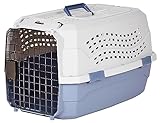
- Hard sided pet carrier with 2 doors for front and top entry; suitable for cat or medium size dog weighing 12 - 20 pounds
- Durable plastic construction with steel wire doors; screws keep the top and bottom sections securely connected
- Spring load latches ensure easy one-handed door opening and closing; top door swings open to the left or right and includes a top carry handle
- Plenty of air ventilation on the sides, top, and back of the carrier
- Note: Be sure to measure the size of the pet when choosing carrier size
- Check the destination’s current official requirements and ask the relevant authority for written clarification if they are unclear.
- Contact a USDA-accredited veterinarian early to plan required veterinary steps and documents.
- Confirm who prepares and submits documents for any required USDA APHIS endorsement.
- Check the airline’s separate rules, deadlines, kennel requirements, and fees.
- Confirm whether permits, customs handling, quarantine, airport release, and delivery are included in a provider’s quote.
Use USDA APHIS Pet Travel guidance and the destination government’s official guidance. Do not assume a transport company can waive an entry requirement or guarantee admission.
Hired transport and APHIS rules
APHIS explains that businesses taking custody of covered animals for hire—including some airlines, hired drivers, motor carriers, and handlers—may be regulated under the Animal Welfare Act. Businesses conducting regulated activities must register with APHIS and follow applicable transportation standards. Owner-accompanied cabin travel is treated differently under this specific commercial-transporter regulation, though other requirements may still apply.
Rank #4

- SECURE AND SAFE: Protect your pet with this plastic dog crate featuring a an easy-open, sturdy wire door and tamper-proof holes for zip ties, so the kennel stays secure—a requirement for air travel
- AIRLINE-FRIENDLY: This pet carrier for dogs meets most airline cargo specifications, offering four-sided ventilation for your pet's comfort and visibility during air travel! We recommend you contact your airline before traveling to verify the specific requirements
- FOR SMALL DOG BREEDS: Designed for dogs or puppies weighing 10-20 lbs, this dog travel crate should have enough room for your pet to walk around and lie down with interior dimensions of 21.5" L x 15" W x 13.5" H; when in doubt please size up
- EASY CLEANING: The portable dog crate's sturdy plastic shell is easy to wipe down quickly, while the stay-dry moat directs fluids away from your pet, making it great for housebreaking puppies or keeping pets dry during travel
- COMMITTED TO PET WELL-BEING: For over 60 years, Petmate has created high-quality products like pet crates for dogs that improve the lives of pets and their owners
Ask the provider for its exact legal name and applicable APHIS registration or license details, then verify them through official APHIS resources. Read APHIS guidance on transporting animals in commerce. Applicability depends on the animal and service arrangement; do not assume every trip or provider is regulated identically.
Questions to ask before booking
- What is your legal business name, and are you the carrier, a coordinator, or a marketplace?
- Who will physically handle my pet, and where will each custody handoff occur?
- Do you use subcontractors or partner facilities? If so, who are they?
- Does the airline accept my pet, kennel, route, and travel date?
- What is included in the written quote, and which charges may be added?
- Who prepares documents, and what must I arrange with my veterinarian or government authorities?
- Where will my pet stay during a delay or missed connection, and who provides care?
- What happens if the airline refuses the kennel, paperwork is rejected, or the destination denies entry?
- What insurance, cancellation, refund, and claims terms apply?
Frequently Asked Questions
What is the best way to transport a dog or cat long distance?
It depends on the animal and itinerary. Compare owner-accompanied cabin travel, airline transport outside the cabin, hired ground transport, and relocation coordination. Check the chosen carrier’s eligibility rules and decide based on custody, route, welfare procedures, and total cost.
Best Value

- Soft-sided dog crate for keeping a furry 4-legged friend safe and comfortable when traveling, includes a Small dog crate made of tan polyester fabric and a lightweight yet sturdy frame
- Sets up in seconds with no tools needed; folds flat for easy portability and compact storage;2 doors (top and front) for easy loading and unloading
- Secure zipper closures, plus fastening straps to keep unzipped rolled-up doors in place and out of the way; mesh windows and front door provide ventilation on all 4 sides
- Recommended for medium sized breeds such as Blue Heelers and Golden Retrievers (50 lbs)
- Product dimensions: 29.92"L x 21.3"W x 21.3''H (LxWxH)
How do I ship a pet to another state?
First check the airline or ground carrier’s requirements and the destination state’s rules. If hiring a transporter, confirm who takes custody, whether APHIS requirements apply, what the price includes, and how delays and emergencies are handled.
Do international pet moves need a health certificate?
Requirements depend on the destination and may include a health certificate, veterinary procedures, permits, or USDA endorsement. Check current official destination guidance and consult a USDA-accredited veterinarian early.
Does a pet transport company handle all the paperwork?
Not necessarily. A coordinator may help prepare or submit documents, but the owner should confirm what the company does, what the veterinarian or government must do, and which original documents must accompany the pet.
How far in advance should I plan an international pet move?
Start as soon as travel is planned. USDA APHIS says preparation can take a few weeks to many months depending on the destination, and document validity windows may be limited. Confirm the timeline for your specific destination and pet.
The Bottom Line
Choose the transport arrangement that fits your pet and exact route, then verify the carrier’s rules, custody chain, documentation, total fees, and contingency plan in writing. For international travel, check government entry requirements separately from airline policies and start with official APHIS and destination guidance.
Quick Recap
Product prices and availability are accurate as of the date/time indicated and are subject to change. Any price and availability information displayed on Amazon at the time of purchase will apply.




