
Do these 3 things before closing this tab:
1Clear out junk files and repair common Windows errors2Scan for outdated or missing drivers - takes under a minute3Repair Windows errors before they cause bigger problemsSome links on this page are affiliate links: if you buy through them we may earn a commission, at no extra cost to you.
The best safe space for an anxious rescue dog is the one the dog chooses and can use without panic. For many dogs, that means a correctly sized wire crate with a divider, comfortable bedding, and a quiet location. For dogs that become distressed behind a door, an exercise pen or fully dog-proofed quiet room is safer. Introduce any option gradually with treats and calm routines; never force a frightened dog to remain confined.
A bed, cover, crate, white-noise machine, or quiet room can reduce environmental stress, but none cures anxiety by itself. Watch the dog’s behavior, stop confinement if distress escalates, and involve a veterinarian or qualified behavior professional when fear is severe.
As an Amazon Associate I earn from qualifying purchases.
What a quiet safe space should accomplish
A safe space gives a dog control over distance, stimulation, and rest. The dog should be able to enter, settle, and leave when appropriate rather than being trapped in a place associated with fear. Cornell University College of Veterinary Medicine recommends a quiet location, comfortable bedding, familiar toys, and a predictable routine for fearful dogs.
Judge the setup by the dog’s response, not by the product description. Relaxed body language, voluntary entry, normal eating, and the ability to settle indicate that the environment is helping. Repeated escape attempts, escalating vocalization, frantic movement, or other distress signals mean the arrangement is too difficult or the confinement is inappropriate.
Popular on Amazon

- IDEAL FOR 71-90 LB DOGS: Measures 42.5 x 28.5 x 30.5 inches - perfect for Australian Shepherds, Boxers, Golden Retrievers & similar breeds. For dogs near 90 lbs, consider sizing up to our 48-inch model so they have plenty of room to get comfortable.
- WE DON'T CUT CORNERS, WE PERFECT THEM: Precision welding, rounded corner clips & slide-bolt latch with Paw Block mitigate snags, cuts & escapes. With rigorous safety testing, iCrate provides peace of mind knowing your dog is safe while you're away.
- DURABLE CONSTRUCTION: Sturdy metal wire design with a protective black e-coat finish, the iCrate resists rust and everyday wear. Complete with leak-proof tray, rubber feet, carry handle, and tool-free assembly, it's ready for years of use.
- SUPPORTS CRATE TRAINING: A divider panel lets the crate grow with your dog, from puppy kennel to full-size crate. Large openings and low thresholds ease the crate training process and help your dog feel more at home.
- LIFE GOES BETTER WITH PETS: A family-owned business based in Indiana, MidWest Homes for Pets brings over 100 years of pet product expertise and a commitment to quality, rigorous safety testing, and excellent US-based customer service.
The four decisions that matter most
- Confinement level: choose a crate only when the dog can remain calm there; otherwise use a pen or dog-proof room.
- Space and fit: the dog needs room to stand, turn around, lie down comfortably, and use bedding without getting caught in gaps.
- Visual stimulation: some dogs relax with an open view, while others settle better when a crate is partly covered and den-like.
- Predictability: place the space in a quiet area and pair it with familiar items, regular routines, and reward-based training.
Crate, exercise pen, or quiet room?
There is no universally best enclosure. The dog’s reaction to confinement should determine how much space and how much separation you provide.
| Option | Best fit | Advantages | Watch for |
|---|---|---|---|
| Wire crate with divider | A dog that can relax in a smaller, defined area and needs a portable resting place | Clear boundaries, useful for travel and veterinary visits, and a divider can adjust space as a puppy grows | Do not leave a distressed dog alone inside; remove or reposition a cover if it increases anxiety |
| Exercise pen | A dog that needs more room or becomes highly stressed in a crate | More movement and choice while still limiting access to unsafe areas | Check that the pen is stable, escape-resistant, and free of gaps or objects that could cause injury |
| Dog-proofed quiet room | A fearful dog that settles better with full walking space or during household upheaval | Most room for movement and distance from triggers; can include a bed, toys, treats, and sound masking | Secure doors and windows, remove hazards, and make sure the dog cannot chew or ingest dangerous items |
Cornell specifically lists an exercise pen as an alternative for dogs that are highly stressed by confinement. A larger puppy-proofed area or room is preferable to forcing a crate when the dog is panicking.
How to choose a quiet dog bed
The bed is the resting surface inside a crate, pen, or room. Choose one that is comfortable, appropriately sized, and compatible with the dog’s behavior and the enclosure.
Start with fit and safe construction
- The dog should be able to lie down fully on the bed, change position, and stretch without being pressed against the sides.
- The bed must fit without creating a dangerous gap between the mattress and crate wall where a paw, collar, or leg could become trapped.
- Use bedding that remains intact for that individual dog. A dog that shreds or ingests fabric needs closer supervision and a different arrangement rather than unsupervised access to a damaged bed.
- Inspect the material regularly for torn seams, exposed filling, broken fasteners, or other damage. Replace compromised bedding.
- Keep a familiar blanket or toy nearby when it helps the dog settle, but remove any item the dog tries to swallow or destroy.
Match the bed to the safe-space location
For a crate, the bed should leave enough usable floor area for the dog to stand, turn, and lie down. In a pen or room, a larger bed can be paired with a separate water area and an open path to move away. During a stressful event, Cornell recommends the dog’s favorite bed, toys, and treats in a quiet, secure room.
A bed is an environmental support, not a treatment. If the dog refuses to approach it, pants continuously, or cannot settle, changing the bed alone will not solve the underlying fear.
Also popular on Amazon

- IDEAL FOR 21-40 LB DOGS: Measures 30.5 x 19.25 x 21.5 inches - perfect for French Bulldogs, Welsh Terriers, Dachshunds & similar breeds. For dogs near 40 lbs, consider sizing up to our 36-inch model so they have plenty of room to get comfortable.
- WE DON'T CUT CORNERS, WE PERFECT THEM: Precision welding, rounded corner clips & slide-bolt latch with Paw Block mitigate snags, cuts & escapes. With rigorous safety testing, iCrate provides peace of mind knowing your dog is safe while you're away.
- DURABLE CONSTRUCTION: Sturdy metal wire design with a protective black e-coat finish, the iCrate resists rust and everyday wear. Complete with leak-proof tray, rubber feet, carry handle, and tool-free assembly, it's ready for years of use.
- SUPPORTS CRATE TRAINING: A divider panel lets the crate grow with your dog, from puppy kennel to full-size crate. Large openings and low thresholds ease the crate training process and help your dog feel more at home.
- LIFE GOES BETTER WITH PETS: A family-owned business based in Indiana, MidWest Homes for Pets brings over 100 years of pet product expertise and a commitment to quality, rigorous safety testing, and excellent US-based customer service.
Why a wire crate with a divider is often the starting point
For dogs that tolerate crate training, the strongest general-purpose choice is a wire dog crate with a divider. Cornell identifies size, material, durability, and dividers as important selection factors. Wire construction provides ventilation and visibility, while a divider allows one crate to accommodate a growing puppy without giving the puppy an excessive amount of toileting space.
Free tools Windows power users keep installed
One-click scans. No signup required.
Size the crate for function, not isolation
The finished space should allow the dog to stand normally, turn around, lie down, and use comfortable bedding. A crate that is too small prevents normal movement. One that is much larger than needed can undermine house-training for a puppy by creating a separate sleeping and toileting area.
Set the divider so the puppy has only the usable area needed at that stage, then move it as the dog grows. Recheck the fit after growth, weight changes, or a change in bedding thickness.
Decide whether to cover the crate
A partial cover can make a wire crate feel more den-like, but visual blocking is optional. The American Kennel Club notes that some dogs settle in darker, den-like crates while others prefer visibility. Introduce a cover gradually and watch the dog’s response. If the dog becomes more agitated, remove it or leave more sides open. Never use a cover to conceal escalating distress.
Place the crate where the dog can rest
Choose a quiet spot away from constant foot traffic, sudden noise, and direct household conflict, while keeping the dog close enough to avoid feeling abandoned if that is what helps. The correct location depends on the individual dog: some need a low-traffic corner, while others settle when they can see their people. Keep the arrangement consistent so the dog can predict when the space is available.
What’s actually slowing this PC down?
Pick the symptom - the matching free tool is one click away.
Also popular on Amazon
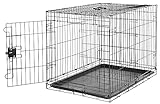
- DURABLE CONSTRUCTION: Amazon Basics metal wire dog crate with manual door locking mechanism provides secure containment for indoor training & rest
- IDEAL DIMENSIONS: Measures 36 x 23 x 25 inches (LxWxH) to accommodate pets under 32 x 21 inches, suitable for breeds like Corgis & Cocker Spaniels
- FOLDABLE DESIGN: Collapsible frame folds flat without tools for easy transport & compact storage; top handle allows comfortable carrying at 20.24 pounds
- EASY CLEANING: Removable plastic base tray slides out for quick cleanup; metal hook at the bottom prevents tray from shifting during daily use
- INCLUDED DIVIDER: Comes with a divider panel to adjust internal space as your puppy grows, allowing customized room within the single-door crate
When an exercise pen or quiet room is safer
Move up to a pen or room when the dog cannot remain calm in a crate, needs to pace or change position, or becomes frantic when a crate door closes. The larger area is not a training failure; it is a way to prevent panic while you build coping skills.
Set up an exercise pen
- Choose a stable pen with spacing that cannot trap a paw, head, collar, or jaw.
- Place it in a quiet area and secure it so the dog cannot push it into furniture or tip it over.
- Add the dog’s bed, familiar toy, and water when appropriate for the period of use.
- Keep an unobstructed path inside the pen so the dog can move away from a person, sound, or other trigger.
- Supervise initial sessions and adjust the space if the dog repeatedly climbs, crashes into the sides, or tries to escape.
Prepare a dog-proofed quiet room
- Remove medications, cleaning products, electrical cords, small objects, toxic plants, and anything the dog may chew or swallow.
- Secure windows and doors and block unsafe gaps behind appliances or furniture.
- Provide the favorite bed, familiar toys, and high-value treats recommended for the dog.
- Use a white-noise machine or classical music to soften unpredictable household sounds when that helps the dog.
- Keep lighting, access, and daily routines as predictable as possible.
During moving or other stressful household events, Cornell recommends a quiet, secure room with white noise or classical music, the dog’s favorite bed, toys, and treats. The room should still be introduced as a positive place before an emergency occurs.
Step-by-step crate acclimation for a rescue dog
Crate training should be gradual, reward-based, and paced by the dog. The American Kennel Club’s central advice is to move slowly and at the dog’s own pace. Do not use “cry it out,” intimidation, or punishment.
1. Observe the starting point
Before closing a door, learn whether the dog voluntarily approaches the crate, eats near it, or rests beside it. Record what triggers concern: the crate itself, the door, being alone, household noise, or a combination. Start below the level that causes fear.
Recommended Free Tools
2. Make the open crate rewarding
Put comfortable bedding inside and leave the door secured open. Toss treats near the entrance, then just inside, allowing the dog to choose whether to approach. Feed meals near the opening and gradually move the bowl farther in only while the dog remains relaxed.
Also popular on Amazon

- IDEAL FOR 41-70 LB DOGS: Measures 36.5 x 23.25 x 24.75 inches - perfect for Bulldogs, Beagles, Whippets & similar breeds. For dogs near 70 lbs, consider sizing up to our 42-inch model so they have plenty of room to get comfortable.
- WE DON'T CUT CORNERS, WE PERFECT THEM: Precision welding, rounded corner clips & slide-bolt latches with Paw Block mitigate snags, cuts & escapes. With rigorous safety testing, iCrate provides peace of mind knowing your dog is safe while you're away.
- DURABLE CONSTRUCTION: Sturdy metal wire design with a protective black e-coat finish, the iCrate resists rust and everyday wear. Complete with leak-proof tray, rubber feet, carry handle, and tool-free assembly, it's ready for years of use.
- SUPPORTS CRATE TRAINING: A divider panel lets the crate grow with your dog, from puppy kennel to full-size crate. Large openings and low thresholds ease the crate training process and help your dog feel more at home.
- BECAUSE LIFE GOES BETTER WITH PETS: A family-owned business based in Indiana, MidWest Homes for Pets brings over 100 years of pet product expertise and a commitment to quality, rigorous safety testing, and excellent US-based customer service.
3. Reinforce voluntary entry
Reward the dog for stepping inside and coming back out. Keep sessions short and calm. Do not push, pull, or physically place a fearful dog in the crate. The goal is for entry to predict food, rest, and safety rather than loss of control.
4. Add brief door movement
When the dog rests inside with the door open, move the door slightly and immediately reward calm behavior. Progress to closing it for a moment while you remain beside the crate, then open it before the dog becomes worried.
5. Increase duration in tiny increments
Extend closed-door time only when the previous duration is easy. Vary the interval slightly instead of making every session longer. Return to an easier step if the dog stops eating, stiffens, vocalizes, or tries to escape.
The Tool Desk
Outbyte Driver Updater FREEScan for outdated or missing drivers - takes under a minuteDriver Scan →Outbyte PC Repair FREERepair Windows errors before they cause bigger problemsFix Now →6. Practice distance before departures
Stand, sit, and take one or two steps away while the dog remains calm. Gradually increase distance and then brief out-of-sight moments. Do not begin with a long absence; being alone is a separate challenge from tolerating a closed door.
7. Build a predictable routine
Use the same calm sequence for rest periods: toilet break or appropriate exercise, entry with a reward, quiet time, and release while the dog is still settled. Predictability helps a rescue dog understand what will happen next.
Also popular on Amazon

- IDEAL FOR 71-90 LB DOGS: Measures 42.88 x 28.75 x 30.38 inches - perfect for Australian Shepherds, Boxers, Golden Retrievers & similar breeds. For dogs near 90 lbs, consider sizing up to our 48-inch model so they have plenty of room to get comfortable.
- WE DON'T CUT CORNERS, WE PERFECT THEM: Precision welding, rounded corner clips & slide-bolt latches with Paw Block mitigate snags, cuts & escapes. With rigorous safety testing, iCrate provides peace of mind knowing your dog is safe while you're away.
- DURABLE CONSTRUCTION: Sturdy metal wire design with a protective black e-coat finish, the iCrate resists rust and everyday wear. Complete with leak-proof tray, rubber feet, carry handle, and tool-free assembly, it's ready for years of use.
- SUPPORTS CRATE TRAINING: A divider panel lets the crate grow with your dog, from puppy kennel to full-size crate. Large openings and low thresholds ease the crate training process and help your dog feel more at home.
- LIFE GOES BETTER WITH PETS: A family-owned business based in Indiana, MidWest Homes for Pets brings over 100 years of pet product expertise and a commitment to quality, rigorous safety testing, and excellent US-based customer service.
8. Let the dog choose the crate when you are home
The Humane Society of the United States advises keeping a comfortable bed in the crate and leaving the door open when you are home so the dog can enter when it needs a safe space. A crate should never be used as punishment.
Independent reader supportYour contribution helps us test, update, and keep practical guides available for everyone.How to recognize unsafe distress
Some dogs may be highly stressed when confined or left alone. Cornell warns that they should never be forced to remain crated alone if they are excessively barking, vocalizing, pacing, panting, eliminating, or drooling. These behaviors are welfare signals, not disobedience.
What to do immediately
- End the confinement as safely and calmly as possible; avoid scolding or making the release a dramatic event.
- Move the dog to the larger safe option it can tolerate, such as an exercise pen or dog-proofed room.
- Remove a cover or reduce visual and sound triggers if those appear to be contributing.
- Do not repeat the same duration hoping the dog will eventually “get used to it.” Resume training at an easier level only after the dog is calm.
- Contact a veterinarian or qualified behavior professional if distress is intense, persistent, or associated with escape injuries.
For severe separation or confinement anxiety, the ASPCA recommends individualized help from a certified applied animal behaviorist or a board-certified veterinary behaviorist when desensitization and counterconditioning are difficult to carry out safely. A qualified trainer may also help with the practical setup; verify credentials, location, fees, and availability before starting a program.
Common mistakes that make fear worse
- Forcing entry: pushing or carrying a frightened dog into a crate removes choice and can create a stronger fear of the space.
- Using the crate as punishment: the dog should associate it with rest and safety, not reprimands or isolation after unwanted behavior.
- Advancing too quickly: long closures or departures before short ones are comfortable can trigger panic and set training back.
- Assuming a cover always helps: some dogs need visibility; cover only the crate if the individual dog relaxes with less visual stimulation.
- Ignoring fit: a crate that is too small restricts movement, while excess puppy space can complicate house-training.
- Leaving damaged bedding or unsafe items: torn material, trapped limbs, and ingestible pieces create risks unrelated to anxiety training.
- Confusing quiet with calm: a silent dog may still be frozen or distressed. Look for relaxed posture, normal breathing, voluntary rest, and willingness to take food.
A practical decision checklist
Use this checklist before choosing or changing a safe space:
- Does the dog voluntarily approach and remain in the space?
- Can the dog stand, turn, lie down, and use bedding without restriction?
- Is the location quiet enough for rest but appropriate for the dog’s need for visibility or proximity?
- Would a partial cover reduce stimulation, or would it remove reassuring visual contact?
- Can the dog be left there without excessive barking, vocalizing, pacing, panting, elimination, or drooling?
- If a crate causes panic, is a pen or dog-proofed room ready as the alternative?
- Are bedding, toys, treats, doors, windows, and enclosure surfaces safe for this specific dog?
- Is the training plan gradual, reward-based, and free of punishment?
Bottom line for choosing the setup
Start with the least restrictive option that safely helps the dog settle. A wire crate with a divider is a versatile choice when the dog accepts confinement and needs an adjustable, portable resting area. Use a partial cover only when the dog responds well to a den-like view. If the dog panics in a crate, choose an exercise pen or dog-proofed quiet room instead. Across every option, voluntary use, correct fit, quiet surroundings, familiar bedding, and gradual positive training matter more than any single product.





Leave a Reply