
The best small size dog food is not one universal brand or recipe. It is a food labeled complete and balanced for your dog’s species and life stage, with calories, portions, texture, and manufacturer support that fit your individual dog.
Small dogs can thrive on many different foods, but their needs are not interchangeable. A growing puppy, an active adult, an older dog, and a dog with a medical condition may need different nutrient profiles and feeding plans. Use the package label as a starting point, then confirm any special requirements with your veterinarian.
As an Amazon Associate I earn from qualifying purchases.
What “best” means for a small dog
“Small breed” describes a useful product category, not a guarantee that every formula suits every dog. Smaller kibble can be easier for a little mouth to pick up and chew, but size alone does not establish nutritional adequacy. Life stage, body condition, activity, breed-related concerns, allergies or intolerances, and diagnosed disease all influence the appropriate choice. The American Kennel Club recommends discussing nutritional risks and individual needs with a veterinarian when selecting food for a small-breed dog (AKC guidance).
A practical definition of “best” is a food that passes these checks:
#1 Best Overall

- REAL CHICKEN FIRST: Blue Buffalo dry dog food starts with real chicken as the first ingredient to help support healthy, lean muscles in adult dogs
- COMPLETE NUTRITION: This BLUE dog food provides balanced daily nutrition for small breed dogs with chicken for protein, wholesome carbohydrates for energy, and other natural ingredients
- EXPERT-LED NUTRITION: Designed to help your pet thrive from the inside out, Blue Buffalo dog food formulas are developed by a dedicated team of veterinarians and animal nutritionists
- SUPPORTS IMMUNE SYSTEM HEALTH: BLUE Life Protection Formula dry dog food features exclusive LifeSource Bits, a precise blend of antioxidants, vitamins, and minerals that are formed at a lower temperature to ensure optimal potency
- WHOLESOME GRAINS: A delicious dry dog food made with brown rice, barley, and oatmeal to support gentle, regular digestion and steady energy for active small dogs
- It is labeled for dogs and the correct life stage.
- Its nutritional adequacy statement says it is complete and balanced for that use, rather than intended only for intermittent or supplemental feeding.
- Its calorie information and feeding directions can be applied consistently to your dog.
- Its texture and kibble size are workable for your dog’s mouth, teeth, and eating habits.
- The manufacturer can answer reasonable questions about formulation, quality control, and nutrient analysis.
- Your veterinarian agrees it is appropriate when your dog has a health condition, unusual growth pattern, or persistent digestive problem.
Read the nutritional adequacy statement first
The nutritional adequacy statement is usually printed in small type on the back or side of the package. AAFCO calls it “the key to meeting a pet’s nutritional needs” (AAFCO’s consumer guide). Find this statement before judging flavor names, marketing claims, or the ingredient list.
Check the species and life stage
The statement should identify the food as intended for dogs and specify the life stage or stages it supports. Common designations include growth, adult maintenance, or all life stages. A puppy should not be placed on an adult-maintenance food merely because the kibble is small. Conversely, an adult dog does not automatically benefit from a growth formula. If the label is unclear, ask the manufacturer or your veterinarian rather than guessing.
Distinguish complete and balanced food from supplements
A treat, topper, chew, broth, or supplement is not automatically a complete diet. AAFCO’s label guidance explains that products marked for “intermittent or supplemental feeding only” are not designed to supply all required nutrients (AAFCO label guidance). Such products may have a place in a feeding plan, but they should not silently replace the complete food that supplies the nutritional foundation.
Do these 3 things before closing this tab:
1Scan for outdated or missing drivers - takes under a minute2Repair Windows errors before they cause bigger problems3Fix the driver behind crashes, sound loss and screen glitchesLook for a statement that matches your dog’s situation
A food can be complete and balanced yet still be unsuitable for a particular medical condition. For example, a dog with a diagnosed disease may need a veterinary therapeutic diet or controlled nutrient intake. The adequacy statement answers whether the food is nutritionally formulated for a category; it does not diagnose your dog or promise to treat illness.
Match the food to your dog’s individual needs
Once a food passes the adequacy check, consider the dog who will eat it. Small dogs vary widely in body size, metabolism, activity, dental status, and health.
Rank #2
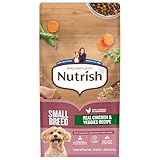
- REAL CHICKEN SMALL DOG FOOD RECIPE: Get ears perking up with every bowl of Rachael Ray Nutrish Chicken Dog Food Recipe made with real chicken as the #1 ingredient for a balanced meal
- SMALL KIBBLE PIECES: This dry dog food for adult small breed dogs features small, crunchy kibble perfect for little mouths
- VETERINARIAN REVIEWED FORMULA: This specially crafted dry dog food recipe is veterinarian reviewed and backed by our team of nutrition and dog experts
- NATURAL DOG FOOD: Natural food with added vitamins, minerals & nutrients for your dog's daily meals. Made with no artificial flavors, it offers real taste that dogs love
- RACHAEL RAY FOUNDATION: Each bag of dry dog food is made with purpose — ensuring nourishing meals while helping support animals in need through The Rachael Ray Foundation
Puppies and growing dogs
Growth is a distinct nutritional stage. Confirm that the label covers puppy growth (or an all-life-stages claim that includes growth) and ask your veterinarian how to monitor weight and body condition. Rapidly changing needs, a very small adult size, poor appetite, vomiting, diarrhea, or failure to gain appropriately warrant professional advice instead of repeated food changes.
Healthy adult dogs
For an adult without a diagnosed condition, compare adult-maintenance foods on adequacy, calories, portion guidance, texture, and your dog’s response. A small-breed label may offer smaller pieces, but “small breed” on the front of a bag is not a substitute for the adequacy statement on the back.
Senior dogs
“Senior” is not a single regulated nutritional life stage in the way growth and adult maintenance are described. If your older dog is losing weight, gaining weight, drinking or urinating more, struggling to chew, or showing reduced appetite, schedule a veterinary examination before choosing a new formula. The right food depends on findings such as dental health, kidney or liver function, mobility, and body condition.
Dogs with health conditions or suspected sensitivities
Food choice should be coordinated with a veterinarian when a dog has kidney, liver, gastrointestinal, urinary, endocrine, heart, or other diagnosed disease. The same applies to recurring ear problems, itching, chronic loose stool, or suspected food reactions. Ingredient avoidance alone is not a reliable diagnosis, and an over-the-counter “limited ingredient” label does not establish that a diet is appropriate for a medical condition.
Compare calories and portions without being misled
Calories matter because a small dog can consume a meaningful share of its daily energy in a few bites. Start with the package’s calorie statement and feeding directions, then watch body condition and discuss adjustments with your veterinarian. AAFCO notes that feeding directions are a starting point and may need revision for an animal’s activity and condition (AAFCO’s feeding guidance).
Rank #3

- REAL CHICKEN SMALL DOG FOOD RECIPE: Get ears perking up with every bowl of Rachael Ray Nutrish Chicken Dog Food Recipe made with real chicken as the #1 ingredient for a balanced meal
- SMALL KIBBLE PIECES: This dry dog food for adult small breed dogs features small, crunchy kibble perfect for little mouths
- VETERINARIAN REVIEWED FORMULA: This specially crafted dry dog food recipe is veterinarian reviewed and backed by our team of nutrition and dog experts
- NATURAL DOG FOOD: Natural food with added vitamins, minerals & nutrients for your dog's daily meals. Made with no artificial flavors, it offers real taste that dogs love
- RACHAEL RAY FOUNDATION: Each bag of dry dog food is made with purpose — ensuring nourishing meals while helping support animals in need through The Rachael Ray Foundation
Use consistent units
When comparing two foods, use the same basis—such as calories per kilogram or calories per cup—rather than comparing unlike numbers. AAFCO cautions that moisture can make an as-fed comparison between dry and canned foods misleading (AAFCO’s calorie explanation). A wet food may appear lower in calories per kilogram because water contributes to its weight, not because the dog necessarily receives less usable energy per serving.
| Comparison | What to check | Why it matters |
|---|---|---|
| Dry versus dry | Calories per kilogram and, if provided, calories per cup; weigh or measure portions consistently. | Different recipes can deliver different energy in the same volume. |
| Wet versus wet | Calories per can, pouch, or kilogram, with package size recorded. | Serving containers vary, so “one can” is not a universal portion. |
| Dry versus wet | Compare calorie information on a consistent basis and account for moisture. | As-fed weight comparisons can make a high-moisture food look less energy-dense than it is. |
| Food plus treats | Add calories from treats, toppers, chews, and supplements to the daily total. | Extras can change the energy balance even when the main food portion is unchanged. |
Adjust portions using your dog, not the bag alone
Package directions cannot account for every dog’s metabolism, exercise, neuter status, environment, or medical history. Use the recommended amount as an initial estimate, feed consistently, and monitor body condition, weight trend, stool quality, hunger, and energy. Make changes with veterinary input when the dog is growing, underweight, overweight, ill, or taking medication. Do not assume that a smaller dog needs a simple fraction of a larger dog’s portion; energy needs do not scale perfectly by body weight.
Choose a usable format and kibble size
Small-breed formulas often offer smaller kibble, which may be easier for a little jaw to grasp. That is a practical feature, not proof that the recipe is nutritionally superior. Observe whether your dog can pick up, chew, and swallow the pieces comfortably. A dog with missing teeth, painful gums, or dental disease may need a different texture, but persistent difficulty eating should be evaluated rather than masked with softer food.
Dry, canned, and mixed feeding can all be workable when the complete-and-balanced status and total calories are clear. If you combine formats, calculate the calories contributed by each and reduce the other portion accordingly. Follow the package’s storage and serving directions, and discard food that has been left out or handled in a way the manufacturer warns against.
Do not use the ingredient list as a quality score
Ingredients can help identify a known protein or an ingredient your veterinarian has told you to avoid, but the list does not reveal the complete nutritional quality of a food. The WSAVA Global Nutrition Committee states that “the ingredient list gives no information on the quality of the ingredients and can be very misleading on the overall quality of the food” (WSAVA Nutrition Guidelines).
What’s actually slowing this PC down?
Pick the symptom - the matching free tool is one click away.
Rank #4
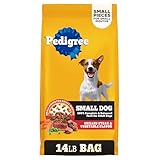
- Complete and Balanced: Pedigree Adult Small Breed Dry Dog Food is 100% complete and balanced food for adult dogs, bringing a nutritious meal to your pet
- Supports Everyday Health: This Pedigree Adult Dry Dog Food recipe for small dogs is made with 36 vitamins, minerals, and amino acids to support your dog’s health and vitality Highly
- Highly Digestible Dog Food Recipe: Pedigree Adult Dry Dog Food for small dogs is made with only natural flavors and includes natural fibers to support healthy digestion
- Supports Healthy Skin and Coat: This dry Pedigree Dog Food recipe for adult small dogs is enriched with Omega 6 Fatty Acid and Zinc to help nourish a healthy skin and coat
- Supports Immune Health: This Pedigree Dry Dog Food for adult dogs recipe is fortified with vitamins & minerals to support a healthy immune system
Ingredients are listed by weight before processing, so water-rich ingredients can appear high on the list even though their final contribution changes after cooking. Marketing terms such as “premium,” “natural,” “holistic,” or a named meat on the front do not replace the adequacy statement, calorie data, feeding directions, and manufacturer information. If your dog has a diagnosed allergy or intolerance, use the ingredient list as one part of a veterinarian-directed plan rather than conducting an uncontrolled elimination trial.
Independent reader supportYour contribution helps us test, update, and keep practical guides available for everyone.Evaluate the manufacturer’s transparency
WSAVA’s consumer toolkit recommends looking beyond the front of the package and asking how the food is formulated and produced (WSAVA’s 2021 pet-food selection guide). A company should be able to provide clear, specific answers rather than redirecting you to slogans.
- Who formulates the food? Ask whether a qualified animal nutritionist or equivalent professional is involved and what credentials they hold.
- How is the food made? Find out whether the company owns the facility, uses a contract manufacturer, and maintains quality-control procedures.
- What evidence supports the formulation? Ask whether the food is supported by feeding trials, formulation calculations, or both, and what those claims mean for the specific product.
- Can the company provide a typical nutrient analysis? The guaranteed analysis on the label is limited; a typical analysis can provide additional context when a veterinarian needs it.
- How are complaints and recalls handled? A transparent contact process and traceability information are useful if your dog becomes ill or a product is withdrawn.
Inability to answer every question does not by itself prove a food is unsafe, but vague answers should lower your confidence when two otherwise similar options are being compared.
A step-by-step method for choosing small-size dog food
- Record your dog’s profile. Note age, current weight, body condition, activity, reproductive status, dental comfort, known diagnoses, medications, and any previous food reactions.
- Set the life-stage filter. Remove foods whose adequacy statement does not cover your dog’s current stage. For a puppy or dog with a medical condition, confirm the choice with a veterinarian.
- Verify complete-and-balanced status. Reject products labeled only for intermittent or supplemental feeding if you are looking for the main diet.
- Compare calorie information. Record the unit and package size for each candidate. Do not compare dry and wet foods by as-fed weight without accounting for moisture.
- Read the feeding directions. Use the stated amount as a starting point, not a promise. Plan how you will measure portions and count treats.
- Check physical usability. Compare kibble dimensions or texture, and consider whether your dog can eat it comfortably.
- Investigate the maker. Ask about formulation expertise, manufacturing, quality control, evidence, and typical nutrient analysis.
- Make one controlled change. Keep notes on appetite, stool, weight, skin, energy, and any symptoms. If a problem appears or your dog has a medical issue, contact your veterinarian instead of cycling through foods indefinitely.
- Reassess periodically. Recheck the label when the dog changes life stage, activity, weight, or health status, and verify the package because formulas and directions can change.
How to compare two candidate foods
Use this worksheet when standing in a store or reviewing current package information. If a value is not printed, ask the manufacturer; do not fill the gap with assumptions.
| Decision axis | Question to answer | Acceptable evidence | Warning sign |
|---|---|---|---|
| Life stage and adequacy | Is it complete and balanced for this dog’s stage? | Clear nutritional adequacy statement for dogs and the relevant stage. | No statement, or “intermittent/supplemental feeding only” when a main diet is needed. |
| Individual fit | Does the dog have a condition or sensitivity requiring professional oversight? | Veterinary recommendation and a plan for monitoring. | Choosing a therapeutic-sounding claim without a diagnosis. |
| Calories and portions | How much energy is in the proposed measured serving? | Calorie statement with units, feeding directions, and a portion-measuring plan. | Comparing unlike units or ignoring treats and toppers. |
| Format and kibble | Can the dog comfortably eat and digest the format? | Appropriate piece size or texture and observation of eating. | Coughing, repeated regurgitation, pain, or inability to chew. |
| Manufacturer transparency | Can the company explain formulation and quality control? | Specific answers about experts, facility, evidence, and nutrient analysis. | Only marketing language or refusal to provide basic information. |
Common mistakes that make a “best” choice worse
- Picking by package size alone: A small-breed badge or tiny kibble does not establish complete nutrition.
- Ranking foods by the first ingredient: One ingredient cannot describe nutrient balance, digestibility, manufacturing controls, or calorie density.
- Using the feeding chart as an exact prescription: Directions are starting points and may need revision for activity and condition.
- Comparing wet and dry calories by weight without moisture context: Water changes as-fed numbers.
- Ignoring life-stage changes: A food that worked during growth may not be the right adult-maintenance choice.
- Calling a supplement a meal: Check whether the product is complete and balanced or supplemental only.
- Changing food repeatedly to chase a symptom: Persistent vomiting, diarrhea, itching, weight change, pain, or appetite loss needs veterinary evaluation.
- Assuming a “senior,” “sensitive,” or “natural” claim answers a medical question: Marketing categories do not replace diagnosis or a tailored feeding plan.
Questions to ask your veterinarian
- What life-stage designation and calorie range fit my dog’s current body condition?
- Does my dog have a health, dental, or breed-related concern that changes the food or texture choice?
- How should I measure portions, count treats, and adjust feeding if weight changes?
- What signs would mean I should stop the food and call the clinic?
- If a diet trial is needed, how long should it run and which extras must be avoided?
Questions to ask the food manufacturer
- Who formulated this specific product, and what are their qualifications?
- Where is it manufactured, and what quality-control testing is performed?
- Is the adequacy claim supported by feeding trials, formulation, or both?
- Can you provide a typical nutrient analysis, including calories, for the current formula?
- How will customers be notified about a recall or significant formula change?
Bottom line for choosing small-size dog food
There is no evidence here for one universally best small-size dog food. Choose by the nutritional adequacy statement first, then match life stage, health status, calories, portions, texture, and manufacturer transparency to your individual dog. Recheck the package when circumstances change, and involve a veterinarian for puppies with feeding concerns or any dog with a medical condition.
Quick Recap
Product prices and availability are accurate as of the date/time indicated and are subject to change. Any price and availability information displayed on Amazon at the time of purchase will apply.





Leave a Reply