
Some links on this page are affiliate links: if you buy through them we may earn a commission, at no extra cost to you.
The most dependable way to protect pets from snakes in Florida is exclusion, not a bottle, granule or ultrasonic gadget. Florida Extension guidance says advertised snake repellents do not work reliably. Close openings around the house and garage, remove shelter and prey, and fence only the small areas where pets spend time. A maintained barrier made from 1/4-inch hardware cloth, aluminum flashing or silt fencing can deter many snakes when it is about 2–3 feet high and buried roughly 6 inches.
Do not scatter mothballs outdoors: their labels authorize moth control in specified containers, not snake control, and outdoor misuse is illegal. If a venomous snake is present, keep people and pets away and call a qualified wildlife professional.
As an Amazon Associate I earn from qualifying purchases.
PC Slower Than It Used to Be?
A free scan shows the junk files, broken settings and background clutter dragging Windows down - then fixes them in one click.Free scan · Windows 10 & 11Crashes, No Sound, or Screen Glitches?
Random freezes, missing sound and display glitches usually trace back to one bad driver. Find and replace yours safely.Free scan · under a minuteWhat works best for Florida pet owners
Snakes enter yards because food, cover and openings are available—not because a particular scent is missing. The practical control plan is therefore layered:
- Seal structures first. Repair exterior door sweeps, caulk gaps around wiring and plumbing, fill larger openings with expanding foam, and cover roof or plumbing vents with hardware cloth.
- Remove reasons to visit. Clear debris and dense hiding places, and store pet food, bird seed and similar attractants in tightly closed containers.
- Protect only high-risk areas. A small dog run, play yard, garden or patio is realistic to fence; whole-yard fencing is expensive, labor-intensive and still incomplete.
- Use professional help for venomous snakes. Never corner, handle or kill one yourself.
This approach follows the recommendations in UF/IFAS guidance on preventing snake encounters and UF/IFAS guidance on living with snakes.
Popular on Amazon
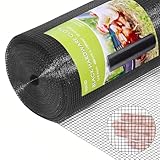
- RUST RESISTANCE: UULID black hardware cloth 1/4 inch 48 x 100 ft adopts Hot dipped galvanized, which prevents rust and corrosion and longer service life
- SUPERIOR DURABILITY:Our black hardware cloth features a protective black pvc coated welded wire fence, enhancing its longevity and performance. providing lasting security for your garden and poultry.
- 1/4" x 1/4" OPENINGS: hardware cloth 1/4 inch garden wire fence rolls opening can be used to build wire walls and roofs for chickens, effectively protecting your chickens from other carious animals! ensuring their safety
- STRONG DURABILITY:Our garden fence wire cloth is rust proof, waterproof, tear resistance, and the grid is flat and even. Even in a variety of wet environment still remains the same, thus this Hot-dip galvanization hradware cloth chicken wire mesh roll is one of the wonderful choice for making fences
- GREAT PACKAGE: We would like to make sure every customer receives a satisfactory hardware cloth 1/4 inch 48 x 100 ft chicken fencing wire fence mesh
Do snake repellents really work in Florida?
No reliable, repeatable evidence supports retail chemical or sonic snake repellents as a stand-alone solution. UF/IFAS states that advertised “snake repellents” simply do not work, and an Ask Extension response dated June 4, 2019, says no snake repellent on the market had been shown through a scientific study to consistently repel snakes. UF/IFAS also describes toxicants and repellents as not a viable way to control or deter snakes.
That does not mean every product is identical or that a manufacturer cannot make a claim on a label. It means you should not plan pet safety around a product whose consistent field performance has not been established. Current product-by-product EPA registrations and efficacy results were not established in the cited Extension material, so claims for a particular retail brand require a separate, current label and evidence check.
What’s actually slowing this PC down?
Pick the symptom - the matching free tool is one click away.
Chemical granules, sprays and “natural” scents
Products marketed with sulfur, essential oils or other odors may appear attractive because they are easy to spread. The Extension evidence does not show that these products consistently keep snakes away from Florida yards. Rain, irrigation, vegetation and animal movement also make any outdoor odor treatment difficult to maintain as a continuous exclusion boundary. Treat such products, at most, as unproven supplements—not as a substitute for closing gaps or managing habitat.
Ultrasonic and sonic devices
Ultrasonic stakes and vibration devices do not have reliable evidence of consistently repelling snakes in the Extension sources. They may give a homeowner a sense that a zone is protected while leaving doors, vents, debris piles and pet-food attractants unchanged. A device also cannot stop a snake that finds a physical opening or follows prey into a garage.
Also popular on Amazon

- Premium Heavy-Duty Construction: Crafted from high-quality low-carbon steel wire with hot-dip galvanized coating applied after welding for maximum durability. Our 1/4" 23-gauge hardware cloth (12" x 35ft roll) offers exceptional strength while remaining flexible enough for easy installation. Resists breaking, bending, and warping for long-lasting performance
- Superior Weather & Corrosion Resistance: Features waterproof, rust-proof construction that withstands harsh environments including rain, snow, and saline conditions. The smooth galvanized surface prevents corrosion while maintaining an attractive appearance year after year. Ideal for both indoor and outdoor applications
- Ultimate Garden Protection System: Effectively safeguards vegetables, flower roots, bulbs and rhizomes from burrowing pests; Creates protective barriers for garden beds, fruit trees and orchards; Can be shaped into individual plant baskets or used to line raised garden beds; Doubles as effective rodent protection for your harvest
- Versatile Animal Enclosure Solution: Perfect for creating secure chicken coops and poultry runs, rabbit hutches and pet enclosures, snake and rodent-proof fencing, wildlife rehabilitation cages, gutter guards and eave protection
- Easy-to-Use & Multi-Functional: Simple to cut and customize for any project; Works as soil screens, balcony barriers, and craft materials; Maintains structural integrity without fading or deforming; Attractive enough for decorative applications while being fully functional; Suitable for both professional and DIY use in gardens, farms, and homes
Mothballs are not snake repellent
Never put mothballs around a Florida yard, porch, kennel or garage to repel snakes. The UF/IFAS mothball fact sheet explains that mothball labels authorize use for moth control in specified containers. Using them outdoors for snakes is an illegal pesticide use; UF/IFAS reports that the Florida Department of Agriculture and Consumer Services investigates this misuse. Vapors and residues can harm people, pets and wildlife, and scattering the product exposes animals to a pesticide that was not labeled for that setting.
Glue traps are a poor choice
Do not rely on glue boards for snakes. UF/IFAS characterizes them as inhumane and difficult to handle safely. A trapped animal can still pose a bite risk, and a pet may contact the adhesive or the snake.
How the main options compare
| Method | Evidence of consistent effectiveness | Legal and exposure considerations | Area and labor | What it actually does |
|---|---|---|---|---|
| Sealing doors, walls and vents | Recommended by UF/IFAS as prevention | Low exposure when ordinary building materials are installed correctly | Focused work at each opening; maintenance needed as materials wear | Blocks entry into the house, garage and other structures |
| Targeted physical barrier | Best practical control for a limited pet area; effectiveness depends on continuous construction and maintenance | No pesticide exposure | Moderate installation effort; vegetation and damage require inspection | Excludes many snakes from a defined space |
| Habitat and attractant reduction | Recommended prevention measure; does not create an absolute barrier | Low exposure when food and debris are managed safely | Recurring yard work and storage changes | Makes the property less attractive and removes hiding and feeding opportunities |
| Chemical or odor repellent | No consistent scientific evidence identified by the cited Extension sources | Product-specific label and exposure issues; do not use mothballs outdoors | Repeated applications, with no established reliable coverage | Attempts to make an area unpleasant rather than physically blocking entry |
| Ultrasonic or sonic device | No consistent evidence identified by the cited Extension sources | Does not remove a snake or close an opening | Easy to deploy, but coverage and performance are unproven | Attempts to discourage movement with sound or vibration |
| Glue trap | Not a recommended control method | Inhumane and difficult to handle safely | Requires handling a live, stressed animal | Captures an animal after it has entered |
The best snake fence for a Florida pet area
For a small, high-risk zone—such as a puppy run, chicken-free garden, play area or patio—the most useful barrier materials identified by UF/IFAS are:
- 1/4-inch hardware cloth: a rigid mesh suitable for a small-area exclusion fence and for covering vents or openings.
- Aluminum flashing: a solid sheet option for a narrow, defined boundary.
- Silt fencing: a fabric-style option that can be installed around a limited area and monitored for damage.
Build the barrier about 2–3 feet high and bury its lower edge roughly 6 inches. The buried section matters because a surface-only fence leaves a route underneath. Keep vegetation trimmed away, look for washouts or lifted sections after storms, and inspect the entire perimeter frequently. A barrier works only while it remains continuous and tall enough to discourage a snake from crossing.
Also popular on Amazon

- Heavy-Duty Hot-Dipped Galvanization: Our low-carbon steel hardware cloth undergoes professional hot-dipped galvanization for a uniform coating without bubbles. Pre-tested for salt spray, it ensures durable corrosion resistance, lasting through years of outdoor use without needing replacements.
- Robust Welded Structure: Our 36in x 50 ft hardware cloth is welded from low-carbon steel wire into a sturdy mesh structure, followed by a post-weld galvanization process. Each weld point is zinc-coated to prevent detachment, ensuring a bright, rust-proof finish even after prolonged exposure to different weather conditions.
- 1/4-inch Fine Mesh: Featuring narrow 1/4" mesh, even small animals find it difficult to penetrate. Perfect for safeguarding vegetable gardens from small rodents like squirrels, rabbits, raccoons, skunks, foxes, snakes, and more.
- Enhanced Packaging: To prevent damage during transportation, Our hardware cloth is packaged in five layers of reinforced cardboard boxes with fully covered sealing at both ends. Internally, it's wrapped with plastic film and paper, ensuring waterproof and rustproof protection. Minimize the risk of damage and ensure safe delivery!
- Easy to Cut and Use: Simply cut with scissors or wire cutters to create different shapes and sizes for chicken coops, garden beds, rabbit fences, hedges, drainage grid fences, flower beds, DIY projects, and more. Caution: Beware of sharp edges after cutting; always wear gloves when handling.
How to install a targeted barrier
- Define the protected footprint. Fence the smallest area that gives your pet meaningful protection. A whole yard usually creates more perimeter to maintain than a household can reliably inspect.
- Map every opening in the boundary. Mark gates, corners, utility penetrations, drainage paths and places where the fence meets a wall. An unprotected gap can defeat an otherwise sound installation.
- Choose one of the three listed materials. Use 1/4-inch hardware cloth where a rigid mesh is practical, aluminum flashing where a solid surface is preferable, or silt fencing where that installation suits the site.
- Set the height and buried depth. Make the finished barrier approximately 2–3 feet high and bury the lower edge about 6 inches.
- Close joints and transitions. Check that corners, gates and wall junctions do not leave openings. Recheck them after soil settles or heavy rain moves material.
- Clear the fence line. Trim grass and overgrowth away from the barrier so you can see its base and so vegetation does not hide damage.
- Inspect on a schedule. Walk the full perimeter frequently, especially after storms, landscaping or construction. Repair lifted, torn or undermined sections before allowing pets back into the area.
This is targeted exclusion, not a guarantee that no snake can ever appear. Florida yards can connect to vegetation, drainage routes and neighboring properties that are outside the protected footprint.
Keep snakes out of a house, garage and pet-door opening
Most indoor prevention is ordinary building maintenance. Work from the ground up and inspect openings at least seasonally and whenever you feel a draft, see daylight or notice damaged weather-stripping.
Recommended Free Tools
- Exterior doors and garage doors: install and maintain a tight exterior door sweep. Replace it when it is worn, bent or no longer contacts the threshold.
- Wiring and plumbing penetrations: caulk narrow gaps where pipes, cables or conduits pass through walls, slabs and siding.
- Larger holes: use expanding-foam sealant suitable for the opening, then check that the finished repair has not cracked or pulled away.
- Roof and plumbing vents: cover openings with hardware cloth while keeping the vent’s intended airflow function.
- Pet doors: treat every pet door as a possible entry route. Keep the flap closing properly, inspect the frame and surrounding wall, and consider restricting access when snakes are active near the house.
- Garage edges and stored materials: keep the threshold visible and avoid creating hidden gaps behind stacked items or debris.
Sealing works best as a complete inspection rather than a single caulk application. A snake needs only one missed opening to enter a structure.
Reduce the food and shelter that draw snakes near pets
Snakes may be attracted indirectly by rodents, frogs, insects and protected hiding places. UF/IFAS nuisance-wildlife guidance recommends reducing these attractants:
Also popular on Amazon

- 【Black Hardware Cloth】- Length: 100ft,wide:48inch,19 Gauge heavy duty is galvanized inside and Resists corrosion pvc double coated outside,1/4 inch opening,19 Gauge is stronger than regular 23 Gauge.ensure quality and service life
- 【Black Chicken Wire】- 1/4inch mesh,of this hardware cloth as Extend the coverage/protection of existing barriers,The 1/4" x 1/4" square opening is still small enough to cover squirrels.
- 【Safety Sturdiness】-hardware cloth 1/4 inch wire mesh roll galvanized inside and vinyl coated outside Sturdy construction Resists corrosion, abrasion, oil, water, acid, and rough environments,maximum rust resistance and long life.
- 【Easy Use】black chicken wire fencing Carton packaging and transportation wire cloth welding structure is extremely sturdy Flexible design makes welding wire coil easy to use in a variety of applications, you can customize it according to your specific needs.
- 【Wide Application】-pvc coated wire mesh Dozens of uses,suitable for various home improvement projects, Ideal for making chicken wire fencing,plastic chicken wire,chain link fence,chicken coop,poultry cage,Animal Control,Gutter Guard,etc.
- Remove piles of boards, scrap material, unused equipment, dense refuse and other debris that can serve as cover.
- Keep grass, weeds and vegetation managed around the house, pet areas and the barrier line so you can see the ground.
- Store pet food and bird seed in tightly closed, rodent-resistant containers rather than open bags or bowls.
- Pick up outdoor pet food instead of leaving it out overnight.
- Inspect sheds, woodpiles and landscape edges where rodents may find shelter.
These steps reduce the reasons for a snake to linger, but they do not make a Florida property snake-proof. Continue maintaining structural seals and any targeted barrier.
Independent reader supportYour contribution helps us test, update, and keep practical guides available for everyone.What to do when a pet finds a venomous snake
- Call the pet away without approaching the snake. Do not corner it, strike it, handle it or try to kill it.
- Move people and other animals indoors only if you can do so safely. Keep a wide distance and close a door between the snake and the household.
- Contact a qualified wildlife professional. UF/IFAS directs readers to the Florida Fish and Wildlife Conservation Commission’s county directory for current professional listings; use the directory linked from Living with Snakes and verify that the provider serves your location.
- If you suspect a bite, contact an emergency veterinarian immediately. Do not wait for swelling or other signs to worsen, and do not give home remedies or attempt to capture the snake for identification.
Even a nonvenomous snake can bite when restrained. Treat every unidentified snake as a hands-off situation until a qualified professional has assessed it.
Maintenance and troubleshooting
“The fence worked, then a snake appeared inside.”
Inspect the lowest 6 inches, corners, gates and points where the barrier meets a building. Look for soil erosion, a lifted edge, torn mesh or vegetation hiding a gap. Repair the opening before relying on the enclosure again.
“I sealed the garage, but snakes still get in.”
Check the garage-door sweep along its full width, side edges, utility penetrations and vents. A damaged sweep or an unsealed pipe opening can remain accessible even when the main door looks closed.
Also popular on Amazon

- 【OUTSTANDING RUST RESISTANCE 】 The 2′×50′ hardware cloth is made of No. 19 heavy-duty galvanized steel wire and provides double coating to maximize rust resistance and service life. Vinyl coating provides additional protection. Can be easily cut with scissors. Molded or folded as needed without any problems
- 【SQUARE MESH】1/4-inch mesh, flexible welding wire, can be used to build steel wire walls and roofs for chickens to ensure their safety and prevent eagles, foxes and raccoons. The 1/4" square opening is still small enough to cover squirrels.
- 【SIZE & LENGTH】19 gauge steel wire, mesh size is 1/4". It measures 2feet by 50 feet long and is suitable for home and garden purposes, including property dividers and protective covers, which you can adjust to your specific needs.
- 【EASY USE】Flexible design makes welding wire coil easy to use in a variety of applications, you can customize it according to your specific needs
- 【APPLICATION】1/4" steel wire mesh, suitable for various home improvement projects. Widely used, suitable for rabbit running, chicken house, duck pen, vegetable garden.
“The yard is clear, but rodents remain.”
Review overnight pet-food practices, seed storage and debris removal. Use tightly closed containers and remove shelter that allows rodents to remain near the pet area.
“A product label says it repels snakes.”
Read the current label for the exact use site and target pest, but do not assume a marketing claim proves consistent performance. The cited Extension sources do not establish a reliable retail repellent category, and mothballs are not legal for outdoor snake use.
“I cannot maintain a whole-yard fence.”
Reduce the protected footprint to the place where pets actually play, strengthen building seals, and focus on debris and food management. For a venomous snake or a difficult structural problem, use a qualified wildlife professional rather than expanding an unreliable chemical treatment.
A practical Florida checklist
- Inspect and replace worn exterior door sweeps.
- Caulk narrow wiring and plumbing gaps.
- Fill larger openings with expanding foam and recheck the repair.
- Cover roof and plumbing vents with hardware cloth.
- Evaluate every pet door as a possible entry point.
- Remove debris and dense cover around the house and pet area.
- Store pet food and seed in tightly closed, rodent-resistant containers.
- For a limited high-risk area, use a 2–3-foot barrier with its lower edge buried about 6 inches; inspect it frequently.
- Do not use mothballs outdoors, and do not use glue traps for snakes.
- Keep people and pets away from a venomous snake and call a qualified wildlife professional.
For the underlying prevention recommendations, see Dealing with Snakes in Florida’s Residential Areas—Preventing Encounters, Managing Conflicts with Wildlife: Living with Snakes, The Facts about Mothballs, the Ask Extension answer on snakes in the yard, and UF/IFAS Nuisance Wildlife guidance.





Leave a Reply