Recommended Free Tools
If you are searching for a telescope for whale watching, choose a terrestrial spotting scope instead. For most shore-based observers, the best-balanced setup is an angled, waterproof 20-60x scope with a 65-85mm objective on a sturdy tripod. The Celestron TrailSeeker 20-60x80mm is the strongest specification-based all-around pick in this comparison, while compact and budget alternatives make more sense for travelers and occasional viewers.
The scope should help you see more without moving closer to wildlife. NOAA Fisheries recommends binoculars and spotting scopes for maintaining distance, and local rules may require you to remain 100, 200, or even 500 yards away depending on the whale species and location.
As an Amazon Associate I earn from qualifying purchases.
First, the important distinction: buy a spotting scope
Astronomy telescopes are designed primarily for viewing the night sky. For whale watching, the more practical instrument is a terrestrial spotting scope: it produces an upright image, focuses at ordinary outdoor distances, handles daylight viewing, and mounts to a tripod. In other words, when shoppers search for a “telescope for whale watching,” they usually need a waterproof spotting scope.
Quick wins for a faster PC:
Fix the driver behind crashes, sound loss and screen glitchesFind Drivers →Repair Windows errors before they cause bigger problemsFix Now →Scan for outdated or missing drivers - takes under a minuteDriver Scan →The best general-purpose setup is an angled 20-60x spotting scope with a 65-85mm objective, mounted on a stable tripod. Start at low power to scan a wide area, locate the whale, and then increase magnification only as conditions allow. The strongest specification-balanced choice in this group is the Celestron TrailSeeker 20-60x80mm for shore-based viewing. It is not a guarantee of a close-up view: haze, spray, wind, sea state, distance, and heat shimmer can matter more than the final number printed on the zoom ring.
#1 Best Overall
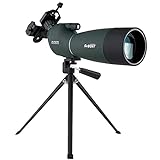
- 25-75x zoom: SV28 spotting scope is easy to focus and change magnification; easily set up when looking at birds and scenery; a great spotting scope for beginner to novice
- 70mm large object lens: more powerful light gathering ability; 70mm tube allows plenty of light and decent view of the target once set; extendable sunshade built onto the main barrel to reduce glare
- Waterproof; can avoid sudden environmental changes to damage the SV28 spotting scope; the finish is made of a seamless Non-Slip material so it doesn't feel like it would slip out of your hands if wet
- Includes phone adapter and portable desktop tripod: the desktop tripod is perfect for range spotting; phone adapter makes it easier to share videos and photos
- Lightweight and portable weight: very suitable for carrying when going out for observation; can also be easily put into the car for use in family camping
Disclosure: Some product mentions in this guide may eventually receive affiliate links. If you buy through one, Animalso may earn a commission at no additional cost to you. That does not change the selection criteria.
Whale-watching scope recommendations at a glance
| Best for | Model or setup | Key specifications | Main compromise |
|---|---|---|---|
| Most shore-based observers | Celestron TrailSeeker 20-60x80mm Angled Zoom Spotting Scope | 20-60x; 80mm; angled; waterproof and nitrogen-filled; 54.6 oz | Heavy before adding a tripod; 60x is easily limited by atmospheric conditions |
| Budget-conscious buyers wanting a full-size scope | Celestron Ultima 20-60x80mm Angled Zoom Spotting Scope | 20-60x; 80mm; 45-degree viewing angle; waterproof and nitrogen-filled; 57 oz | Large and tripod-dependent; do not assume premium-level optical refinement |
| Rugged, demanding field use | Vortex Diamondback HD 20-60x85mm | 20-60x; 85mm; 61.3 oz; 18.3-20.3mm eye relief | Heavier and more expensive than the 80mm alternatives |
| Travel and occasional viewing | Nikon PROSTAFF 3 Fieldscope Outfit | 16-48x; 60mm; straight body; waterproof and fogproof; 21.9 oz | Less light-gathering capacity and a lower maximum power than the full-size choices |
| Complete viewing kit | Spotting scope plus 8×42 binoculars and a fluid-head tripod | Binoculars scan broadly; scope examines a located whale; fluid head controls movement | More equipment to carry and set up |
These recommendations are based on published specifications and intended use, not hands-on comparative testing. Manufacturer prices, inventory, product generations, and warranty terms should be rechecked before purchase.
Best overall value for shore viewing: Celestron TrailSeeker 20-60x80mm
The Celestron TrailSeeker 20-60x80mm Angled Zoom Spotting Scope is the most balanced choice for someone who regularly watches whales from a beach, headland, overlook, or other stable position. Its 20x starting power is suitable for scanning, while the 60x upper range gives you room to inspect a whale, blow, dorsal fin, or breaching behavior after you have found it.
Free tools Windows power users keep installed
One-click scans. No signup required.
- Magnification: 20-60x zoom
- Objective: 80mm
- Field of view: 2 degrees to 1 degree, or about 105 to 52 feet at 1,000 yards
- Eye relief: 18-15mm
- Construction: waterproof and nitrogen-filled
- Handling: dual-focus mechanism and rotating tripod mount
- Weight: 54.6 oz, approximately 3.4 lb, before the tripod and accessories
The 80mm objective is a useful middle ground: it offers more light-gathering potential than a compact 60mm scope without reaching the size and weight of some larger instruments. The angled body is also comfortable for tripod use and easier to share among observers of different heights.
At the time of the cited manufacturer listing, Celestron showed a $369.95 price and listed Amazon among featured retailers. Treat both price and availability as temporary details rather than permanent specifications.
Choose it if: you want a serious, weather-sealed shore setup and can carry a roughly 3.4-pound scope plus a tripod.
Think twice if: you will be on a moving whale-watching boat, hiking long distances, or trying to use the scope without a substantial support system.
What’s actually slowing this PC down?
Pick the symptom - the matching free tool is one click away.
Best budget-oriented full-size option: Celestron Ultima 20-60x80mm
The Celestron Ultima 20-60x80mm Angled Zoom Spotting Scope follows the same basic formula as the TrailSeeker: a full-size 80mm objective, 20-60x zoom, angled viewing, and weather-sealed construction. It is a sensible option for occasional whale watchers, families, and buyers who want aperture and zoom range without moving to a higher-priced model.
- Magnification: 20-60x
- Objective: 80mm
- Viewing angle: 45 degrees
- Field of view: about 105 to 53 feet at 1,000 yards
- Construction: waterproof and nitrogen-filled
- Weight: 57 oz
- Support: tripod-adaptable
Celestron’s product page listed a $269.95 official price and showed Amazon among featured retailers when researched. Check the current listing before buying. The lower price makes the Ultima attractive, but it should not be described as optically identical to more expensive scopes or as equivalent to premium ED-glass designs without independent testing.
Rank #2

- FIND TARGETS WITH YOUR TELESCOPE QUICKLY AND ACCURATELY: The StarPointer red dot finderscope adds “point & look” functionality to any telescope.
- RIGHT-SIDE-UP VIEWS: Unlike some finderscopes, the StarPointer keeps the sky right-side up, matching what you see with your unaided eyes for easy and intuitive use.
- ADJUSTABLE RED DOT: Turn the knob to adjust the brightness of the red dot. Keep it dim to preserve your night vision or turn it up to find land-based objects during the day.
- COMPATIBLE WITH TELESCOPES AND MORE: StarPointer attaches to just about any telescope thanks to its small footprint. It even works great with astronomical binoculars and spotting scopes.
- START OBSERVING RIGHT AWAY: Includes the mounting base and a long-lasting CR2032 3V battery.
Choose it if: you want a large objective and broad zoom range for occasional fixed-position viewing.
Think twice if: portability is important. At 57 oz, this is still a substantial instrument that needs a stable tripod.
Best for rugged field use: Vortex Diamondback HD 20-60x85mm
The Vortex Diamondback HD spotting scope is aimed at readers who value a rugged, field-oriented design and a slightly larger objective. Its 85mm aperture can be useful when coastal viewing takes place in overcast weather or during the lower-light portions of the day, although no objective size can overcome fog or heavy atmospheric distortion.
- Magnification: 20-60x
- Objective: 85mm
- Field of view: 2.1 to 1.1 degrees, or about 108 to 60 feet at 1,000 yards
- Eye relief: 18.3-20.3mm
- Weight: 61.3 oz
- Manufacturer-listed MSRP: $699.99 at the time of research
The larger objective and generous listed eye-relief range are appealing for serious wildlife observation, including for some glasses wearers. The trade-off is size: this is heavier than the Celestron 80mm options and demands an equally capable tripod and head. Vortex also emphasizes its warranty positioning, but a warranty should be treated as support after a problem, not as a substitute for careful handling.
Choose it if: you expect demanding field use and prefer a larger, rugged wildlife scope over a lightweight travel kit.
Think twice if: you are a casual cruise passenger or need to minimize luggage. The extra size may provide little practical benefit on a moving deck.
Crashes, No Sound, or Screen Glitches?
Random freezes, missing sound and display glitches usually trace back to one bad driver. Find and replace yours safely.Free scan · under a minuteWindows Errors? Fix Them Before They Spread
Repair common Windows errors and clear accumulated junk for a smoother, more stable PC - no reinstall needed.Free scan · no reinstallBest compact option: Nikon PROSTAFF 3 Fieldscope Outfit
The Nikon PROSTAFF 3 Fieldscope is the portability choice. It uses a 60mm objective and a 16-48x zoom in a straight-body design, making it substantially lighter than the full-size 80-85mm scopes.
- Magnification: 16-48x
- Objective: 60mm
- Field of view: 120 feet at 1,000 yards at 16x
- Eye relief: 19mm
- Construction: waterproof and fogproof
- Weight: 21.9 oz
The 16x starting power is useful for finding a whale, and the 21.9-ounce weight is much easier to pack for travel or carry alongside other wildlife equipment. The cost of that portability is a smaller light-gathering aperture and a lower maximum magnification than the 80mm and 85mm models.
The straight body can be convenient when aiming from a low position or through a vehicle window. For a shared tripod setup on a cliff or overlook, however, an angled scope is generally more comfortable because observers can look downward into the eyepiece rather than having to align their eyes with the scope’s straight axis.
Rank #3

- Upgraded Flagship Spotting Scope – Proven & Reliable – Featuring 25–75x magnification and an 80mm objective lens with BAK4 prism and FMC optics, this spotting scope is Gosky’s upgraded flagship model. Balanced performance makes it an ideal high-end entry choice. Since 2019, it has sold over 500,000 units worldwide, proving its reliability for birdwatching, hiking, hunting, target shooting, and wildlife viewing.
- Classic Optical System for Stunning Clarity – With a 23mm eyepiece (larger than many similar scopes) and a large 80mm objective lens, this spotter scope delivers wide field of view, bright images, and excellent color accuracy. The optimized optical design brings nature closer, allowing you to truly enjoy the fun of outdoor observation.
- Nitrogen-Filled & O-Ring Sealed – Ready for Outdoors – Designed for rugged conditions, this spotting scope is nitrogen-filled and O-ring sealed to provide dependable waterproof and fogproof protection. Perfect for year-round outdoor use, whether in rainy, humid, or changing weather environments.
- Refined Details for Versatile Use – Built with a rubber-armored body that blends with the environment while offering durability and grip. A rotatable body design makes it great for birdwatching and target shooting. The retractable sunshade reduces glare under strong sunlight. The sturdy metal base with standard 1/4"-20 thread fits most universal tripods for stable viewing.
- Essential Accessories Included – Comes with a tabletop tripod, eyepiece cover, objective lens cover, accessory pouch, portable carrying case, and cleaning cloth. Everything you need to start exploring right away—whether for spotting scopes for birdwatching, hiking, hunting, target shooting, or wildlife viewing.
Choose it if: you need one compact scope for travel, occasional shore viewing, and general wildlife use.
The Tool Desk
Outbyte PC Repair FREEClear out junk files and repair common Windows errorsFree Scan →Outbyte Driver Updater FREEScan for outdated or missing drivers - takes under a minuteDriver Scan →Think twice if: your main goal is extracting the most detail possible in dim coastal light or at very long viewing distances.
Premium alternative: Leupold SX-2 Alpine HD Gen 2 20-60×80
The Leupold SX-2 Alpine HD Gen 2 20-60×80 angled scope is worth considering when ruggedness, handling, and warranty support matter more than keeping the price low. Leupold describes this model as tested for extreme climates and highlights DiamondCoat and Guard-ion lens-coating features. The company also uses repair-or-replace language for its lifetime spotting-scope guarantee.
Verify the current U.S. price, inventory, model generation, and exact warranty terms before purchase. The available research does not justify claiming that this scope produces a better image than every Celestron or Vortex alternative. Its sensible justification is the feature set, construction emphasis, and support policy—not an unsupported promise of universally superior optical performance.
How to choose the right whale-watching scope
1. Prioritize a useful low-power setting
Whales surface unpredictably and may travel through a large area. A wide field of view is more valuable while searching than a dramatic maximum-power number. A scope that starts around 16x or 20x gives you a better chance of locating the animal and keeping it in view.
Once the whale is located, increase power gradually. In many situations, a middle setting such as 30x or 40x will be easier to use than 60x. At maximum power, every vibration is magnified and the image may be degraded by heat shimmer, wind, sea spray, haze, and movement on the water.
2. Match objective size to your carrying needs
| Objective size | What it generally offers | What you give up |
|---|---|---|
| 60-65mm | Lighter, easier to pack, and adequate for bright daytime viewing | Less light-gathering potential and generally less comfortable at the highest powers |
| 80-85mm | More light-gathering potential for overcast weather, dawn, dusk, and fading light | More bulk, weight, and demand on the tripod |
An 80mm scope is often the practical compromise for a stationary coastal setup. Choose 60-65mm when you know you will carry the scope a long way or use it mainly in bright daylight.
3. Prefer an angled body for a fixed viewing station
An angled scope is usually easier to share between people of different heights and more comfortable on a tripod. It is especially convenient when the instrument points upward from a beach, cliff, or overlook. A straight scope can be faster to aim from a low position, on a vehicle window mount, or when one person is using it briefly.
This is an ergonomic recommendation, not a claim that angled bodies automatically have higher optical resolution.
Rank #4

- Lens with 100mm aperture: The 100mm lens has 2.3 times the focusing power of the 65mm lens, and its brightness is more than double; A scope of this calibre will enable you to see more detail of wildlife especially in low light conditions;
- 25x to 75x magnification range: SV28 spotter scope equipped with the 25-75x zoom eyepiece, you'll have the power to focus on any detail; you'll be able to capture every moment with clarity and detail; perfect for target shooting; long range viewing;
- Fully multi-coated: the FMC coating on the spotting scopes for bird watching can enhance light transmission; more light reaches the eyepiece; creating a brighter viewing experience
- Anti-lost eyepiece cover and high-grade lens cover: the eyepiece cover design ensures your cover securely attached to the spotting scopes for target shooting; a high-grade objective lens cap can prolong the lifespan of a spotting scopes for target shooting; and reduce the possibility that is repair; or replacement
- Twist up eyecups; the rotatable eye mask of the spotter scope offers more comfort; allowing you to tailor the fit according to your eye position; this ensures a snug; comfortable fit during extended use
4. Look for genuine coastal-weather protection
Waterproof construction, nitrogen filling, rubber armor, lens caps, and a carrying case are useful around salt spray, mist, rain, wind, and rapid temperature changes. Waterproof does not mean safe to immerse in seawater.
Carry a microfiber cloth or appropriate optics-cleaning tool. Keep caps on when the scope is not in use, and do not drag dry salt crystals across the lenses. Follow the manufacturer’s cleaning instructions rather than using household glass cleaner.
5. Check eye relief if you wear glasses
Eye relief is the distance between the eyepiece and the position where the full image is visible. Longer eye relief is generally more comfortable for glasses wearers, but the published figure does not tell the whole story: eyecup design and individual fit also matter. If you wear glasses, prioritize a model with generous listed eye relief and confirm the eyepiece adjustment method before ordering.
The tripod is part of the optical system
A 20-60x scope is too sensitive to hand movement for dependable handheld use. Budget for a sturdy photographic or video tripod with a smooth pan-and-tilt or fluid head. A fluid head helps you follow a moving whale without the jerky starts and stops common with a basic still-camera head.
Do these 3 things before closing this tab:
1Scan for outdated or missing drivers - takes under a minute2Repair Windows errors before they cause bigger problems3Fix the driver behind crashes, sound loss and screen glitchesUseful tripod features include:
- Fluid pan and tilt: controlled horizontal and vertical movement while tracking.
- Quick-release hardware: faster setup and removal, provided the plate is secure.
- Adequate load capacity: the head must safely support the scope, mounting plate, and any camera adapter.
- A stable platform: a heavier, properly extended tripod is usually steadier than a lightweight unit with a fully raised center column.
The Celestron scopes are tripod-adaptable, and video-tripod systems such as those made by Manfrotto illustrate the fluid pan, fluid tilt, quick-release, and stability features to look for. Do not assume that any head fits any scope: check the scope’s mounting thread, the quick-release plate, the head’s capacity, and the combined weight before buying a fluid-head tripod for spotting scopes.
On a boat, even a good tripod cannot eliminate deck movement. Use a high-power scope only from a stable position where the crew permits it, and never let equipment setup distract you from safety instructions or from keeping a legal distance.
Independent reader supportYour contribution helps us test, update, and keep practical guides available for everyone.Why binoculars still belong in the kit
A spotting scope’s high magnification comes with a narrow field of view. That makes it poor for initially locating a whale that may surface anywhere in front of you. A waterproof 8×42 binocular is easier to raise quickly, scan with, and share.
The Celestron Nature DX 8×42 has 8x magnification, 42mm objectives, a 7.4-degree field of view, waterproof and nitrogen-filled construction, phase-coated BaK-4 prisms, and a listed weight of 22.2 oz. NOAA’s whale-watching advice also recommends bringing binoculars on viewing excursions.
Use the two optics together:
- Scan broadly with the binoculars at 8x.
- When someone spots a blow or splash, keep one person calling out the whale’s direction while another aims the scope at low power.
- Center the whale, then raise magnification only enough to see useful detail.
- Return to binoculars when the whale changes direction or disappears, since reacquiring a subject is easier through the wider field.
On a moving whale-watch boat, binoculars may be the better primary optic. From a fixed cliff or overlook, a tripod-mounted scope can show more detail after the whale has been located. Neither choice makes approaching the animal acceptable.
Best Value

- The finder scope is a secondary scope that's used to help you locate objects in the main telescope;3 thumb screws allow positioning XY adjustment for precise telescope alignment
- It provide 5x24 low power magnification;the telescope fixed to the body of a more powerful telescope and pointed in the same direction for initially locating an object to be observed
- Tube has a glossy black metallic finish and cross hair reticle;includes mounting bracket and dust caps;the bracket fits any telescope optical tubes and the dust caps protects against dust and fingerprin
- Mounting bracket has curved base with two holes and attaches to telescope tube with bolts or screws;bracket will not slide into a dovetail base
- Wth it you are more convenient to find the star
Responsible whale watching: magnification is not permission to approach
The purpose of a scope is to obtain a better view while remaining back. It is not a reason to steer toward a whale, chase it, block its route, or try to fill the frame.
NOAA Fisheries generally advises observers to remain at least 100 yards from whales unless a species-specific or local rule requires more distance. Its guidance identifies 200 yards for killer whales in Washington State inland waters and 500 yards for North Atlantic right whales in U.S. waters. Humpback-whale rules in Hawaii and Alaska also require 100 yards. These examples are not a universal rule for every coastline: requirements can vary by species, state, sanctuary, country, and viewing situation. Check the current local regulations before launching a boat, joining a tour, or choosing a shoreline viewpoint.
Do not feed, touch, pursue, surround, provoke, or attempt to make a whale react. Watch for signs that the animal may be disturbed, including:
- fleeing or repeatedly changing direction;
- fidgeting, freezing, or staring toward observers;
- rapid changes in speed or travel direction;
- increased vocalization; or
- aggressive behavior.
If you notice these behaviors, stop trying to improve the view and increase your distance. Responsible viewing means allowing the whale to continue its normal behavior, even if that means accepting a brief or imperfect sighting.
A practical setup and viewing workflow
- Check the rules and conditions first. Confirm species-specific distance requirements, local closures, weather, wind, tide, and whether the viewing location allows tripods.
- Set up behind the permitted viewing boundary. Extend the tripod legs only as much as needed, lock the scope securely, and keep the setup away from surf spray and unstable edges.
- Start at 16x or 20x. Scan methodically across likely travel lanes rather than jumping immediately to 60x.
- Find the whale with binoculars if possible. Have one observer watch widely while another uses the scope. This avoids sweeping the high-power scope randomly across the water.
- Increase power gradually. If the image becomes soft or trembles, reduce magnification. A steadier, clearer 30x view is more useful than a blurred 60x view.
- Track behavior, not just body parts. Observe the animal’s travel direction and surface pattern without trying to intercept it.
- Protect the equipment afterward. Replace caps, wipe the exterior, and clean optics according to the manufacturer’s instructions, especially after exposure to salt spray.
Which scope should you buy?
- Choose the Celestron TrailSeeker 20-60x80mm for the best balance of aperture, zoom range, weather protection, handling features, and cost for shore-based whale watching.
- Choose the Celestron Ultima 20-60x80mm if you want a full-size 80mm scope at a lower listed price and accept its bulk.
- Choose the Vortex Diamondback HD 20-60x85mm if rugged field use and a larger objective matter more than weight and price.
- Choose the Nikon PROSTAFF 3 Fieldscope if portability is the priority and you will mostly watch in daylight.
- Choose the Leupold SX-2 Alpine HD Gen 2 if premium handling, climate-focused construction, and warranty support justify the budget after you verify the current terms.
- Add 8×42 binoculars if you need to locate and follow whales efficiently, especially from a boat.
- Do not skip the tripod for a full-size 20-60x scope. A stable fluid-head setup can improve the usefulness of the instrument more than simply buying a higher maximum magnification.
Frequently Asked Questions
Do I need an astronomy telescope to watch whales?
A spotting scope is better suited to whale watching because it produces an upright daylight image, focuses at ordinary outdoor distances, and mounts easily to a tripod. An astronomy telescope may be awkward for terrestrial viewing and is not designed around the same field use.
What magnification is best for whale watching?
For a fixed shore location, look for roughly 20-60x magnification and a 65-85mm objective. Start at the lower setting to scan, then increase power after locating a whale. On a moving boat, 8x binoculars may be more practical than a high-power scope.
Can I use a spotting scope without a tripod?
Yes. A 20-60x scope magnifies hand movement and tripod vibration, so handheld use is unreliable. Choose a sturdy tripod with a smooth pan-and-tilt or fluid head, and verify the mounting thread, quick-release plate, head capacity, and scope weight.
Quick wins for a faster PC:
Repair Windows errors before they cause bigger problemsFix Now →Fix the driver behind crashes, sound loss and screen glitchesFind Drivers →Clear out junk files and repair common Windows errorsFree Scan →Is an angled or straight spotting scope better?
An angled scope is usually more comfortable for a stationary tripod setup and easier for people of different heights to share. A straight scope can be convenient from a low position, through a vehicle window, or when aiming quickly from one person’s eye level.
How close should I get to a whale when using a scope?
No. Magnification is a way to observe from a safe distance, not permission to approach. NOAA guidance generally identifies at least 100 yards from whales, with greater distances for some species and locations. Check current local rules before every outing.
The Bottom Line
For most people watching whales from shore, an angled waterproof 20-60x80mm spotting scope on a stable fluid-head tripod is the right answer; the Celestron TrailSeeker is the most balanced specification-based pick here. Add 8×42 binoculars for scanning, use high power sparingly, and let the equipment help you stay within—and preferably well beyond—the required wildlife distance.
Quick Recap
Product prices and availability are accurate as of the date/time indicated and are subject to change. Any price and availability information displayed on Amazon at the time of purchase will apply.
What’s actually slowing this PC down?
Pick the symptom - the matching free tool is one click away.




