
Some links on this page are affiliate links: if you buy through them we may earn a commission, at no extra cost to you.
The safest way to help an overweight dog slim down is a veterinary-supervised plan: confirm excess fat with body- and muscle-condition scoring, set calories from the dog’s ideal weight and health status, measure every bite, keep treats within 10% of daily calories, add activity gradually, and monitor the rate of loss. A dog should not be put on a crash diet or an internet calorie target.
Start by confirming that your dog is carrying excess fat
Body weight is useful, but it cannot answer the whole question. A muscular dog may weigh more than a slender dog of the same breed, while an older dog can lose muscle and gain fat without a dramatic change on the scale. Ask your veterinarian to assess body condition and muscle condition together before changing food or exercise.
As an Amazon Associate I earn from qualifying purchases.
Use a body-condition score, not the scale alone
A body-condition score (BCS) looks at how much fat covers the ribs and spine, the shape of the waist when viewed from above, and the abdominal tuck when viewed from the side. The American Animal Hospital Association (AAHA) says these features are more informative than weight alone for identifying excess fat. Your clinic may use a numerical scale; record the score and the date so later examinations can show whether fat, rather than only water or muscle, is changing.
Check muscle condition at the same appointment
A muscle-condition score (MCS) records whether your dog is maintaining lean tissue. This matters during weight loss because an aggressive calorie cut, illness, or inactivity can reduce muscle as well as fat. A veterinarian can feel the muscles over the spine, shoulders, hips, and thighs and decide whether the plan needs more protein, a different diet, rehabilitation, or medical investigation.
Popular on Amazon
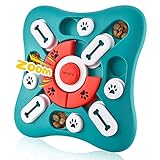
- 【PRODUCT SIZE】10 inch*10 inch*1.3 inch.
- 【3 WAYS TO PLAY, UPGRADE SLOW FEEDER】Our dog mental stimulation toys have a unique squeak button in the middle, which make it easier to attract the attention of dogs and cats. Three different difficulty designs and the 16-hole dog treat dispenser design maximize slow feeding time, even beyond 20 minutes.
- 【FUNNY STIMULATING TOYS】All kinds of dogs and cats love the puzzle game of Spin & Slide and the Seek & Hide with their smell sense and paw skills to find food. Combining circular orbit sliding game and linear orbit sliding game, smart dog and cat must move the slider correctly to get the food reward hidden in the maze.
- 【NON-REMOVABLE PARTS DOG PUZZLE】Our dog treat puzzle is made of non-toxic materials, very durable and suitable for pets to play for a long time. This dog toy has no removable parts because the design has built-in play parts that fold tightly and won't fall off easily.
- 【ANTI-SLIP & EASY TO CLEAN】: The four corners of the bottom are equipped with four anti-skid pads, which can be well fixed during the dog's slow food process; It is easy to clean, also dishwasher safe.
Record the starting point
Have the veterinary team document the information below. It creates a baseline for a plan that can be adjusted rather than guessed.
| Baseline item | Why it matters |
|---|---|
| Body weight and scale used | Provides a repeatable reference for the monthly rate of loss. |
| Body-condition score | Shows fat coverage, waist shape, and abdominal tuck. |
| Muscle-condition score | Helps protect lean tissue while fat is reduced. |
| Complete diet history | Reveals calories from meals, treats, table food, supplements, and medication food. |
| Activity and daily routine | Shows current fitness and where gradual movement or enrichment can fit. |
| Medications and health risks | Identifies drugs or diseases that may affect appetite, metabolism, mobility, or weight loss. |
AAHA’s owner guidance notes that up to 59% of dogs and cats were overweight in the prevalence literature cited by its 2014 Weight Management Guidelines. That is a historical estimate, not a current measurement for every country, and it does not replace an examination of your individual dog.
Set a calorie target with your veterinarian
Weight loss occurs when the dog consistently receives fewer usable calories than the dog expends, but the correct deficit differs widely. The veterinary team should calculate an allowance from ideal body weight, life stage, activity, medical conditions, and the dog’s actual intake. Do not copy a calorie number from a generic chart or another dog’s plan.
Base the plan on ideal weight, not the current scale reading
Using current weight alone can perpetuate overfeeding because the calculation treats excess fat as if it were metabolically necessary tissue. Your veterinarian can estimate a healthy target from the BCS, breed or body type, MCS, and clinical history, then choose a starting calorie allowance. The target is a starting point to test and adjust, not a permanent promise.
Choose an adequate diet for the restriction required
Simply serving much less of a maintenance food can remove protein, vitamins, and minerals along with calories. For substantial restriction, AAHA guidelines support nutrient-fortified therapeutic weight-loss diets under veterinary direction. These diets are formulated so a smaller calorie allotment still supplies essential nutrients. The appropriate formula depends on the dog’s diagnosis, life stage, allergies, kidney or digestive status, muscle condition, and other clinical factors; there is no universally best brand or recipe.
Also popular on Amazon

- SLOW FEEDER FOR FAST EATERS — Narrow the food flow, and a 30-second gulp stretches into a 5-to-60-minute meal.
- SPIN TO EAT — Your dog spins the clear top with a paw, kibble drops into the center bowl, and every bite is earned.
- YOU SET THE DIFFICULTY — Open the outlet for beginners, narrow it for pros. One bowl your dog never outgrows.
- HOLDS A FULL MEAL, 4 CUPS — Room for a Lab's dinner, not a handful of treats, so it replaces the everyday bowl.
- SMALL, MEDIUM, AND LARGE DOGS — Wider than a dinner plate and low to the floor, it feeds Chihuahuas to Great Danes.
Divide the daily allowance into measured meals
Many dogs do well when the day’s allowance is split into two or three meals, provided that schedule suits the household and the medical plan. Decide the total for the entire day first, then portion each meal from that total. Do not add an unmeasured “top-up” because the dog appears hungry; discuss persistent hunger with the veterinary team, who may alter meal volume, fiber, diet type, or feeding strategy.
The Tool Desk
Outbyte PC Repair FREERepair Windows errors before they cause bigger problemsFix Now →Outbyte Driver Updater FREEFix the driver behind crashes, sound loss and screen glitchesFind Drivers →Measure every calorie, including the ones that do not look like food
Portion accuracy is often the difference between a successful plan and a stalled one. AAHA’s nutritional-history guidance calls for recording all food sources, not just the main bowl.
Make a complete household food inventory
- Kibble, canned food, fresh food, and mixed meals.
- Training treats, dental chews, long-lasting chews, and food used in toys.
- Table scraps, bites handed over by children, and food dropped during cooking.
- Supplements, pill pockets, and food used to give medication.
- Calorie-containing toppers, broths, oils, and anything added to improve palatability.
Write down who feeds the dog and when. A shared log, container with the day’s measured allowance, or clearly labeled meal portions prevents several family members from unknowingly feeding the same “extra” calories.
Use a scale or another accurate measuring method
A digital kitchen or pet-food scale can make portions repeatable, particularly for calorie-dense kibble and small treats. If the veterinary team gives a volume measure, use the same level measure each time; do not switch between heaped cups and estimated handfuls. Weighing is especially helpful when a small error would represent a large percentage of a small dog’s daily allowance.
Do not compensate for exercise with unplanned food
Unless your veterinarian specifically changes the allowance, an extra walk does not automatically earn an extra snack. Exercise calories are difficult to estimate, and rewarding them can erase the intended deficit. If activity increases substantially, report the change at the next check so the plan can be recalculated safely.
Also popular on Amazon

- 2 Levels in 1 Toy: start your pups off with a level 1 puzzle, add some treats in the base compartments and watch your dogs get their tasty reward by nudging the lids. For dogs who have mastered level 1, for added challenge in level 2, just put some treats in the top compartments, teach your dogs to press the top cover to dispense treats down into the base compartments and finally enjoy their reward
- Slow Feeder: The large capacity top transparent granary saves you the hassle to refill dog food frequently. The product can also be used as a slow feeder utensil for your dogs, which promotes healthy ingestion by slowing down eating speed by over 10x. Great for large and small dogs
- Not Easy to Tip Over: 4 non-slip rubber mats and weighted base hold the dog puzzle toy firmly in place when dogs eat and nudge and prevent the toy from tipping over
- We Prioritize Safety: the dog puzzle toys are designed with your pet’s health in mind, made of durable food-grade PP materials. Non-removeable parts make it safe and easy to clean. And you can give puzzles toy to your dog or directly out of the box, just no assembly!!
- Trains Dog’s Intelligence: interactive treat puzzle game challenges your puppies to get their reward of treats, works your dog's mind while reducing boredom and destructive behavior like chewing, digging and excessive barking. Size: 4.2 inch height
Keep treats and extras within 10% of daily calories
AAHA’s weight-management guidance recommends that treats compose no more than 10% of a pet’s total daily calories, including human food. Treats are part of the calorie budget, not a separate category.
Reserve part of the meal for training
The simplest way to reward behavior without exceeding the allowance is to remove small pieces of the measured daily meal and use those pieces during training. The dog receives the same calories it would have eaten in the bowl, while you retain a powerful reward.
Use low-calorie options only after confirming safety
Owner-facing AAHA guidance and the American Veterinary Medical Association list examples such as carrots, broccoli, celery, and green beans; lean meats are another example mentioned in owner guidance. These foods are not automatically safe or calorie-free for every dog. Confirm the choice, preparation, and portion with your veterinarian, especially if your dog has a digestive disease, food allergy, urinary concern, or a prescription diet. Avoid letting “healthy” human food become unlimited grazing.
| Reward approach | How to control calories | When it is useful |
|---|---|---|
| Reserved meal pieces | Remove the pieces from the measured daily ration before training. | Frequent practice or many small rewards. |
| Veterinarian-approved vegetables | Count the portion toward the 10% allowance and confirm individual tolerance. | Dogs that enjoy food volume and can safely eat the selected vegetable. |
| Small lean-meat pieces | Use sparingly, measure them, and include them in the daily total. | High-value training when ordinary food is not motivating enough. |
| Nonfood rewards | No calories; use praise, petting, grooming, or play. | Routine behaviors, recall practice, and dogs that enjoy social interaction. |
Replace some edible rewards with attention and play
Petting, praise, grooming, a short game, or access to a favorite toy can reinforce behavior without adding calories. Learn which reward your dog values in each situation. A dog may work for play in the living room but need a measured food reward around major distractions outdoors.
What’s actually slowing this PC down?
Pick the symptom - the matching free tool is one click away.
Make meals active with enrichment
A puzzle feeder can turn a measured meal into a problem-solving activity and encourage the dog to work for food. AAHA specifically recommends puzzle feeders for mental stimulation and meal delivery. Put only the pre-measured meal into the device; adding extra food to make the puzzle last longer defeats the calorie plan.
Also popular on Amazon

- Four Challenges & Levels 1-3: Multiple games with a flip game and a linear track sliding game, all requiring dogs to learn steps and find treats. This puzzle is designed to be more fun and difficult, with more unique ways to play. It can enhance your dog's IQ and train their sense of smell
- Prolong the Feeding Time: The 14-hole food storage slow feeder has four ways to play, which is effective in slowing down the dog's eating speed. It is also beneficial to the dog's physical and mental health by increasing the time and difficulty of acquiring food, thus avoiding gastrointestinal issues caused by indigestion
- Safe Materials & Cleanable: Furry friends can safely play with this toy, which is made of food-safe and long-lasting materials. Additionally, it is easy to clean with warm water and soap after use
- Six Silicone Anti-Slip Pads: Six silicone anti-slip pads with high resistance ensure a firm grip and prevent the item from sliding to one side during feeding
- Warm Tips: When playing with the puzzle, please keep your dog with you to prevent any possible destruction of the toy. The toy has a tight design of built-in game components, so you don't need to worry about them being easily dislodged and swallowed by your dog
Match the feeder to the dog
- Choose a difficulty the dog can solve without frustration.
- Use a design that can be cleaned thoroughly and checked for damaged parts.
- Watch the first sessions to ensure the dog does not chew or swallow pieces.
- Reduce difficulty or stop the device if it causes guarding, panic, or repeated failure.
Food enrichment is not a substitute for exercise or medical care, but it can slow rapid eating, occupy a dog between walks, and make a restricted portion feel more rewarding.
Increase exercise gradually and protect mobility
More movement can support a calorie-controlled diet, preserve lean muscle, and improve quality of life. The safe amount depends on current fitness, age, body shape, joint health, breathing, and other disease. AAHA advises gradual increases in duration and intensity rather than a sudden jump in workload.
Build from the activity your dog can already tolerate
- Ask the veterinarian whether the dog is ready for increased activity and whether pain, heart or lung disease, or another condition changes the plan.
- Start with manageable walks, gentle play, or interactive toys that do not cause pain or breathing difficulty.
- Increase duration or intensity in small steps, changing one variable at a time.
- Allow recovery and observe how the dog moves later that day and the next morning.
- Keep the activities the dog enjoys so the routine is sustainable for both of you.
Stop when the dog shows warning signs
End the session and contact the veterinary team if your dog develops pain, marked lameness, breathing difficulty, weakness, or an inability to recover normally. Do not force a heavier dog to run, jump, climb steep surfaces, or continue through discomfort simply to burn more calories.
Consider rehabilitation support
A veterinary rehabilitation practitioner can design low-impact exercise that builds fitness while protecting joints and preserving muscle. This is particularly valuable for dogs with osteoarthritis, previous orthopedic injury, severe deconditioning, or difficulty exercising on ordinary walks.
Independent reader supportYour contribution helps us test, update, and keep practical guides available for everyone.Track the rate of loss, not just the direction
AAHA’s 2025 owner guidance gives a target of 1% to 3% of body weight per month for dogs. That is a monthly rate, not a recommendation for rapid weekly dieting. Your veterinary team may choose a different pace for a particular dog based on health, age, muscle condition, or the amount of fat to lose.
Also popular on Amazon
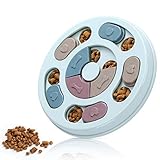
- 【Size】: L9.44" * W9.44"* H1.14" suitable for cats, puppies and small dogs.
- 【Interactive Dog Toys】This is a interactive puppy puzzle , which can easily become the closest companion and toy for your puppies and cats, and will release pressure for dogs. Find food by sliding parts to improve eating pleasure and IQ.
- 【Slow Feed Bowl】This encourages pets to eat at a slower speed, helps to slow down the feeding time to help the dog digest, and can provide your dog with a variety of healthy snacks.
- 【Slow Feede toys】 Use this educational game toy to exercise the dog’s brain, which will help meet the dog’s instinct needs, train the pet’s sense of smell, and let the dog enjoy feeding when using the nose or paw to move the slider, while providing spirit stimulate.
- 【Dog toys】No toy is indestructible. Do not leave toys with unsupervised pets. Remove and replace toy if damaged.
Use consistent measurements
- Reweigh on the same scale whenever possible.
- Use a schedule set by the veterinary team rather than weighing repeatedly at random times.
- Record body weight, BCS, MCS, food allowance, treats, activity, and notable symptoms.
- Bring the log to rechecks so the team can distinguish a measurement issue from a plan issue.
Respond to the pattern you see
| What you observe | Appropriate next step |
|---|---|
| Loss is within the veterinary target and muscle is maintained | Continue the measured plan and attend the scheduled reassessment. |
| Loss is faster than intended, or muscle or energy is declining | Contact the veterinarian promptly; do not continue the same restriction without review. |
| No meaningful loss despite careful adherence | Recheck every food source, portion measurement, household feeder, activity record, and medical factor with the veterinary team. |
| Vomiting, diarrhea, weakness, lethargy, pain, or breathing trouble occurs | Contact the veterinarian promptly rather than waiting for the next routine weigh-in. |
Find out why a dog is not losing weight
A stalled scale does not prove that the dog needs a much larger calorie cut. First verify what is actually being consumed and measured. Then ask the veterinarian to reassess the medical plan.
Check intake and measurement errors
- Confirm that the food’s calorie density and the prescribed portion are the same as when the plan was set.
- Account for every treat, chew, supplement, topper, medication vehicle, and table scrap.
- Ask every person in the household, including visitors and children, what they feed.
- Check whether a puzzle feeder, training session, or exercise reward is receiving food in addition to the daily allowance.
- Verify that cups or scoops are level and that a scale is functioning correctly.
Review diseases and medications
AAHA identifies hypothyroidism, Cushing’s disease, osteoarthritis, and chronic corticosteroid use among factors that can interfere with weight loss. Pain can reduce movement; steroid treatment can alter appetite and metabolism; endocrine disease can change energy needs. Your veterinarian may need an examination, laboratory testing, medication review, or treatment of pain before changing calories again.
Quick wins for a faster PC:
Repair Windows errors before they cause bigger problemsFix Now →Fix the driver behind crashes, sound loss and screen glitchesFind Drivers →Reassess the diet’s suitability
If portions are accurate but the dog is hungry, losing muscle, or failing to progress, the problem may be the diet’s nutrient density, palatability, fiber, medical suitability, or the calorie target itself. Do not swap foods or make a major reduction without veterinary guidance, particularly when a therapeutic diet or another disease is involved.
Common mistakes that undermine a safe plan
- Judging success by weight alone: A lower number can hide muscle loss. Track BCS and MCS as well.
- Cutting the normal food dramatically: Large reductions can leave essential nutrients short. Ask whether a nutrient-fortified weight-loss diet is more appropriate.
- Ignoring “small” extras: Several tiny treats, chews, or scraps can exceed the 10% allowance.
- Changing exercise too quickly: Sudden intensity can cause pain or injury and make the dog less active afterward.
- Using food for every interaction: Praise, petting, grooming, and play can provide effective rewards without calories.
- Assuming a plateau means failure: A plateau is a reason to audit intake and reassess health, not to impose a crash diet.
- Continuing despite symptoms: Pain, breathing difficulty, vomiting, diarrhea, weakness, or unusual lethargy requires veterinary advice.
A practical routine for the whole household
- At the veterinary visit, record weight, BCS, MCS, diet, activity, medications, and the planned calorie allowance.
- Measure the entire day’s food in the morning and place it in a labeled container.
- Set aside the portion that will be used for training or enrichment.
- Feed the remaining allowance as the agreed number of meals.
- Record every extra, including medication food and anything another person gives.
- Use walks, play, and interactive toys at the level your dog can tolerate, increasing gradually.
- Reweigh and reassess on the veterinary schedule, bringing the food and activity log.
- Call sooner if loss is too fast, progress stops despite accurate adherence, or illness signs appear.
Safe weight loss is a controlled health intervention, not a race. The most reliable plan combines an accurate diagnosis of excess fat, a veterinarian-calculated calorie target, nutritionally adequate food, measured portions, restrained treats, gradual activity, enrichment, and regular reassessment.





Leave a Reply