
Some links on this page are affiliate links: if you buy through them we may earn a commission, at no extra cost to you.
The most reliable workday routine combines a toilet break and walk before you leave, a brief scent or reward-based training game, part of the dog’s normal meal in a safe food puzzle, and a quiet area where the dog can rest. Test every item while you are home, rotate activities instead of piling on toys, and arrange a midday person when the planned absence is longer than your dog can comfortably manage.
Enrichment can occupy a relaxed dog, but it cannot treat panic. Barking, escape attempts, accidents, drooling, or refusal to eat may indicate separation-related distress and warrant veterinary or qualified behavior help.
As an Amazon Associate I earn from qualifying purchases.
What a mentally stimulating workday looks like
Mental stimulation is not simply leaving a basket of toys on the floor. A useful plan gives your dog appropriate ways to search, lick, chew, solve a simple problem, move, toilet, and interact with people. It also protects sleep and safety. Many dogs will spend part of a normal absence resting; the goal is a predictable rhythm that meets the individual dog’s needs without creating frustration or excess calories.
Build the routine around five points:
- Prepare the body: offer a toilet opportunity and a walk before work.
- Use the nose and brain: add a few minutes of scent searching or reward-based training.
- Make the meal work: put some of the regular ration in a food puzzle, stuffed rubber toy, or snuffle mat.
- Provide a safe reset: leave a comfortable, hazard-free rest area.
- Cover a long gap with a person: use a walker, sitter, trusted friend, or suitable daycare when the absence exceeds the dog’s tolerance.
There is no universal enrichment duration or toy that is safe for every dog. Observe what your dog actually does: settles and sleeps, searches calmly, vocalizes, refuses food, guards an item, or tries to escape. Adjust the plan to that behavior rather than assuming a product or schedule will work for all dogs.
Popular on Amazon

- [Treat Distribution] Our food dispenser has differently sized spheres at both ends. As dogs push the toy, it moves within a fixed area, allowing dogs to continuously chase and play with it. During movement, food is dispensed from the food holes on both sides of the toy.
- [Adjustable Switch] Each of the two spheres with a food dispensing switch, making it suitable for various sizes and types of pet dry food or snack. The switch can be adjusted according to the different sizes of dog food. It also allows control over the amount of food dispensed, extending or shortening the time it takes for pets to obtain food. It is more conducive to a healthy dog diet.
- [Increase Pet Intelligence] This dog treat puzzle toy combines intellectual training with food rewards. When pets push this toy, it will not only be to get delicious food, but it will also stimulate their intelligence and hunting instinct. This design not only meets the needs of pets but also encourages them to learn and grow in the game.
- [Prolonged Play] The dog enrichment toy is designed to limit the amount of treats your dog gets while encouraging more extended playtime. This is intended for effective playtime for dogs and is NOT a chewed toy. It is also dog boredom buster toys and best dog gift to keep them busy when dogs are left home alone, relief anxiety.
- [Attract Dogs' Attention] With barbell shaped design and bright color, the dog puzzle toy ball can attract your dog's attention, stimulate their curiosity and drive them crazy to roll it. Size: 6.1*3.44*3.44in/15.5*8.7*8.7cm.
How long can a dog be left alone?
The answer depends on the individual dog, including toilet needs, health, age, previous training, temperament, and ability to settle. The RSPCA advises that dogs generally should not be left alone for longer than four hours so they have opportunities to exercise, go to the toilet, and spend time with people. That is welfare guidance, not a universal legal limit, and it does not make a four-hour absence comfortable for every dog.
The ASPCA gives a sudden change from being with a guardian all day to being alone for six or more hours as an example of a schedule change that can trigger separation anxiety. A dog who has calmly managed shorter, gradual absences may still struggle when the duration changes abruptly.
Quick wins for a faster PC:
Repair Windows errors before they cause bigger problemsFix Now →Fix the driver behind crashes, sound loss and screen glitchesFind Drivers →Use the shortest workable absence as your starting point
Begin with an absence your dog can complete without distress, then increase time gradually. A camera can show whether the dog settles, sleeps, searches, vocalizes, or attempts escape. Camera footage is useful observation, not a diagnosis. If the dog cannot remain relaxed, shorten the absence and add human coverage instead of simply supplying more toys.
When a workday needs a midday visit
A walker, sitter, trusted friend, or daycare visit can provide toileting, movement, and social contact that an object cannot. Match the provider and setting to the dog: some dogs enjoy a group environment, while others do better with a quiet one-to-one visit. Confirm that the person can follow feeding, medication, leash, and safety instructions, and arrange a trial visit before relying on the service during a full workday.
A step-by-step routine before you leave
- Offer a toilet opportunity. Give the dog enough time to eliminate rather than rushing directly from a crate, bed, or breakfast to the door.
- Take a purposeful walk. Let the dog move and investigate smells. A novel but manageable route can provide mental work without requiring a high-intensity workout.
- Add a short learning game. Practice a few easy, reward-based cues, scatter kibble for a supervised search, or let the dog identify a simple scent trail. Stop while the dog is still successful.
- Prepare only part of the meal as enrichment. Measure the day’s food first, then reserve a portion for a puzzle, stuffed rubber toy, or snuffle mat. This prevents enrichment from becoming unplanned extra feeding.
- Set up the rest area. Remove hazards, provide water as appropriate for your dog’s normal routine, and place the activity where the dog can use it without getting trapped or wedged.
- Leave without creating a crisis. Keep the departure predictable and low-key. If the dog shows escalating distress during pre-departure cues, seek behavior guidance rather than repeatedly rehearsing panic.
Exercise may help a dog relax, but it does not replace treatment for anxiety. A tired dog can still panic when alone.
Also popular on Amazon
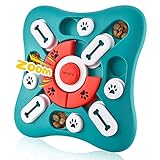
- 【PRODUCT SIZE】10 inch*10 inch*1.3 inch.
- 【3 WAYS TO PLAY, UPGRADE SLOW FEEDER】Our dog mental stimulation toys have a unique squeak button in the middle, which make it easier to attract the attention of dogs and cats. Three different difficulty designs and the 16-hole dog treat dispenser design maximize slow feeding time, even beyond 20 minutes.
- 【FUNNY STIMULATING TOYS】All kinds of dogs and cats love the puzzle game of Spin & Slide and the Seek & Hide with their smell sense and paw skills to find food. Combining circular orbit sliding game and linear orbit sliding game, smart dog and cat must move the slider correctly to get the food reward hidden in the maze.
- 【NON-REMOVABLE PARTS DOG PUZZLE】Our dog treat puzzle is made of non-toxic materials, very durable and suitable for pets to play for a long time. This dog toy has no removable parts because the design has built-in play parts that fold tightly and won't fall off easily.
- 【ANTI-SLIP & EASY TO CLEAN】: The four corners of the bottom are equipped with four anti-skid pads, which can be well fixed during the dog's slow food process; It is easy to clean, also dishwasher safe.
Food puzzles and stuffed toys
Food puzzles turn a normal meal into licking, extracting, and problem-solving. The ASPCA recommends a food-stuffed puzzle toy that takes the dog at least 20 to 30 minutes to finish when the guardian leaves. That figure is a practical target from current ASPCA guidance, not a guarantee that every dog will work for that long.
Free tools Windows power users keep installed
One-click scans. No signup required.
How to introduce one safely
- Choose a size the dog cannot swallow and a difficulty level that allows steady success.
- Offer the empty item while you are present so you can inspect how the dog grips, rolls, licks, and chews it.
- Start with easily accessible food. Increase difficulty only when the dog remains calm and does not resort to frantic biting.
- Use a portion of the regular meal, not an unmeasured pile of treats.
- After the dog has used the item safely under supervision, offer it at departure and continue checking its condition.
Discard a puzzle if it develops cracks, sharp edges, loose pieces, or a size that could become a swallowing hazard. A dog that guards the item, becomes frustrated, or abandons food may need an easier setup or a different activity.
Snuffle mats and scent-based games
A snuffle mat lets a dog forage through fabric folds for meal kibble. It provides scenting and searching in a usually short-to-moderate session. Use the dog’s measured food allowance, supervise initial sessions, and remove the mat if the dog begins chewing or swallowing fabric.
Hidden-kibble hunt
For an inexpensive alternative, hide small portions of kibble in safe, accessible locations before leaving. Start with obvious hiding places while you are home, then vary the locations as the dog understands the game. Keep food away from electrical cords, toxic substances, inaccessible gaps, children’s toys, and anything the dog might shred or ingest. Reduce the rest of the meal by exactly what you hide.
Keep scent work calm
Scent games should encourage methodical searching, not frantic room-to-room running. Use a small number of finds, allow breaks, and stop if the dog becomes distressed. A camera can show whether the dog searches and then rests or remains agitated after the food is gone.
Also popular on Amazon

- 2 Levels in 1 Toy: start your pups off with a level 1 puzzle, add some treats in the base compartments and watch your dogs get their tasty reward by nudging the lids. For dogs who have mastered level 1, for added challenge in level 2, just put some treats in the top compartments, teach your dogs to press the top cover to dispense treats down into the base compartments and finally enjoy their reward
- Slow Feeder: The large capacity top transparent granary saves you the hassle to refill dog food frequently. The product can also be used as a slow feeder utensil for your dogs, which promotes healthy ingestion by slowing down eating speed by over 10x. Great for large and small dogs
- Not Easy to Tip Over: 4 non-slip rubber mats and weighted base hold the dog puzzle toy firmly in place when dogs eat and nudge and prevent the toy from tipping over
- We Prioritize Safety: the dog puzzle toys are designed with your pet’s health in mind, made of durable food-grade PP materials. Non-removeable parts make it safe and easy to clean. And you can give puzzles toy to your dog or directly out of the box, just no assembly!!
- Trains Dog’s Intelligence: interactive treat puzzle game challenges your puppies to get their reward of treats, works your dog's mind while reducing boredom and destructive behavior like chewing, digging and excessive barking. Size: 4.2 inch height
Chews: useful occupation with real hazards
Chewing can provide species-typical occupation, but a chew is not automatically safe because it is sold for dogs. The ASPCA warns that rapidly consumed pieces can cause intestinal obstruction or perforation and recommends active observation. Introduce any new chew while you are present, assess how quickly the dog breaks it apart, and remove it when it becomes small enough to swallow.
- Do not leave an unfamiliar chew with a dog who has not demonstrated safe use.
- Inspect for splinters, detached pieces, frayed material, or trapped jaws.
- Stop using an item that causes frantic gulping, guarding, vomiting, or repeated attempts to break off chunks.
- Ask a veterinarian for guidance if the dog has a history of swallowing non-food objects or gastrointestinal problems.
Chews complement a plan; they do not replace a toilet break, human contact, or anxiety treatment.
Reward-based training before or after work
Training supplies mental work and interaction with the handler. Keep sessions brief and positive: reward attention, a mat settle, hand targeting, a “find it” search, or calm leash behavior. Use food from the daily ration where possible. End after a successful repetition rather than drilling until the dog is frustrated.
Examples that fit a workday
- Mat settle: reward the dog for choosing a bed and remaining there while you move around the room.
- Find it: toss one piece of kibble into an open, safe area and release the dog to search.
- Object discrimination: teach the dog to touch or retrieve one familiar item, using easy steps and generous rewards.
- Novel-route walk: allow extra sniffing and exploration instead of only increasing speed or distance.
Positive methods are the appropriate foundation. Punishment can increase fear and does not teach the dog what to do during an absence.
Recommended Free Tools
Comparing workday enrichment options
| Option | Main mental job | Duration and supervision | Key cautions |
|---|---|---|---|
| Food puzzle or stuffed rubber toy | Licking, extracting, and problem-solving | Often useful at departure; test first under supervision | Count filling in the daily ration; choose a safe size and difficulty |
| Snuffle mat | Scenting and foraging | Usually short to moderate; supervise initial sessions | Prevent fabric chewing or gulping; use meal kibble rather than excess treats |
| Hidden-kibble hunt | Searching and scent discrimination | Flexible and inexpensive; set up before leaving | Hide food only in safe locations and subtract it from the meal |
| Reward-based training | Learning and handler interaction | Best before or after work with a person present | Use positive methods; stop if the dog is frustrated or distressed |
| Chew | Species-typical chewing and occupation | Varies by item; supervision is essential | Swallowed chunks can cause obstruction or perforation |
| Walker, sitter, or daycare | Social contact, toileting, and movement | Replaces part of a long absence | Match the provider and setting to the individual dog and verify local availability |
Rotate activities instead of leaving everything out
Novelty is useful when it stays predictable and safe. Keep a small set of proven activities and rotate one element at a time: a different puzzle shape, a new safe hiding pattern, or a changed walk route. Introduce new items on a day you can observe. If the dog destroys, guards, or ignores an item, remove it rather than escalating difficulty.
Also popular on Amazon
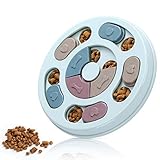
- 【Size】: L9.44" * W9.44"* H1.14" suitable for cats, puppies and small dogs.
- 【Interactive Dog Toys】This is a interactive puppy puzzle , which can easily become the closest companion and toy for your puppies and cats, and will release pressure for dogs. Find food by sliding parts to improve eating pleasure and IQ.
- 【Slow Feed Bowl】This encourages pets to eat at a slower speed, helps to slow down the feeding time to help the dog digest, and can provide your dog with a variety of healthy snacks.
- 【Slow Feede toys】 Use this educational game toy to exercise the dog’s brain, which will help meet the dog’s instinct needs, train the pet’s sense of smell, and let the dog enjoy feeding when using the nose or paw to move the slider, while providing spirit stimulate.
- 【Dog toys】No toy is indestructible. Do not leave toys with unsupervised pets. Remove and replace toy if damaged.
Rotation also helps you identify what the dog can do independently. A puzzle that works for ten calm minutes may be appropriate at departure; an item that requires repeated human help is a training activity for another time.
Is your dog bored or experiencing separation anxiety?
Separation anxiety is distress linked to being apart from a guardian. The ASPCA lists barking, howling, destructive escape attempts, accidents, drooling, and agitation when the guardian prepares to leave among possible signs. A distressed dog may refuse food or become panicked rather than calmly finishing a puzzle.
Boredom can improve when the dog receives appropriate novelty, searching, chewing, movement, and interaction. However, the same destructive mess can have different causes: RSPCA guidance notes that separation-related behavior may be confused with boredom or outside noises. Look at the pattern and timing, not just the damage.
Do these 3 things before closing this tab:
1Repair Windows errors before they cause bigger problems2Fix the driver behind crashes, sound loss and screen glitches3Clear out junk files and repair common Windows errorsClues to record
- Does distress begin during keys, shoes, or other departure cues?
- Does the dog eat the food puzzle, leave it untouched, or scatter food while vocalizing?
- Does behavior continue throughout the absence or stop after a short search?
- Are there escape injuries, heavy drooling, repeated pacing, or accidents despite normal toilet opportunities?
- Does a midday visitor change the behavior, and can the dog settle after that visit?
Video can help a veterinarian or behavior professional evaluate the sequence, but it cannot diagnose the condition by itself.
Independent reader supportYour contribution helps us test, update, and keep practical guides available for everyone.What to do if the dog is distressed
- Stop rehearsing full panic. Reduce absences to a duration the dog can tolerate and arrange a walker, sitter, friend, or daycare when necessary.
- Book a veterinary assessment. Medical problems can affect behavior, and a veterinarian can determine whether further behavioral care is needed.
- Use gradual desensitization and counterconditioning. ASPCA guidance recommends professional help for moderate or severe cases. Build departures in small steps while pairing separation with safe, positive experiences.
- Do not punish. A mess, howl, or scratched door is not deliberate revenge. Punishment can add fear and worsen the association with departure.
- Do not claim a toy cures anxiety. Enrichment supports welfare and may help occupy a relaxed dog, but treatment must address the emotional response to separation.
Appropriate escalation options include a veterinary behaviorist, a Certified Applied Animal Behaviorist, or a qualified positive-reinforcement trainer who works with separation cases. Ask what methods and progress measures they use before beginning.
Also popular on Amazon

- 【Product Size】10 inch*10 inch*1.2 inch.
- 【Interactive Dog Puzzle Toys 】This is a fun interactive puzzle toy,which can encourage and train your dogs or cats to seek foods by sliding the slider, helping pets to increase IQ by learning sequential steps and the challenging play.
- 【Squeaky Dog Toys】This dog puzzle toys is designed with a sounding device in the middle of the toy,which is to attract the pet's attention.Also,you would enjoy the fun of dog squeak puzzle toy with your pets, greatly improve relations with your pets and get fun during interactive dog games.
- 【Mental Excecise&Boredom Buster】Our memory training puzzle toy can keep smart dogs busy and engaged in more thinking and activities.Therefore,clot stimulation toys are great for reducing dogs’boredom,anxiety and destructive behaviors.
- 【Food-Safe PP Material】This dog treat puzzle is made with toxic-free, food-grade PP material. It is durable for interactive play and mental enrichment but not designed as a chew toy. Always supervise your pet during use.Easily washable with water or in the dishwasher.Note: No toy is indestructible. Remove and replace the toy if damaged.
Feeding, calorie, and household safety rules
- Measure first: deduct stuffed-toy filling, puzzle food, treats, and snuffle-mat kibble from the dog’s daily allowance. RSPCA warns that overfeeding can cause obesity.
- Inspect every item: check for broken parts, swallowed material, trapped jaws, sharp edges, and frantic guarding.
- Introduce while present: never make an unfamiliar toy or chew the only activity available during a long absence.
- Control the environment: remove cords, toxic substances, small objects, unstable furniture, and anything the dog has previously tried to ingest.
- Keep rest possible: enrichment should not force continuous activity. A quiet, comfortable area is part of the plan.
Animal welfare includes both physical and mental wellbeing. The AVMA describes protecting animal welfare as a veterinary commitment encompassing all aspects of an animal’s wellbeing, so safety, rest, social contact, and emotional comfort belong in the same plan as entertainment.
An example workday schedule
| Time | Action | Purpose |
|---|---|---|
| Before work | Toilet break, walk with sniffing, and a few minutes of reward-based training | Movement, elimination, scenting, and calm interaction |
| At departure | Offer part of the normal meal in a tested puzzle or stuffed rubber toy | Structured licking and problem-solving; ASPCA guidance targets 20–30 minutes of use |
| Midday, when needed | Walker, sitter, trusted friend, or suitable daycare | Toileting, movement, and human contact during a longer absence |
| After work | Walk, exploratory outing, play, or another short training session | Positive interaction and additional mental work |
The times are a framework, not a prescription. If the dog cannot remain comfortable between visits, shorten the interval or increase human coverage. If the dog finishes food quickly and settles, do not add difficulty merely to keep it busy.
What’s actually slowing this PC down?
Pick the symptom - the matching free tool is one click away.
When to change the plan
Review the routine whenever your work hours, household, health, or the dog’s behavior changes. A schedule that worked while someone was home all day may fail after a return to in-person work. Increase absences gradually after holidays or illness, and observe the first several departures rather than assuming the old pattern still applies.
Seek prompt professional advice for escape attempts that risk injury, repeated refusal of food during absences, severe vocalization, heavy drooling, self-injury, or any sudden behavior change. A food puzzle is an enrichment tool; it is not a substitute for diagnosis, a midday care plan, or evidence-based behavior treatment.





Leave a Reply