
Windows Errors? Fix Them Before They Spread
Repair common Windows errors and clear accumulated junk for a smoother, more stable PC - no reinstall needed.Free scan · no reinstallOutdated Drivers Are Slowing You Down
One free scan finds every outdated or missing driver and matches the right update for your exact hardware.Free scan · exact hardware matchSome links on this page are affiliate links: if you buy through them we may earn a commission, at no extra cost to you.
Separation-anxiety barking is a distress response, not disobedience. The most reliable way to reduce it is to prevent full-panic absences while teaching your dog, in very small steps, that departures are safe. Record what happens when you leave, keep absences shorter than your dog’s panic threshold, pair brief departures with calm rewards, and increase time only when your dog remains relaxed. Punishment, “cry it out,” and forcing a frightened dog into a crate can intensify the problem.
A veterinarian should assess severe, sudden, medically complicated, or self-injurious cases. Medication may help a dog learn, but it is prescribed as part of a broader behavior plan rather than used as a standalone cure.
As an Amazon Associate I earn from qualifying purchases.
Do these 3 things before closing this tab:
1Scan for outdated or missing drivers - takes under a minute2Clear out junk files and repair common Windows errors3Fix the driver behind crashes, sound loss and screen glitchesWhat separation-anxiety barking means
Dogs with separation anxiety experience fear when a particular person leaves or when they are left alone. Barking, whining, and howling are possible signs, but the problem may also appear as pacing, panting, trembling, scratching at doors, destruction, escape attempts, house-soiling, vomiting, or self-injury. Some dogs become frantic within minutes; others show a slower buildup of distress.
The U.S. Food and Drug Administration (FDA) described separation anxiety as a fear-based behavioral problem and reported in 2019 that published estimates placed separation-anxiety behavior problems in 20% to 40% of dogs referred to behavior practices in North America. That figure applies to referred cases, not every dog in the general population.
Popular on Amazon

- Safe, Effective, Easy Setup: The dog bark collar has 4 working modes; 5 adjustable sensitivity levels. Just press the M button at any time to enjoy quiet time. Please refer to the user manual before use for optimal performance and safety
- Automatically Stop Dog Barking: FAFAFROG bark collar for large dogs is equipped with an upgraded smart dog barking recognition chip with 2 activation conditions: The dog keeps barking and vibration from vocal cords (No remote)
- Protect Mode: The smart color display clearly shows the working status and power level; If the dog bark collar has been activated 6 times continuously, it will stop working for 30 seconds (the digital display changes to "8"), protecting your dog from unnecessary activation. FAFAFROG bark collar is a tool of love, not punishment
- Fast Charging & Waterproof: The bark collar for medium dogs features new charging for simple operation and more stable charging; A full charge in 2 hours works for about 15-20 days; The bark collar for large dogs has an IP67 waterproof design, so you can enjoy training time with your dog in the pool, park, beach, or backyard. Your dogs will enjoy bathing, swimming or playing in the rain
- Fits Most Dogs: Our bark collar is 27 inches long and weighs 0.17 lbs, suitable for dogs weighing 8 to 150 lbs with neck sizes from 8 to 25 inches, and is ideal for dogs over 6 months old. The bark collar length can be adjusted as your dog grows
Barking that occurs only when you are gone is a strong clue, but it does not prove separation anxiety. A dog may instead be reacting to people or animals outside, confinement, boredom, an inconsistent schedule, pain, hearing changes, or another medical problem. The first goal is to identify the pattern rather than guessing from the sound alone.
Confirm what happens after you leave
Use an indoor pet camera with recording
Set up an indoor pet camera with video recording so you can watch the first 30 to 60 minutes after departure. Review the footage for the exact onset of barking, pacing, panting, scratching, elimination, attempts to escape, and the point at which the dog settles. A camera can reveal quiet distress, such as standing rigidly at the door or repeatedly scanning windows, that is easy to miss from outside.
Free tools Windows power users keep installed
One-click scans. No signup required.
Keep a simple log alongside the video:
- Departure time and the length of the absence.
- Whether the dog noticed keys, shoes, a coat, or another departure cue.
- Seconds or minutes until the first vocalization.
- Other physical signs, including panting, drooling, trembling, pacing, vomiting, or elimination.
- Whether the dog could eat a normal treat or food toy.
- How long recovery took after you returned.
Share representative clips and the log with your veterinarian. The pattern helps distinguish separation distress from alarm barking at passersby, confinement anxiety, boredom, or illness, and it gives you an objective way to measure progress.
Prevent panic while you arrange treatment
Every long, frantic absence rehearses the behavior and can make the next departure harder. Until training allows your dog to stay calm for the time you need, arrange care that keeps absences below the dog’s current limit.
Temporary care options
- A trusted friend, neighbor, or professional sitter can stay in the home or take the dog out before distress begins.
- Daycare can work for dogs who enjoy group settings and are medically and behaviorally suited to them.
- Boarding may be appropriate for unavoidable extended trips when the facility can safely manage the dog.
- Taking the dog with you, when practical, can prevent a crisis while you build skills.
These are management tools, not evidence that training has failed. The purpose is to reduce the number of panic episodes while you teach a new response. Keep departures and arrivals calm and matter-of-fact. Where possible, make departure cues less predictive by occasionally picking up keys, putting on shoes, or opening the door without leaving.
Also popular on Amazon
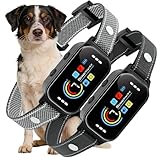
- Precision Sonic Training & Custom Modes Humanely stop unwanted barking with 5 intelligent training modes and 7 adjustable sensitivity levels, tailored to your dog’s breed, size and behavior. One quick "M" button press for instant, no complex settings.
- 3-Layer Safety & Anti-False Trigger Smart anti-misfire chip cuts false triggers by 67%*, paired with 0-7 sensitivity and auto safety mode (pauses after 3 activations in 45s). Safe for 40+ breeds (11-120lbs)
- One-Click Operation & Easy Setup Dual-button control for instant sensitivity/mode adjustment, plus visual quick-start guide and test mode. 2-minute setup, perfect for first-time pet owners.
- IP67 Waterproof & Long-Lasting Battery All-weather tough (dustproof/waterproof) for beach, hikes, rainy walks—ideal for outdoor adventures. 15-day battery life with 2-hour magnetic quick charging (cable included).
- Koguzl Quality Guarantee 100% customer satisfaction promise! Enjoy a 60-Day No-Hassle Money-Back Guarantee and 2-Year Manufacturer Warranty for total peace of mind.
When a crate helps—and when it harms
A crate is useful only if your dog already relaxes there. A dog who willingly naps in the crate may appreciate it as a familiar resting place. A dog who pants, freezes, bites the bars, destroys bedding, or injures itself when confined is experiencing an unsafe situation; crating that dog during an absence can worsen the risk. The American Animal Hospital Association lists alternatives such as a sitter, daycare, or boarding when crating is unsafe.
Never force a panicking dog into a crate, and do not use the crate as a way to contain destruction without addressing the fear. Use a dog-proofed room or pen only if video shows that the space is genuinely calming.
Teach calm behavior before working on long departures
Reward relaxation at home
Start when you are present. Place a mat or bed in a quiet area and quietly reward your dog for lying down, soft body language, looking away from you, or resting its head. Deliver the reward without exciting conversation. Over many short sessions, your dog learns that calm, independent behavior earns good outcomes.
Practice brief out-of-sight moments
Walk behind an interior door or around a corner for one or two seconds, then return while your dog is still relaxed. Gradually vary the location and duration. These exercises are not meant to test endurance; they are repetitions in which the dog succeeds before anxiety rises. If your dog follows immediately, vocalizes, or rushes the barrier, make the next repetition easier.
Use food only when the dog can eat calmly
A stuffable food toy or puzzle feeder can support counterconditioning by making a brief departure predict something valuable. Offer it while you are still home first. If the dog ignores food, drops it, guards it frantically, or cannot remain settled, anxiety is too high for that exercise; shorten the absence and lower the overall difficulty. Food toys are management aids, not substitutes for gradual exposure.
What’s actually slowing this PC down?
Pick the symptom - the matching free tool is one click away.
Also popular on Amazon

- Dual Smart Sensors – Stop False Triggers, Bark Only for Your Dog: Tired of collars triggered by neighbor's dog or every noise? Our dog bark collar is advanced with dual-sensor intelligence. AI sound recognition pinpoints your dog’s unique barks, whines, and howls, while the built-in gravity sensor filters out head shakes and sudden movements. It intelligently ignores environmental noise and other dogs' barking, ensuring corrections happen ONLY when your pet actually barks. Fair, accurate, and frustration-free
- Every dog is different – so is our training! This bark collar offers 4 humane modes: Beep, Vibration, Beep+Vibration and 3 adjustable levels. Pair them with 8 fine-tune sensitivity grades, so you can precisely set the trigger threshold for sensitive small breeds (fits dogs as small as 10 lbs, like Chihuahuas and Pomeranians) or stubborn large breeds (up to 100 lbs, like Labradors and German Shepherds). Whether you need a gentle vibration for a timid pup or a stronger correction for a persistent barker, you stay in full control. Start low, observe, and adjust – no guesswork, just effective bark control that’s safe and personalized
- Real-Time Bark Counter + 15-Day Battery & IP67 Waterproof – Smart Bark Collar with TFT Screen: The rotatable TFT color screen makes it incredibly easy to set up and adjust training parameters on this anti-bark collar. Monitor daily bark counts in real time – no more guessing, just clear data to track your dog's progress. Within just one week of consistent training, you'll likely see a noticeable drop in barking. Powered by a 2-hour quick charge, this bark collar runs 15–20 days on a full charge. Plus, the IP67 waterproof rating means it stands up to rain, splashes, and beach outings without any damage – durable for all-weather wear
- Feather-Light (0.17 lbs) & 25" Adjustable Nylon Strap – Comfortable Bark Collar Fit for Small to Large Dogs: Why sacrifice comfort for control? Weighing only 0.17 lbs, this lightweight anti-bark collar is so comfortable your dog will barely feel it. The 25-inch adjustable nylon strap ensures a snug, secure fit for breeds from Poodles and Frenchies to Golden Retrievers and German Shepherds (fits neck sizes up to 25 inches). The easy buckle design lets you put it on and take it off in seconds, making it a convenient training collar for daily use
- Reduce Barking by 90% – Backed by 2-Year Warranty: Transform your home into a peaceful haven. This collar effectively reduces excessive nuisance barking by up to 90%. Whether curbing boredom barking or ensuring quiet while you're away, we've got your back. Comes with a 30-day money-back guarantee and a 2-year replacement warranty – your satisfaction is 100% guaranteed
Run graduated departures
Systematic desensitization and counterconditioning are the behavioral foundation. Begin below the threshold at which barking or panic starts, pair the departure with a positive experience, and return before distress escalates.
- Find the starting duration. Using the camera, test a departure that may be as short as walking through the door and returning immediately. Choose the longest duration at which your dog remains loose-bodied and quiet; for some dogs this is only a few seconds.
- Repeat easy departures. Perform several repetitions with a pause between them. Return neutrally, wait for calm, and begin again. Do not make every repetition longer.
- Add time in small increments. Increase by seconds, not by large jumps. A practical sequence might move from one second to three, five, eight, and ten seconds, but the exact increments depend on the individual dog.
- Mix easy and slightly harder trials. After a successful longer repetition, follow it with an easier one. This prevents the session from becoming a continuous climb toward failure.
- Watch the video, not the clock alone. Panting, pacing, fixed staring, whining, or refusal of food means the duration is too difficult even if barking has not started.
- Step back after distress. If barking or panic appears, return at the first safe opportunity and make the next repetition shorter—often returning to the last duration that was clearly successful.
- Generalize gradually. Practice different doors, times of day, departure clothes, and routines only after the basic exercise is stable. Change one variable at a time.
Progress is rarely linear. A dog may manage 30 seconds in the morning and struggle at the same duration later after a noisy event, illness, or schedule change. Treat each session as information rather than a pass-or-fail test.
Why “cry it out” and flooding backfire
Leaving a panicking dog alone until it stops vocalizing does not teach safety; the dog may stop from exhaustion or helplessness while fear remains. Flooding—exposing the dog to an absence far beyond its tolerance—can sensitize the response. Cornell University College of Veterinary Medicine advises gradual desensitization instead. If you cannot keep an absence below threshold, use temporary care rather than a forced test.
Do not punish the barking
Yelling from another room, leash corrections, shock collars, spray devices, and other aversive methods may suppress a sound briefly but add fear to an already frightening situation. They do not teach the dog that being alone is safe, and punishment after you return cannot connect reliably to barking that happened minutes earlier. The American Animal Hospital Association and Cornell guidance support reward-based, gradual behavior work instead.
When you return, avoid scolding damaged furniture or accidents. Clean calmly, make the environment safe, and adjust the next absence to a duration your dog can handle.
Also popular on Amazon

- 【No More Rubs or Raw Spots】Unlike bark collars with seams or pointed edges, our seamless back design conforms smoothly to your dog's skin, preventing pressure or chafing. This innovative contact surface eliminates friction points, ensuring your pet's comfort and freedom from irritation.
- 【Perfect Fit for All Dogs】This adjustable dog bark collar is suitable for small, medium, and large dogs. For small dogs, every ounce of weight is crucial. Therefore, our barking collar is carefully designed to be extremely lightweight, allowing even puppies to wear it comfortably without feeling burdened. The reflective nylon collar provides extra safety for your dog during nighttime walks.
- 【3 Humanized Modes】Our dog training collar offers three gentle correction modes (beep, vibration, and beep + vibration) and five sensitivity settings, allowing you to adjust to different environments and create a positive, personalized training experience. This method calmly helps them relax and learn effectively, effectively correcting barking behavior by building trust and understanding.
- 【AI-Powered Precision】This vibrating dog collar uses an advanced AI voice recognition chip and motion sensors, activating only when your dog barks. It intelligently ignores background noise and other animal sounds, meaning correction is only applied when necessary, avoiding confusion and unnecessary stress for your dog. This precision helps build clear causal cognition and accelerates learning.
- 【Innovative Protection System】We understand that responsible training requires setting boundaries. Therefore, our anti barking device for dogs automatically pause for 30 seconds after seven repetitions. This intentionally scheduled rest protects your dog from stress, allowing them to calm down, understand the training content, and readjust. Let your dog enjoy a pleasant training experience.
Choose tools by the job they can actually do
| Option | What it can do | Limits and safety conditions |
|---|---|---|
| Indoor pet camera with video recording | Shows when distress begins, identifies overlooked signs, and measures change. | It monitors rather than treats anxiety; use recordings to adjust training and to share evidence with your veterinarian. |
| Stuffable food toy or puzzle feeder | Adds a valuable activity during controlled, brief departures and can support counterconditioning. | Use only when the dog can eat and stay relaxed; supervise initial use and choose a design the dog cannot break or swallow. |
| Dog-appeasing pheromone diffuser | May be tried as an optional environmental adjunct. | A 2021 review of eight controlled trials rated the overall evidence weak, with no clearly superior formulation and uncertain clinical benefit. It should not replace behavior work or veterinary care. |
| Crate | Provides a familiar resting space for a dog that already relaxes there. | Unsafe for dogs that panic, freeze, destroy the crate, attempt escape, or self-injure when confined. |
| Sitter, daycare, or boarding | Prevents absences longer than the dog can currently tolerate. | Management reduces rehearsal but does not by itself teach independent settling; select care suited to the individual dog. |
The Veterinary Evidence review concluded that evidence for dog-appeasing pheromone products in dogs over six months of age remains weak. A diffuser is therefore a low-priority experiment, not a primary treatment. Stop using any product that causes irritation, ingestion risk, or new agitation.
Independent reader supportYour contribution helps us test, update, and keep practical guides available for everyone.When veterinary treatment is needed
Book an assessment promptly for severe or unusual signs
Arrange veterinary evaluation when the dog injures itself, makes dangerous escape attempts, vomits, collapses, cannot eat or settle, or shows a sudden behavior change. Pain, gastrointestinal disease, neurologic problems, medication effects, and age-related changes can alter behavior or make training harder. Bring the video and behavior log.
Medication can make learning possible
Medication is a veterinary decision based on the dog’s health, severity, environment, and response to training. The FDA describes clomipramine as part of a comprehensive behavior program, not a replacement for behavior modification. Do not start, stop, combine, or adjust prescription drugs or supplements without veterinary direction.
Recommended Free Tools
On May 6, 2026, the FDA announced approval of Tessie (tasipimidine oral solution), the first FDA-approved treatment for both canine noise aversion and separation anxiety. Its indication does not eliminate the need for a behavior plan; your veterinarian must decide whether it is appropriate for your dog and explain dosing, monitoring, and interactions.
Get skilled coaching
A veterinary behaviorist can assess medical contributors, design a graduated-departure schedule, and manage medication. A qualified fear-free trainer can coach timing, body-language observation, and home setup while coordinating with your veterinarian. Ask how the professional handles panic, what methods are used, and how progress is measured. Avoid anyone who promises a quick fix, recommends punishment, or tells you to leave a terrified dog until it gives up.
Also popular on Amazon

- HUMANE NO SHOCK TRAINING – No shock bark collar for dogs uses sound and vibration to help reduce excessive barking. Ideal anti bark collar for small medium and large dogs with smart bark control.
- SMART AI BARK DETECTION – Advanced AI chip detects your dog's bark while helping reduce false triggers from other dogs, wind, traffic, TV and common household noises for reliable training.
- SOUND & VIBRATION MODES – Bark collar automatically responds with sound or sound plus vibration when barking is detected. Two training modes provide a simple no shock solution for everyday bark training.
- ADJUSTABLE COMFORT FIT – Dog bark collar fits neck sizes from 6–25 inches and dogs from 6–120 lbs. Soft reflective nylon strap provides a secure comfortable fit for small medium and large dogs.
- LONG-LASTING BATTERY – Up to 14 days of operation depending on usage. Smart bark collar stays ready for home, walks, travel and everyday training with dependable automatic bark detection.
Troubleshoot common setbacks
The dog barks as soon as the door closes
Lower the starting point to a door movement, a half-second outside, or even standing on the threshold. Repeat calm successes before adding duration. Check whether keys, shoes, or a specific exit trigger anxiety and practice those cues separately without leaving.
The dog eats the food toy only when you stay
That response indicates the absence is too difficult or the food is not valuable enough in that context. First build interest in the toy while you are nearby, then place it down during a one- or two-second departure. If the dog still cannot eat, stop using the toy as a test and shorten the exercise.
Progress stops after a promising week
Review the video for smaller signs of stress, reduce increments, and return to the last stable duration. Consider whether unavoidable long absences, construction noise, illness, visitors, or a schedule change caused repeated panic. Use temporary care while rebuilding.
The dog is calm in one room but panics in a crate
Treat confinement anxiety separately. Do not assume that a crate is required for separation-anxiety treatment. Train relaxed crate use only while you are present, or use a dog-proofed area that video confirms is safe.
Barking continues despite careful training
Recheck the diagnosis with your veterinarian, especially if the behavior began suddenly or includes physical symptoms. Ask for referral to a veterinary behaviorist and discuss whether medication could lower anxiety enough for learning. Continue preventing full-panic absences while waiting for care.
A practical daily plan
- Before the session: Meet exercise, toileting, and routine needs without trying to exhaust the dog. Set up the camera and remove hazards.
- Warm up calm behavior: Reward a few minutes of relaxed mat or bed behavior while you remain home.
- Practice departure cues: Pick up keys or put on a coat, then sit back down if those cues are triggering.
- Run short departures: Use the current successful duration, repeat it, and add only a small amount when the video shows continued relaxation.
- Record outcomes: Note duration, body language, food intake, and recovery. End the session before the dog becomes distressed.
- Manage the rest of the day: Arrange a sitter or other care for any absence longer than the dog can tolerate.
Several short, successful sessions are more useful than one ambitious test. Set a review point with your veterinarian or trainer so the plan can be adjusted from evidence rather than guesswork.
What improvement should look like
Early progress may be subtle: the dog notices the door but remains lying down, takes food, paces less, or recovers quickly. A camera lets you distinguish genuine relaxation from silent freezing. Track the longest calm duration, the number of repetitions completed without distress, and recovery after you return. Do not judge success solely by whether barking is audible; other anxiety signs matter.
Expect setbacks and protect the gains you have made. A single unavoidable panic episode does not erase learning, but repeated long absences can keep the nervous system sensitized. Keep management in place until your dog can reliably handle the real absences your household requires.





Leave a Reply