
What’s actually slowing this PC down?
Pick the symptom - the matching free tool is one click away.
Some links on this page are affiliate links: if you buy through them we may earn a commission, at no extra cost to you.
The safest way to reward a dog without creating a beggar is to pay for calm, incompatible behavior away from the table. Send your dog to a mat, bed, crate, or other designated spot before the meal; reinforce quiet sitting, lying down, or staying there with a pea-sized soft treat, praise, petting, a toy, play, or another activity your dog values. Deliver the reward at that location—not from your plate and not by calling the dog over.
When begging starts, do not pay it with food or excited attention. Calmly return the dog to the settle spot, block access with a gate, or use a separate room, then resume rewards only after the dog is quiet. This combination of reinforcement and management teaches what to do instead of merely suppressing unwanted behavior.
As an Amazon Associate I earn from qualifying purchases.
PC Slower Than It Used to Be?
A free scan shows the junk files, broken settings and background clutter dragging Windows down - then fixes them in one click.Free scan · Windows 10 & 11Outdated Drivers Are Slowing You Down
One free scan finds every outdated or missing driver and matches the right update for your exact hardware.Free scan · exact hardware matchWhy table food creates begging
Begging is behavior that has been reinforced. If staring, pawing, whining, barking, or hovering is sometimes followed by a bite from a plate, the dog learns that those actions can produce food. Even an occasional success can keep the behavior going because the payoff is unpredictable.
The replacement behavior must be easier for the dog to understand and more reliable in its results. “Go to your mat,” “down,” “settle,” and “leave it” give the dog a specific action that can earn reinforcement. A gate, crate, or separate room prevents the dog from practicing the old routine while the new one is being taught.
Popular on Amazon

- BIG MOTIVATION IN EACH MINI BITE. Each of these 1.5 calorie treats are packed with flavor from pork liver, real bacon, and added botanicals that will keep dogs focused and eager to learn!
- TRAIN. ENRICH. TREAT. These low calorie training rewards are great for training sessions, enrichment activities such as puzzle toys and snuffle mats, and every day treating occasions.
- GREAT FOR SMALLER DOGS. These bite-sized treats are the perfect size for training and every day treating for smaller dogs. Each 10 oz bag includes approximately 500 treats
- REWARD THE EVERYDAY Pet Botanics healthy training rewards are perfect for training and treating every day in every way. These soft & chewy treats have no artificial flavors, colors or preservatives.
- PROUD MEMBER THE CLOUD STAR FAMILY. With Cloud Star products, you can spend less time worrying about what to feed your pet and spend more time Living Life with Your Dog by Your Side.
Attention can also function as a reward. Looking at, talking to, petting, or repeatedly moving a dog in response to vocalizing may strengthen an attention-seeking pattern. Give interaction for calm behavior instead, and keep your response to active begging quiet and predictable.
The core rules for rewarding without begging
- Reward the behavior you want repeated. Positive reinforcement makes a behavior more likely to occur again. Reinforce a relaxed down, a quiet wait, a glance away from food, or a sustained stay.
- Deliver rewards away from the table. The dog should receive the payoff at its mat, bed, crate, or other approved location, never from a person’s plate or hand at the table.
- Use a clear marker. Say “yes” or “good dog” in an upbeat voice as soon as the desired behavior occurs, then give the reward. The marker tells the dog exactly which moment earned the payoff.
- Make food rewards tiny and soft. A small piece that can be swallowed immediately keeps the dog engaged with you rather than searching the floor for crumbs.
- Prevent rehearsal. During meals when training is impractical, use a gate, crate, or separate room. Management is not a failure; it stops the begging cycle from being rewarded.
- Fade food gradually. Pay every correct response while the behavior is new. Once it is dependable, lengthen the interval between treats and vary the rewards while continuing to acknowledge correct behavior.
- Use only reward-based training. The American Veterinary Society of Animal Behavior (AVSAB) states: “This statement clearly recommends that only reward-based training methods be used for all aspects of dog training and behavior modification.” Aversive tools and physical or psychological punishment are not recommended.
Which rewards work best during a meal?
The best choice depends on what motivates your individual dog and whether you can deliver it quickly without bringing the dog toward the table. Compare options by motivation, calories, speed, mess, distance from diners, repeatability, and whether the reward reinforces calm behavior rather than approach behavior.
| Reward | Motivation | Calories and ration planning | Delivery and mess | How to use it without encouraging approach |
|---|---|---|---|---|
| Tiny soft training treat | High for many dogs; test your dog’s preference. | Use very small pieces and subtract their calories from the daily ration. | Fast to swallow and usually low-mess. | Walk to the mat and place it there after the marker; never toss it toward the table. |
| Portion of normal kibble | Useful when the dog values its regular food. | Measure it from the day’s planned food rather than adding extras. | Clean and easy to portion; some dogs chew more slowly. | Set aside part of the meal and deliver individual pieces at the settle location. |
| Verbal praise | Strong for dogs that enjoy social interaction; weaker for others. | No calories. | Instant and clean. | Use “yes” or “good dog” quietly from a distance, then continue the calm interaction. |
| Petting or affection | Valuable to social dogs. | No calories. | Easy, but approaching a restless dog can excite it. | Offer it only while the dog remains settled; stop if it triggers jumping or movement toward the table. |
| Toy or short game | Effective for dogs motivated by play. | No calories. | Can be clean, but a vigorous game may disrupt the meal. | Use a quiet chew or brief play at the dog’s location, not a chase that brings the dog to diners. |
| Walk, outdoor access, or another valued activity | Depends on the dog and timing. | No treat calories. | Requires planning and may not be immediate. | Use after a calm interval or at the end of the meal as a larger, scheduled payoff. |
No single reward is universally best. Start with the least disruptive option your dog genuinely values. If a toy creates frantic movement or petting causes the dog to leave the mat, switch to a quieter reward. A reward counts only if the dog can receive it while maintaining the behavior you are trying to build.
Prepare before anyone sits down
Training is easiest when the reward, location, and cue are ready before food appears. Choose a mat, bed, crate, or room that is far enough from the table for the dog to relax but close enough for you to deliver reinforcement. Keep pea-sized soft treats or a measured portion of the dog’s normal food within reach. A gate is useful when you need hands-free management.
Decide in advance which behavior will earn rewards. For a dog that already knows a mat cue, use “go to your mat” followed by “settle.” For a beginner, start with a simple down or a brief quiet sit. The first objective is not a long stay; it is teaching that calmness in that location produces good things.
Step-by-step mealtime routine
- Prepare the rewards and location. Before sitting down, portion the dog’s soft treats or normal food and identify the mat, bed, crate, or separate room. Account for the food in the dog’s daily ration.
- Send the dog to the spot. Cue “go to your mat,” “bed,” or another consistent phrase. When the dog arrives, mark and reward there. Do not call the dog to the table to collect payment.
- Reinforce the first quiet moment. As the dog gives a quiet glance, relaxes into a down, or holds the position, say “yes” or “good dog,” walk over, and place the reward at the dog’s location. Return to your meal.
- Build duration in small increments. At first, reinforce frequently enough to keep the dog successful. Gradually wait longer between rewards as the dog remains relaxed. If the dog gets up, the interval was too difficult; shorten it at the next attempt.
- Respond to begging neutrally. If the dog approaches, stares, paws, whines, or barks, do not feed, scold, or create an exciting interaction. Calmly guide the dog back to the settle spot or use the gate. Wait for quiet before reinforcing again.
- Handle dropped food with “leave it.” Cue “leave it” as soon as food falls. Reward the dog for disengaging and moving away from the food, with the payoff delivered away from the table. Retrieve the dropped item yourself when it is safe to do so.
- Fade food only after reliability. Across successful meals, lengthen quiet intervals and reduce the frequency of treats gradually. Keep praise, occasional food, play, affection, or another valued activity so the behavior remains worthwhile.
Teach a dependable settle behavior
Start away from mealtimes
Teach the mat behavior when the house is quiet. Stand near the mat and reward any interest in it, then reward standing, sitting, and lying there. Add the cue once the dog is choosing the location readily. Release the dog after a short successful interval, then repeat. This creates a history of calm behavior before you add the stronger distraction of human food.
Add mild distractions
Practice while you handle an empty plate, sit briefly, or move around the room. Reinforce before the dog leaves the mat. Increase only one difficulty at a time: distance, duration, movement, or food smells. If the dog repeatedly breaks position, make the exercise easier instead of adding corrections.
Also popular on Amazon

- BUDDY TRAINING BITES: These bite-sized treats are chock full of meaty flavor from appetizing pork liver as the 1st ingredient, so they are easy to eat and perfect for dogs of all ages.
- ALL THE GOOD STUFF: Our training treats are made in the USA and they are free of corn, soy, artificial flavors and preservatives. With Buddy, you can feel good about serving your best bud the treats they deserve!
- LOW CALORIE: Only 1.5 calories per treat to help make your dog training sessions last longer! The delicious aroma will have your pup coming back for more.
- 500 TREATS PER BAG: Reward your dog's good behavior with 500 treats per bag. Buddy is healthy, tasty & fun!
- EVERYBODY LOVES BUDDY: Buddy is the perfect companion for your best friend! Buddy's delicious flavors are sure to bring your pup joy! Buddy has a range of treats - all made with real, simple ingredients that you can pronounce.
Use a release cue
A release word such as “okay” tells the dog when the settle exercise is finished. Without a release cue, some dogs guess that they may leave as soon as the reward arrives. Keep the release calm and avoid turning it into a sprint toward the table.
Teach “leave it” for dropped food and tempting plates
“Leave it” should mean disengage from the item and orient back to the handler or move away. Begin with a low-value object in a quiet setting, reward the instant the dog stops reaching for it, and progress gradually to more tempting food. During meals, use the cue before the dog grabs a fallen item whenever possible.
The reward for leaving food should not come from the food itself or from the table. Deliver it at the dog’s approved location. This distinction teaches that turning away from temptation, rather than approaching it, is what earns reinforcement.
Recommended Free Tools
Use the dog’s daily food without overfeeding
Food rewards are part of the dog’s intake. The Humane Society of Missouri advises distributing food through training and feeding toys while accounting for the complete daily ration. The American Kennel Club advises following the feeding recommendations on the food label so the dog is adequately fed.
Measure the day’s food before training. You can reserve a portion for mealtime practice, use regular kibble as the reward, or reduce the remaining meal by the amount used during training. There is no evidence here for a universal treat-calorie percentage that applies to every dog, so adjust with your veterinarian when body condition, growth, medical needs, or a prescribed diet are concerns.
Small, soft pieces are practical because the dog can swallow them immediately. Large, hard, crumbly, or greasy pieces slow delivery, create floor-scanning, or add unnecessary calories. The physical size should match the dog, but the training principle is the same: use the smallest piece that still matters to that individual dog.
How to fade treats without losing the behavior
When a cue is new, reward every correct response. This dense reinforcement helps the dog discover the rule. Once the dog settles reliably through ordinary distractions, begin varying the interval: sometimes reward after a short quiet period, sometimes after a longer one. Continue the marker and praise even when food is omitted.
Also popular on Amazon
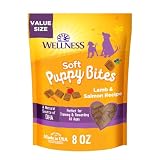
- GRAIN-FREE PUPPY TREATS: These bite-sized, soft puppy training treats are the perfect reward during training sessions or any time you want to thank your dog for good behavior. Puppy bites contain 6 calories per individual treat!
- SUPPORTS BRAIN DEVELOPMENT: Soft dog treats are crafted with salmon, a healthy source of DHA to promote healthy brain development.
- HEALTHY INGREDIENTS: These treats for dogs are made with minimal ingredients focused on quality proteins: made with lamb and salmon, with added vitamins specifically for puppies.
- NO CORN, WHEAT, OR SOY: Treats for dogs do not contain wheat, wheat gluten, corn, soy, or artificial colors.
- MADE IN USA: Our dog treats are quality-assured, made in USA, and crafted from the finest globally-sourced ingredients. Treats are tender, healthy, and bite-sized for small, medium, and large dogs of all lifestages, and activity levels.
Fade gradually rather than stopping treats abruptly. A sudden change can create frustration, especially if the dog has been reinforced on every repetition. Keep occasional food rewards available for especially long meals or difficult distractions, and rotate in play, petting, a walk, outdoor access, or another activity that the dog values.
Do not make the dog guess whether begging will eventually pay. Intermittent reinforcement should apply to the desired settle behavior, not to staring, pawing, or vocalizing. If begging has been rewarded in the past, it may briefly intensify when food stops; consistent management and reinforcement of the alternative behavior are essential during that transition.
Management choices when training cannot happen
Gate
A gate blocks access while allowing the dog to remain nearby. It is useful when the dog can relax outside the dining area and someone can check on it. Pair the barrier with a chew, toy, or resting area if those are appropriate for the individual dog.
Separate room
Feeding or placing the dog in another room is an acceptable way to prevent begging, and the American Kennel Club specifically recommends this option. It is practical for large family meals, guests, or situations in which consistent timing is impossible.
The Tool Desk
Outbyte Driver Updater FREEScan for outdated or missing drivers - takes under a minuteDriver Scan →Outbyte PC Repair FREERepair Windows errors before they cause bigger problemsFix Now →Crate
A crate can serve as the settle location when the dog has already been introduced to it positively and can rest there comfortably. Do not use it as a sudden punishment for approaching the table. Keep the routine predictable and provide appropriate enrichment.
Leash or tether with supervision
A short, supervised leash can help return the dog to its mat without chasing. It is a management aid, not a way to force the dog to remain in position. Never leave a tethered dog unattended or allow the leash to create a snagging hazard.
Troubleshooting common problems
“My dog ignores praise but loves food.”
Use tiny soft treats while the behavior is being learned, then pair each treat with the marker and praise. Over time, keep the praise and vary in other rewards, but do not remove food before the dog understands the task.
Also popular on Amazon

- BUDDY TRAINING BITES - These bite-sized treats are chock full of meaty flavor from appetizing pork liver as the 1st ingredient, so they are easy to eat and perfect for dogs of all ages.
- ALL THE GOOD STUFF - Our training treats are made in the USA and they are free of corn, soy, artificial flavors and preservatives. With Buddy, you can feel good about serving your best bud the treats they deserve!
- LOW CALORIE - Only 1.5 calories per treat to help make your dog training sessions last longer! The delicious aroma will have your pup coming back for more.
- 501 TREATS PER BAG - Reward your dog's good behavior with 500 treats per bag. Buddy is healthy, tasty & fun!
- EVERYBODY LOVES BUDDY: Buddy is the perfect companion for your best friend! Buddy's delicious flavors are sure bring your pup joy! Buddy has a range of treats - all made with real, simple ingredients that you can pronounce.
“My dog grabs the treat and runs back to the table.”
The reward is probably being delivered too close to the dining area or the dog is not yet ready for that level of distraction. Place the treat directly on the mat, increase distance from the table, and use a gate or separate room until the dog can remain settled.
“The dog gets more excited when I pet it.”
Petting is not reinforcing calmness if it causes movement, jumping, or renewed staring. Switch to a quiet verbal marker, a small food reward placed on the mat, or a calm toy. Reintroduce petting only when the dog can stay relaxed.
“Begging gets worse when I stop feeding from the table.”
A short-lived increase can occur when a behavior that used to work no longer does. Do not give in during the escalation. Use the gate or separate room to prevent rehearsal, and reinforce the first quiet behavior at the designated location.
“The dog leaves the mat as soon as I sit down.”
Reduce the difficulty. Practice the mat cue with shorter duration and less food-related distraction, then build up gradually. Reward before the dog gets up, and use a release cue so the dog learns exactly when leaving is permitted.
“Food falls faster than I can respond.”
Keep the dog behind a gate or in another room during messy meals. In controlled practice, prepare low-value food, cue “leave it,” and reward disengagement. Management is the safer choice when a dropped item could be dangerous or the dog is too fast for reliable training.
Do these 3 things before closing this tab:
1Scan for outdated or missing drivers - takes under a minute2Repair Windows errors before they cause bigger problems3Fix the driver behind crashes, sound loss and screen glitchesWhat not to use
Do not use yelling, leash corrections, shock, prong or choke equipment, physical force, intimidation, or psychological punishment to stop begging. These methods do not teach the dog where to go or what to do instead, and they can create fear or conflict around people and food. AVSAB’s position is that reward-based methods should be used for all dog training and behavior modification.
Do not manufacture a “correction” by putting food within reach and punishing the dog for taking it. Teach “leave it” with controlled, gradual practice and reinforce the desired disengagement. If guarding, snapping, panic, or severe distress appears around food, stop the exercise and seek help from a qualified veterinary behavior professional.
Also popular on Amazon
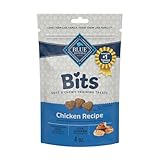
- REAL CHICKEN FIRST: BLUE Bits dog training treats are made with delicious real chicken as the first ingredient making them an ideal reward for your best friend’s best behavior
- SOFT TRAINING TREATS: For dogs that love a soft treat, BLUE Bits are tender, bite-sized morsels that are the perfect size for training; plus, with DHA to help support cognitive development, they’re an ideal puppy treat
- WHOLESOME INGREDIENTS: These dog treats don’t contain any chicken (or poultry) by-product meals and are free from corn, wheat, and soy; plus, they’re free from artificial preservatives like Propylene Glycol and colors like Red Dye 40
- HEALTHY DOG TREATS: Blue Buffalo natural dog treats feature the healthy, wholesome ingredients you’ll love feeding as much as they’ll love eating
- Contains: One (1) 4-oz bag of BLUE Bits Natural Soft-Moist Training Dog Treats, Chicken Recipe
A practical reward plan for different dogs
Food-driven dog
Reserve part of the normal daily ration or use tiny soft treats. Begin with frequent delivery on the mat, then extend the quiet interval. A gate or separate room may be needed while the dog learns that table access never produces food.
Play-driven dog
Use a quiet toy or brief game at the settle location, provided play does not cause running toward diners. Schedule a longer game or walk after the meal for sustained calm behavior.
Quick wins for a faster PC:
Repair Windows errors before they cause bigger problemsFix Now →Scan for outdated or missing drivers - takes under a minuteDriver Scan →Social dog
Use a marker, soft praise, and carefully chosen petting while the dog remains in position. If attention makes the dog approach, deliver praise from a distance and reserve physical affection for the release period.
Dog with little interest in conventional treats
Test normal kibble, a toy, affection, outdoor access, or another activity the dog consistently seeks. The reward must matter to that dog and must be deliverable without reinforcing approach behavior.
Mealtime checklist
- Choose the mat, bed, crate, or separate room before food is served.
- Prepare pea-sized soft treats or measure a portion of normal food.
- Decide on one cue, such as “go to your mat,” and one release word.
- Reward quiet sitting, lying down, looking away, and staying—not staring, pawing, whining, or barking.
- Walk to the dog to deliver rewards; never call it to the table.
- Use a gate or separate room when you cannot supervise consistently.
- Cue “leave it” for dropped food and reward disengagement away from the food.
- Track the food used for training as part of the daily ration.
- Increase duration slowly and fade treats only after the behavior is reliable.
- Keep praise and other non-food rewards in the program after food becomes intermittent.
What the evidence does—and does not—establish
Humane Society guidance supports consistent reinforcement of desired behavior and withholding rewards for undesired behavior. It also recommends very small, soft pieces that can be gulped quickly. Humane Society of Missouri guidance supports using food in training and feeding toys while accounting for the full ration. The American Kennel Club identifies gates and a separate room as practical ways to prevent begging and recommends following label feeding guidance. AVSAB recommends reward-based training and rejects aversive methods.
These sources do not establish a universal begging prevalence rate, a guaranteed treatment-success percentage, or a single treat-calorie limit that fits every dog. Training speed varies with the dog’s motivation, learning history, household consistency, meal distractions, and health needs. The reliable principle is behavioral: reinforce calm behavior in a location away from the table, prevent access to the old payoff, and reduce food gradually only after the alternative behavior is dependable.





Leave a Reply