
Windows Errors? Fix Them Before They Spread
Repair common Windows errors and clear accumulated junk for a smoother, more stable PC - no reinstall needed.Free scan · no reinstallOutdated Drivers Are Slowing You Down
One free scan finds every outdated or missing driver and matches the right update for your exact hardware.Free scan · exact hardware matchSome links on this page are affiliate links: if you buy through them we may earn a commission, at no extra cost to you.
The safest weatherproof dog house has a sealed, rain-shedding shell; an insulated roof; a solid floor raised above wet ground; protected ventilation; and an entrance that breaks wind and rain. It must also be large enough for the dog to stand normally, turn around, and lie down fully. Keep the shelter shaded in heat, protected from prevailing wind in cold weather, dry inside, and supplied with replaceable bedding. A house is not a safe substitute for indoor housing when a dog is too young, old, ill, short-coated, unacclimated, or unable to tolerate the local temperature.
“Weatherproof” means more than a roof that keeps off a shower. An outdoor shelter has to manage water, wind, temperature, humidity, drainage, cleaning, and the individual dog’s ability to regulate body heat. The most reliable design combines a waterproof, structurally sound shell; a durable roof that sheds rain and snow; an insulated roof and walls protected behind a chew-resistant covering; a level floor raised above the ground; ventilation that removes heat and moisture without exposing the dog to dangerous drafts; and a wind- and rain-breaking doorway.
As an Amazon Associate I earn from qualifying purchases.
Recommended Free Tools
Those features work only when the house is correctly sized, placed on well-drained ground, kept dry inside, and matched to the climate and the dog. Ontario’s official outdoor-dog guidance treats a waterproof shelter, insulated roof, ventilation, elevation, and suitable bedding as welfare requirements. Toronto’s municipal guidance specifies at least two inches of floor elevation. USDA Animal Welfare Act rules add requirements for entrance wind and rain breaks and restrict outdoor housing for dogs that are not acclimated or cannot tolerate local conditions.
What makes a dog house genuinely weatherproof?
Waterproof shell and roof
Start with surfaces that do not absorb water and joints that are sealed against driven rain. The roof should shed both rain and snow rather than allowing water to pool. Texas A&M veterinary lecturer Sarah Griffin advises lifting a house off the ground so it does not sit in “mud, rain or snow.” Durable roof coverings such as metal or fiberglass shingles are recommended in Texas A&M guidance for a built shelter. Whichever covering you choose, inspect seams, fasteners, corners, and the roof edge: a tiny leak can soak bedding and turn an otherwise insulated house into a cold, damp enclosure.
Popular on Amazon

- SPACIOUS LARGE DOG SHELTER: Boasting generous dimensions of 60" L × 36" D × 35.4" H, this extra‑large outdoor dog house offers ample room for large dog breeds, so dogs can move freely without feeling cramped. Engineered for enhanced stability with a weight capacity up to 180 lbs, it creates a roomy interior for your biggest furry friends
- SAFE HEATING PAD SYSTEM: This extra large heated dog house features a solid wood structure paired with a 6-sided all-around insulated liner and high-quality heating pad to retain warmth, keeping outdoor dogs cozy even when temperatures drop below 0°C (32°F). The entrance door curtain blocks cold wind and rainfall, and the openable roof offers convenient interior access for quick daily cleaning
- ADVANCED THERMAL INSULATION: Every wall, floor, and roof of the insulated dog house is lined with 0.78-inch foam insulation. This design locks in heat tightly and blocks out frigid outdoor air, so your dog stays warm even when temperatures drop below freezing. It turns the shelter into a reliable winter refuge for outdoor or indoor use
- HEAVY‑DUTY DOG HOUSE: Featuring a unique structure with solid wood panels, a reinforced metal frame, and L-shaped steel connectors, this chew‑resistant outdoor dog house is far more durable than traditional wooden shelters. It stands up to outdoor wear (rain, wind, sun) and even rough use from energetic dogs, built for long‑term everyday use
- SAFE HEATING PAD:This heated outdoor dog house comes with a UL‑tested heating pad featuring a built‑in thermostat for automatic heat regulation. The heating pad is designed to maintain comfortable temperatures ranging from 89 ℉ to 116 ℉. Its built‑in high‑temperature protection helps avoid overheating and extreme temperature drops. A 6.5 ft chew‑resistant reinforced cord is included for added safety. No frequent manual adjustment is required to keep dogs comfortable amid fluctuating outdoor temperatures
A waterproof shell is not the same as an airtight box. Water exclusion belongs to the exterior envelope; controlled airflow belongs to the ventilation design. Seal roof and wall joints while preserving rainproof vents or an airflow path at protected locations.
Insulation that is protected from chewing
An insulated roof is specifically required in Ontario guidance. Insulation slows heat transfer in both directions: it helps retain body-generated warmth in winter and limits heat entering from a hot roof in summer. Exposed insulation is unsafe because a dog can chew and ingest it, so cover it with a durable interior surface that cannot be easily torn apart.
Insulation moderates temperature; it does not supply fresh air. A tightly insulated shelter still needs ventilation to remove moisture from breathing, wet coats, and damp bedding. Without airflow, condensation can form on cold surfaces in winter and heat can accumulate in summer.
Raised, solid floor and drainage
The floor should be level, solid, and elevated above wet ground. Elevation keeps rainwater, melting snow, and mud from entering, and it reduces rot. Toronto’s local guidance calls for at least two inches of elevation; treat that as a municipal minimum for the locations covered by that guidance, not a universal design formula for every site.
Set the house on a stable support so it does not tilt or settle. The surrounding ground should drain away from the entrance. A raised floor cannot prevent flooding if the shelter is placed in a low spot or if runoff flows toward the doorway. Check after heavy rain and snowmelt, not only on a dry installation day.
Ventilation without direct exposure
Ontario states that “Ventilation and air flow in a doghouse are important in all types of weather.” Ventilation removes heat and moisture in summer and prevents a cold-season house from becoming damp and stale. The opening must be arranged so rain and snow cannot blow directly onto the dog or bedding, and airflow should not create a continuous, chilling draft across the sleeping area.
Free tools Windows power users keep installed
One-click scans. No signup required.
Look for protected vents or an airflow path high enough and shielded enough to stay rainproof. Never block every vent to keep out cold: moisture trapped inside can wet bedding, promote mold, and reduce its insulating value. In hot weather, airflow is especially important because an insulated enclosure can otherwise hold heat.
Also popular on Amazon

- SAFE HEATING PAD SYSTEM: Extra-large heated dog house comes with an automatic thermostat heater that maintains a consistent 85–115°F—perfect for keeping your pup cozy. It has built-in overheat protection to prevent excessive warmth, plus a chew-resistant cord to stop curious dogs from damaging the line. You get worry-free warmth knowing your pet is safe, even when unsupervised
- SMART TEMPERATURE CONTROL: The built-in thermostat regulates heat automatically, keeping a steady, comfortable temperature for your dog at all times. You won’t have to constantly check or adjust settings—saving you time while ensuring your pet never gets too cold or too warm, even as outdoor temps change
- ADVANCED THERMAL INSULATION: Every wall, floor, and roof of the dog house is lined with 0.78-inch foam insulation. This design locks in heat tightly and blocks out frigid outdoor air, so your dog stays warm even when temperatures drop below freezing. It turns the shelter into a reliable winter refuge for outdoor or indoor use
- INDESTRUCTIBLE DOG HOUSE: Featuring a unique structure with solid wood panels, a reinforced metal frame, and L-shaped steel connectors, this dog house is far more durable than traditional wooden shelters. It stands up to outdoor wear (rain, wind, sun) and even rough use from energetic dogs, ensuring long-lasting use for years
- SPACIOUS SIZE FOR BIG BREEDS: Measuring 55.9"L × 31.9"D × 35.4"H, this extra-large dog house offers ample room for big breeds to stretch, turn, or rest comfortably—no more squeezing into small shelters. The roomy interior accommodates large dogs without feeling cramped, making it ideal for breeds like Labradors, German Shepherds, or Golden Retrievers that need more space to move
A doorway that breaks wind and rain
The entrance is the largest opening and the most common route for wind-driven precipitation. A flexible flap, offset entrance, or self-closing door can reduce direct exposure. USDA rules require a wind break and rain break at the entrance for regulated housing. The door must still allow the dog to enter and leave freely; a flap that sticks, freezes, or is too heavy can make the shelter unusable.
An offset entrance can place the sleeping area out of the direct path of wind. A flap should be made from a durable, flexible material and checked for cracking, curling, or icing. Keep the threshold clear of bedding that could absorb rain entering at floor level.
How large should an outdoor dog house be?
Size the interior for the individual dog, not for the dog’s current curled-up sleeping posture. Every dog must be able to stand at normal head height, turn around without squeezing, and lie down with its legs extended. Measure an adult dog directly, or use the expected adult size for a puppy. Recheck a growing puppy regularly and replace the house before movement becomes restricted.
Measure the three movements that matter
- Standing: Observe the dog standing naturally, with its head in a normal position. The ceiling must not force the dog to crouch or hold its neck unnaturally.
- Turning: Have the dog turn around inside the proposed footprint. The walls, doorway, and bedding should not trap the shoulders or hips.
- Stretching: Confirm that the dog can lie on its side with its legs extended. A bed that permits only a tight curl is undersized even if the dog can enter.
Use the dog’s normal adult dimensions rather than adding a large, unused volume. An oversized interior is harder for a dog’s body heat to warm, particularly in cold weather. An undersized interior restricts movement and can prevent the dog from getting away from a damp or drafty patch. If several dogs share a shelter, each must be able to perform all three movements without crowding; provide separate shelters when that cannot be achieved.
Account for bedding and the doorway
Check usable interior space after bedding is installed. A thick pad or layer of straw raises the floor and reduces headroom, while a narrow doorway can make an otherwise adequate room difficult to enter. The dog should not have to step over a high lip or push through a flap that presses against its face.
How to adapt a shelter for cold, heat, rain, and snow
Cold weather
Cold protection depends on a dry, insulated, draft-controlled enclosure rather than insulation alone. Keep the floor off wet ground, use a wind-breaking entrance, and maintain clean, dry bedding. Inspect for condensation and replace damp material immediately. A dog that is not acclimated to the local cold, or that is young, old, sick, infirm, short-coated, or otherwise temperature-intolerant, may need indoor housing instead of an outdoor shelter.
USDA regulations identify 50°F (10°C) and 35°F (1.7°C) bedding thresholds in their animal-welfare provisions. These figures are regulatory triggers within the conditions covered by those rules, not a guarantee that every dog is safe outdoors above either temperature. Acclimation, wind, wetness, coat, health, age, and access to a dry retreat all change risk. Follow the stricter applicable local rule and veterinary advice.
Quick wins for a faster PC:
Fix the driver behind crashes, sound loss and screen glitchesFind Drivers →Clear out junk files and repair common Windows errorsFree Scan →Scan for outdated or missing drivers - takes under a minuteDriver Scan →Also popular on Amazon
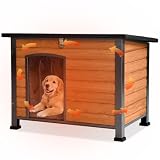
- ADVANCED INSULATED DOG HOUSE: The GUTINNEEN insulated dog house is crafted with high-quality insulation, keeping outdoor animals warm and cozy even when temperatures dip below 0°C. Its windproof door curtains effectively block cold air from seeping in and trap warmth inside. Even without the additional liner, our dog house is constructed with solid, thick fir wood that acts as a natural insulator against the cold and a specially designed insulated structure to help retain your dog's body heat and provide a cozy shelter for dogs
- ANTI-CHEWING METAL FRAME DESIGN: This outdoor dog house combines solid wood panels with a heavy-duty metal frame—each panel is fully framed in metal and secured by metal connecting bars, making the structure much sturdier than dog houses with thin aluminum trims or plain wood. The upgraded metal reinforcement is also designed to resist chewing and destruction, so you won’t have to worry about your pup damaging their shelter even as they follow their natural chewing instincts
- ALL-WEATHER PROTECTION: Built to shield your pet from the elements: an asphalt roof blocks rain, snow, and harsh sunlight; a PVC door curtain keeps cold wind out; and raised waterproof feet elevate the dog house off the ground, preventing dampness and keeping the interior dry. No matter the season, your dog stays comfortable and protected
- EASY CLEANING & QUICK ASSEMBLY: This large outdoor dog house features an openable roof for easy interior access (ideal for quick daily tidying) and a removable bottom plate for deep cleaning—keeping the space fresh and hygienic. All necessary parts are included for assembly, with pre-drilled holes allowing setup in under 30 minutes. Once assembled, the sturdy structure resists splitting or loosening, ensuring stable use for years
- IDEAL FOR SMALL-TO-MEDIUM DOGS: Measuring 33.5"L x 22"W x 25.2"H, this dog house offers ample room for small to large-sized dogs—specifically those up to 150 lbs. with a shoulder height of 15–30 inches. Its cozy, roomy design makes it perfect for backyards, patios, or porches, giving your dog a safe, relaxing spot to rest outdoors
Hot weather
Shade and airflow are the first controls against heat stress. Place the house where it remains shaded during the hottest part of the day, remembering that the sun’s angle changes seasonally. Ventilation must remain open and rainproof; do not seal vents to create a warmer winter box. Insulation can slow heat entering through the roof, but it cannot compensate for direct sun, stagnant air, or a dog that cannot leave the shelter.
Provide a cooler shaded area outside the house so the dog can choose its position. A weatherproof house should never be the only available location during extreme heat. Watch for rapid breathing, weakness, confusion, or collapse and move the dog to a cool, safe place while seeking emergency veterinary help.
Rain, snow, and freeze-thaw cycles
After precipitation, inspect the roof, door, floor, and bedding together. A roof that sheds water may still allow splashback at the threshold; a raised floor may still become wet if runoff reaches the entrance. Snow can block vents or freeze a flap shut. Clear accumulated snow, verify that the drainage path remains open, and check under the house for standing water. Dry replacement bedding should be available before the existing material is removed.
Where should an outdoor dog house be placed?
Choose level, well-drained ground away from flood-prone low spots. The entrance should face away from prevailing cold wind where possible, while the house itself should receive shade during hot weather. Keep enough clearance around the structure to inspect the floor, clean underneath, and see whether water is pooling.
What’s actually slowing this PC down?
Pick the symptom - the matching free tool is one click away.
Do not position the house where a dog can climb onto its roof and escape a fenced area. Check nearby objects, fence heights, and roof edges from the dog’s perspective. Secure the shelter so wind cannot shift it, but do not create trip hazards or block the dog’s exit.
Bedding: the dry layer that determines comfort
Use bedding that is clean, dry, replaceable, and appropriate for the climate. Ontario guidance lists straw, wood shavings or pellets, moisture-proof foam, and rubber pads among suitable options. Toronto warns that bedding must be changed regularly to prevent mold. The central rule is moisture control: material that stays damp can mold, lose insulating value, and freeze.
Set up a replacement routine
- Inspect bedding every day in wet, freezing, or very hot weather, and whenever the dog comes in wet.
- Remove material that is damp, soiled, moldy, or frozen rather than mixing it into a dry layer.
- Clean and dry the floor before adding replacement bedding.
- Keep spare dry bedding in a sealed, weather-protected container.
- Check that bedding has not blocked vents, narrowed the doorway, or created a trip hazard.
Softness alone is not a quality test. A thick material that remains wet is less protective than a thinner layer that stays dry. Replace bedding on a schedule suited to use and weather, not only when it looks dirty.
Also popular on Amazon

- ULTIMATE WINTER DOG SHELTER: Featuring solid wood panels, a 0.78-inch thick insulated liner, and a UL-certified heating pad, this ourdoor heated dog house locks in cozy temperatures—keeping outdoor dogs warm even when temps drop below 0°C (32°F). The heating pad is UL-tested with automatic temperature control (89–116°F/32–47°C) and a built-in high-temperature protection device, preventing overheating or chilling
- UL-TESTED SAFE HEATING PAD: UL-certified heating pad's built-in thermostat auto-regulates heat for a consistent, comfortable temp(89–116°F)—no constant checks or adjustments needed. Encased in a waterproof housing with a 6.5 ft chew-resistant metal-reinforced cord, it delivers reliable warmth in rain, snow, or ice, keeping your pet cozy year-round
- ADVANCED INSULATION LINER: The 0.78" thick insulated liner of the insulated dog house locks in warmth to reduce heat loss and blocks frigid outdoor air. Crafted from flame-retardant material, this liner adds an extra level of safety—giving you peace of mind for the insulated dog house’s year-round use, even in cold climates
- INDESTRUCTIBLE DOG HOUSE: Featuring a unique structure with solid wood panels, a reinforced metal frame, and L-shaped steel connectors, this large outdoor dog house is far more durable than traditional wooden shelters. It stands up to outdoor elements (rain, wind, sun) and even rough use from energetic dogs, ensuring long-lasting use for years
- EASY CLEANING & QUICK ASSEMBLY: This large outdoor dog house features an openable roof for easy interior access (ideal for quick daily tidying) and a removable bottom plate for deep cleaning—keeping the space fresh and hygienic. All necessary parts are included for assembly, with pre-drilled holes allowing setup in under 45 minutes. Once assembled, the sturdy structure resists splitting or loosening, ensuring stable use for years
How to compare weatherproof dog houses
When two shelters meet the basic welfare requirements, compare them on the features that affect real use. A lower purchase price does not compensate for a leaking roof, an inaccessible floor, or a design that cannot be cleaned.
The Tool Desk
Outbyte Driver Updater FREEScan for outdated or missing drivers - takes under a minuteDriver Scan →Outbyte PC Repair FREERepair Windows errors before they cause bigger problemsFix Now →| Comparison point | What to verify | Why it matters |
|---|---|---|
| Waterproofing and roof | Sealed surfaces, sound joints, and a roof that sheds rain and snow; durable roof covering such as metal or fiberglass shingles for a built shelter | Prevents wet bedding, leaks, rot, and loss of insulation |
| Insulation | Insulated roof and, where provided, insulated walls; all insulation covered by a durable, chew-resistant surface | Moderates heat transfer without exposing the dog to loose material |
| Ventilation | Rainproof vents or a protected airflow path that remains open in every season | Controls heat and moisture while avoiding direct wind and rain |
| Floor and drainage | Solid, level floor elevated above ground; stable supports and a site that drains away | Reduces flooding, mud, splashback, and structural rot |
| Entrance | Free passage plus a flap, offset opening, or self-closing door that breaks wind and rain | Protects the sleeping area without trapping the dog |
| Interior dimensions | Enough room to stand normally, turn around, and lie with legs extended after bedding is installed | Prevents restriction while avoiding an unnecessarily heat-losing volume |
| Cleaning | Accessible interior, removable or replaceable bedding, and surfaces that can be dried | Allows rapid removal of moisture, waste, and mold risk |
| Placement compatibility | Stable on level ground, shaded in heat, protected from prevailing wind, and unable to aid a fence escape | Improves climate safety and prevents secondary hazards |
Step-by-step inspection before a dog uses the house
- Check the shell: Look for gaps, cracked panels, loose fasteners, soft wood, and roof areas where water could pool.
- Test the floor: Confirm that it is solid, level, stable, and raised above the ground. Measure the elevation if local guidance applies; Toronto specifies at least two inches.
- Inspect insulation: Make sure it is enclosed behind durable surfaces and cannot be reached by chewing.
- Verify airflow: Identify every vent or airflow path. Confirm that it is protected from rain and snow and is not blocked by bedding.
- Evaluate the entrance: Walk the dog through it, then check the flap or door for free movement, wind protection, and a dry threshold.
- Measure the interior in use: Add bedding, then watch the dog stand, turn, and lie fully extended.
- Choose the site: Set the house on level, well-drained ground with shade and wind protection appropriate to the season.
- Run a weather check: After rain, snow, or a hot afternoon, inspect for leaks, condensation, standing water, blocked vents, and excessive heat.
Common failures and how to correct them
| Symptom | Likely design or maintenance problem | Correction |
|---|---|---|
| Wet bedding after rain | Roof leak, splashback, low doorway, or runoff toward the entrance | Seal the leak, improve the rain break, redirect drainage, raise the shelter, and replace bedding |
| Mold or musty smell | Condensation, blocked ventilation, or bedding left damp | Open protected airflow, dry the interior, replace bedding, and investigate ongoing water entry |
| Cold floor or mud underneath | House sitting directly on wet ground or supports that have settled | Restore a stable raised floor on level, drained ground |
| Dog avoids the house | Door is difficult, interior is too small, it is hot or damp, or the flap is noisy or heavy | Observe entry and exit, correct the obstruction, reassess size and ventilation, and provide an alternative dry retreat |
| Excessive heat inside | Direct sun, inadequate airflow, or insulation without ventilation | Add shade, clear protected vents, and provide a cooler outdoor option; do not rely on insulation alone |
| Snow or ice blocks the opening | Unprotected entrance or flap that freezes | Clear the opening, improve the wind and rain break, and check it repeatedly during freezing weather |
| Dog can reach the fence from the roof | House placed too close to a boundary or roof used as a platform | Move the shelter or alter the enclosure so the roof cannot become an escape aid |
When an outdoor shelter is not safe enough
Outdoor housing is inappropriate for a dog that is not acclimated to local temperatures, cannot tolerate the weather, or is sick, infirm, aged, or young unless a veterinarian specifically approves the arrangement. Short-coated dogs and dogs with poor body condition may become cold faster than a healthy, acclimated dog in the same shelter. A house cannot remove the risks of extreme cold, extreme heat, high wind, flooding, or prolonged wetness.
Bring the dog indoors or follow a veterinarian-directed protection plan when the animal shows shivering, lethargy, weakness, confusion, collapse, persistent distress, or an inability to stay dry and comfortable. Provide access to an indoor or otherwise climate-controlled refuge whenever the forecast exceeds the dog’s tolerance. The shelter should be a dry, voluntary retreat, never a reason to leave a vulnerable dog outside.
A practical buying decision
Choose an insulated weatherproof dog house only after confirming the basics in this order: waterproof shell and roof, raised solid floor, protected ventilation, weather-breaking entrance, correct interior size, cleanable construction, and a placement plan for shade and drainage. Then compare portability, material safety, and maintenance effort. A shelter that is easy to lift or move is useful only if it remains stable in wind and can still be positioned on well-drained ground.
Before purchase or construction, write down the dog’s expected adult size, the site’s wettest and hottest conditions, the direction of prevailing wind, how bedding will be changed, and where the dog will go during dangerous weather. If any answer is uncertain, solve that limitation before relying on the house.
Final checklist
- Waterproof, structurally sound shell and roof that shed rain and snow.
- Insulated roof, with insulation enclosed behind a durable covering.
- Solid, level floor elevated above wet ground; Toronto guidance specifies at least two inches in its jurisdiction.
- Rainproof ventilation that remains available in hot and cold weather.
- Entrance with a wind break and rain break, while allowing easy passage.
- Interior sized for normal standing, turning, and fully extended lying.
- Level, well-drained placement with seasonal shade and wind protection.
- Clean, dry, replaceable bedding, with damp material removed promptly.
- No roof or placement feature that helps the dog escape a fenced area.
- Indoor or veterinary-directed protection for dogs that are young, old, sick, infirm, unacclimated, short-coated, or unable to tolerate local temperatures.
A weatherproof dog house is successful when it stays dry, ventilated, stable, cleanable, and comfortable while giving the dog room to move and an easy way out. Regular inspection after real weather—not just at installation—determines whether it continues to meet those conditions.





Leave a Reply