Quick wins for a faster PC:
Fix the driver behind crashes, sound loss and screen glitchesFind Drivers →Clear out junk files and repair common Windows errorsFree Scan →Scan for outdated or missing drivers - takes under a minuteDriver Scan →Short answer: A Biewer Terrier and a Yorkshire Terrier are closely related toy terriers with similar long, silky coats, but their official descriptions emphasize different details. Biewer standards present an affectionate, loyal, playful family companion, while the American Kennel Club (AKC) describes the Yorkshire Terrier as a feisty dog with an old-time terrier character beneath its delicate appearance. Neither description predicts an individual dog.
The clearest measurable difference is how registries define size. The current AKC Biewer standard uses an 8–10-inch height range at the withers, while the United Kennel Club (UKC) gives a preferred Biewer weight of 4–8 pounds. AKC and The Royal Kennel Club set the Yorkshire Terrier’s upper standard weight at 7 pounds (3.2 kg in the Royal Kennel Club standard). Both breeds carry long coats that require owners to plan for regular care, although the standards do not prescribe a home grooming schedule.
As an Amazon Associate I earn from qualifying purchases.
Comparison at a glance
| Feature | Biewer Terrier | Yorkshire Terrier | What it means for an owner |
|---|---|---|---|
| Temperament language in breed descriptions | UKC: intelligent, loyal, devoted to its family and fun-loving. AKC: intelligent, loyal, affectionate and playful. | AKC: a feisty, old-time terrier beneath a dainty appearance. | Both are described as companionable, but the Yorkie description foregrounds terrier boldness. Individual upbringing and personality still matter. |
| Coat | Long, flowing and silky; UKC describes a straight coat without an undercoat. The AKC standard allows trimming to floor length for ease of movement. | Moderately long, perfectly straight, glossy, fine and silky hair; it must not impede movement. | Either choice means managing a long coat. The cited standards do not establish brushing, bathing or trimming intervals. |
| Published size figures | AKC: 8–10 inches at the withers. UKC: preferred weight 4–8 pounds. | AKC: no more than 7 pounds. Royal Kennel Club: up to 3.2 kg (7 lb). | These are registry standards, not average adult measurements. Biewer figures vary by registry and by the measurement used. |
| Color and identity | Current AKC standard specifies a tricolored dog. | AKC describes a steel-blue and rich golden-tan coat. | Color is one of the easiest visual distinctions, even though the breeds share a historical connection. |
Read the figures with their issuing organization attached. Breed standards describe an ideal show dog; they are not population surveys or guarantees about a pet’s eventual size, coat behavior or temperament.
Free tools Windows power users keep installed
One-click scans. No signup required.
How the Biewer and Yorkie are related
The resemblance is not accidental. The UKC traces the Biewer Terrier to German Yorkshire Terrier breeders around 1984. That origin helps explain why a Biewer has the familiar small terrier outline and a long, silky coat while developing a separate identity in modern registries. The UKC’s historical account is available in its Biewer Terrier breed standard.
#1 Best Overall
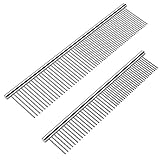
- ✅ FUNCTION -This dematting tool for dogs can removes tangles, mats, loose hair, besides, it’s perfect to promote blood circulation and massage skin.
- ✅ PREMIUM MATERIAL - Made of high quality stainless steel, this comb is durable, corrosion resistant and will not fade, good for avoiding static electricity.
- ✅ COMFORTABLE & SAFE - Rounded pin ends are gentle to the skin. This comb grooms and massages for a healthy coat, prevent snagging and pet injury.
- ✅ WHAT YOU GET- 2 Pack combs for removes both small & large areas tangles, knots. Large comb size: 7.4 x 1.65 IN, small comb size: 6.3 x 1.2 IN.
- ✅ RISK-FREE LIFETIME GUARANTEE - We firmly stand by the lasting quality of our pet grooming tool. If for any reason you're not 100% happy with it, reach out to us to receive a refund or replacement.
Today, the registries describe distinct breeds. The AKC’s current Biewer standard was approved February 5, 2026 and became effective April 30, 2026 in the Toy Group standards PDF. For general breed information, AKC also maintains pages for the Biewer Terrier and the Yorkshire Terrier. A Yorkie is simply the common short name for a Yorkshire Terrier; it is not a separate breed.
This history also explains why a puppy advertised as “Yorkie-like” is not automatically a Biewer. Breed identity depends on documented lineage and the registry under which the dog is recorded, not only on a tricolored pattern or a similar silhouette. Ask to see registration information and use the standard associated with that registry when checking size and appearance claims.
Temperament: companion emphasis versus terrier edge
What Biewer standards emphasize
The UKC calls the Biewer intelligent, loyal, devoted to its family and fun-loving. The AKC uses closely related language, describing an intelligent and loyal dog that is affectionate and playful and makes an excellent companion and family dog. The AKC standard also says the Biewer moves confidently with a high head carriage.
Do these 3 things before closing this tab:
1Fix the driver behind crashes, sound loss and screen glitches2Clear out junk files and repair common Windows errors3Scan for outdated or missing drivers - takes under a minuteThose phrases describe the ideal the registry asks judges to recognize. They can help you understand the breed’s intended character, but they cannot tell you whether a particular puppy will be outgoing, reserved, noisy, persistent or easy to settle. Observe the individual dog and ask how it has been raised rather than treating the adjective “family” as a guarantee.
What the Yorkie description adds
AKC’s Yorkshire Terrier overview stresses a feisty, old-time terrier character under the dainty exterior. That wording points to the breed’s working-terrier heritage and suggests a more overtly spirited image than the Biewer descriptions, which center first on devotion and playfulness. It does not mean every Yorkie is difficult, reactive or less affectionate; it is a description of the breed type.
When comparing two dogs in real life, look for behavior you can actually evaluate: how each dog responds to handling, unfamiliar people, normal household movement and brief separation from its caregiver. Standards do not provide a temperament test or a population-level comparison, so a meeting with the individual dog is more informative than assuming one breed is universally calmer or easier.
Rank #2

- Effective detangling and dematting – Designed to work through knots, mats, and loose hair, helping keep coats smooth, clean, and well maintained.
- Stainless steel teeth for durability – Built with strong stainless steel to glide through coats while maintaining long-lasting performance.
- Compact size for better control – 7.5-inch design offers increased precision, making it ideal for detailed grooming and smaller areas.
- Comfortable and easy to use – Lightweight, balanced design provides a secure grip for better handling during grooming sessions.
- Safe for dogs, cats, and pets – Rounded teeth help reduce discomfort while grooming, making it suitable for a variety of coat types.
How to use temperament language responsibly
- Use the Biewer descriptions to identify a preference for an affectionate, playful companion ideal, not a promise about every Biewer.
- Use the Yorkie description to prepare for a dog whose terrier spirit may be prominent, while leaving room for wide individual variation.
- Ask the breeder, rescue or current owner for concrete observations instead of relying on labels alone.
- Consider your household’s tolerance for an energetic, assertive small dog; the standards themselves do not establish exercise needs, barking frequency or trainability rankings.
Terms such as “family dog” and “feisty” should therefore be treated as starting points for questions. Ask whether the dog settles after play, accepts routine grooming, copes with visitors and has lived with children or other animals if that matters in your home. Those answers concern the individual dog’s history, not a guarantee supplied by either breed standard.
Which breed is bigger?
The answer depends on which registry and which measurement you are using. The AKC Biewer standard specifies height at the withers, whereas the UKC Biewer standard states a preferred weight. Those are different dimensions, so they should not be blended into a single cross-registry “average.”
| Registry and breed | Standard figure | How to interpret it |
|---|---|---|
| AKC Biewer Terrier | 8–10 inches at the withers; over 11 inches is a serious fault. | Height range in the current AKC standard, effective April 30, 2026. |
| UKC Biewer Terrier | Preferred weight 4–8 pounds. | Preferred weight in the UKC standard; it is not an average measured across pet dogs. |
| AKC Yorkshire Terrier | No more than 7 pounds. | Upper weight limit in the AKC breed description. |
| Royal Kennel Club Yorkshire Terrier | Up to 3.2 kg (7 lb). | Ideal standard size; The Royal Kennel Club notes that an individual may fall outside the stated measurement. |
“At the withers” means the height measured at the top of the shoulders, not the head or ears. “Preferred weight” describes the weight the UKC favors in its Biewer standard; it is not a promise that every adult will weigh within that band. “No more than” and “up to” are upper limits, not predictions of a typical adult. The distinction matters when comparing a puppy’s growth or selecting equipment.
On paper, a Yorkie has a tighter published weight ceiling, while Biewer references can look different because one registry gives height and another gives preferred weight. That does not establish that every Biewer is taller or heavier than every Yorkie. If adult size is critical for stairs, carriers, harnesses or other equipment, evaluate the parents and the individual dog and allow for normal variation rather than choosing from a label alone.
The AKC Biewer standard also identifies a dog over 11 inches as a serious fault. That is a conformation judging term, not a medical warning or a statement that a larger companion cannot be healthy. Likewise, The Royal Kennel Club explicitly notes that an individual Yorkshire Terrier may fall outside its ideal measurement. Registry figures are most useful for understanding the target type and asking precise questions, not for guaranteeing a particular pet’s final dimensions.
Windows Errors? Fix Them Before They Spread
Repair common Windows errors and clear accumulated junk for a smoother, more stable PC - no reinstall needed.Free scan · no reinstallOutdated Drivers Are Slowing You Down
One free scan finds every outdated or missing driver and matches the right update for your exact hardware.Free scan · exact hardware matchCoat and grooming: similar commitment, different wording
Biewer Terrier coat
The AKC describes a long, flowing, silky coat that hangs close to the ground and may be trimmed to floor length to make movement easier. The UKC describes the coat as straight and without an undercoat. These details explain the breed’s elegant appearance and why loose hair can tangle or collect debris, but they do not set a mandatory household routine.
Rank #3

- PREMIUM MATERIAL: This metal comb is made of high-quality stainless steel coated with zinc carefully, durable and corrosion-resistant, won’t rust after washing, withstands wear and tear in long term use. Perfect for straightening out the knotted tangles hair, as well as finishing and fluffing without causing any harm.
- COMFORTABLE & SAFE: Each comb tooth is finely polished, can be used to retouch and massage by penetrating DEEP into the coat without scratching your pets’ skin. It is seamless & smooth so that it won't snag hair, glide through the coat like butter, could effectively remove loose hair, dander & dirt trapped beneath fur and curly hair.
- UNIQUE 2-IN-1 DESIGN: Every dog comb has 2 different teeth densities, the wide teeth can be used to comb knotted fur or open the tangled hair, the dense teeth is suitable for comb the soft fur nearby eyes, ears and fine hair of the legs. Also good for avoiding static electricity when being used.
- MULTIFUNCTIONAL & SAFE: Our anti-scratch round teeth would also support the pet health by boosting blood circulation and massaging skins. The comb's coarse and fine teeth work together to remove thick or dead fur and leave your pet's coat soft, sleek, and shining no matter long haired or short haired dogs or cats with thin and thick coats or sensitive skin.
- BUY with CONFIDENCE: The cat comb is compact and portable, fitting conveniently in a handbag, preventing snagging and pet injury. We offer you No questions asked 90-DAY REFUND and 24*7 hours 100% SATISFACTION GUARANTEE. We take care of all quality-related issues with a replacement or refund. If you have any problems with the product, please contact us.
Yorkshire Terrier coat
The Royal Kennel Club standard calls for hair that is moderately long, perfectly straight rather than wavy, glossy and fine with a silky texture, not woolly. It also states that the hair must never impede movement. The full wording appears in the Yorkshire Terrier breed standard, last updated April 2025.
What both coats require from a household
Neither standard reviewed specifies how often to brush, bathe or trim a pet. The practical conclusion is not that one breed is maintenance-free; both descriptions involve long hair that owners must keep clean, untangled and out of the way of movement. The exact workload will depend on whether you keep the coat long, use a shorter pet trim, the dog’s activity and how quickly its hair mats.
A stainless-steel grooming comb is a reasonable optional tool for checking a long, silky coat. That is a tool choice inferred from coat structure, not a tested-product recommendation. If a comb catches repeatedly, the skin is irritated, or the dog resists handling, pause and seek instruction from a qualified groomer or veterinary professional instead of forcing a painful session.
A practical coat-care decision checklist
- Decide on coat length. Ask whether you want a flowing show-style appearance or a shorter, easier-to-manage pet trim. The Biewer standard explicitly permits trimming for ease of movement; the Yorkie standard requires the hair not to impede movement.
- Budget time for inspection. Long hair needs regular hands-on checking for tangles, debris and movement restriction, even though the standards do not state a universal interval.
- Introduce handling gradually. Practice brief, calm sessions around the body, legs, ears and feet before attempting a full grooming session.
- Use tools gently. A comb should pass through the coat without pulling the skin. Stop when you encounter a tight mat or signs of discomfort.
- Get professional help when needed. A groomer can demonstrate a routine suited to the dog’s actual coat and chosen trim; a veterinarian should assess skin problems, painful mats or movement changes.
Before bringing either breed home, watch a grooming demonstration using a dog with a similar coat length. Ask what handling the dog already accepts and whether its current trim exposes the paws and eyes clearly. These questions do not create a universal schedule, but they reveal the practical work involved and help you plan a gradual routine instead of discovering coat problems after mats form.
Color and visual identity
The current AKC Biewer standard specifies a tricolored dog. AKC describes the Yorkshire Terrier’s characteristic coloring as steel-blue and rich golden-tan. These are standard color descriptions, not guarantees that a companion dog will look exactly like a show illustration at every age.
Color can help you distinguish the breeds at a glance, but it should not be the sole basis for selection. Verify the breed, registry documentation and the dog’s health and behavior independently of coat pattern. The standards define appearance, not allergy safety, shedding level, lifespan or medical risk.
Rank #4

- ROUND & GENTLE COMB TEETH: Unlike dematting combs with sharp teeth, this dog grooming comb features round teeth that break up tangles +effectively remove loose hair, dander & dirt trapped beneath fur.
- ERGONOMIC NO-SLIP HANDLE: Finished with a rubbery grip, our grooming comb is safer & easier to use than most groom tools. The non-slip coating prevents slippery accidents to keep you & your pet safe.
- IMPROVES OVERALL PET HEALTH: Designed to gently massage your pet's coat, the anti-scratch teeth on our dog & cat comb naturally support the health of your furry best friend by boosting circulation.
- COMB COMES WITH FREE EBOOK: DIY pet grooming can be a bit tricky if tools are not used correctly, which is why every SP pet hair comb includes a download of our helpful instructional guide.
- RISK-FREE LIFETIME GUARANTEE: We firmly stand by the lasting quality of our pet grooming tool. If for any reason you're not 100% happy with it, reach out to us to receive a refund or replacement.
The color distinction is especially useful because the breeds share a long-haired outline. A tricolor pattern supports the Biewer description in the current AKC standard, while the Yorkie description centers on steel-blue and rich golden-tan. Color alone cannot establish parentage, registry status or temperament, so treat it as an identifying feature rather than a purchasing guarantee.
The Tool Desk
Outbyte Driver Updater FREEFix the driver behind crashes, sound loss and screen glitchesFind Drivers →Outbyte PC Repair FREEClear out junk files and repair common Windows errorsFree Scan →Choosing between them for your home
Choose based on the temperament emphasis you prefer
If the Biewer standard’s language of devotion, affection and playfulness matches what you want, start by meeting Biewers and evaluating real dogs. If you are drawn to the Yorkshire Terrier’s spirited terrier identity, look for a Yorkie whose actual behavior fits your household. Neither route eliminates the need to assess the individual dog.
Choose based on coat work you will consistently provide
The two breeds do not offer a meaningful “low-grooming” shortcut in these standards: both have long, straight or silky hair. Decide honestly whether you can maintain a long coat, arrange professional grooming, or keep a shorter trim. A dog whose coat is repeatedly neglected will not benefit from the beauty of the breed standard.
Choose based on verified size information
Use the size table as a reference to the registries, not as a promise about a puppy. Ask for the measuring method, the registry involved and the parents’ adult size. If a seller presents a single number without saying whether it is height, preferred weight or an upper limit, the claim is incomplete.
Meet the individual dog
Standards cannot replace observation. Watch how the dog moves, accepts gentle handling and responds to ordinary household interaction. Ask what the current caregiver has observed over time. This approach is especially important because no named population-level temperament study or comparative behavior statistic is established by the standards cited here.
What’s actually slowing this PC down?
Pick the symptom - the matching free tool is one click away.
Plan equipment around the actual dog
For a carrier, harness or stairs, measure the dog and check fit rather than relying only on a breed label. A Biewer’s published height and preferred weight come from different registries, and a Yorkie’s stated figure is an upper limit. Recheck fit as a puppy grows and after a coat trim; long hair can change how a harness or collar sits.
Best Value

- EASY DEMATTING & DETANGLING: Our dog grooming comb features extra-long stainless-steel teeth that glide through tough knots, mats, and tangles with ease, making grooming faster, smoother, and more comfortable for your pet
- EXTRA LONG PINS: Engineered with PINs that are 30% longer, this dematting comb reaches deeper into dense, curly, or long coats to remove mats at the root and deliver a more thorough grooming experience
- ERGONOMIC HANDLE: Designed with a non-slip, ergonomic handle, this metal dog comb ensures a secure grip and reduces hand fatigue, allowing for longer, more controlled grooming sessions with minimal strain
- GENTLE ON YOUR DOG'S SKIN: The rounded, polished teeth protect your dog's sensitive skin from scratching or irritation, providing a gentle grooming experience while still effectively removing debris, tangles, and loose fur. Regular use helps reduce shedding and prevents future mats and tangles from forming
- SUITABLE FOR ALL COAT TYPES: Versatile and effective for all breeds and coat textures, this grooming comb works on short, medium, and long-haired dogs, including doodles, double-coated breeds, and curly or wiry-coated pets
Common mistakes in Biewer-versus-Yorkie comparisons
- Calling one breed universally calmer. Registry adjectives are ideals, not guarantees, and the descriptions do not provide a head-to-head behavior study.
- Combining incompatible size numbers. A height range, a preferred weight and an upper weight limit answer different questions.
- Promising a fixed grooming schedule. The coat standards establish length and texture, not a universal number of brushing sessions or baths.
- Assuming similar appearance means identical breed identity. The Biewer’s documented development among German Yorkshire Terrier breeders explains the resemblance while registries now recognize separate standards.
- Using color as a health or personality shortcut. The color descriptions distinguish appearance only.
- Treating a serious fault as a health diagnosis. The AKC phrase about a Biewer over 11 inches concerns conformation judging; it does not by itself diagnose a problem.
- Assuming a show coat is the only acceptable pet coat. The Biewer standard allows trimming for movement, and the Yorkie standard requires hair not to impede movement. A practical pet trim can be discussed with a groomer.
Questions to ask before bringing one home
- Which registry’s standard and measurements are being used?
- For a Biewer, is the stated figure height at the withers or preferred weight? For a Yorkie, is the figure an upper limit?
- How is the dog’s coat currently trimmed, and what grooming handling does it tolerate?
- What specific behavior has the current caregiver observed around people, handling and household activity?
- Can you meet the individual dog and see it move freely without hair interfering with movement?
- Can you see registration documentation that matches the breed name being advertised?
- What are the parents’ adult sizes, and how were those measurements taken?
Bottom line for a prospective owner
The Biewer Terrier and Yorkshire Terrier are both tiny, long-coated companions, so coat care and careful size planning apply to either. The Biewer’s standards emphasize an affectionate, loyal and playful family companion; the Yorkie’s AKC description adds a distinctly feisty terrier character. The responsible choice is the dog whose observed temperament, coat condition and expected size fit your home—not the breed label that sounds better in isolation.
Frequently Asked Questions
What is the main difference between a Biewer Terrier and a Yorkshire Terrier?
Their histories, registry descriptions and standard colors differ. The Biewer developed around 1984 among German Yorkshire Terrier breeders and is described by AKC and UKC as loyal, affectionate and playful; AKC emphasizes the Yorkie’s feisty, old-time terrier character. Both have long, silky coats, so daily ownership can involve similar coat-care planning.
Which is bigger, a Biewer Terrier or a Yorkie?
There is no single cross-registry answer. The current AKC Biewer standard gives 8–10 inches at the withers, while the UKC lists a preferred Biewer weight of 4–8 pounds. AKC and The Royal Kennel Club give the Yorkshire Terrier an upper standard weight of 7 pounds, or 3.2 kg. These are different measurement types and are not average adult statistics.
Recommended Free Tools
Do Biewer Terriers need less grooming than Yorkies?
The cited standards do not establish a grooming frequency for either breed. Both describe long, straight or silky hair. Coat length, chosen trim, activity and matting tendency determine the practical workload. A stainless-steel comb may be a useful optional tool, and a groomer can demonstrate a routine for the individual dog.
Are Biewer Terriers calmer than Yorkshire Terriers?
The standards do not provide a head-to-head temperament study or a population-level calmness statistic. Biewer descriptions emphasize devotion, affection and playfulness, while AKC’s Yorkie description highlights terrier boldness. Meet the individual dog and ask its caregiver for specific behavioral observations.
How can I tell a Biewer Terrier from a Yorkie?
The current AKC Biewer standard specifies a tricolored dog, while AKC describes the Yorkie’s traditional coat as steel-blue and rich golden-tan. Color is only one clue. Confirm the breed through registry documentation and lineage because similar appearance does not make the breeds interchangeable.
What does the Biewer size standard actually mean?
The AKC figure is a height range measured at the withers: 8–10 inches, with over 11 inches listed as a serious conformation fault. The UKC figure is a preferred weight of 4–8 pounds. Height and preferred weight should not be combined as though they were one average.
The Bottom Line
Bottom line: Biewers and Yorkies are closely related, small, long-coated terriers. Choose by the individual dog’s observed behavior, coat-care needs and documented size, while treating each registry’s standard as an ideal description rather than a guarantee.
Quick Recap
Product prices and availability are accurate as of the date/time indicated and are subject to change. Any price and availability information displayed on Amazon at the time of purchase will apply.




