Recommended Free Tools
Biewer Terriers are generally healthy, and the Biewer Terrier Club of America (BTCA) describes the breed as having very few known health issues. The concerns the club and the American Kennel Club (AKC) specifically identify are mainly retained baby teeth, tartar buildup, and a sensitive gastrointestinal (GI) system. Breed-club screening recommendations also cover eyes, patellar luxation, PRCD-PRA, and primary lens luxation (PLL), but a recommended test is not proof that a disease is common.
This guide explains what to watch for, when a symptom warrants a veterinarian, what breeder records should contain, and why screening results cannot guarantee that an individual dog will remain disease-free. It is informational, not a diagnosis; new, persistent, worsening, or unusual signs should be discussed with a licensed veterinarian.
As an Amazon Associate I earn from qualifying purchases.
What health problems do Biewer Terriers have?
The current evidence supports a calibrated answer rather than an alarming list. The BTCA’s health statement, approved December 17, 2025, says the breed is relatively young and has very few known health issues. The AKC likewise says most Biewer Terriers are healthy. Neither source supplies a breed-specific prevalence percentage, so it is not possible to say that a particular disorder affects a stated share of Biewers.
The issues directly noted for owners are dental problems in small dogs—especially retained baby teeth and tartar—and a sensitive GI system. The BTCA also sets health-testing expectations for breeding dogs. Those tests are intended to identify inherited-risk information or clinical findings that can inform breeding decisions; they are not a list of conditions that every pet Biewer will develop.
#1 Best Overall

- Quantity and Color: You will receive 8 dog toothbrushes in 8 colors at a time, enough to satisfy your repeated use or disposable use.
- Dual Headed Design Dog Toothbrush:With two different sized heads designed to accommodate both dogs and cats of all sizes (puppy ,small dog and large dog)ensuring a comfortable experience for both pet and owne
- Long Handle Easy To Use: Our dog tooth brush is angled and narrow.It is easy to maneuver and allows for a deep clean for those hard to reach areas in your pet's mouth.This toothbrush large head apply to large dogs and small head are perfect for small dogs. It better than dog finger dog toothbrush because Long handle design avoid finger injury.
- Gentle Dog Dental Care: Our pet puppy Toothbrush has super soft bristles, use dog toothpaste and our brush, you will be able to gently remove debris from your pet's mouth without causing any harm or discomfort.
- Material: the dog toothbrush is made of PP and nylon, strong and wear-resistant, will not hurt or scratch your pet's gums and teeth, so you can use it for a long time.
| Area | What the sources establish | What an owner can watch for | What to do |
|---|---|---|---|
| Teeth | Retained baby teeth and tartar are specifically mentioned by the BTCA. | Two teeth occupying one position, crowded teeth, visible yellow-brown tartar, bad breath, or reluctance to chew. | Arrange a veterinary oral examination; use appropriate home care as advised. Home brushing does not remove retained teeth. |
| Digestive system | A sensitive GI system has been noted by the BTCA and AKC. | Persistent diarrhea or discolored stools, vomiting, reduced appetite, or a change from the dog’s normal bowel pattern. | Contact a veterinarian for persistent or concerning changes; stool color alone does not identify a cause. |
| Eyes and inherited-risk testing | BTCA breeding recommendations include an ACVO eye examination, PRCD-PRA DNA testing, and PLL DNA testing. The BTCA says PLL has not been reported as a common clinical disease in Biewers. | Squinting, cloudiness, apparent vision difficulty, bumping into objects, or any other eye-health concern. | Ask your veterinarian about examination by a board-certified veterinary ophthalmologist. DNA screening does not replace an eye examination. |
| Kneecaps | Patellar luxation veterinary evaluation is a BTCA CHIC required/recommended item. | Skipping, an intermittent hind-leg “hop,” or reluctance to use a leg should be assessed rather than self-labeled as luxation. | Have a veterinarian examine the dog; a gait sign has several possible explanations. |
The table separates an observed breed-club concern from a screening target. A test appearing in a breeding protocol should not be read as evidence that the condition is a common pet-dog diagnosis.
Dental problems: retained baby teeth and tartar
Retained baby teeth
Small dogs can retain deciduous (baby) teeth while adult teeth erupt. The BTCA specifically calls retained baby teeth a dental issue to watch for in smaller dogs, including Biewer Terriers. Look at the mouth only when your dog is comfortable and never force the jaws open. A common visual clue is two teeth occupying what appears to be one position, often with crowding or an abnormal angle.
Retained teeth can make cleaning difficult and can trap food around crowded areas. A visible extra tooth is not something to diagnose at home: your veterinarian can determine whether it is a retained baby tooth, an adult tooth in an unusual position, or another finding. Ask when the mouth should be rechecked during puppy examinations, because the appropriate timing depends on the individual dog’s dental development.
Tartar and daily observation
The BTCA also mentions tartar buildup. Tartar is hardened material on the tooth surface; a yellow or brown deposit, persistent bad breath, red-looking gums, or a change in chewing behavior merits a professional assessment. Dogs may continue eating despite oral discomfort, so normal appetite does not rule out dental disease.
Rank #2
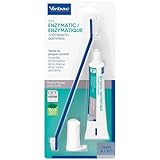
- #1 BRAND CHOSEN BY VETERINARIANS: Proven effective and trusted for over 30 years, C.E.T. is the top recommended dental brand by veterinary professionals to reduce plaque & tartar buildup
- Dual-sided toothbrush designed specifically for canine mouths with soft bristles for comfortable brushing
- Long handle with reverse angle allows for easy use and soft bristles for comfortable brushing while the finger-brush slips over finger for ease of use and better control
- Great tasting poultry-flavored toothpaste is ideal for dogs and cats that quickly build up plaque and tartar
- Complete kit with everything pet owners need to start a program of regular oral hygiene for their dog or cat. Ideal to help acquaint dogs/cats and their owners with the tooth brushing experience
Routine veterinary dental assessments and veterinarian-approved home care are sensible for a small breed. A small-dog toothbrush or canine dental-care kit can support cleaning if your veterinarian shows you how to use it, but brushing cannot remove a retained tooth or treat established dental disease. Do not scrape teeth with household tools or give products that have not been discussed with your veterinary team.
Gastrointestinal sensitivity and stool changes
What “sensitive GI system” means
The BTCA and AKC both note that Biewer Terriers may have a sensitive GI system. This is a general breed-club observation, not a single diagnosis and not a prescribed diet. A dog with a sensitive stomach may show digestive upset after a food change or another individual trigger, but stool changes have many possible causes. Do not infer the cause from appearance alone.
When diarrhea or discolored stool needs attention
The AKC advises veterinary attention for “persistent problems with diarrhea or discolored stools.” The decision point is persistence or a pattern that concerns you, not an invented number of hours or days. Record when the change began, how often it occurs, the stool’s color and consistency, appetite, water intake, energy, recent food changes, and any medications or supplements. Bring that information to the appointment.
Do these 3 things before closing this tab:
1Repair Windows errors before they cause bigger problems2Fix the driver behind crashes, sound loss and screen glitches3Clear out junk files and repair common Windows errorsA single soft stool in an otherwise normal dog may resolve, but repeated diarrhea, recurring episodes, or discolored stools should prompt a call to your veterinarian. If your Biewer is deteriorating, cannot maintain normal hydration, or appears seriously ill, seek urgent veterinary guidance rather than waiting for home monitoring to answer the question.
Rank #3
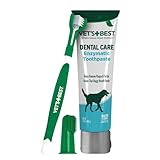
- DOG TOOTH BRUSHING KIT: Keep your dog's teeth and gums healthy with our dog toothbrush and toothpaste kit; our toothpaste is made with aloe, neem oil, grapefruit seed extract, baking soda, and enzymes to keep you dog's mouth fresh
- DOG DENTAL CARE MADE EASY: Our dog tooth paste gently cleans away plaque and tartar, serving as an effective dog breath freshener; rid your dog of bad breath and gift them a healthier mouth with our dog tooth brushing kit.
- TRIPLE HEAD TOOTHBRUSH: Our dog dental cleaning kit features a triple-sided dog tooth brush that cleans all sides of your dog's teeth at once, making tooth brushing faster and more efficient; no more struggling to clean those hard to reach back teeth
- NATURAL FLAVORS: Our toothpaste for dogs has natural flavors that your furry friend will love, making dog tooth brushing a more enjoyable experience even for the pickiest of pups, so you can keep their dog breath fresh without any fuss
- DENTAL KIT FOR DOGS OF ALL SIZES: Regular teeth cleaning supports your pet’s health. Use our dog toothbrush and toothpaste between vet visits to maintain oral hygiene, reduce plaque and tartar buildup, and keep your dog’s mouth fresh and healthy.
Practical prevention and monitoring
Keep feeding changes gradual according to your veterinarian’s advice, avoid switching several variables at once, and store a consistent record of foods and treats. Do not treat the BTCA’s comment about diet as a universal prescription: what works for one dog may not suit another, and a persistent problem requires evaluation for causes beyond food sensitivity.
Eye health, PRCD-PRA and primary lens luxation
Why eye examinations are recommended
The BTCA’s current CHIC required/recommended items include an eye examination by a board-certified ACVO ophthalmologist. The club recommends the examination before breeding and suggests evaluations at ages 1, 3, and 6 years. The AKC breed page independently lists an eye examination among the national breed club’s recommended tests. These recommendations concern breeding-health assessment; they do not mean that every Biewer has an eye disorder.
For a pet, arrange veterinary attention for squinting, a newly cloudy-looking eye, unusual redness or discharge, apparent vision difficulty, or any eye change that is new or worsening. A general-practice veterinarian can perform an initial assessment and refer to a board-certified veterinary ophthalmologist when appropriate.
Quick wins for a faster PC:
Clear out junk files and repair common Windows errorsFree Scan →Scan for outdated or missing drivers - takes under a minuteDriver Scan →Repair Windows errors before they cause bigger problemsFix Now →PRCD-PRA DNA testing
PRCD-PRA DNA testing appears on the BTCA CHIC list and the AKC’s summary of recommended tests. Ask a breeder for the actual laboratory result or an independently verifiable registry record, not simply the words “health tested.” Clarify which parent was tested, the test date, and how the result was used in the breeding decision. A DNA result describes the tested genetic variant; it does not replace an eye examination or guarantee that a puppy will never have an eye problem.
Rank #4

- SMALL & SOFT - 8 COUNT – Human grade ultra soft bristles designed for Cats, Puppies, and XS Breed Dogs Like Teacups, Chihuahuas, Yorkshire, and Poodle. Ultra soft and polished bristles aid in removing plaque without damaging gums, promoting clean teeth and healthy gums.
- 100% SATISFACTION – Contact us directly if you have any questions about the dog tooth brushing kit. H&H Pets will be happy to assist you. Get the product now and help maintain your pet’s oral health for a happy and healthy companion.
- PERFECT FOR SMALLER BREED PET – Designed specifically for your small pet’s mouth and sensitive gum. H&H pets recommend this product to small dogs, cats, and other small breed pets. This cat/dog toothbrush is perfectly angled to help you clean your front and back teeth.
- HEALTHIER TEETH & BETTER CARE – This carefully designed cat/dog tooth brushes will help your pet significantly improve dental health and reduce problems such as plaque and tartar. The single head (mini) pet tooth brushes come in two colors so you can assign them when you have more than one pet.
- SOFT BRISTLES FOR PREMIUM CARE – Flexible and soft bristles on the brush were specially designed to remove plaque build-up and tartar from your puppy, dog, or cat's mouth. Do the job right without causing your pet pain with this pet first toothbrush for pets.
Primary lens luxation (PLL)
The BTCA explains that PLL has not been reported as a common clinical disease in Biewer Terriers. The club nevertheless recommends PLL DNA testing because Biewers have Yorkshire Terrier ancestry and an ADAMTS17 mutation associated with PLL is known in that lineage. This is a rationale for screening, not a claim that PLL is prevalent in the breed.
If you have concerns about your dog’s eyes, consult your veterinarian or a board-certified veterinary ophthalmologist. A DNA screening result is not a diagnosis, and a clear result cannot substitute for examination of the eye itself.
Patellar luxation: a screening target, not a home diagnosis
Patellar luxation is evaluated by a veterinarian and is one of the BTCA CHIC required/recommended items. The AKC also lists patellar evaluation among the national breed club’s recommended tests. At home, an intermittent skip, brief hind-leg lift, or reluctance to climb may be worth recording, but those signs do not prove that the kneecap is luxating. Soft-tissue injury, pain, or other orthopedic issues can look similar.
Free tools Windows power users keep installed
One-click scans. No signup required.
Write down when the gait change happens, whether it follows exercise, and whether the dog returns to a normal stride. Arrange an examination instead of manipulating the knee yourself. For breeding decisions, ask to see the documented veterinary evaluation and its date; for a pet, follow the examining veterinarian’s advice about monitoring or treatment.
Best Value

- COMPLETE DENTAL KIT INCLUDED: This dog toothbrush and toothpaste kit includes enzymatic chicken-flavored toothpaste, a dual-sided toothbrush, and a rubber finger toothbrush for a full at-home oral care system in one pack.
- BAKING SODA DEEP CLEAN FORMULA: Dog toothpaste enzymatic formula with Arm & Hammer baking soda neutralizes bad breath at the source, breaks down odor-causing bacteria, and lifts plaque and debris from teeth and gumline for noticeable results.
- CHICKEN FLAVOR DOGS ACCEPT WELL: The chicken-flavored enzymatic toothpaste for dogs encourages cooperation during brushing; if your dog is sensitive to flavor intensity, start with small amounts to build a consistent daily habit.
- TARTAR CONTROL WITH DAILY USE: Consistent use of this enzymatic dog toothpaste actively breaks down tartar buildup along the gumline, helping reduce risk of gum disease and tooth decay when brushing becomes a regular routine.
- TWO BRUSH STYLES FOR FIT: The kit pairs a dual-sided toothbrush for standard brushing with a finger toothbrush for dogs sized for small mouths and hard-to-reach spots, so you can match the tool to your dog's comfort and mouth size.
What the BTCA recommends breeders screen for
The BTCA health statement identifies four current CHIC required/recommended items: an eye examination by a board-certified ACVO ophthalmologist, PRCD-PRA DNA testing, PLL DNA testing, and a patellar luxation veterinary evaluation. It recommends the eye examination before breeding and suggests repeating or obtaining examinations at 1, 3, and 6 years of age. The exact test record and timing matter when you assess a litter’s parents.
| Screening item | Type of information | How to interpret it |
|---|---|---|
| ACVO ophthalmologist examination | Clinical eye assessment by a board-certified veterinary eye specialist. | Shows findings on the examination date; it is not a lifetime guarantee. |
| PRCD-PRA DNA test | Genetic test result for the variant included in the laboratory’s assay. | Ask for the laboratory document and the parent to which it applies; it does not replace an eye examination. |
| PLL DNA test | Genetic screening motivated by the ADAMTS17-associated risk described by BTCA. | Screening rationale does not establish PLL as common disease and does not diagnose an eye problem. |
| Patellar luxation evaluation | Veterinary examination of the kneecaps. | Interpret with the dog’s age and the evaluator’s written findings. |
The same BTCA statement lists optional tests: a basic cardiac evaluation, radiographic evaluation for Legg-Calvé-Perthes disease, serum bile acid testing, degenerative myelopathy DNA testing, and hyperuricosuria DNA testing. “Optional” describes the club’s testing list; it does not establish that each condition is common in Biewers. Ask the breeder why an optional test was selected and how the result informed the mating, rather than assuming that more tests automatically mean a healthier puppy.
How to evaluate a breeder’s health records
Use a written, test-by-test approach. A breeder who can explain what was tested, when, by whom, and what the result means gives you more useful information than a general claim that the parents are “clear.”
The Tool Desk
Outbyte PC Repair FREEClear out junk files and repair common Windows errorsFree Scan →Outbyte Driver Updater FREEScan for outdated or missing drivers - takes under a minuteDriver Scan →- Request the exact records. Ask for the eye examination report, DNA laboratory certificates, and patellar evaluation rather than a verbal summary.
- Match each record to the parent. Check the registered name or identification so you know which sire or dam was examined.
- Check the test type. Confirm that an eye report is from a board-certified ACVO ophthalmologist and that a DNA report identifies the laboratory and assay.
- Check dates and ages. Note the dog’s age on the eye examination, especially if the breeder follows the BTCA suggestions for examinations at 1, 3, and 6 years.
- Look for a verifiable registry entry where applicable. A public record can help confirm that the document belongs to the stated dog, but it does not replace reading the report.
- Ask for an explanation in plain language. The breeder should be able to describe how findings affected the breeding plan without promising that a clear result guarantees a disease-free puppy.
- Keep the puppy’s veterinary plan separate. Arrange your own examination after adoption and retain records for future veterinarians; parental screening is not a substitute for care of the individual dog.
How to tell if your Biewer Terrier needs a vet
Call promptly for persistent or changing symptoms
- Persistent diarrhea or discolored stools, as specifically advised by the AKC.
- Repeated vomiting, a sustained appetite change, or a bowel pattern that keeps returning.
- New bad breath, visible tartar, gum changes, mouth sensitivity, or an apparent retained tooth.
- Squinting, cloudiness, unusual discharge, or any sign that vision has changed.
- A recurring skip, leg lift, or reluctance to use a limb.
These signs are prompts for professional assessment, not diagnoses. Bring photographs of stool or video of an intermittent gait change when safe to obtain them, and provide the timeline and any recent changes in food, medication, activity, or environment.
Seek urgent guidance when the dog appears seriously unwell
If your Biewer is rapidly worsening, profoundly weak, unable to keep fluids down, or otherwise appears seriously ill, contact an urgent veterinary service. Do not wait for a breed-specific explanation: the sources do not establish a single cause for these signs, and delay can make treatment harder.
A simple home-monitoring routine
- Weekly mouth check. In good light, look for an extra-looking tooth, crowding, tartar, gum changes, or a new odor. Stop if your dog resists and ask your veterinarian to examine the mouth.
- Daily stool awareness. Notice frequency, consistency, and color without trying to diagnose from color. Record persistent or recurring changes.
- Regular movement observation. Watch your dog walk and trot on a level surface. Note a skip or leg lift, but do not force exercise to reproduce it.
- Calm eye observation. Look for changes in clarity, discharge, squinting, or navigation. Never put human eye medication in the eye unless a veterinarian prescribed it.
- Keep records together. Store vaccination, dental, eye, orthopedic, and laboratory reports with dates and the dog’s identification.
What these findings do—and do not—tell you
A breed description of “generally healthy” does not mean an individual dog cannot become ill. Conversely, a recommendation to test for a genetic variant does not mean the breed commonly develops the associated disease. Screening estimates risk or documents a finding at a particular time; diagnosis requires a clinical assessment of the dog in front of you.
The BTCA and AKC materials do not provide prevalence percentages for Biewer Terrier diseases. They also do not establish tracheal collapse, liver shunts, hypoglycemia, or other conditions as common breed-specific problems in the evidence summarized here. Avoid internet checklists that present unquantified possibilities as certainties. Focus on the documented concerns—dental issues and GI sensitivity—while using the recommended eye, DNA, and patellar records to ask informed questions about breeding health.
Quick Recap
Sources and current guidance
- Biewer Terrier Club of America, “Health Statement” (approved December 17, 2025).
- American Kennel Club, “Biewer Terrier — Dog Breed Information.”
- Biewer Terrier Club of America, “Primary Lens Luxation (PLL).”
Product prices and availability are accurate as of the date/time indicated and are subject to change. Any price and availability information displayed on Amazon at the time of purchase will apply.




