
Some links on this page are affiliate links: if you buy through them we may earn a commission, at no extra cost to you.
The Birman is a medium-to-large, semi-longhaired cat recognized for three features: vivid blue eyes, darker color-pointed markings, and four white feet. Those white markings are known as gloves on the front paws and laces when they extend up the backs of the hind legs.
This is an affectionate, people-oriented breed with a relatively easy coat, but it is not a cat for a household that expects a completely independent pet. Birmans usually want to be involved in family life, need regular interaction, and can be prone to weight gain if food and activity are not managed carefully.
As an Amazon Associate I earn from qualifying purchases.
Birman breed overview
| Characteristic | Birman |
|---|---|
| Size | Medium to large |
| Typical weight | Females about 6–10 lb; males about 10–15 lb |
| Coat | Semi-long, silky, and usually without a dense undercoat |
| Eyes | Blue, usually nearly round |
| Pattern | Color-pointed with white gloves and laces |
| Temperament | Gentle, affectionate, sociable, playful, and generally quiet |
| Grooming | Usually weekly combing |
| Good with children and other pets | Often, provided introductions are gradual and respectful |
| Important health concern | Hypertrophic cardiomyopathy (HCM) |
Individual cats vary, so this profile describes common breed tendencies rather than guarantees. A kitten’s early socialization, household environment, health, and previous experiences all influence its adult behavior.
History and breed identity
The Birman is sometimes called the “Sacred Cat of Burma.” Its temple-origin story is part of the breed’s mythology rather than established history. The documented modern breed history places a breeding pair in France around 1919, with the female reportedly arriving pregnant. Birmans reached the United States in 1959 and were accepted for registration by the Cat Fanciers’ Association (CFA) in 1967.
Popular on Amazon
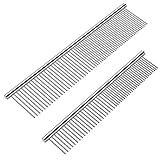
- ✅ FUNCTION -This dematting tool for dogs can removes tangles, mats, loose hair, besides, it’s perfect to promote blood circulation and massage skin.
- ✅ PREMIUM MATERIAL - Made of high quality stainless steel, this comb is durable, corrosion resistant and will not fade, good for avoiding static electricity.
- ✅ COMFORTABLE & SAFE - Rounded pin ends are gentle to the skin. This comb grooms and massages for a healthy coat, prevent snagging and pet injury.
- ✅ WHAT YOU GET- 2 Pack combs for removes both small & large areas tangles, knots. Large comb size: 7.4 x 1.65 IN, small comb size: 6.3 x 1.2 IN.
- ✅ RISK-FREE LIFETIME GUARANTEE - We firmly stand by the lasting quality of our pet grooming tool. If for any reason you're not 100% happy with it, reach out to us to receive a refund or replacement.
The Birman is not the same breed as the Burmese or the Ragdoll. The most immediately recognizable distinction is the Birman’s required white-paw pattern. Ragdolls are also color-pointed and blue-eyed, but they are generally larger and do not have the Birman’s characteristic gloves and laces.
What does a Birman look like?
Birmans have a muscular, heavily boned body that is elongated but stocky. Females are typically smaller than males. The head is broad and rounded, with a medium-length Roman nose. Their coat is pale cream or eggshell over the body, while the face, ears, legs, and tail develop darker points.
The Birman’s white gloves and laces
All four paws should have white markings. The front-paw markings are called gloves. On the hind legs, the white can extend upward in a wedge or inverted-V shape known as a lace. Symmetry is preferred in show standards, although pet Birmans may have uneven markings.
The white feet are an important breed characteristic, but white paws alone do not prove that a cat is a Birman. A cat’s breed identity depends on its overall characteristics and, for a pedigreed cat, its documented ancestry. The Birman gloving pattern has been associated with a recessive KIT-gene variant, and genetic testing can help with specific questions, but it does not replace pedigree or a full breed assessment.
Colors and kitten development
Birman points may be seal, blue, lilac, chocolate, red, cream, tortie, or tabby-patterned, depending on the registry and the classification system being used. Because the color-point pattern is temperature-sensitive, Birman kittens are born white. Their darker points develop as they mature, and the coat may continue changing for several years. Sources differ on when coloration and physical maturity are complete, so there is no single age that should be treated as an exact cutoff.
Birman temperament and behavior
The typical Birman is affectionate without being constantly demanding. Many follow their preferred people from room to room, settle nearby while the household is busy, and look for ways to participate. They are often patient and gentle, which can make them a good fit for families that handle cats calmly.
Birmans are usually quieter than some highly vocal breeds. Their sounds may include soft meows and chirps rather than persistent loud calling. However, “quiet” does not mean silent. A Birman may become more talkative if people regularly respond to its vocalizations.
They retain a playful, intelligent side well into adulthood. Many enjoy wand toys, puzzle feeders, fetch, and reward-based training. Short, positive sessions can teach behaviors such as coming when called, entering a carrier, or touching a target.
Also popular on Amazon

- ROUND & GENTLE COMB TEETH: Unlike dematting combs with sharp teeth, this dog grooming comb features round teeth that break up tangles +effectively remove loose hair, dander & dirt trapped beneath fur.
- ERGONOMIC NO-SLIP HANDLE: Finished with a rubbery grip, our grooming comb is safer & easier to use than most groom tools. The non-slip coating prevents slippery accidents to keep you & your pet safe.
- IMPROVES OVERALL PET HEALTH: Designed to gently massage your pet's coat, the anti-scratch teeth on our dog & cat comb naturally support the health of your furry best friend by boosting circulation.
- COMB COMES WITH FREE EBOOK: DIY pet grooming can be a bit tricky if tools are not used correctly, which is why every SP pet hair comb includes a download of our helpful instructional guide.
- RISK-FREE LIFETIME GUARANTEE: We firmly stand by the lasting quality of our pet grooming tool. If for any reason you're not 100% happy with it, reach out to us to receive a refund or replacement.
Can a Birman be left alone?
This is a social breed, and some Birmans struggle when left alone for long periods every day. A cat companion may help in a suitable household, although another animal is not a substitute for appropriate introductions and human attention. If everyone in the home is away most of the day, plan enrichment, predictable interaction, and a realistic arrangement for companionship before choosing a Birman.
Birmans often live successfully with children, other cats, and cat-friendly dogs. The safest approach is a gradual introduction: provide a separate room initially, exchange scents before direct contact, use barriers when needed, and allow the cat to retreat. Never expect a cat to tolerate chasing, rough handling, or forced interaction.
Do these 3 things before closing this tab:
1Clear out junk files and repair common Windows errors2Scan for outdated or missing drivers - takes under a minute3Repair Windows errors before they cause bigger problemsBirman grooming and daily care
Coat care
The Birman’s semi-long coat is silky and generally lacks a substantial undercoat. That makes it less prone to severe matting than some long-haired coats, but it does not make grooming optional. Comb the coat about once a week, checking particularly around the ruff, behind the legs, under the armpits, and around the tail. Increase grooming during seasonal shedding if loose hair or small tangles appear.
Routine bathing is usually unnecessary. A bath may be useful during heavy shedding or when a veterinarian recommends one for a medical reason. Use cat-safe products and avoid turning bathing into a regular procedure unless the individual cat genuinely needs it.
Food, weight, and exercise
Birmans can gain excess weight, especially when food is freely available and activity is limited. Measure portions rather than filling the bowl repeatedly. Feeding two or three small meals a day can be preferable to free-feeding, but the right calorie intake depends on the cat’s age, size, neuter status, activity, body condition, and health.
Ask your veterinarian to assess body condition and adjust portions when necessary. Provide daily play with interactive toys, climbing or perching options, and opportunities to search for or work for food. A relaxed personality should not be mistaken for a lack of exercise needs.
The Tool Desk
Outbyte PC Repair FREEClear out junk files and repair common Windows errorsFree Scan →Outbyte Driver Updater FREEScan for outdated or missing drivers - takes under a minuteDriver Scan →Other routine care
- Trim the nails regularly, using gradual handling practice if the cat is uncomfortable with paw contact.
- Introduce tooth brushing with cat-specific toothpaste, or discuss other dental-care options with your veterinarian.
- Keep vaccinations and parasite prevention appropriate to the cat’s lifestyle and local veterinary advice.
- Check the eyes, ears, skin, and coat during normal handling so changes are noticed early.
- Schedule routine wellness examinations, even when the cat appears healthy.
Birman health concerns
Hypertrophic cardiomyopathy
Hypertrophic cardiomyopathy, or HCM, is the major health concern repeatedly identified in Birman breed guidance. The disease thickens the heart muscle and may be difficult to detect at home in its early stages. It can progress to heart failure, blood clots, or sudden death.
There is not currently a simple, universally validated Birman-specific HCM DNA test that can clear a cat of risk. Health assessment instead relies on veterinary examinations and, when indicated, cardiac evaluation such as echocardiography. If you are buying a kitten, ask the breeder what heart screening has been performed on the parents and request supporting documentation rather than accepting a verbal “heart tested” claim without details.
Also popular on Amazon
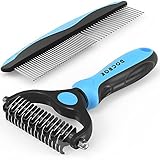
- 【Easy Dematting and Deshedding Tools】: Our Grooming brush and comb combo help effortlessly dematting and reduces shedding. A must have dog brush for shedding, pet supplies, cat supplies, dog supplies metal comb for dogs shedding.
- 【Safe Design】: Soft and protective edge brush and comb creating a comfortable feeling while detangling matted hair and deshedding without hurting your pet. Perfect metal comb for dogs, dematting comb for cats, undercoat rake for dogs double coat.
- 【2-in-1 Rake】: Our undercoat rake is perfect for medium and long-haired dogs and cats and other double coat pets. Wide side for easy dematting, dense side for deshedding. Well made deshedding tool, grooming brush and deshedder brush for dogs.
- 【2-in-1 Comb】: Wide sided for comb knot, smoothing and modeling your pet's hair, dense side for removal of loosen hair, you can use it on the legs, head or tail of your pets where the brush can’t. Perfect metal comb for dogs, dematting comb for cats deshedding tool for dogs.
- 【Sturdy and Comfortable Design】: Premium Stainless steel metal teeth and compact design make our product sturdy and durable. High-quality & lightweight TPR handle make your grooming effortlessly. High-quality undercoat rake for dogs double coat, metal comb for dogs, dematting comb for cats, dog comb for matted hair.
Polycystic kidney disease and other testing
Polycystic kidney disease (PKD) is discussed in Birman health information, although some breed guidance describes the breed’s risk as very low. PKD1 genetic testing is available through veterinary genetics laboratories. Results should be interpreted in the context of the exact test, the cat’s clinical history, and veterinary advice.
Birman-specific laboratory tests may also cover the white-glove pattern, coat color, parentage, and mucopolysaccharidosis VI (MPS VI). The availability of a test does not mean the condition is common in every Birman. Ask what a test actually detects and how the result affects breeding or medical decisions.
What’s actually slowing this PC down?
Pick the symptom - the matching free tool is one click away.
Lifespan
Published lifespan estimates vary considerably, with major cat and veterinary sources giving ranges from roughly 9 years to 20 years. That spread reflects differences in data and individual cats, not a promise that a particular Birman will reach either end. Preventive veterinary care, healthy weight, nutrition, genetics, and early attention to illness all matter.
Are Birmans hypoallergenic?
No. Birmans should not be marketed as hypoallergenic. All cats produce allergens, and no cat breed has been proven genuinely hypoallergenic. A Birman’s coat length or texture does not eliminate the possibility of an allergic reaction.
If someone in the household has allergies, spend time with adult Birmans before committing, ideally in more than one environment. Reactions can vary between individual cats and homes. Discuss allergy management with a qualified medical professional rather than relying on a breed label.
Independent reader supportYour contribution helps us test, update, and keep practical guides available for everyone.Finding or adopting a Birman
Adoption is worth considering: some pedigreed cats and Birman mixes enter shelters or breed-specific rescue groups through owner surrender or changes in circumstance. Ask for the cat’s medical and behavioral history, and arrange a veterinary examination after adoption.
Free tools Windows power users keep installed
One-click scans. No signup required.
When contacting a breeder, look beyond photographs and registration paperwork. A responsible breeder should be willing to discuss health, socialization, diet, contract terms, and the return policy if the placement fails. Request:
- vaccination and parasite-prevention records;
- the kitten’s veterinary records and identification information;
- pedigree or registration details where applicable;
- documented health-screening information for both parents;
- details about HCM screening and whether PKD or other relevant testing has been performed;
- the age at which kittens leave, and how they have been socialized.
Directories from organizations such as TICA and CFA can help locate breeders. A directory listing or registry membership is a starting point, not a guarantee of an individual breeder’s health practices. Be cautious of sellers who will not show records, insist on immediate payment, offer to ship a very young kitten without discussion, or make absolute claims such as “guaranteed disease-free” or “hypoallergenic.”
Also popular on Amazon

- GENTLE DETANGLING & MAT REMOVAL – Rounded stainless steel teeth glide smoothly through mats and tangles without pulling fur, ideal for long-haired breeds like Persians and Maine Coons. Safe for sensitive skin and daily grooming use.
- ANTI-STATIC & EASY TO CLEAN – Metal comb minimizes static electricity, keeping fur smooth and manageable. Simply rinse under water for quick cleaning, no residue or rust thanks to corrosion-resistant stainless steel construction.
- DURABLE & COMFORTABLE DESIGN – Lightweight yet sturdy 6-inch comb fits comfortably in hand. Polished rounded tips ensure a pleasant grooming experience for both pets and owners, reducing grooming stress.
- SUITABLE FOR MULTIPLE PET TYPES – Effective on long-haired cats, short-haired cats, dogs, rabbits, and small pets. An essential tool for pet owners seeking to manage shedding, prevent knots, and maintain a healthy coat.
- PROFESSIONAL GROOMING RESULTS AT HOME – Captures loose fur efficiently, reducing shedding around the house. Promotes healthier skin and coat by distributing natural oils and stimulating blood circulation during brushing.
Is a Birman the right cat for you?
A Birman may suit you if you want a friendly companion that usually has a soft voice, enjoys interactive play, and has a long coat that can often be maintained with weekly combing. The breed can work well in families and multi-pet homes when everyone is introduced thoughtfully.
Think twice if your ideal cat is highly independent, if it would be alone for most of every day without enrichment or companionship, or if you are unwilling to manage measured feeding and routine grooming. The Birman’s manageable coat does not mean low overall care: it still needs social contact, preventive healthcare, stimulation, and attention to weight.
Recommended Free Tools
FAQ
Are Birman cats good family pets?
Often, yes. Birmans are typically gentle, patient, affectionate, and sociable. They can do well with respectful children and other pets when introductions are gradual and the cat has places to retreat.
How often should a Birman be groomed?
Weekly combing is a good baseline. Groom more often during seasonal shedding or whenever tangles begin forming, especially around the ruff, legs, and tail. Routine bathing is usually not necessary.
Do Birman cats have health problems?
The breed’s major repeatedly cited concern is hypertrophic cardiomyopathy (HCM). PKD and some rarer inherited conditions may also be discussed. Regular veterinary examinations and careful breeder health screening are important.
How can you tell a Birman from a Ragdoll?
Both breeds can have blue eyes and color-pointed coats, but Birmans are defined by their four white feet, including front gloves and rear laces. Ragdolls are generally larger and do not have this characteristic Birman pattern.
Outdated Drivers Are Slowing You Down
One free scan finds every outdated or missing driver and matches the right update for your exact hardware.Free scan · exact hardware matchWindows Errors? Fix Them Before They Spread
Repair common Windows errors and clear accumulated junk for a smoother, more stable PC - no reinstall needed.Free scan · no reinstallThe Bottom Line
The Birman combines a striking color-pointed appearance with a friendly, adaptable temperament and a coat that is easier to manage than its length suggests. It still needs weekly grooming, measured meals, daily interaction, and ongoing veterinary care—particularly attention to heart health. Choose a Birman because you want an involved companion, not because it is supposedly silent, hypoallergenic, or maintenance-free.





Leave a Reply