Free tools Windows power users keep installed
One-click scans. No signup required.
Before you bring a black cat home, ask the shelter for the cat’s actual medical records, care still due, observed behavior, litter and household history, current food and litter, adoption-fee details, transport and paperwork requirements, and its return or post-adoption support policy. Ask staff to separate confirmed facts from unknowns; shelter procedures differ, and a general “healthy” label is not a substitute for records.
Start with a written question list
Save these questions on your phone and write down the answers for the specific cat you are considering:
As an Amazon Associate I earn from qualifying purchases.
- What medical care has this cat received, and can I take the records home?
- Which vaccines, parasite treatments, tests and medicines are complete, and what remains due?
- Has the cat been spayed or neutered and microchipped? If not, who schedules and pays for each remaining step?
- What behavior has staff or a foster caregiver actually observed around handling, visitors, noise and time alone?
- Has the cat lived with children, cats or dogs, and what introduction plan does the shelter recommend?
- Has there been spraying, litter-box trouble, scratching, hiding or biting? What preceded it, and what helped?
- What food and litter is the cat using now?
- What does the adoption fee include, and what must I arrange or pay for separately?
- What carrier, identification, payment and paperwork are required at pickup?
- Who should I contact if the match is not workable, and what is the organization’s return or support policy?
The answers should describe this individual cat, not an assumed checklist for every black cat or every animal at that shelter.
Ask for the complete health picture
Request records, not a general assurance
Ask the staff member to show you the medical record and identify each service by date when possible. “Healthy” can mean that no urgent problem is apparent, while a record tells you what was examined and what was not. Ask:
#1 Best Overall

- Pet Carrier: 17.5” L x 11” W x 11” H, Recommended max load of 16 lbs cats small dogs. Please do not choose your carrier based on weight--please reference your pet's length and height in selecting a pet carrier size.
- Fits for under-seat dimensions of most airlines. Every airline has a specific set of rules and regulations, please contact with airline before flying with your cats small dogs.
- Mesh windows for ventilation, top and side entry with locking zippers for safety. Carrying handles, adjustable shoulder strap which can also be used as seatbelt, and back strap can fasten the pet carrier to your luggage.
- Pet carrier comes with a removable base insert, which creates a solid surface for your pet to stand on, along with a removable & hand washable cozy fleece pet bed, which offers a cozy sleeping space for your traveling cats small dogs.
- "Toys for pets, of textile materials". Mostly used as a Toy of Fabric Pet Home for pets playing and relaxing.
- When was the physical examination performed, and were any symptoms or diagnoses noted?
- Which core vaccines were given, on what dates, and when is the next dose due?
- Was the cat treated for fleas, ticks or intestinal parasites? Were tests performed, and what were the results?
- Is the cat taking a medication, following a special diet or needing wound care, monitoring or a recheck?
- Are there known dental, skin, respiratory, gastrointestinal, mobility or other conditions?
- What has not been assessed because the history is missing or the cat has not yet shown a symptom?
Ask the shelter to label information as confirmed, reported by a previous owner, observed in foster care or unknown. That distinction helps your veterinarian decide what needs repeating rather than treating an incomplete history as proof that care was done.
Verify sterilization, identification and age-related care
Confirm whether the cat is already spayed or neutered and microchipped. If a procedure or registration is pending, get the responsible organization, appointment process and payment obligation in writing. Ask how the microchip will be registered to you after adoption. Confirm the cat’s estimated age, because vaccination timing, dental evaluation and nutrition recommendations depend on age and health rather than coat color.
Use shelter policies as examples, not guarantees
Organizations set their own medical packages. For example, the SPCA of Texas adoption process says its cats receive a physical examination and health evaluation, behavior assessment, microchip, spay/neuter, flea and tick treatment, deworming, rabies vaccination for cats three months and older, and FVRCP vaccination. That is one organization’s stated policy, not a promise that another shelter has provided the same services. Ask your shelter to list exactly what is included for the cat you are adopting.
Plan the first veterinary appointment
Ask what the shelter wants your veterinarian to review, whether any follow-up appointment is already booked and when you should schedule an independent examination. Bring every record, medication label and discharge instruction. ASPCA adoption guidance advises establishing veterinary care shortly after adoption; the timing should reflect your cat’s condition and any care the shelter says is still due.
Find out how the cat behaves in real situations
Ask about handling, visitors and time alone
Ask staff or the foster caregiver to describe what they saw, not to assign a vague personality label. Useful details include whether the cat approaches unfamiliar people, tolerates being picked up or touched, retreats when the room is noisy, plays at particular times, and settles when left alone. Ask what happened immediately before hissing, swatting, hiding or biting, and what response helped the cat recover.
Rank #2
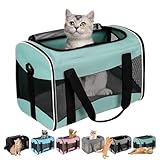
- [PRODUCT DIMENSIONS] Pet travel carrier size : 17x11x11 inches, recommended up to 15 lb pets, it is suitable for large, medium cats and small dogs. Please don't choose your airline cat carrying case based on weight, please refer to your pet's length and height when choosing a pet carrier size.
- [AIRLINE APPROVED] This cat carrier is designed with airline approved, it can fit comfortably under most flight seats, we can take our pets wherever we want. Dog travel carrier offers two attachment loop handles that can be used as a dual harness or as a luggage strap for balanced carry and secure transport.
- [EXCELLENT MATERIAL] Collapsible cat carrier is made of polyester fabric, supported by a steel ring, washable, wear-resistant and durable. The three sides and the top of this pet carrier are nylon mesh, scratch-resistant and not easy to damage, it can not only check your pet in real time, but also ensure enough air circulation.
- [SAFE AND COMFORTABLE] Dog travel bag has metal zippers on the top and side entrances, durable and not easy to deform, it allows your pets to enter and exit easily. The cat carrying case is equipped with an anti-escape safety buckle, which can effectively prevent pets from accidentally falling. It is suitable for car rides and vet rides.
- [PORTABLE AND FOLDABLE] Pet travel carrier comes with a detachable and hand washable wool pet bed, it can provide a comfortable sleeping space for your traveling pet. The cat travel case comes with an adjustable shoulder strap and handle for easy portability. When not in use, you can fold it up for storage.
A shelter environment can suppress or exaggerate behavior. The cat may act differently after moving to a quiet home, so treat observations as a starting point rather than a guarantee. Caitlin Phillips of the Animal Rescue League of Boston notes that “Cats have so many different nuances to their behavior”; ask for those nuances instead of relying on a single temperament word.
Investigate litter-box and scratching history
Ask what type and number of litter boxes the cat used, where they were located, which litter texture it preferred and whether accidents, spraying or stool- or urine-related concerns occurred. Ask whether a medical issue, household change, dirty box, location or conflict with another animal appeared to trigger the problem. Find out what scratching surfaces and locations the cat used, and whether any furniture scratching was observed. These details let you reproduce familiar conditions before making gradual changes.
What’s actually slowing this PC down?
Pick the symptom - the matching free tool is one click away.
Check compatibility with your household
Tell the shelter about children, resident cats, dogs, frequent visitors, work hours, stairs and any other routine that could affect the match. Ask whether the cat has lived with each relevant group and whether the observation was direct, brief or unconfirmed. For resident pets, ask for a staged introduction plan rather than an immediate face-to-face meeting. A dedicated room and slow scent and visual introductions are safer than allowing animals to confront each other on arrival.
Clarify indoor and outdoor experience
Ask whether the cat has lived exclusively indoors, had controlled outdoor access or roamed outside, and what arrangement the shelter considers appropriate. Also ask about energy level, preferred interaction, grooming tolerance and play style. A cat accustomed to constant activity may need more enrichment than a quiet adult, while a cat that hides may need longer decompression before seeking contact.
Keep food, litter and routines familiar at first
Ask for the exact food brand or formulation, feeding schedule, portion pattern, treats and any dietary restriction. Ask what litter material and box style the cat knows. If the shelter can provide a small amount of the current food or litter, use it while the cat settles; otherwise buy the closest practical match before pickup. Change diets gradually and ask your veterinarian for guidance when a medical condition, age or medication affects feeding.
Rank #3

- High Quality Design:Sturdy steel cage structure and wooden support board maintain good spatial stability and shape. Breathable mesh windows on four sides,which can ensure good air circulation and views,make pets have a comfortable and safe travel.It can also be easy for you to check on your pets.There is a front pocket to store pet toys,treats,etc.
- Dimension and Weight:Made of durable tear-resistant fabric.Four easy entrances for pets. Dimensions: 17 inch x 11 inch x 11 inch (L*W*H), suitable for pets up to 16 lbs.Please don't choose your carrier based on weight only,consider your pet's length and height when choosing a carrier.
- Airline Approved & Safty:Can be placed under the seats of most airplanes(Four non-slip feet on the bottom to prevent movement), and comfortably on the seat next to you in a car or bus.It has a adjustable shoulder strap.Can also be fastened to the car seat with a safety belt or shoulder strap to keep your pet safe.
- Easy to Clean :You can clean the stains and dirt on the surface with a soft cloth.Soft mat inside the pet carrier is removable and washable.You can take it out and wash it easily to solve all stains.
- Easy to Collapsible & Lightweight:When not in use,fold it into a flat,space saving and easy to store.Only 2.2lbs,it's easier to carry around.It can also used as a toy of pet house,allowing pets to play in a safe space to relax and rest.
Do not interpret refusal to eat, vomiting, diarrhea or prolonged hiding as a simple personality trait. Ask the shelter what signs warrant an urgent call and give your veterinarian the records so a change from the shelter routine can be considered alongside medical causes.
Confirm fees, transport and post-adoption support
Ask exactly what the adoption fee covers
Request an itemized explanation of the fee. It may include some examinations, vaccines, parasite treatment, sterilization, microchipping or supplies, but policies vary. Ask whether follow-up appointments, medications, registration, future vaccine doses or pending procedures cost extra. Both ASPCA guidance and Adopt-a-Pet’s shelter-question guide recommend asking what the fee includes instead of assuming that a procedure or supply is covered.
Prepare for pickup requirements
Ask whether you must bring a secure carrier or whether the shelter supplies one. Confirm acceptable identification, payment method, signed forms, appointment time and any household or landlord documentation. A cardboard box, open bag or unlatched carrier is not a safe substitute for a properly secured cat carrier during transport.
Understand the return and support policy before signing
Ask whom to call if the cat develops a health concern, the resident animals cannot be introduced safely or the placement is not workable. Find out whether the shelter requires a return to its facility, offers behavior advice, sets a time window or uses a different process for urgent cases. Do not wait until a crisis to look for the contact information; save it with the adoption records.
What is—and is not—special about adopting a black cat
The sources available for this checklist do not establish a black-cat-specific adoption statistic, health risk or behavior pattern. Coat color alone is therefore not a documented fit criterion. Use the same evidence-based questions for a black cat that you would use for any cat, concentrating on the individual’s medical history, stress signals, social preferences, litter habits and compatibility with your routine.
The Tool Desk
Outbyte PC Repair FREERepair Windows errors before they cause bigger problemsFix Now →Outbyte Driver Updater FREEFix the driver behind crashes, sound loss and screen glitchesFind Drivers →Rank #4
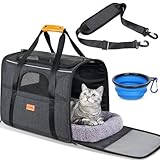
- 【 Spacious & Comfortable Cat Carrier 】The large cat carrier provides ample space for your feline friend to move, turn, and stretch during travel. Measuring 17.3 x 12.2 x 13.4 inches, it is wider and taller than most cat carriers, ensuring your pet feels comfortable and at ease while on the go.
- 【Balanced Mesh Design】Unlike other cat carrier hard, our cat carrier soft strikes the perfect balance with 40% mesh surface area. This ensures your pet can observe the surroundings and breathe easily while feeling safe and secure at the same time. The cat carrier large is suitable for pets in all kinds of situations.
- 【Built-in Dual-Sided Cushion】The detachable pad offers two distinct comforts: a cool side for summer and a super-soft, warm side for winter. You can easily flip it to match the season, providing the perfect temperature for your pet in any weather.
- 【Includes Foldable Bowl】Designed for on-the-go use, our foldable bowl carries 410g of food or 20oz of water. After use, simply collapse it and attach it directly to your pet's collar or leash, perfect for keeping your pet fueled and hydrated anywhere.
- 【Safe & Durable】Safety is our top priority, and the pet carrier for cat is equipped with a secure buckle to prevent your pet from escaping. The cat carrier soft is made of reinforced snow silk fabric and hard mesh material, ensuring durability and preventing any tearing during long-distance travel.
Photos and shelter lighting can make facial expressions or coat details harder to read, so ask staff to describe body language and let the cat approach at its own pace. Do not rush handling to obtain a better picture or assume that a quiet cat is necessarily relaxed. The practical decision is whether this cat’s known needs and unknowns fit the home you can provide.
Independent reader supportYour contribution helps us test, update, and keep practical guides available for everyone.Prepare a safe landing zone before pickup
Gather the essential supplies
Set up a quiet room before the cat arrives. Have ready:
- A secure carrier for transport and future veterinary visits.
- Food and water bowls, plus the food the cat currently eats.
- A litter box, the familiar litter if possible, and a scoop.
- A bed or washable bedding and a hiding place.
- A scratching post or pad, age-appropriate toys and basic grooming tools.
- Identification information and the shelter’s records and contact details.
ASPCA cat-care guidance includes food, bowls, toys, grooming tools, identification, scratching supplies, a litter box and litter, a carrier and bedding among the basic supplies to prepare. Ask what the shelter provides before buying duplicates.
Make the room escape- and toxin-safe
Secure windows and doors, hide electrical cords, remove string and small objects that could be swallowed, and check that household plants are safe for cats. Keep cleaning products, medicines and human foods inaccessible. Place the litter box away from food and water, and provide a hiding option that you can still monitor.
Do these 3 things before closing this tab:
1Repair Windows errors before they cause bigger problems2Scan for outdated or missing drivers - takes under a minute3Clear out junk files and repair common Windows errorsPlan a gradual introduction
Keep the new cat in its prepared room initially, especially when other pets live in the home. ASPCA adoption guidance recommends a quiet decompression area and patience; American Humane Society’s cat adoption checklist likewise recommends going slowly and allowing the cat to become accustomed to one room first. Expand access when the cat is eating, using the litter box and showing relaxed behavior, not simply because a set number of hours has passed.
Best Value
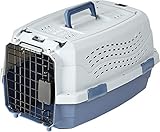
- Hard sided pet carrier with 2 doors for front and top entry; suitable for cat or extra-small dog breeds, such as chihuahuas and toy poodles (up to 11 pounds)
- Durable plastic construction with steel wire front door; screws keep the top and bottom sections securely connected
- Top door can swing open to the left or right for easy access and convenience
- Plenty of ventilation on sides, top, and back of the carrier
- Note: Be sure to measure the size of the pet when choosing carrier size
Make transport and the first day low-stress
- Put the cat into the closed carrier inside the shelter or another secure area, following staff instructions.
- Keep the carrier level and secured during the trip; do not open it in a parking lot or moving vehicle.
- Take the cat directly to the prepared room and close the door before opening the carrier.
- Let the cat leave on its own instead of pulling it out. Sit quietly, offer familiar food and water, and keep handling minimal.
- Monitor eating, drinking, urination, defecation, breathing and obvious signs of pain or illness. Contact the shelter or veterinarian using the agreed emergency instructions if something concerns you.
Expect hiding or reduced interaction during the transition, but do not ignore physical symptoms or a failure to use the litter box. The shelter’s observations and your veterinarian’s assessment are more useful than a fixed timetable.
Bring the right information to veterinary follow-up
Choose a veterinarian before adoption when possible and take the shelter records to the initial visit, as recommended by American Humane Society guidance. Ask the veterinarian to reconcile the record with the cat’s examination, confirm the next vaccine and parasite-prevention dates, review nutrition, check the microchip and address any pending sterilization or diagnostic work.
If you are considering pet insurance, read current plan documents carefully. ASPCA notes that plans may help with veterinary expenses but can have waiting periods and pre-existing-condition exclusions. Do not assume a policy will reimburse care that began before enrollment or that every treatment is covered.
Quick wins for a faster PC:
Repair Windows errors before they cause bigger problemsFix Now →Scan for outdated or missing drivers - takes under a minuteDriver Scan →Use the shelter’s answers to make the decision
You do not need a cat with a perfect, fully known history. You do need to understand which needs are documented, which are manageable with preparation and which remain unanswered. A responsible match accounts for medical follow-up, behavior support, resident-pet introductions, daily interaction, grooming, litter care and the budget for routine and unexpected veterinary care.
As Dr. Kate Hurley of the University of California, Davis, and the Million Cat Challenge puts it: “There’s the right cat for every person and the right home for every cat.” The shelter’s specific answers—and your willingness to proceed gradually—are what determine whether this particular black cat is right for your home.
Quick Recap
Product prices and availability are accurate as of the date/time indicated and are subject to change. Any price and availability information displayed on Amazon at the time of purchase will apply.




