The Tool Desk
Outbyte Driver Updater FREEScan for outdated or missing drivers - takes under a minuteDriver Scan →Outbyte PC Repair FREERepair Windows errors before they cause bigger problemsFix Now →Before adopting a dog with a medical history, ask the shelter for the documented diagnosis, the evidence behind it, every current and past treatment, the care still needed, and copies of the records. Then have your own veterinarian review those records and examine the dog promptly. A label such as “skin problems” or “heart issue” is not enough to estimate prognosis, cost, or whether the dog fits your household.
Start with the diagnosis, not the adoption-profile label
Ask the staff to describe the condition in precise terms and to distinguish a confirmed diagnosis from a symptom, suspicion, or uncompleted work-up. A shelter may know that a dog is limping, coughing, losing weight, or taking medication without yet knowing the underlying cause. Those facts have different implications from a diagnosis supported by examination, laboratory testing, imaging, or a specialist report.


As an Amazon Associate I earn from qualifying purchases.
Questions about what is known
- What condition, injury, or symptom has been identified?
- Who made the diagnosis: a shelter veterinarian, an outside clinic, a specialist, a previous owner, or someone else?
- When was the problem first noticed, and has it improved, worsened, or recurred?
- What findings confirm it, and what possibilities remain untested?
- Could pain, medication, fear, or shelter stress be affecting what staff see today?
Ask for dates. “Diagnosed last week” means something different from a condition documented repeatedly over several months. Ask whether the dog had the same issue before entering the shelter and whether the history came from an owner, a foster caregiver, an animal-control officer, or a brief intake observation. Write down who supplied each fact.
Do these 3 things before closing this tab:
1Clear out junk files and repair common Windows errors2Fix the driver behind crashes, sound loss and screen glitches3Repair Windows errors before they cause bigger problemsRequest the complete record
Ask for copies of the intake examination, later veterinary notes, laboratory results, imaging reports, specialist recommendations, vaccination and deworming records, surgery reports, and discharge instructions. AVMA guidance on veterinary records identifies conditions and medications, including each drug’s name, dosage, and frequency, as useful medical-history information. A short adoption summary cannot replace those details.
#1 Best Overall

- "COMPLETE MEDICAL RECORDS FOR DOGS & PUPPIES: Comprehensive health record booklets designed to track vaccinations, deworming, exams, and treatments. Ideal for maintaining organized, accurate medical histories for individual dogs or entire litters."
- 25 INDIVIDUAL BOOKLETS PER PACK: Includes 25 separate health records, making it easy for breeders, shelters, rescues, or clinics to document care for multiple pets. A convenient, cost-effective option for professional use."
- CLEAR, CUSTOMIZABLE FORMAT FOR EASY RECORDING: Each booklet includes clearly labeled sections for vaccines, dates, and notes. Simple, organized design allows pet owners and professionals to record information quickly and legibly at home or during vet visits."
- PORTABLE & DURABLE DESIGN: Compact size fits easily into travel folders, puppy packets, or veterinary files. Sturdy paper stock ensures each record withstands handling over time, ideal for breeders and adopters."
- IDEAL FOR PET OWNERS, BREEDERS & CLINICS: A must-have tool for dog owners, shelters, veterinarians, and groomers to track a pet’s complete health history. Simplifies communication between caregivers, adopters, and clinics."
If a record cannot be released immediately, ask the shelter to explain why, obtain your written authorization if required, and identify the person who can send it to your veterinarian. Do not rely on a verbal promise that records will be “forwarded later” without confirming the process and timing.
Ask exactly what each medication does
Medication errors are avoidable when the handoff is specific. For every prescription, ask for the generic or brand name, strength, dose, route, schedule, purpose, prescribing veterinarian, date and time of the last dose, and the quantity supplied at adoption. Request the written label or discharge instructions, not just a staff member’s recollection.
Medication handoff checklist
| Detail to obtain | Why it matters |
|---|---|
| Drug name and strength | Prevents confusion between similar products or concentrations. |
| Amount and route | Shows how much to give and whether it is given by mouth, on the skin, in the eye, or by another route. |
| Timing and frequency | Allows you to continue the prescribed interval rather than improvising. |
| Purpose | Helps you recognize what the medicine is intended to treat and what improvement to discuss with the veterinarian. |
| Last administration and refills | Prevents an accidental double dose and reveals when a new prescription is needed. |
| Missed-dose and stopping instructions | Some medicines should not be stopped or adjusted without veterinary direction. |
| Observed response or side effects | Gives your veterinarian a starting point for deciding whether the plan is working. |
Ask whether the dog has vomited, developed diarrhea, become unusually sleepy, stopped eating, or shown another reaction after treatment. Ask what the shelter veterinarian wants done if a dose is missed or a side effect appears. Do not change a dose, combine products, or discontinue treatment based on an adoption conversation; have your veterinarian confirm the plan.
Quick wins for a faster PC:
Scan for outdated or missing drivers - takes under a minuteDriver Scan →Repair Windows errors before they cause bigger problemsFix Now →Find out what care remains after adoption
A dog may be medically stable today but still need rechecks, repeat testing, rehabilitation, a procedure, dietary management, or lifelong medication. Ask the shelter to separate completed care from recommended care and from optional investigations.
Rank #2

- All-in-one pet care tracking: vaccinations, vet visits, medical exams, medications and more
- Easy access to pet’s health info: stay organized and on top of your pet's health
- Ample writing space: never run out of space; designed to last entire life of pet
- High-quality materials: durable and elegant design for long-lasting use
- Portable size: convenient A5 size, perfect for on-the-go; practical for vet visits and storage
Questions about follow-up
- What examination, procedure, laboratory test, imaging study, or specialist visit is due next?
- Is an appointment already scheduled, and can the appointment be transferred or coordinated with my veterinarian?
- What result would change the treatment plan?
- How often should the dog be monitored once stable?
- What food, exercise limits, handling precautions, or home setup has the veterinarian recommended?
- What care, if any, does the shelter provide after adoption, and for how long?
Ask for written thresholds: which changes can wait for a routine appointment, which require a same-day call, and which warrant emergency care. The shelter veterinarian may provide general guidance, but your own veterinarian must interpret it in light of a fresh examination.
Symptoms to track at home
Before bringing the dog home, ask staff what they have observed about appetite, drinking, activity, mobility, breathing, urination, defecation, vomiting, skin, and behavior, including when each observation occurred. A simple daily log of food and water intake, medications, stools, coughing, scratching, pain signs, and activity can help your veterinarian identify trends. Record the time rather than relying on memory.
Interpret observations in their setting
A prior owner’s report, a foster caregiver’s weeks of observation, and a shelter intake examination are not equivalent evidence. Ask who observed the behavior, for how long, under what conditions, and whether pain or handling could have influenced it.
ASPCA guidance notes that medical intake examinations can occur while a dog is highly stressed. It also cautions that shelter behavior assessments have limited ability to predict behavior after adoption. A fearful or defensive response in a noisy kennel should not automatically be treated as the dog’s permanent temperament, but a specific bite history or safety warning should not be dismissed. Ask for multiple observations, incident details, triggers, injuries, management advice, and whether the dog has been seen in a foster home.
Questions that add context
- Was the dog in pain, restrained, medicated, or newly transported when the behavior occurred?
- Has the behavior appeared with staff, volunteers, visitors, children, dogs, cats, food, toys, or routine handling?
- What happened immediately before and after an incident?
- What management or training has helped?
- Has a veterinary professional evaluated the dog for medical causes of the behavior?
Use this context to plan a safe introduction and veterinary visit. It does not eliminate the need to follow shelter safety instructions.
Estimate the real commitment with your veterinarian
Ask your veterinarian to estimate costs and time from the actual records, not from a generic description. “Needs monitoring” could mean one recheck or a continuing diagnostic process. Request separate estimates for the next required step, likely routine management, and possible additional testing if the diagnosis changes.
Compare the decision factors
| Factor | Questions to ask | What to assess at home |
|---|---|---|
| Diagnostic certainty | Is the condition confirmed, suspected, or still under investigation? | Can you tolerate uncertainty while testing continues? |
| Stability | Is the dog improving, unchanged, or deteriorating? | Can you provide observation and prompt follow-up? |
| Treatment burden | How many medicines, procedures, restrictions, or visits are expected? | Who will perform each task, including when you travel? |
| Monitoring needs | What signs, measurements, or tests are required? | Can your schedule support the monitoring reliably? |
| Access to care | Does the dog need a specialist or emergency service? | Are those services reachable and financially realistic? |
| History quality | Which facts are documented and which are reports or observations? | What uncertainty can your household manage? |
| Quality of life and safety | Is pain controlled, and are restrictions or behavior risks understood? | Does the dog fit your people, animals, housing, and experience? |
This is a practical decision framework, not a medical score. ASPCA shelter guidance states that placement decisions should consider animal welfare, public safety, and the adopter’s ability to provide care. A medical condition alone does not determine whether adoption is appropriate; the dog’s welfare and your capacity to meet the plan do.
PC Slower Than It Used to Be?
A free scan shows the junk files, broken settings and background clutter dragging Windows down - then fixes them in one click.Free scan · Windows 10 & 11Outdated Drivers Are Slowing You Down
One free scan finds every outdated or missing driver and matches the right update for your exact hardware.Free scan · exact hardware matchArrange an independent veterinary examination quickly
AVMA’s adopter guidance says: “Schedule a veterinary examination to assess the health of your new companion as soon as possible to ensure it receives the appropriate vaccinations and any needed health care.” Book the appointment before or immediately after adoption and ask the shelter to send records ahead.
- Give the clinic the diagnosis summary, complete records, medication list, vaccination and deworming history, and any incident notes.
- Bring every medication container and written instruction to the appointment.
- Ask the veterinarian to reconcile the shelter’s diagnosis with the physical examination and available test results.
- Confirm each medicine’s indication, dose, timing, duration, refill plan, and missed-dose instructions.
- Ask which tests or referrals are necessary now, which can wait, and what follow-up date to schedule.
- Request clear written instructions for routine monitoring and urgent warning signs.
Your veterinarian may reach a different conclusion from the shelter’s preliminary assessment. That is not necessarily a contradiction: the dog’s condition, stress level, treatment response, or available records may have changed.
Keep one accurate medical file
Create a paper folder, digital folder, or both. Include the adoption contract, intake and veterinary records, test results, imaging reports, vaccination and deworming information, medication labels, emergency contacts, insurance correspondence, and your current veterinarian’s instructions. ASPCA pet-planning guidance recommends keeping medical conditions, medications, veterinary information, and records together in a pet portfolio.
Put an up-to-date medication list where household members and pet caregivers can find it. Include the drug, strength, dose, route, schedule, purpose, start date, and the veterinarian’s contact information. Update it whenever treatment changes and remove discontinued medicines from the active list while retaining the original record.
Ask what insurance will and will not cover
Do not assume a policy will pay for a condition that was known, symptomatic, or under investigation before coverage began. ASPCA warns that many pet-insurance plans have waiting periods and exclude pre-existing conditions. Those are general cautions, not the terms of every policy.
Best Value
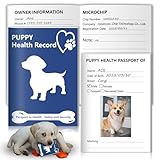
- Product Include:When you choose our dog vaccines records tracker, you'll receive one notebook.This 12-page puppy health journal has 8 dedicated pages for tracking your pup’s health, vet visits, and key details, with 4 blank pages at the end for jotting down extra notes, pet-related info, or anything else you want to record.
- Ideal Size for Record Keeping:Each dog vaccine record book measures 5x3.5 inches folded; 5x7 inches unfolded, allowing for easy portability and storage.These handy health records notebook for dogs with double sided printing, featuring enough space for all your pets important information,plus, it has dedicated spots for sticking on vaccine stickers and adding cute puppy photos.They offer a stylish and organized approach to pet health documentation, a must have addition to your pet supplies.
- Premium Quality: The puppy health record tracker’s cover features 300gsm coated paper with vibrant full-color printing and a protective laminate finish. Inside, 100gsm high-quality offset paper pages are durable and ink-resistant, ensuring no bleeding from pens or markers—so your records stay neat and easy to read.
- Effortlessly Track Vaccinations and More:The canine health record booklets pages include:owner and puppy information,medical history and hospitalizations,vaccination record and sticker,dog service providers,fecal examinations and de-worming,heartworm screening, prevention and treatment etc.This record keeping tool will ensure every important detail is accounted for and make this task easy, organized, and straightforward.Add this essential tool to your pet supplies for a happier, healthier pet.
- Essential for Pet Owners:Designed for veterinary clinics and pet owners, these puppy vaccination record books make tracking key health details—like shots, checkups—simple and organized. When you’re away and leave your pup with a sitter or family, the dog medical record and vaccine book serves as a quick reference for their medical history. Plus, dedicated sections for photos, physical markings, and ID info prepare you for emergencies, helping you recover your friend quickly if they get lost.
Questions for an insurer
- How does the policy define a pre-existing condition?
- Could prior symptoms, an unresolved diagnosis, or related body-system problems trigger an exclusion?
- What waiting periods apply to accidents, illnesses, orthopedic issues, or other categories?
- Are examination fees, diagnostics, prescriptions, rehabilitation, hereditary conditions, and ongoing monitoring included?
- Can the insurer review the dog’s records before enrollment and provide exclusions in writing?
- Are there annual, per-condition, or lifetime limits and deductibles that affect this dog’s care?
Request the policy language and any medical-history exclusions in writing before relying on coverage. Continue to plan for veterinary bills that the insurer may not reimburse.
A conversation script for the shelter
You can use this concise sequence during an interview: “What is confirmed, who diagnosed it, and on what date? May I have copies of every exam, test, image, and treatment record? For each medication, what are the name, strength, dose, route, schedule, purpose, last dose, side effects, and missed-dose instructions? What care or testing is next, what signs are urgent, and what support does the shelter provide after adoption? Who observed each behavior, and in what setting?”
Take notes, ask the staff member to clarify unfamiliar terms, and request that uncertain answers be marked as unknown rather than filled with guesses. If the shelter cannot answer a question, treat that gap as uncertainty to discuss with your veterinarian, not as proof that the dog has no problem.
Make the adoption decision deliberately
After collecting the records, consider whether you can provide the documented care every day, reach the required veterinary services, manage the dog safely around household members and animals, and absorb uncertainty while the work-up continues. Talk with everyone responsible for care before signing the adoption agreement.
Some dogs with health conditions can be placed during or after treatment, while others need a different setting or more stabilization first. Ask the shelter what placement plan protects the dog and the public if your household cannot meet the requirements. A thoughtful decision may be to adopt, to request more information and time, or to decline rather than accept a plan you cannot sustain.
Quick Recap
Product prices and availability are accurate as of the date/time indicated and are subject to change. Any price and availability information displayed on Amazon at the time of purchase will apply.




