If your cat is straining to urinate and passing little or no urine, seek emergency veterinary care now. A urinary blockage can become life-threatening, especially in male cats. Blood in the urine, frequent litter-box trips, or painful urination also need veterinary attention, but those signs alone cannot tell you whether the cause is bladder stones.
What bladder stones are and why they form
Bladder stones, also called uroliths (urinary stones) or cystic calculi, are mineral formations inside the bladder. Urine contains minerals naturally; under certain conditions, crystals can collect and grow into stones. In cats, common types include struvite (magnesium ammonium phosphate) and calcium oxalate. Their causes and treatment differ. Merck Veterinary Manual and the Cornell Feline Health Center describe several factors that may contribute, but the process is not fully understood and a single cause is not always identifiable.
As an Amazon Associate I earn from qualifying purchases.
Possible contributors include urine concentration and pH, mineral balance, diet, inflammation or infection, how often and how much a cat urinates, some medications, and genetic factors. These are risk factors, not proof that a particular food or behavior caused an individual cat’s stones.
Symptoms to watch for—and when it is an emergency
Bladder stones can irritate the bladder or interfere with urine flow. Some small stones cause no obvious signs. Possible symptoms include:
#1 Best Overall

- Purina ONE +Plus Urinary Tract Health cat food made with real chicken to help provide the protein she needs for strong muscles, including a healthy heart
- Urinary care cat food provides low magnesium and supports urinary tract health by reducing urinary pH
- Easily digestible SmartBlend of high-quality ingredients in Purina ONE urinary tract cat food includes four antioxidant sources for a strong immune system
- Deliciously crunchy cat food bites deliver great taste with no artificial flavors or colors
- Urinary health cat food crafted in Purina-owned, U.S. facilities
- Blood in the urine
- Frequent trips to the litter box or repeated attempts to urinate
- Straining, discomfort, or crying while urinating
- Passing only small amounts of urine
These signs also occur with other urinary problems, including feline lower urinary tract disease, so they do not confirm stones. Arrange veterinary evaluation rather than trying to diagnose the cause at home. VCA Animal Hospitals and Cornell explain the overlap between urinary signs and their possible causes.
Repeated straining with little or no urine means emergency care
A stone or urinary plug can block the urethra, the passage that carries urine out of the bladder. Male cats are at greater risk because their urethra is narrower. If your cat repeatedly tries to urinate but produces nothing or only drops, go to an emergency veterinarian immediately; do not wait to see if it clears. Merck Veterinary Manual says a complete obstruction can cause toxin buildup within 1 to 2 days and may lead to death within about 3 days. That is a veterinary reference time course, not a prediction for an individual cat; inability to urinate is an emergency now. Merck and VCA both emphasize urgent care for obstruction.
Rank #2
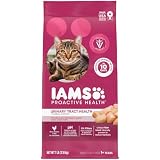
- Urinary Tract Health: IAMS Proactive Health Hairball & Urinary Tract Health dry cat food features clinically proven technology to promote urinary health in 10 days
- Cat Dry Food Reduces Hairballs: This cat food dry recipe includes a unique fiber blend clinically proven to reduce hairballs
- #1 Ingredient Is Real Chicken: IAMS Proactive Health Hairball & Urinary Tract Health cat food is made with real chicken as the #1 ingredient
- Quality Recipe: This recipe provides 100% complete and balanced nutrition for adult cats, delivering the nutrition they need
- Supports A Healthy Heart: IAMS Proactive Health Hairball & Urinary Tract Health dry cat food is crafted with essential nutrients including calcium and potassium to help nourish a healthy heart
How a veterinarian diagnoses bladder stones
Symptoms alone cannot establish that a cat has stones. A veterinarian may examine your cat and test a urine sample, then use imaging to look for stones and assess the urinary tract. Depending on the case, evaluation may include:
- Urinalysis and, when appropriate, urine culture
- Blood tests to assess general health and possible effects of urinary disease
- X-rays or ultrasound; specialized imaging may be considered when needed
Some stones are not visible on a standard X-ray, so ultrasound or other imaging may help when suspicion remains. The veterinarian may also evaluate other parts of the urinary tract. The tests selected depend on the cat’s signs and examination findings. VCA’s diagnostic overview describes examination, urine testing, and imaging.
Rank #3

- Urinary Tract Health: IAMS Proactive Health Hairball & Urinary Tract Health dry cat food features clinically proven technology to promote urinary health in 10 days
- Cat Dry Food Reduces Hairballs: This cat food dry recipe includes a unique fiber blend clinically proven to reduce hairballs
- #1 Ingredient Is Real Chicken: IAMS Proactive Health Hairball & Urinary Tract Health cat food is made with real chicken as the #1 ingredient
- Quality Recipe: This recipe provides 100% complete and balanced nutrition for adult cats, delivering the nutrition they need
- Supports A Healthy Heart: IAMS Proactive Health Hairball & Urinary Tract Health dry cat food is crafted with essential nutrients including calcium and potassium to help nourish a healthy heart
Can bladder stones in cats dissolve?
Sometimes. A veterinarian may prescribe a therapeutic diet to dissolve certain struvite stones. It is not a general solution for every stone: calcium oxalate stones are not treated as diet-dissolvable in the same way and may require removal. The veterinarian needs to identify or infer the stone type and monitor whether treatment is working. Merck and VCA’s struvite guidance explain the difference.
Do not start a dissolution diet without veterinary direction. A diet suited to one stone type may not address another, and an obstructed cat needs urgent treatment to restore urine flow rather than a trial of food. Ordinary urinary-health foods, home remedies, and cranberry products should not be assumed to remove stones.
Rank #4
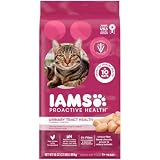
- Urinary Tract Health: IAMS Proactive Health Hairball & Urinary Tract Health dry cat food features clinically proven technology to promote urinary health in 10 days
- Cat Dry Food Reduces Hairballs: This cat food dry recipe includes a unique fiber blend clinically proven to reduce hairballs
- #1 Ingredient Is Real Chicken: IAMS Proactive Health Hairball & Urinary Tract Health cat food is made with real chicken as the #1 ingredient
- Quality Recipe: This recipe provides 100% complete and balanced nutrition for adult cats, delivering the nutrition they need
- Supports A Healthy Heart: IAMS Proactive Health Hairball & Urinary Tract Health dry cat food is crafted with essential nutrients including calcium and potassium to help nourish a healthy heart
Treatment options depend on the stone and the cat
The veterinarian’s recommendation depends on stone composition, size and location, whether urine flow is blocked, and the cat’s overall health and ability to undergo anesthesia or another procedure.
| Situation or stone type | Possible approach | Key consideration |
|---|---|---|
| Some struvite stones | Veterinarian-selected therapeutic diet to dissolve the stones | Requires veterinary direction and follow-up to assess response. |
| Calcium oxalate stones or stones that cannot be dissolved medically | Removal may be recommended, including surgery such as cystotomy or another removal procedure | The choice depends on stone location, size, and the cat’s health. |
| Urethral obstruction | Urgent veterinary treatment to restore urine flow | This takes priority over long-term stone management. |
These are not interchangeable treatments, and the table is not a decision tool for diagnosing a cat at home. Your veterinarian can explain the likely stone type, the benefits and risks of the options, and how progress will be checked. Merck Veterinary Manual’s veterinary overview discusses treatment choices.
Best Value

- UPDATED FORMULA: Clinically shown to promote urinary health by supporting a healthy mineral content in the urine
- Features natural fiber to help comfortably reduce hairballs and support healthy digestion
- Made with natural ingredients, plus added vitamins, minerals, and amino acids
- Made in the USA with global ingredients you can trust
- Hill's Pet Nutrition is the US Veterinarians' #1 recommended brand
Stone analysis, follow-up, and recurrence prevention
If a stone is removed, analysis of its mineral composition can help guide a prevention plan. Follow-up may include repeat urine testing or bladder imaging to check for remaining or recurring stones. Your veterinarian may recommend a specific diet and ways to support water intake based on the diagnosis and your cat’s needs. Prevention is individualized; no food or supplement can be assumed to suit every cat, and recurrence cannot always be prevented. Merck and Cornell describe the role of stone analysis and follow-up.
Quick Recap
Product prices and availability are accurate as of the date/time indicated and are subject to change. Any price and availability information displayed on Amazon at the time of purchase will apply.




