
No—do not put bleach on a cat. The veterinary and public-health guidance cited here does not include a controlled test showing how well household bleach kills fleas on cats. It does establish that bleach is a corrosive household product that can seriously injure cats, while cat-labeled flea medicines are the appropriate treatment route. If your cat licked, chewed, or swallowed bleach, contact a veterinarian or animal poison-control service immediately, even if the cat seems normal.
Does bleach kill fleas on cats?
There is no controlled efficacy result in the cited guidance showing that bleach kills fleas on a cat, and no safe dose or application method is established. That uncertainty is not a reason to experiment. Bleach is intended as a household cleaner, not a feline pesticide, and applying it to a cat can expose the animal to a corrosive chemical through licking, swallowing, skin contact, or contaminated fur.
As an Amazon Associate I earn from qualifying purchases.
The practical answer is therefore straightforward: never bathe, spray, spot-treat, or wipe a cat with household bleach to control fleas. ASPCA’s household-product guidance discusses bleach as a poisoning hazard and separates cleaning pet equipment from exposing the animal itself. Its corrosive-product guidance warns that cats can develop serious signs after relatively small exposures. See ASPCA Poison Control’s household-product guidance and ASPCA’s corrosive-products guidance.
Why bleach is a dangerous flea remedy
Bleach is corrosive, and cats groom themselves
A cat may ingest residue from its coat while grooming. ASPCA says undiluted bleach ingestion can injure the mouth and esophagus. The same hazard applies when a cat licks a paw or fur contaminated with bleach. A product that is safe only when used on a properly rinsed surface is not safe to apply to an animal.
#1 Best Overall

- Advantage II Large Cat is a leading brand in cat flea treatment and prevention for large cats over 9 lbs., at least 8 weeks of age
- Vet-recommended, easy-to-apply monthly topical treatment – no hard-to-swallow pills, no prescription needed
- Delivers total flea protection – kills adult fleas, flea larvae and flea eggs through contact
- Same-day effectiveness – kills fleas within 12 hours of application and keeps working for 30 days
- Fragrance-free formula, waterproof after 24 hours of application
Serious signs may be delayed
Possible signs of corrosive exposure include drooling, vomiting, mouth irritation or ulcers, difficulty swallowing, weakness, poor coordination, and breathing difficulties. A cat can appear well shortly after exposure, so waiting for symptoms is unsafe. ASPCA advises veterinary care for suspected corrosive ingestion even when the animal initially looks normal.
There is no cat-safe concentration or contact time to improvise
Household bleach varies by formulation and concentration. The cited guidance does not establish a dilution, contact time, or application technique that turns it into a safe flea treatment for cats. Do not dilute it “just enough,” mix it with another cleaner, or use a small amount as a spot treatment. Mixing cleaners can create additional hazards, and a cat may lick any residue that remains on fur, paws, bedding, or flooring.
Skin, eyes, and inhalation still matter
Bleach does not have to be swallowed to be dangerous. A splash can irritate or injure the eyes and skin, and fumes from a strong or poorly ventilated solution can worsen breathing. If bleach contacts the cat, move the animal away from the source and call a veterinary professional for case-specific washing or transport instructions. Do not delay a call while trying several home remedies.
Free tools Windows power users keep installed
One-click scans. No signup required.
What to do if your cat licked or swallowed bleach
Treat possible ingestion or licking as an urgent veterinary problem. Use the product label to give the veterinarian precise information, including the product name, concentration if listed, approximate amount, and time of exposure.
- Remove access. Move the cat away from the spill or treated surface and prevent further grooming of contaminated fur if you can do so without wrestling or stressing the cat.
- Call a veterinarian immediately. Explain that bleach exposure is suspected and describe any signs. ASPCA Poison Control publishes (888) 426-4435; confirm current access and any fee when you call. The service’s guidance is available through ASPCA’s corrosive-household-product information.
- Keep the container or label. The exact product and concentration help a professional assess the risk. Take a photograph of the label if transporting the container is impractical.
- Do not induce vomiting. Vomiting can bring a corrosive substance back across the mouth and esophagus. Do not give a home “neutralizer” or other treatment unless a veterinary professional specifically instructs you.
- Follow the professional’s transport and decontamination instructions. If the cat is having breathing difficulty, repeated vomiting, marked weakness, trouble swallowing, or severe mouth irritation, state that clearly during the call so the urgency is understood.
Do not wait to see whether fleas disappear or whether symptoms develop. Corrosive injuries can progress after the initial contact. If the product is on the coat, keep the cat from licking it while you obtain instructions; do not apply another chemical, oil, detergent, or flea product over the bleach.
Safe ways to address fleas on a cat
Flea treatment should be selected for the individual cat, not improvised from a household cleaner. The U.S. Environmental Protection Agency (EPA) advises consulting a veterinarian, reading the entire label, and using a product only for the species and size or weight specified. Its guidance is at Controlling Fleas and Ticks on Your Pet.
Rank #2

- EFFECTIVE, WATERPROOF FLEA TREATMENT FOR CATS: PetArmor Plus is a waterproof, flea & tick topical prevention for cats that kills fleas, flea eggs, flea larvae, ticks, and chewing lice for up to 30 days after application.
- TRUSTED, VET QUALITY FORMULA: Containing fipronil and (S)-methoprene, the same active ingredients as FRONTLINE Plus for Cats. PetArmor Plus for Cats has a powerful formula that starts to kill fleas within 24 hours.
- BREAK THE FLEA CYCLE: Unlike other flea and tick treatments that may temporarily suppress flea activity, PETARMOR Plus Cat Flea Treatment works by effectively breaking the flea life cycle Kill flea eggs and larvae to prevent re-infestation.
- FLEA AND TICK PROTECTION: PetArmor Plus for Cats flea drops protects your furry family members from brown dog ticks, American dog ticks, Lone Star ticks, and deer ticks (which may transmit Lyme disease).
- EASY-TO-USE, LONG-LASTING: PetArmor Plus flea and tick treatment comes with three (3) waterproof topical applications that provides your pet flea protection and control for three (3) months.
Ask a veterinarian to match the product to the cat
Tell the veterinarian the cat’s age, current weight, health conditions, pregnancy or nursing status if relevant, and every medication or parasite product being used. These details can change which active ingredients, route, or dosing schedule is suitable. A product that is appropriate for one cat may not be appropriate for another. Mention whether the cat is a kitten, elderly, underweight, chronically ill, or recovering from another problem.
Use only products whose label names cats
Never apply a dog flea product to a cat. EPA explicitly warns against this because pesticides can be more toxic to one species than another. Check the label for the animal species, minimum age, weight range, application site, and any warnings before opening the package. Packaging that looks similar is not evidence that two products are interchangeable.
Follow the label rather than combining products
Do not shorten a repeat interval, use extra doses, split a dose meant for a different weight range, or combine topical and oral products unless a veterinarian directs you to do so. If a product causes a reaction, contact the prescribing clinic or an emergency service rather than adding another pesticide. Keep a record of the product name, dose, and date so another household member does not accidentally repeat it.
Cat-flea options compared
The table describes the categories discussed in veterinary flea-control guidance. A product’s exact active ingredient, duration, repeat interval, age cutoff, and contraindications are label-specific; where the cited sources do not provide a universal value, no single number should be assumed.
| Approach | Route or role | What must be checked | Important limitation |
|---|---|---|---|
| Cat-labeled topical product | Applied to the skin at the label-specified site | Cat species, minimum age, weight range, application instructions, health and medication considerations | Duration and repeat interval vary by product; use only the current label and veterinary advice |
| Cat-labeled oral product | Administered by mouth when the product is approved for that cat | Species, age, weight, dosing schedule, medical history, and interactions with other medicines | Product-specific suitability and interval are not interchangeable between brands or formulations |
| Flea comb | Mechanical inspection and removal of visible fleas | Frequent combing, a container for captured fleas, and a plan for disposal and follow-up | A comb can help inspect or groom but is not established here as a stand-alone population-control treatment |
| Labeled indoor flea-control product | Environmental adjunct for rooms, bedding, or other permitted areas | That the label allows the intended location, preparation, ventilation, occupants, pets, and re-entry timing | It does not replace treating the cat with a cat-appropriate product |
VCA’s Flea Control in Cats explains that veterinary flea control includes both animal treatment and environmental management. Ask the veterinarian to choose the combination that fits your household.
What’s actually slowing this PC down?
Pick the symptom - the matching free tool is one click away.
How to compare products without guessing
Compare only products that are authorized for cats, then look at the route, minimum age, weight band, expected duration, repeat interval, application instructions, and health or medication warnings. A longer-lasting product is not automatically safer, and a faster-acting product is not automatically a complete solution. The veterinarian can explain whether the cat needs one product or a coordinated plan and how to respond if fleas are still seen during the control period.
Rank #3
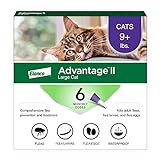
- Advantage II Large Cat is a leading brand in cat flea treatment and prevention for large cats over 9 lbs., at least 8 weeks of age
- Vet-recommended, easy-to-apply monthly topical treatment – no hard-to-swallow pills, no prescription needed
- Delivers total flea protection – kills adult fleas, flea larvae and flea eggs through contact
- Same-day effectiveness – kills fleas within 12 hours of application and keeps working for 30 days
- Fragrance-free formula, waterproof after 24 hours of application
Why fleas can seem to return after treatment
Flea control is not limited to the adult fleas you can see on the cat. VCA notes that eggs and pupae can persist in the environment. New adults may emerge after the cat has been treated, creating the impression that a product failed. Seeing an occasional flea during the early part of a plan does not justify an extra dose or a switch to bleach.
Incomplete environmental treatment
Fleas and their immature stages can remain in areas where the cat rests. VCA describes washing or replacing bedding and using appropriately labeled home sprays as parts of environmental control. Treat only locations named on the product label, and follow ventilation and re-entry instructions exactly. Keep pets and people out of treated areas until the label says they may return.
Incorrect application
Applying a product to the wrong body area, using an incorrect weight range, or missing a scheduled repeat can reduce control and increase risk. Recheck the label and call the veterinarian if you are unsure whether a dose was applied correctly. Never compensate for a missed dose by doubling the next one unless a professional tells you to do so.
Quick wins for a faster PC:
Fix the driver behind crashes, sound loss and screen glitchesFind Drivers →Repair Windows errors before they cause bigger problemsFix Now →Scan for outdated or missing drivers - takes under a minuteDriver Scan →Another infested animal
Dogs, cats, and other animals in the household can reintroduce fleas. Have the veterinarian assess each pet and recommend species-appropriate products. Do not transfer a product from one species to another, and do not assume that treating only the animal with the most visible fleas will end the cycle.
A practical flea-control plan
- Confirm the problem. A veterinarian can distinguish fleas from other causes of itching and check for complications such as skin irritation or anemia risk in vulnerable cats.
- Record the cat’s details. Note current weight, age, medical conditions, pregnancy or nursing status, and all medicines and parasite treatments.
- Select one cat-labeled treatment plan. Follow the veterinarian’s choice and the product label for route, amount, application site, and repeat timing.
- Inspect with a flea comb if useful. Combing can help you find live fleas and monitor change, but captured fleas do not prove that the environmental stages have been eliminated.
- Address the home. Wash or replace bedding as appropriate, clean resting areas, and use an indoor product only when its label covers that surface and situation. Observe all drying, ventilation, and re-entry instructions.
- Review every pet and the schedule. Ask when each animal should be treated again and what signs would justify a recheck. Keep a written calendar so doses are not duplicated or missed.
VCA explains that incomplete home treatment, incorrect application, and exposure to other infested animals are common reasons fleas appear to come back. A follow-up plan is safer than repeatedly adding products on your own.
Using bleach to clean pet items
Bleach has a limited, separate role in pet care: surface cleaning when the product’s directions permit it. ASPCA says diluted bleach can be used to clean pet toys and kennels if they are thoroughly rinsed and aired until the odor has dissipated. This instruction applies to objects, not to the cat and not to flea control on the animal.
Rank #4

- SHIPMENT CONTAINS: One 6-dose pack of Amazon Basics Flea Topical for Large Cats (over 9 pounds)
- FAST ACTING: Eliminates fleas in just 12 hours, providing your cat with swift relief from discomfort with our effective flea medication
- DUAL INGREDIENT FORMULA: Formulated with Imidacloprid and Pyriproxyfen to kill adult fleas and prevent flea infestations
- LONG-LASTING PROTECTION: Protect your cat from infestations for up to 4 weeks with each application, killing reinfesting fleas within 2 hours and efficiently halting the flea lifecycle
- EASY APPLICATION: Designed for monthly use, apply directly to dry skin between the shoulder blades for best results
- Remove the cat, food, water, bedding, and other items before cleaning.
- Use the dilution and contact instructions on the product label; do not mix bleach with other cleaners.
- Rinse cleaned items thoroughly.
- Allow items to dry and air out until no bleach odor remains before returning them to the cat.
- Store bleach securely so the cat cannot lick a wet surface or reach the container.
If a label does not authorize use on a particular material, choose another cleaning method or ask a veterinarian about the safest option. Never assume that a dilution suitable for a kennel or toy is suitable for fur or skin.
Recommended Free Tools
Common mistakes to avoid
- Putting bleach directly on fur or skin: household-cleaner guidance is not animal-treatment guidance.
- Using a dog flea product on a cat: EPA warns that species can differ in pesticide toxicity.
- Assuming a normal appearance means no danger: ASPCA warns that signs after corrosive exposure may be delayed.
- Inducing vomiting after ingestion: a corrosive substance can cause additional injury on the way back up.
- Repeating doses early: use the product’s label schedule and veterinary instructions rather than trying to accelerate control.
- Treating only the visible fleas: eggs and pupae in the home can produce new adults after the cat is treated.
- Ignoring other animals or the environment: untreated sources can keep the infestation going.
- Relying on smell or appearance: a surface that looks dry or no longer smells strongly is not a substitute for the label’s rinsing and re-entry directions.
When to contact the veterinarian again
Contact the clinic promptly if fleas remain despite correct use of a cat-labeled product, if the cat develops worsening skin irritation, or if you are uncertain whether a dose was given. Seek emergency care for suspected bleach exposure, breathing difficulty, repeated vomiting, pronounced weakness, inability to swallow, or severe mouth irritation. Cornell’s feline poison information also lists household cleaning agents such as bleach among poisoning hazards; its overview is available at Cornell University’s Feline Health Center.
What the evidence supports
The cited sources support three clear decisions. First, bleach is a corrosive household product that can injure cats, so it should not be applied as a flea remedy. Second, EPA recommends species- and size-appropriate, label-directed flea products and specifically warns against using dog products on cats. Third, VCA describes flea control as a combination of appropriate treatment for the cat and management of the home environment because immature flea stages can persist.
Those sources do not provide a measured flea-kill rate for bleach on cats. Any claim that bleach kills a particular percentage of fleas, or that a certain homemade dilution is effective, would go beyond the evidence. The safer, evidence-based choice is to avoid bleach on the animal and obtain a veterinarian-guided flea plan.
Frequently Asked Questions
Can I put diluted bleach on my cat for fleas?
No. No cat-safe dilution, contact time, or application method is established, and bleach can injure a cat through licking, swallowing, skin contact, or contaminated fur. Use a flea product labeled for cats and selected with veterinary guidance.
Do these 3 things before closing this tab:
1Scan for outdated or missing drivers - takes under a minute2Clear out junk files and repair common Windows errors3Fix the driver behind crashes, sound loss and screen glitchesWhat if my cat only licked a tiny amount of bleach?
Call a veterinarian or animal poison-control service promptly even if the cat appears normal. ASPCA warns that corrosive injuries and signs can be delayed. Keep the product container or label available, and do not induce vomiting or give a home neutralizer unless instructed.
Best Value
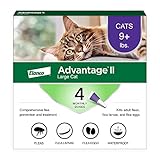
- Advantage II Large Cat is a leading brand in cat flea treatment and prevention for large cats over 9 lbs., at least 8 weeks of age
- Vet-recommended, easy-to-apply monthly topical treatment – no hard-to-swallow pills, no prescription needed
- Delivers total flea protection – kills adult fleas, flea larvae and flea eggs through contact
- Same-day effectiveness – kills fleas within 12 hours of application and keeps working for 30 days
- Fragrance-free formula, waterproof after 24 hours of application
What signs can bleach poisoning cause in cats?
Possible signs include drooling, vomiting, mouth irritation or ulcers, difficulty swallowing, weakness, poor coordination, and breathing difficulties. Any suspected exposure warrants professional advice rather than waiting for symptoms.
Can bleach be used around a cat’s bedding or kennel?
ASPCA says diluted bleach may be used to clean pet toys and kennels when directions permit, provided items are thoroughly rinsed and aired until the odor has dissipated. Remove the cat and supplies during cleaning, follow the label, and never apply the solution to the animal.
Can I use a dog flea medicine on my cat?
No. EPA specifically warns against using dog flea products on cats because pesticides can be more toxic to one species than another. Check that the product names cats and matches the cat’s age and weight.
Why are fleas still visible after treatment?
Eggs and pupae can persist in the environment and later produce new adults. Incomplete home treatment, incorrect application, missed repeat doses, or another infested animal can also keep the problem going. Ask a veterinarian to review the whole household plan.
Is a flea comb enough to eliminate fleas?
A flea comb can help inspect the coat and remove visible fleas, but it is not established here as a stand-alone population-control treatment. It should be part of monitoring or grooming while a veterinarian-guided plan addresses the cat and environment.
Should I repeat a flea dose if I still see fleas?
Do not shorten the interval, add an extra dose, or combine products on your own. Product duration and repeat timing vary. Check the label and contact the veterinarian if fleas persist or if you are unsure whether the original dose was applied correctly.
The Bottom Line
Do not use bleach on a cat. Its flea-killing performance on cats is not established, while corrosive exposure can cause serious injury. If exposure may have occurred, call a veterinarian or animal poison-control service immediately and do not induce vomiting. For fleas, use only a product labeled for cats, matched to the cat’s age, weight, health, and medications, and address the home environment as directed.
The Tool Desk
Outbyte Driver Updater FREEFix the driver behind crashes, sound loss and screen glitchesFind Drivers →Outbyte PC Repair FREEClear out junk files and repair common Windows errorsFree Scan →Quick Recap
Product prices and availability are accurate as of the date/time indicated and are subject to change. Any price and availability information displayed on Amazon at the time of purchase will apply.





Leave a Reply